APB-SAL is a blog about education, science, science education, fiction, science fiction, literature, literary stories, poetry, and anything else that strikes the blogger's fancy.
NOTE: This blog interrogates art. It rarely make moral proclamations. For that attend the church or politician of your choice. This blog concerns aesthetics, not propaganda. Consider this as interviews with books where the interviewer presents interviewees, so you get what you need to do your own thinking.
Unbelievable
to us, our eyes took in the image of a slowly moving saucer-shaped
object, with red, green and white lights blinking around the perimeter.
It moved directly over our heads toward the church, and I was sure it
was too low to clear the steeply pitched roof. Much to my surprise, it
did not hit the building but glided over it and disappeared. We
scattered and shouted the news to the boys who meandered around in the
side lot. They yelled and jumped on their motorcycles and peeled into
the vacant field behind the church property to see if the saucer had
landed there. They returned disappointed. There was no sign of a flying
saucer.
Years
ago, I was steering down the steep, windy lane from the Sundance Ski
Resort when my heart began to pound. The car behind me had closed the
gap between us on the mountainside. Maybe he was a psychopath who would
drive me off the road, attack and stab me to death. Maybe I was being
chased by my handsome lover who had begged me not to leave him, was
aching to hold me in his arms and wouldn’t let me go. Maybe it was both.
My hands froze on the steering wheel when at the T-junction the
suspicious driver pulled up beside me. When he turned in the opposite
direction, and the chase was over, I decided it was time. As an
accomplished and published ghost writer with over twenty-five years of
experience, my subconscious was calling me to enter the world of
fiction.
These demonstrate the power of Anderson's creativity
and ability to enthrall with literary thrills. Though some might suggest
a measure of credulity, you'll also notice the skepticism that also
governs the imagination--that it is fiction that propels us forward.
Just as she navigates the Charybdis and Scylla of politics, she threads
narrative creativity as a skilled pilot, testing her readers'
imagination with wild aplomb.
- - -
How did you get started writing?
My mother read literature to us as kids around the kitchen table, and
I was fascinated how the words could make her cry and give me goose
bumps. I picked up a pen and began journaling as a young teenager and
still journal to this day. I must have a dozen volumes now.
Have you mined those journals to write new works? Or are they
workshops in craft? Or just personal records?
I used journaling to hone those emotional expressions and clarify
life’s experiences which as you know is a huge part of
storytelling, to get all that emotion onto the page and into the
heart of the reader.
Who were some of your favorite writers back then? now?
I loved Nancy Drew Mysteries growing up. Now I enjoy the mysteries of
Mary Higgins Clark and the romance of Nicolas Sparks.
What was the origin of the novel?
It was quite unexpected, really. I met a Palestinian woman on
Shepherds Hill just outside of Bethlehem who thanked me for being
willing to write a story of her people and their struggle. I felt
embarrassed as I reflected on her words because I realized I was not
even close to describing the conflict of that war-zone. I traveled
home and changed my story. Instead of trying to avoid the conflict I
put my protagonist into the center of it.
[The
Palestinian woman and I] sat together and talked about the despair she
had experienced; the bus searches and beatings, the laws prohibiting her
from ever seeing her birthplace, Jerusalem. How in her desire to
worship on the Sabbath she’d snuck through a hole in the security fence
to reach the Mount of Olives and been shot at by soldiers. It was
chilling.
I spent six years researching and interviewing friends from Palestine
and Tel Aviv and Jerusalem and of course I traveled there and did
onsite interviews. I had great support from both sides of the story.
Studying Palestinian poetry was a phenomenal experience. They have a
flavor so unique and powerful that I loved playing with that.
What were some of those flavors?
The poems I studied had a unique style, with carefully placed words
born of suffering which might seem angry and morbid to some, blood,
death, despair and ruin, but because they were so beautifully
written, they fall on your heart.
An American friend who studied there said that he had Muslim and
Israeli friends with whom he freely discussed and debated important
issues, whereas in the US, we're afraid to talk politics, except with
like-minded sorts. What was your experience?
I imagine when your life is rooted in conflict and you are living in
a war-zone you are not afraid to share your opinion. They disagree
with each other, for sure and will correct you when they think you’re
wrong. I found the opinions of people in Palestine well informed
through their personal experience.
The novel did feel like you'd worked hard to understand the
culture(s). In one part the community protects a criminal of their
people, but at the same time tries to help a woman find her child.
People make grave mistakes and feel shame with no way to atone--and
are treated as if the mistakes were purposeful.
It is a complex society and my experience is limited, but I loved
being with them. I found these people extremely loving, caring and
helpful on both sides of the conflict.
How many of these events are based on stories you've heard?
This story was definitely inspired by the people I interviewed. I
worked hard to get as many of their stories into the work as I could.
The true stories from the book Son of Hamas by Mosab Hassan
Yousef really touched me and informed my story.
Have you heard back from anyone from the area about the novel--or
friends whose stories helped shape the novel?
Yes. They’ve asked for boxes of books for their friends. Some
Palestinians wished I would have told more of the atrocities they had
endured. Some of my Israeli friends felt I was a bit tough on the
Israelis. I’d hear, “I can tell you’ve been talking with your
Palestinian friends!” Then I would hear, “No. An Israeli doctor
would never do that,” from the Palestinian side. Yet, I personally
interviewed the Israeli director of surgery at the facility where the
surgeon plugged the bullet hole in the student’s heart with his
finger, and saved her, while the Palestinian shooter was in a stall
down the hall. This doctor had personally flown with a Palestinian
father and his child who was dying of cancer to a special facility
and overseen his treatment. I wish I could have told all their
marvelous stories.
What were some of the difficulties you had in writing it?
I had a hard time walking the line between being anti-Israeli or
anti-Palestinian. I am neither. My goal was just to get people to
think about their thinking. Open some minds to a new way to see this
battlefield. Expose them to something they hadn’t thought of
before. It seems to have been successful in that way.
It was also hard to figure out which genre this story fit into. It
was not a good fit for romance because of the thriller aspect, but in
the end, I chose to go with romantic suspense and hoped people would
find it refreshingly different.
It is refreshing and different. I was constantly surprised when
sections became a thoroughbred thriller. Who are some of your
influences?
Everyone close to me, my husband, children, extended family and
friends, all believed in me and encouraged me, and said that I could
do it. What a blessing.
I definitely would have to say that my greatest mentor is David
Farland. I have no idea how someone can write so stunningly. I
started out careening from wall to wall trying to figure this writing
process out, but he was right there with me. He has coached and
edited and corrected and nudged me along this path and always with
profound kindness. I couldn’t have done this without his expertise
and encouragement.
What are you working on now?
This time I am taking the story to Southern Spain. I was on one of
the southern beaches collecting shells when I saw my next love
interest. He came out from an abandoned hotel and with a spear in his
hand waded out to claim his catch. I asked myself. Who is this
squatter and what is his story? I named him Marcos and he is a
fascinating character in my next novel.
Good luck to your current and follow-up novels. I look
forward to reading what you conjure up next. Thank you for the
interview.
Here's a contemporary romance thriller or thrilling
romance for those who have a penchant for thrillers and romance. Both play a
significant role.
Glancing at the cover, I assumed that the novel was primarily romance,
and put it on the back burner--to read as soon as I'd read these others. Romance fascinates me but usually as part of a mix, so the title and some of the subtle imagery should have suggested the strong impact of
the thriller genre.
In the novel, Jannah has a reason to become an activist. Effron and she
make mistakes and hide secrets that get them in trouble. But even in a
desert, they will bloom.
The strength of
the writing took me by surprise. Anderson takes on a bestselling style, as expected for the genres she's mining, but puts
effort into making her scenes vivid, more than most bestselling writers do.
Let's prove this by opening the book at random and picking a passage that illustrates this:
"When Shaphier came into view, Jannah’s heart quickened. She cranked the
window down and leaned her head out to feel the stiff breeze on her
face. Though home to 23,000, to an outsider, it appeared a backward town
with unpleasant residents. She admitted it was a broken-down community.
The power cables sagged between pine-log poles and gusting wind
cartwheeled plastic grocery bags across the fields of gray stubble—after
being a prisoner, it was a sight to be cherished."
What a keen eye for choosing the right word to carve out an image.
This is no easy love story. Setting it in one of the most controversial regions on the planet would probably not occur to most. But that challenge becomes a draw.
Does it accurately portray the conflict in the Middle East? That I cannot address. It feels like she has made a valiant effort to portray the conflict with difficult and admirable nuance, but those closer to the issue might have another perspective.
The opening sample might suggest whether you'd be interested:
Chapter 1
Wrongly Accused
For too many days, Jannah al-Jorbouni lay on a frayed and smelly mattress in her dim jail cell in Lachish Detention Center. The corridor light cast a yellow glow on a colony of ants climbing through the concrete cracks. Their black oval bodies darted into the bedding, food, and clothing.
Jannah clutched a handful of knotted sheets as the pain in her stomach spiked. A bizarre fever had raged through her body all night.
Like ice crystals on a frosty windowpane, she was freezing cold one moment, clutching the thin blanket under her chin, then suddenly, burned hot, her bedding drenched in sweat. The noxious odors of sweaty bodies and sewage further sickened her, and she felt like a caged animal.
She licked her cracked lips, which did little to moisten them, and stared at the two swallows of water left in the cup she held.
She leaned up, took a sip, swished it around to let the liquid bathe her tongue, then held it in her cheeks before swallowing.
As the gray days passed behind bars, each day drearier than the one before, a kind of hopelessness gripped her. She struggled against despair more than she did against the pain in her abdomen and ran her hand over the tally marks scratched into the wall near her bunk. Six months in this hellhole. How much longer can I hold out? she wondered.
The first few months at Lachish, she’d believed she could handle anything, but her Christian spirit had been drained. Too much wrath and retaliation had left her soul riddled with holes. The only evidence that she had not been entirely broken was when she left the boiled egg yolk or crust of bread on the dinner tray for Besan, who was more sister than cousin.
Ben Farthing demonstrated his worth as a writer by having a story come in second in the Baen Fantasy Adventure Award.
Last year, I encountered Farthing's first book, Boom--extremely strange, in the best sense of the term. If you like weird, chances are you'll like it. Read the excerpt first. If you're enchanted, then buy the ebook. Its speculative invention starts strong and barrels toward the finish.
The story follows Everard Harrison, a resident of the D.C. metro area, pulls his truck to a stop to help a woman who appears to be in distress. He is presently unaware of his latent supernatural abilities until they fall upon him when threatened by others who have long been using theirs:
She breathed in deep gasps. Not crying--hyperventilating.
"Hey, are you all right?" A stupid question.
He spotted a scrap of paper next to her that she must have dropped. He picked it up and touched her shoulder. She looked up. Her expression wasn't panic, but exhaustion, like she'd just run a marathon. Sweat beaded on her skin and glistened in her hair. She was slender, slightly older than Everard--probably mid-thirties--and gorgeous despite the blemishes across her cheek....
It wasn't acne, or age spots, or scars. It was a swarm of holes, moving both together and independently like a school of fish. Each deep enough to show teeth or bone, but instead only revealing pink flesh descending into shadow....
The holes glided over her face, over--oh, God--over her eyes, her open eyes, tiny fleshy pits slipping along whites and blues and irises. He should run. That what he should do, and he would, as soon as he could figure out what was going on with her skin.
It's interesting the author slapped a lot of labels on to clue readers into what they'd be in for: Lovecratian, thriller, urban fantasy, horror. He removed the label, but it did have a super-hero label as well. They are all useful guide posts to what's inside, but still inadequate. If you like non-stop break-neck thrillers that make it hard for you to catch your breath, this could be a good fit.
I'd offer Roger Zelazny as a stronger comparison, more so than Lovecraft (though the design of the creatures that populate this realm share something of the Lovecraftian spirit). We have a protagonist who has forgotten, had his memory wiped, or somehow never knew of his connection to the strange inner world that operates beneath our own.
Because of its pacing, I almost failed to notice the deeper political significance of the work, situated as it is in the Washington D.C. vicinity. So it also offers some intellectual entertainment for those who like that sort of thing, but obviously without overbearing or overwhelming the work--subtly done.
I watched a lot of black-and-white movies with my pop growing up. They were his thing. He had a lot of the noirs, and we watched this one. I liked a lot of them, but not this classic noir. This one I hated and I couldn't explain why. I didn't try. I'll discuss it below
That's probably why it took me so long to read Cain's work. When I did, I found the novel a moving if awful kind of tragedy. Moreover, it had made it on Modern Library's Top 100. You can see why in the excerpt below. The novel is packed with energy, each line bursting with suggestion.
The book was apparently banned in Boston for the violence and sex. It is violent, one moment especially, but the sex is largely off stage. Different times.
This has had a ton of covers. My favorite is this first one. It captures all three characters in one shot.
Excerpt
That was when I hit this Twin Oaks Tavern.... I blew in there in a hurry and began looking down the road. When the Greek showed, I asked if a guy had been by in a Cadillac. He was to pick me up here, I said, and we were to have lunch. Not today, said the Greek. He layed a place at one of the tables and asked me what I was going to have. I said orange juice, corn flakes, fried eggs and bacon, enchilada, flapjacks, and coffee.
Pretty soon he came out with the orange juice and the corn flakes.
"Hold on, now. One thing I got to tell you. If this guy don't show up, you'll have to trust me for it. This was to be on him, and I'm kind of short, myself."
"Hokay, fill'm up."
I saw he was on, and quit talking about the guy in the Cadillac. Pretty soon I saw he wanted something.
"What you do, what kind of work, hey?"
"Oh, one thing and another, one thing and another. Why?"
"How old you?"
"Twenty-four."
"Young fellow, hey? I could use young fellow right now. In my business."
"Nice place you got here."
Notice how Frank hides everything about himself from Nick, in every line.
This discussion below will have no easy summary as I'll be spoiling it along the way. Here's a Youtube clip of the radio play adaptation, which is very similar to the movie version. They used to adapt movies for the radio.
Book Version
In the novel, Frank Chambers is tossed off a hay truck. He'd been in Tijuana. He shows up at the Twin Oaks diner, pretending a friend was coming in a Cadillac (i.e. rich), going to spring for dinner, and Nick Papadakis, the owner, cooks and asks if Frank wants a job. He's told immediately that Cora Smith is Nick's wife, which seems to be what keeps Frank there to take the job, fixing tire flats. When Frank compliments her on the burritos they made, she's very keen to dissociate herself from Mexicans and Nick, a Greek, which of course is interesting that she'd marry him. She later calls him greasy. Nick seems indifferent except as a way to get at her so she wouldn't treat his as her servant.
Frank uses a fallen sign to talk Nick into getting a new one. Once Nick leaves, he locks the door to be alone with Cora. He bites her lip at her request and bloodies her. Scene cuts as they head to the bedroom.
Nick is upset that Cora's lip was hurt by the swing door and he makes Frank fix it. He hits Cora in the legs and she seems to like it although she asks how he got that way. They get away every chance they get when Nick leaves. They share their pasts. She calls herself a hellcat except with Frank.
No reason is given for Nick's murder, but they plan it: Her hitting him in the head with a bag of ball bearings while he's in the tub and to hold him under, so it looks like he fell and drowned himself. When they plan the bathtub murder, Frank is to be outside and honk the horn if anyone comes by but he ends up chasing a cat and not being around when a state trooper shows up asking questions. They note the cat going up. The lights went out and she screams.
They feel they have to save Nick's life and rush him into the hospital. As soon as Nick recovers consciousness, Cora talks Nick into the story she wants him to believe. When they get back, they find the potential murder weapon on her. The state cop notes the cat caused the lights going out.
They try to run off, but Cora doesn't want to, so Nick runs off, and tries to make money at pool to get Cora. He bumps into Nick, who cajoles Frank into coming back. Nick seems proud of his accident.
That night Cora has an argument with Nick about bringing Frank back. Frank somehow hears her heartbeat and clicks on the kitchen light to find her holding a knife (whether to kill Frank, herself or Nick is unclear). They come up with a new murder plan.
The men get drunk. Nick yells that Cora, driving, will get them all killed. Foreshadowing. The worst moment is when Frank hits Nick over the head.
Frank rips her blouse and blackens her eye, so she'll pass getting into an accident. It doesn't go as planned though and Frank damages his back and arm. He goes in and out of consciousness as shipped around from mortuary to hospital.
They get interrogated. Nick acts properly confused. He seems convincing to the bald District Attorney is and the reader, but the DA is tough and even catches part of the story in guessing... except the insurance angle. The DA with much cajoling talks Frank into signing a complaint against Cora. The DA seems to know everywhere he'd been jailed.
Cora's lawyer, Katz, knows Cora will be get upset when she hears about Frank's signed complaint, so he hires a former dick to record her confession, so she can get it out of her. And then he has the complaint stuck a safe.
Frank is plagued by dreams of killing Nick, hearing the crack.
The DA crows about his sure win and bets Katz one hundred dollars on the court results. The insurance agent had gone to Nick and he told Nick that injury insurance was needed. Also there were two policies in effect at the same time, and even if they did hang Cora, the insurance companies still had to pay since Frank could sue injuries and the companies would have to pay. He had the insurance companies agree that she had caused the murder because they had a guest clause that if Nick and Cora caused an accident, then the companies had to pay. It's a bit complicated. So Nick put his insurance man on the the stand who said that they didn't think Cora had done it.
Nick decides not to charge Cora for the lawyering. The DA's check was enough.
Frank and Cora have it out. They hold each other responsible (him for the complaint, her for the confession) but seem to have forgiven one another.
They talk of selling the business, but Cora wants to expand it from car repair and hotdogs, to include beer outside under the shade. Frank is upset. He wants to move on.
While Cora's in Iowa, Frank runs into Madge who sells big Central American cats to zoos and movies. So he takes off with her. She asks if he's got "Gypsy blood" in him like she does. A match.
Kennedy, Katz's dick, extorts money out of Frank and Cora to get Cora's confession. Frank uses the sign to blind Kennedy and gets the gun and hands it to Cora to hold while he beats on Kennedy. Kennedy complies and tells his buddies to bring the photostats and original confession.
Cora finds out about Frank and Madge. Madge left a puma kitten to remember her.
Cora and Frank torture each other. He wants to kill Cora and she wants to turn him in. But Frank feels a love-hate. Cora is having Frank's baby and never wanted to hang the kid's father.
Frank dives underwater and finally feels clean, but Cora's sick and he carries her to the car. A truck is blocking the passing lane despite his honking of the horn. Cars are coming on the left, so he tries to go around the right and runs into the culvert wall. The puma kitten hadn't been taken care of so it was mangy and tried to bite Frank. Judge calls Frank a mad dog. He worries about what Cora thinks about him. He asks the reader for prayers for him, Nick and Cora.
Cats are their bad luck. We have the electrocuted cat who foiled their first murder attempt (although I'm not completely sure why), and then the lawyer who helped and now this puma which led him astray and now testified against him.
Movie Version
In the movie, the District Attorney gives Frank a lift to the restaurant, which is interesting. The DA seems to have an interest in the itinerant man's future. And yet, in a cosmic way, he's the one who delivers the doomed man to his fate. Plus we get to see the good-guy antagonist (and the cop who tries to give a ticket to the DA for parking in the road). Frank has apparently called about a job and tells Nick [Smith--they erased the racism for the movie] that he's got itchy feet [he moves a lot]. There's a wonderful sign "Man Wanted"--great triple entendre (for hire, for sex, for murder).
Nick is immediately smitten and picks up her lipstick for her. Did she drop it on purpose? We don't get to see. But she puts out her hand for him to deliver the lipstick as if he's her servant, but he steps back to lean against the counter instead, making her come to him.
Nick thrusts the young couple together when he encourages them to dance when he can't. Cora tries to get out of it, but Nick insists.
Frank uses the outside sign as a way to get in with Cora since she's long been wanting Nick to get a newer sign.
In love, they leave a note in the cash register that she's leaving him, and head out on the road, but Cora is miserable, so she has them turn around. She doesn't want the itinerant life.
After they attempt the bathtub murder, the DA follows in his car and notes the step ladder. Frank blames the cat.
When Nick comes home nearly run off the road, they come up with a plan to run him off the road. Nick has plans to sell the place, as his sister can't walk and he wants Cora to help take care of her. He almost seems to know about their plans. Cora rejects this as she doesn't want to sell the place, but he had her sign a divorce agreement, not knowing what it was, so that she'd get nothing if she left him.
So they come with a plan to kill him. In this accident, she is uninjured and Frank accidentally get caught in the automobile.
They get pressured into marrying. To test him, to let him drown her or save her life, they swim out to where she can't swim any more. He saves her, but his distracted driving runs them into road. He's happy when they can prove he will die not because of Cora but because of his killing Nick.
In jail, Frank explains the title, in part. The postman rings twice, and you always hear the second time.
The Difference
The movie follows the book pretty closely with some ingenious improvements. Love that sign. Simplifying the insurance angle was good. I'm not sure I followed. Keeping the DA around developed his character and added tension and some symbolic weight. The racism angle was probably worth cutting although it did add a layer of characterization, a man proud of his heritage (though his wife was not). Nick isn't necessarily that much older than Cora in the book.
Here's what broke me: In the movie, though older, he seems so sweet, I didn't want to see him hurt. The book had another advantage, perhaps due to not being pressed for time: It would add pressure and take it off. We'd feel the tension, but when it released, we had hope that the characters might improve their behavior. The sexual tension is there in the book, but it takes him a bit to encourage her. Maybe it's in my imagination, but it feels like they can succeed by running away, or by sticking to their (Frank with the DA), or by finally getting together. We get these little breathers that, even if we disapprove, we at least feel they're going to turn their lives around. The movie feels like a relentless road of misery, one bad move after another.
#
I'm catching up on reviews, so it was a surprise that once again my readings coincided with Scott Bradfield's. Here's his discussion on the writer.
Never Stop on the Motorwayby Jeffrey Archer St. Martin's Press General Fiction (Adult)
Diana, successful business woman and single parent, feels pressure on multiple fronts. She still feels the sting of the year-old divorce. Yet she chooses to remain single, partially because the single choices left much to be desired. And the men tend to think of her promiscuous after a single mistake:
"[E]very other man on the premises either smirks behind your back or treats your thigh as an extension of the arm on his chair."
Driving her Audi suburban and jamming out to Gloria Gaynor's "I Will Survive." She does have a good friend, Daniel, who has been married for twelve years with three children, she being the godmother. It is their family she is driving out to visit in the country.
After she accidentally hits a cat and mourns its passing, headlights gleam in her rearview mirror. She tries to let him pass. She slows down. She speeds in excess of a hundred miles an hour, hoping to get pulled over by the cops, but he won't stop tailgating. His bumper won't leave hers, no matter what she chooses to do.
The story leaves one surprise for the end. This pulse-pounder will leave fingernail impressions in the couch. The price for this story is reasonable. If you're into thrillers, you'll want this one. If there's any critique, it's that there feels like we need one more story beat after the surprise--not that it's needed.
END OF REVIEW
Okay, stop reading until you buy and read this for yourself. Commentary with spoilers below for those who like to discuss stories.
Unless there's a nuance I'm missing, the title "Never Stop on the Motorway" suggests this is a thriller, nothing more and nothing less. However, a quarter of the opening text or so deals with the problems women have with men. Yet she goes to a man for help. This may irk some feminists, so I was pondering what more could be meant.
If anything is meant to be said here on the topic of feminism, it may be that men can be allies, not necessarily in the background. And some men only seem to be the problem (you'll have to read the story to know what I'm referring to.
That is an "if"--whether author wanted anything more than to thrill. Nothing wrong with stories that only aim to entertain.
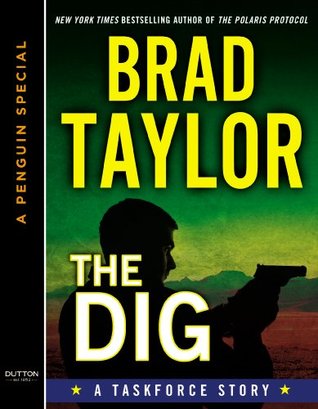
Pike Logan is a member of the Taskforce. He is training (and slowly falling for) Jennifer Cahill, a young anthropologist, who has gone on a dig in Guatemala with Pike. She wants to further her career and jumps at an archaeological dig in Roswell, New Mexico. Their affair is slow but mounting and involves awkward if fair turnabouts.
As they excavate in Roswell, they uncover something that says the dig isn't what it seems, and the local henchmen rally to stop them. Pike's time and resources in the Taskforce allows him to unearth what's truly going on.
The suspense here is first rate. The characters involving enough for their genre--if macho-oriented--as one might expect from a military thriller.
I will defer to the author in terms of combat as he was a member of the military's Special Forces. I'm not as certain about the violence as a means to an end. At least, one act to incapacitate the enemy pushed it too far into the gruesome. After all, the guy was a hired local flunky looking for a quick buck. Of course, it's hard to tell the baddie's motives as the readers aren't in his head. But how far is too far? He can be a gentleman with women but how about with men? Couldn't he have done something that wouldn't maim the man for life?
I'm sure the guys who love this genre would gobble this stuff up, but it leaves me wondering about the protagonist: Is he impulsive? Is he giving enough thought to his actions? Will his sense of chivalry drive him to unnecessary damage?
It's one narrative moment, but it impaired my confidence in the character's judgment. Maybe it's something he has to work on, but it'd be nice to see that concern about his impulses addressed if not fully resolved, as this is only a short novel.
However, if you are a human of swift justice and action-packed punches, unpacking human motivations is not your pastime métier. This book cooks up exactly the seasonings you're hankering for. As for the speculative genre, it whets but mostly feints. Its main urge is to pluck those thrill strings.