Search This Blog

Showing posts with label William Gibson. Show all posts

Wednesday, January 29, 2025

"Webrider" by Jayge Carr

First appeared in Ellen Datlow's The Third Omni Book of Science Fiction, reprinted by Donald A. Wollheim, Arthur W. Saha, Pamela Sargent.  

Summary:

Twig is a webrider. She can travel over space and time. The danger is groupies--those who, like her sister, try to ride the web but cannot and die.

Discussion:

This opens with a fine energy--matching William Gibson's more frenetic prose with Samuel Delany's Aye and Gomorrah, adding a touch of Jeffery-Carver-style space travel (where travel is, at least in part, a state of mind) and something of the author's own. It's an interesting concoction. It's not a major work but thought-provoking. It takes a look at art--how hard it can be to learn on one's own, but with the proper mentor....


Friday, February 11, 2022

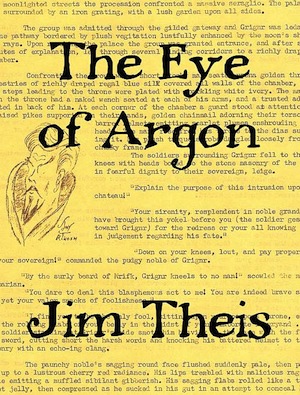
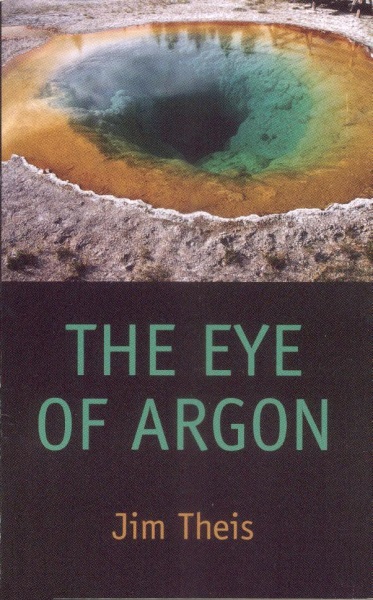
Cultural Ephemera: The Eye of Argon + the "Star Wars Kid" + Hope

https://m.media-amazon.com/images/I/41plSf6H6OS.jpg

http://www.isfdb.org/wiki/images/d/d0/THFRGNLTWQ2015.jpg

http://www.isfdb.org/wiki/images/7/74/THFRGNBRCX2006.jpg

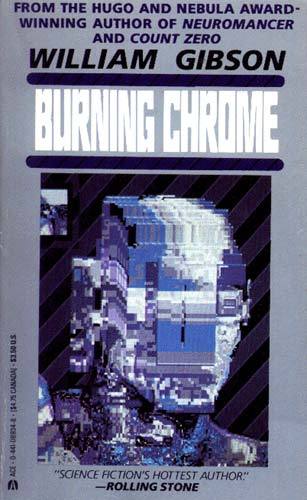
When I attended Clarion in Seattle, they called it a six-week bootcamp for writers. Inevitably, tensions rose as people lacked sleep trying to write and critique stories by talented if new writers. The writing workshop provided multiple ways to distract and amuse you--toys, stuffed animals, books, magazines, illustrations. We had a slush pile to read. There were also stories in photocopied manuscripts that never saw light--such as William Gibson's script for an Alien sequel. (Reminder: this is his failed manuscript, not made into a movie, but decades later is written as an audio play with a novelization by Pat Cadigan.)

One manuscript they kept, was called The Eye of Argon--famously bad. The author's name was unattached. There were rumors that one anonymous person had written it (or some famous writer's early hack work?) while some said that multiple Clarion writers and their teachers like Samuel Delany tried to write the worst story possible. Someone invented game rules for reading the manuscript at conventions.

At the behest of writer friends I read the opening paragraph. I didn't laugh--perhaps smiled to humor the writers--since as an editor I'd seen a lot of bad manuscripts and I'd tried to encourage them all as gently as possible. I didn't have the time to read it, so I put away the manuscript. 

If there were a point to having the manuscript float among writers, it would have been to say: 

  1. Take a break. Laugh. Relax.
  2. Your first drafts may be this bad, so rewrite.
  3. Don't publish your early drafts or juvenilia.

Later, we all learned the writer of Eye was a sixteen-year-old from Missouri (I only just learned in the past twenty-four hours), a writer who died two decades ago, now. It was originally printed in a small fanzine that was passed on to a professional writer. The writer of Eye even wrote a sequel.

Some years ago, people passed around links of the "Star Wars kid"--a kid who jumped around with his light-saber. Remember: In the movies, actors have trainers who help actors practice their moves. This kid's self-training video was posted. The teasing got so bad, the family had to move.

The Eye of Argon had a similar effect on the author. A good sport, he seems to have even taken part in readings--thirty years afterwards--poking fun at his juvenilia, but it haunted him. He apparently became a journalist, so presumably he could write, but this kept him from writing fiction, the past hung like an albatross around his neck. 

There's a reason why Samuel Taylor Coleridge's The Rime of the Ancient Mariner has a big impact. Everybody has an albatross. Ulysses S. Grant started his career as a drunk. Abraham Lincoln had depression. The writer, St. Paul, had mysterious "thorn" whatever that was. Evidently, to write this epic poem, Samuel Taylor Coleridge had his own albatross (and/or he knew someone else who had). Either embrace your albatross or shuck it off.

The writer of Eye should have kept writing. He actually has a huge platform.There have been scholarly articles written. Internet postings. A Wikipedia article. Multiple conventions and radio shows devoted to reading it. A few editors appropriated the material and published at least four different editions. 

Think about the "Star Wars kid"--he's already got an immediate audience. Whatever he does next, wherever he is, if he announces himself, he's got our immediate attention. (So make it good, kid. The cool kids are rooting for you.)

Besides, what moves people far more than juvenalia? Writers who went on to write something better. Think of it as a home, face, or hair makeover. Who isn't excited to witness a transformation, an upgrade, giving hope for themselves?

Sure, someone would always bring up The Eye, but they are just the people who never shrugged off their albatross and want you to stay in the doldrums with them--someone to feel stronger than, or better looking than, or better at writing. All the cool people would be impressed not only by a success story, but by a well-written tale. The writer of Eye seems to have won a scholarship for his journalism, so he was an award-winning writer! Why not keep this speculative writing up as a sideline and hire a professional to help out?.

Would I want to be the the writer of Eye, would I want his albatross? Hell, no. Nobody wants another man's albatross. They've already got their own. We just want to see you win as we hope to win ourselves one day.

If the writer of Eye were still alive, I'd encourage him to try again. Yes, there's a reason why I wrote "The writer of Eye": because he is all of us.

#

Elsewhere, a writer, weighed down by their own mysterious albatross, adrift in their own doldrums (described as having spiritual aspects) solicited advice to get out. Here are a few possibilities:

  • Find the thing that energized you--or used to. Go do that. 
  • Write. No expectations. Not a particular story unless it jazzes you. Write whatever--essay, poem, story. Let whatever's in you out. But write in the way that empowers you. For me, that is language that pays attention to language. If it's good, great. No expectations.
  • Walk or jog outside for 15 minutes/day at least. If you have a god who listens, vent. If you have no god, invent an imaginary friend. Tell him whatever's on your mind.

Wednesday, November 24, 2021

Alien, Aliens, mothers, Alien 3 vs. William Gibson's script (spoilers galore)

Apparently, a new Alien movie is coming out along with a new Blade Runner, with Ridley Scott at the helm. Sounds promising.

This is my belated follow-up to this earlier post about the William Gibson script.

So Alien, the first movie in the franchise, gets a solid 8.4 on IMDB while the sequel Aliens gets an 8.3.

They are not without flaw. The biology of the species has a gaping hole and seems improbable although that doesn't interfere with the story. Namely, how is that creature growing bigger?

One pleasure, outside the obvious plot tension, is the mother motif. In the first, the seemingly benevolent mother is in the ship's computer  helping make their lives easier, but later we learn that "mother" is an amorphous authority running the ship from the outside, steering them into danger for its own benefit. A stand-in for authoritative governments that lack regard for its citizens and only use them as pawns to whatever that larger goal might be. The only other "mother" present (the alien) is meant to be seen as a visual metaphor for how destructive their government is.

In the second, we get an expanded metaphor of a positive mother where Ripley plays a surrogate mother to an orphaned child. The metaphor is now a contrast of mothers. The original metaphor has to be understood within the context of someone naming their native country their mother or father. The metaphor in the second loses bad government metaphor, but explores mother in a new fascinating way.

The followup, Alien3, got a 6.5 on IMDB. Why? This website lists ten possible reasons why.

It also explains why Gibson minimized Sigourney Weaver's role, which seemed a strange choice since she was the main player in the first two.

My first impression of the audio script was that it was too similar, which was why I needed to rewatch the first films as the audio drama was catching listeners up to speed.

Now Gibson's strength is teasing out an intriguing threat made in the first two that somehow never really made it into the series: namely weaponizing this alien species. This isn't settled here in his script but it leaves the door to be discovered in a further sequel. In retrospect, Gibson's choice is the most logical expansion of the series. 

Instead, the movie that got made was more creative in the sense of setting it on a former prison colony where a religion sprung up around their conditions--in theory. Granted, whoever created the religion could have tried harder, but it was still fascinating. Part of it may have been the necessity due to eliminating weapons. Nonetheless, the original concept feels fresh and should have breathed some life into it.

But it didn't build on what we knew. Ripley's character isn't expanded (apart from sex which isn't explained), and characters get killed off, probably to simplify the narrative. You certainly want a child visiting this colony. Also, we get no closer to understanding the species in the way that Gibson's makes us feel like we are approaching.

Finally, it didn't expand the motherhood metaphor except now Ripley is carrying a mother-alien child within her. Yet she doesn't follow the same lifecycle as the aliens did before. So again, biology problems. No explanation for why this creature the size of a baby isn't detected by the mother. And the metaphor isn't clear. Perhaps she's like the opposite of the Virgin Mary--with a kind immaculate conception. And she does sacrifice herself as a savior, falling in the shape of a cross, but to kill the infant this time. But there'd need to be more clues throughout to draw this conclusion. Perhaps I need to give it another viewing to see how well it built toward this view of "mother."

The real problem of Alien3 is the idiot plot. Sure, they kill off the one intelligent guy, so that it really is an idiot plot. But even that doesn't make sense. Why was she drawn to the guy where she didn't seem drawn before? Why develop his character then kill him off?

Now the brilliance of the first movie was that it explained why people didn't do the intelligent thing. The least powerful guys had the best advice, but it went unheeded. Why? "Mother" computer/government.

Alien3 was an decent movie with some fascinating premises that could conceivably have paid off. Perhaps, had it not had its predecessors, it'd have been seen as a stronger movie with less to live up to.

Would Gibson's script have been better? Hard to say. Certainly it would have at least expanded the series and moved it toward a long-term goal. It probably needed some revision to bring in some of the brilliance of the first and second films, which could have happened had the right director sculpted the script toward what the series had been building. Still, while not as powerful as the first two, both have something to add for fans of the series. It's good that it saw the light of day.

Sunday, June 13, 2021

Alien III by William Gibson

What happens when you cross a popular SF movie franchise with a popular SF writer? That's the question here when William Gibson was handed the writing reins of the second sequel--a version ultimately abandoned by the moviemakers. Apparently, Gibson gave this two runs, styling each draft after the first and second movies. Neither accepted.. 

It was floating around the Internet for decades and you can still find it. The popularity of both writer and franchise has created the unusual phenomenon of having a script that was rejected having been made into a comic, an audio drama, and even a novelization by Pat Cadigan.

Another reason this version appeals to fans is that it offers an alternative to the actual Alien3. The first three movies are ranked by IMDB fans as 8.4, 8.3 and 6.5, respectively--a substantial drop. 

This post is more of a place-holder I hope to revisit the series and compare the two versions. My feeling upon listening to the Audible drama is that it is firmly a part of the series. Most series, for me, melt into one another. Individually, some movies may surpass others, but they have an overall leavening. 

For instance, some feel that Aliens was superior to Alien, but any achievement that the second movie had rested, in part, on the inventiveness of its predecessor. It seems a strong addition to the series, but again the invention was in prior films. The movies are hitched. Perhaps as separate entities, the movies might have been greater success or failures, but together they become somewhat uniform like a thematic or sonic concept album like Pink Floyd's The Wall or The Cure's Disintegration. Though some songs may be better than others, the album succeeds or fails based more on its entirety. Likewise, a series like Star Wars has weathered failures due to the initial successful movies pulling the franchise and fans into new iterations.

This offering did not seem exceptionally more inventive than other offerings, but I'd need to rewatch the first and second, and then compare. Perhaps it would have been the boost the series needed. After all, IMDB lists the audio as ranking with the second film.

If you're a fan of the series, you owe it to yourself to check it out.

Tuesday, May 5, 2015

"Melancholy Elephants" by Spider Robinson

First appeared in Analog. It won the Hugo and Analog Readers Poll, was up for the Locus award. It was reprinted by Isaac Asimov, Martin H. Greenberg, Stanley Schmidt, and Garyn G. Roberts. Read online.

Summary:
Mrs. Martin is a cold killer:
"[T]he mugger made his play. She killed him instead of disabling him. Which was obviously not a measured, balanced action—the official fuss and paperwork could make her late. Annoyed at herself, she stuffed the corpse under a shiny new Westinghouse roadable."
She visits the Senator to convince him that perpetual copyright is not in the interests of the creative. Mrs. Martin lost her husband when he couldn't produce a suitably original song for her. The Senator, however, has already been bought by the other side.

Discussion:
The argument is convincing--at least to me, but maybe that's because I've read it multiple times and I'm thoroughly brain-washed.

The title doesn't jog the memory (that may be part of the story's trick). It refers to the adage that elephants never forget, but--the story adds--you never see happy elephants due to their long memories. Instead, we need to forget to forge ahead.

The narrative is more of an essay. Most of the "action" is a debate, handily won.

Mrs. Martin seems a literary precursor to William Gibson's Molly Millions although it's not clear what this does for this particular narrative. Perhaps a lack of allowable creativity in their society leads to lives of crime and hard-heartedness.

Below is a graph from Wikipedia showing visually how copyright has changed over the years:

Thursday, August 21, 2014

Beginnings, Neuromancer, Snow Crash, and "Boojum" by Elizabeth Bear and Sarah Monette

William Gibson's opening line to Neuromancer is justly famous:  "The sky above the port was the color of television, tuned to a dead channel."  Descriptive and intriguing.

However, note what actually happens in the actual first scene.  Nothing really.  Case is a hacker has-been sitting at a bar.  Readers have told me they never finished it--likely because of this.  Like anything else we read, we want to know why we're reading it, and it doesn't come immediately.

There is a brief hint of something in the past that has him longing for the past:  "A year here and he still dreamed of cyberspace, hope fading nightly...."  But it's vague.

Could this scene be jettisoned, perhaps saving bits here and there?  Yes.

When Gibson revisits the novel in his scripting, he backs up and puts his characters in action, showing why Case is moping around.  It's worth it.  Nancy Kress had a name for it:  her swimming pool theory.  You can't glide until you've had a big push off the side of the pool.  Push, then glide.

One of my favorite novels is Neal Stephenson's Snow Crash.  It's wasn't until the reread that I realized the first tenth of the novel had nothing to do with the rest of it.  He simply used it to introduce his character in his world.  He cheated, the bastage.  Oh well.  It was fun.

"Boojum", by design, also lacks a provocative opening.  It hints, but those hints are impossible to even feel without knowing the ending.  To know would spoil the ending.  It is a tale of discovery.  We've been operating out of ignorance.  We didn't bother to ask a simple question.  The story, once it gets rolling, is a good one.

After its first appearance in Ann VanderMeer, Jeff VanderMeer's Fast Ships, Black Sails anthology, it's been republished in a variety of forms maybe seven times by David G. Hartwell, Kathryn Cramer, Gardner Dozois Rich Horton, Norm Sherman, John Joseph Adams, Ross E. Lockhart.  It placed third in the Locus poll.  Quite impressive for a market that lacks the reprint anthologies of yore.

Spoilers
The living space ship, Lavinia Whateley or "Vinnie," doesn't want to be used as a ship but to fly free through the universe.  A genius secondary sub-story parallels and emphasizes this theme where living brains are packed into canisters against their will, and there's nothing they can do about it.

But the story opening merely sketches in the world of the story, hints at the theme, and adds some atmosphere.

You can read it yourself online, and you should as it's worth your while, but push through the opening.

Wednesday, January 29, 2014

Slow Down + Blog Assessment + Writer Interviews + Posts You May Have Missed

Slow Down
Too many posts consume time. I must slow down. I have stories to write and submit, so enjoy what's here.

Blog Assessment
The last assessment was in December of 2012. I've been at this since Dec 2009--a little over four years (although I also blogged at s1ngularity:criticism and Mundane SF blogs before this). With nearly a thousand posts, that's about two posts for every three days. When I get bogged down at school, I post less frequently.

For two and half years, page visits have grown ten percent or so per month, which amounts to a twenty-fold increase. The per post view-rate has grown since last year from 35 to 55 or so, not quite a sixty percent increase. This is more dramatic when you consider the early posts with few hits are factored in (the hits were probably my mama who accidentally hit the refresh button a few times.

A year ago, one post--"Girl" by Jamaica Kincaid--outstripped all other posts and accounted for ten percent of the traffic (it's now five). I guess it's a good one. Fifty to a hundred folks stop by each month to take a look. Trent Zelazny's interview posts may have been the only posts that overtook her monthly lead.

Interesting to see which classic stories people are still fascinated by. Theodore Sturgeon's "Microcosmic Gods" and "Thunder and Roses" have drawn hundreds of readers in less than a year, but the other Sturgeon stories only about two dozen each.  I'll  be interested to see which stories of the big three--Arthur C. Clarle's, Isaac Asimov's and Robert Heinlein's--people are still fascinated by.  William Gibson and Ursula K. LeGuin drew less attention than I would have supposed although I need to do more or theirs..

In retrospect, part of the blog's growth was not only the quantity of posts but also the quality of their presentation. I changed presentation when I reviewed and interviewed. Take note if you blog.

Popular posts can be viewed on the right.

Writer Interviews
On file are the following:
  1. Loralee Leavitt
  2. Christopher Barzak
  3. Trent Zelazny
  4. Kenneth W. Cain
  5. I have upcoming interviews with G.O. Clark and Dustin Lavalley.

Posts You May Have Missed
These are posts I thought there might be more interest than they've received: 
  1. A Scene-by-Scene Analysis of the Movie, 2001: A Space Odyssey*
  2. Analysis of Flatland: A Romance of Many Dimensions by Edwin A. Abbott*
  3. A number of James Patrick Kelly posts--one of the best writers of speculative fiction in the 90s and 00s. I didn't put much time into pretty-fying them, focusing on content. Maybe I'll revise them one day.
* These two might make a nice contrast, treating religion from opposite ends of the spectrum.

Monday, September 9, 2013

Review: William Gibson by Gary Westfahl

William Gibson Gary Westfahl
University of Illinois Press

This is a scholarly treatment of William Gibson.  Unfortunately, due to technological glitches, the only part of the book I received was an extensive bibliography--handy if not especially interesting.

I did check out the introductory sample from the Amazon website.  It immediately splashes his brash character in a quote that takes down Robert Heinlein.  Gibson, as you can see by the story "The Gernsback Continuum" discussed here, entered the SF scene, kicking down the Heinlein-generation's furniture and setting up a new shop.  However, Westfahl suggests that Gibson and Heinlein share more than they seem to.

Westfahl points out that Gibson, despite claims for him being postmodernist, grew up in the slums of SF, and considers himself from that turf.  To that end, Westfahl renders Gibson's biography.

The introductory analysis makes me lament the technological glitch that gave me only the back pages.  This book may be worth investigating for fans and scholars alike.

Friday, May 31, 2013

"The Belonging Kind" by John Shirley and William Gibson


This originally appeared in Charles Grant's Shadows 4, reprinted in Arthur W. Saha's The Year's Best Fantasy Stories: 8  and in Ann and Jeff VanderMeer's The Weird: A Compendium of Strange and Dark Stories.

Coretti is a sad man who can't seem to fit in.  He goes to a bar and finds a woman, who matches his shy stutter but immediately switches to a country twang when a woman of that type talks to her.  Coretti and the changeable woman pass to a different bar. Her dress changes, too.  Eventually, she walks off with another man.

Coretti tries to find her again, searching bars and canceling classes in the morning.  One day, he does find her, and she changes him to one of the title.

Solid work.

Wednesday, May 29, 2013

"Fragments of a Hologram Rose" by William Gibson


This originally appeared in Unearth, a magazine for beginning writers--one that initially housed many major authors such as James Blaylock.  Parker moves through his dystopian world, being an indentured servant, but escaping from this without a notion as to why.  Parker almost but never recognizes his situation.  That's it.  A character shows us our future American dystopia.   Well written on a sentence level--the story's strength--it doesn't rise above it's parts.  Interesting from a Gibson-completist perspective and how Gibson's work gained incredible strength only four short years later with "The Gernsback Continuum" which appeared in Terry Carr's admired anthology series, Universe, and two stories in the illustrious Omni magazine under the editorship of Ben Bova, Robert Sheckley, Ellen Datlow: " Johnny Mnemonic" and "Hinterlands".  The former was nominated for a Nebula, both for the Locus Poll Award.

Tuesday, May 28, 2013

Close Reading: "The Gernsback Continuum" by William Gibson


This originally appeared in Terry Carr's Universe 11, reprinted in Bruce Sterling's seminal look at cyberpunk, Mirrorshades, two historical genre anthologies--Edel Brosnan's The SF Collection and Ursula K. Le Guin & Brian Attebery's The Norton Book of Science Fiction--and in Paula Geyh, Fred G. Leebron & Andrew Levy's Postmodern American Fiction, among others.  It's easy to see why Cyberpunk upset the prior generation of SF writers, yet despite its antagonistic statement, William Gibson went on to receive nominations and win several awards during early in his career.  This story is more or less an unmanifested cyberpunk manifesto, which as most manifestos do, goes against all that has come before, beginning with Gernsback romantic ideas of fictionalizing scientific concepts (see title).

The first-person narrator is paid to photograph the futuristic architecture of the 30s and 40s.  At futuristic gas station (oil juxtaposed against future), he opines:
"those strange radiator flanges... were a signature motif of the style..., look[ed] as though they might generate potent burst of raw technological enthusiasm, if you could only find the the switch that turned them on.  I shot one in San Jose an hour before the bulldozers arrived."
First, "potent burst of raw technological enthusiasm" would be the earlier generations painted as technological enthusiasts (with the humorous jab in the "switch" statement).  "I shot" pays double duty--both literal and figurative--both uses displays the display is about to get killed or bulldozed.  It is "a 1980 that never happened.  An architecture of broken dreams."

The narrator arrives in Tucson and a hallucinatory experience where the land reflects back the dreams of a future from the 30s, the perfection of which he will later have to wash from his mind using a healthy dose of reality:
"They were smug, happy, and utterly content with themselves and their world.  And in the Dream, it was their world.... [A description of the Dream follows.]  It had all the sinister fruitiness of Hitler Youth propaganda."
I'm not sure it could be put any more boldly.  The challenge/examination is worth heeding, even if it's reductionistic and even if Gibson's own works have become susceptible to the same criticism except from the opposite angle.  Pessimistic challenges such as these are as valid as their opposites.  Also, William Gibson--a major figure in contemporary SF--uses this early in his collection to mark how his work will be a departure from what has gone before.