Search This Blog

Showing posts with label TV. Show all posts

Tuesday, February 4, 2025

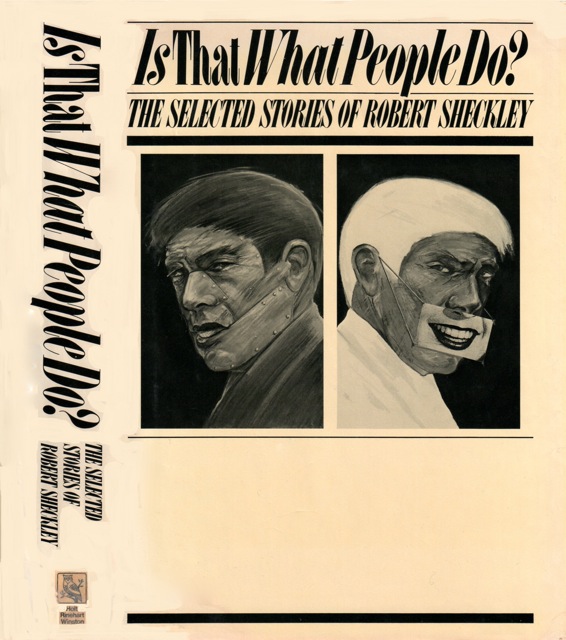
"The Life of Anybody" by Robert Sheckley

https://www.isfdb.org/wiki/images/8/81/ITWPDO19XX.jpg

First appeared in Sheckley's collection, Is That What People Do?, reprinted by Brian Attebery, Ursula K. Le Guin, Stefan Dziemianowicz, Martin H. Greenberg, Robert Weinberg.

Summary:

Sometime in the near future, people will have TV cameras show up in your living room. You have to be natural or they'll cut away. Better to have bad ratings than none at all. Nobody wants people acting differently than they normally would.

Discussion (Spoilers):

The couple know they are boring, so they spice up their lives in case the cameras come calling again. 

Sheckley had already predicted reality TV before most writers, but here the speculation is that we are actually boring, which is sort of interesting. The shows people watch are more interesting than most people's lives.

However, to become interesting, people would have to fake their lives, which is what we get from most reality TV--people behaving unnaturally to create drama that might get people watching your reality show.

For so short a story, the tale accomplishes much.

I am going through the Norton anthology, story by story, to get a sense for the modus operandi. They seem to be seeking shorter works, provocative works, and possibly works that present gender in a certain manner. There is no particular gender issue at play except maybe the wife chooses not to stir up marital strife for the sake of ratings.

But Sheckley has had better stories than this, so it's odd that this one is selected. Maybe this is the academic aspect, allowing professors to select this among other TV tropes.

The other possibility is that stories were selected to make them easier for non-SF readers; however, you'd think that a course in SF would be more interested in making a splash as opposed to easing people into the waters (especially by 1960-90). When this was published in 1993, most readers would have already been exposed to far stranger SF on TV and movies.

Friday, December 24, 2021

Wheel of Time vs. Lord of the Rings

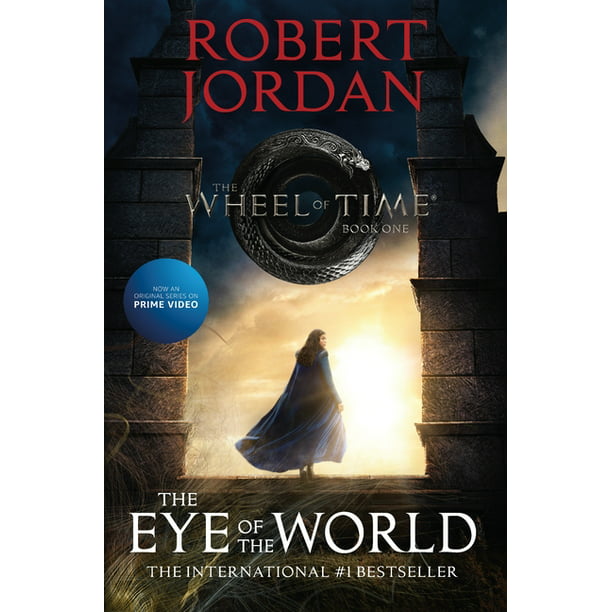
Wheel of Time: The Eye of the World : Book One of the Wheel of Time (Series #1) (Paperback)

Season one of The Wheel of Time is complete. I was fond of episodes two, three, and eight. 

Here was my hopefulness about the series after episode 3 of the Amazon series. Ah, youth.

I seem to have parted ways with viewers, in terms of episodes. They love four, and eight seems to have been their least favorite--not that eight is my favorite, but it offered me hope for season two when my faith in the series was waning.

Hopefully, they'll get another season to develop the characters...

Trent's law: "If you abandon basic storytelling in one area, make up for it elsewhere."

I'll be rereading book one. Here were my initial thoughts on reading it.

- - -

Stephen Colbert celebrated the 20th anniversary of Lord of the Rings' opening night. I find this less interesting for the humor than the claim that it is the #1 trilogy, beating out Star Wars and Godfather. Maybe? They're hard to compare since they all have different territories they mark.


I will say that I was disappointed yet hopeful at the first movie's ending.

On a rewatch, I noted how slow the opening was and how Gandalf remarks to Bilbo that he hasn't changed, but though Ian McKellen as Gandalf does flash some grim concern, it comes off as casual conversation. Besides he does look changed from earlier scenes. Not a major point, but interesting.

Monday, November 22, 2021

Wheel of Time (first three episodes)

I first read Robert Jordan's first novel some time ago. I rather liked it with some caveats (although I'm not sure if that's clear). I had anticipated reading more in the series--at least until it got boring, but I seemed to have lost that path.

I still plan to revisit the series, but here's one take on the TV series adaptation of The Wheel of Time from Amazon's Prime. The first episode doesn't do a great job getting us to care about what's happening to the characters, but the events are engaging.

By episodes two and three, though, the characters start to show promise, so if the first episode doesn't appeal to you, give the next two a go to see if they start to rub off on you. The IMDB ratings of the episodes mirror my own reaction, leaping from 7.6 to 8.2.

See the source image

Tuesday, September 7, 2021

Howard Waldrop's “Night of the Cooters" & George R.R. Martin's 1993 TV pilot, Doorways.

In other news, George R. R. Martin announced that Howard Waldrop's story, “Night of the Cooters,” has been adapted for film.  

It's been done on green screen with the long road ahead for the post production process.

I discussed Waldrop's story over here.


In 1993, George R.R. Martian wrote a TV series pilot that got filmed but didn't find a home:


Largely, a low-tech operation, which can work (famously, the early episodes of Dr. Who), but it might have done better if it were shopped around ten years or so earlier.

Some intriguing premises here. Some unrealized plot ideas generated, but I'm curious how well that might have worked across an entire series. Great cast although they might have turned in better performances as they worked longer together, understanding their roles and relationships.

It opens on a woman running with and across traffic without explanation. Perhaps it needed more back story, or maybe needed to be shorter or even cut straight to the hospital.

The doctor eventually takes off with the stranger, which might have made more sense were he in love, but he doesn't seem to be. Maybe another explanation would have been forthcoming.

The character of Cat (her inability to speak or count) and those pursuing them across the parallel universes would have hopefully had made more sense as the series progressed. Also the rules of the universes could have been better explained such as a universe where there's no fuel yet we have hot air balloons.

IMDB rates it a 5.6, probably due to some of the above issues. Two years later, the show Sliders makes a go with a similar premise.

It's a shame Martin, the master storyteller, wasn't able to finish the project. There is a graphic novel that maybe fills in the gaps. But ah well, better he finish the Game of Thrones / A Song of Ice and Fire series.

Wednesday, February 24, 2021

Resident Alien

SyFy Channel's Resident Alien, so far, seems worth seeking out. After viewing the trailer for this I set the DVR--a little humor, a little SF, a little mystery.


The first episode was chockful of juggled balls . The second dipped, but the third and fourth bobbed back up (IMDB viewers seemed to agree on a slight dip, but they also dipped on #3, which I did not).

Note: If you like zero discussion of shows you haven't seen, stop reading and go watch. No spoilers here, really--well, not exactly.

The amazing thing is how Alan Tudyk had to die again although this death allows him to play his role. He does a good job, usually, of mimicking what his alien counterpart: a crash-landed alien who has to pretend to be a human doctor in order to collect parts while relatively unnoticed. What's well done here is in what directions his expertise might lie. What requires some hand-wavium is his ability to look up what he needs on the internet.

One kid, Judah Prehn's Max, recognizes him for what he is. Given how the alien adapted, this also requires hand-wavium. While their relationship kicks off well and takes a surprising darkly comedic turn, it doesn't really kick in until Max takes action.

Sara Tomko and Alice Wetterlund are highlights--their freewheeling humor. Their characters' daunting task is to make Alan's alien somehow human. Sara's task seems even larger given her closeness to the alien at work and the embarrassment he causes, but her acceptance of him only serves to make her more endearing. The humor went darker than I expected, and the uncovering of a mystery, so far, is limited. It's more SF than mystery. So far. But there's plenty to enjoy. I do worry that they'll set up a second season without ending this one first. So far, it only seems to be enough for one season's drama. Possibly more. Hopefully it will some sense of closure before tacking on a second season. However, maybe by the end, I'll be persuaded otherwise.

Thursday, January 9, 2020

Analysis of Pierre Boulle's Planet of the Apes


Pierre Boule’s Planet of the Apes is one of the good ones. In spite of two major flaws, it stirs the thought pot, at times verges on hilarious (although mostly serious), and is expertly constructed.

Summary:

A couple goes “boating” in space and pick up a “message in a bottle.” The story they read is our main story.

A crew from Earth land on a planet where the humans (or at least creatures who appear human) are as unintelligent as beasts. They seem to hate clothes, for they strip the Earth men to their birthday suits. Why isn’t exactly clear and it becomes less so when we stumble into one of the major flaws.

When the apes appear, they wear clothes, which suggests that maybe they fear the clothes as a thing attached to apes. The apes seem to have a hierarchy or class structure and this later proved true, but the differences have ironed out to lumpiness. They round up the humans to cage.

Discussion (with Spoilers):

The whole point of the book is to show the simians as humans. Their behaviors are human and the humans, simian. The narrator tries to communicate his intelligence but his captors refuse to see it. Besides, like his fellow captives, he has no civilized tongue that can be understood. He slowly learns the language and with the help of a female primate, who encourages him to wait to reveal himself until he’s mastered the language and can explain himself at a scientific meeting.

There’s a huge difference here between the book and the shows (really, the first movie with Charlton Heston captures most closely what the book is up to). The books sets up the simians as humanity around the time the book was written—1960. The humans have advanced to a space-faring race, so there is a distance in civilization between the space man (our ancestor) and the ape men. But the ape men are as developed as we are. So we cannot claim technical superiority in the same way the French astronaut narrator can. The movie has the ape race less technologically advanced, so that we feel a distance between us.

Moreover, their ethics is ours. Much of it feels like a critic of how at least the French thought and did science. When the astronaut reveals himself, they let him live, not try to kill him as might occur in a movie—although the apes are dubious. The astronaut, when thought primitive, was held a cage with a beautiful female human and is forced to copulate with her although he feels a little like he’s mating with a beast. Still he falls for her. When she is with child, ape woman who has been helping our narrator, helps him escape to his intact space ship and the small nuclear family escape.

The first flaw is the race memory. At one point, though this has happened generations ago, presumably, a human-beast woman suddenly rattles off how the apes became the masters where they were servants and eventually the humans bowed out due to the simians’ greater strength.

  1. Such a race memory, if such a thing could exist, would not be so detailed.
  2. Humans would not bow out of any kind of superiority race to become dumb animals, discarding their abilities to speak and reason. Perhaps they’d fight. Perhaps they’d work together. Perhaps both.
  3. (A blank for you to enter other problems with race memory or voluntarily losing intellect as a species.)

Another problem with this is that one of the doctors of the Earth crew loses his intelligence. At first I guessed he’d been lobotomized in an experiment (did that happen in one of the films?). But no. He voluntarily shucks knowledge just as these other former Homo sapiens did.

The ending and frame story are just shy of brilliant, and I wanted to love it though I do admire it still. Basically, the family returned to Earth to find it run by apes.

The space-faring couple who discover the message in a bottle (in the frame story) are also apes. This last is flawed brilliance. As it stands, it seems to suggest that apes are superior and will take over everywhere, no matter what. While it suggests that apes will conquer space as our descendants might one day and that the apes at the end are superior to us today, it might have better to suggest no species is superior. If the apes share our flaws, won’t they have our failings and deserve to lose their civilization to an entirely different species?

The book title is a misnomer. It should probably read Planets of the Apes, but maybe that reveals too much.

A thought-provoking book, nonetheless.


Monday, January 6, 2020

Make Avengers Great Again, or the Curse of the Second Season/Movie/Book


 \


At one of my jobs, we have weird conversations. We have time to exchange a line or two, part and return with replies. It allows for thoughtful replies in theory although I don't know if it turns out that way. Since we are mostly men, the topics range from Scooby Doo heirs to Lil Wayne, business ethics, corporate policies, the second amendment, Star Wars, Star Trek, video games, etc. One topic lasted two hours--perhaps that verb should be swapped for "was overly exhausted in."

See the source imageAnyway, a guy smiled, raised his fist, and said, "Maga." I was puzzled, unsure if I had misheard or was unfamiliar with this bit of popular culture. He said, "You know what that means, right?"

I walked away, remembered MAGA, and suspected there was some trick yet to be pulled, so I suggested my own acronym explanation: "Make Avengers Great Again." He agreed. Avengers had ceased to be great. We both suspected Age of Ultron was the last great Avengers movie, but didn't explain why. 

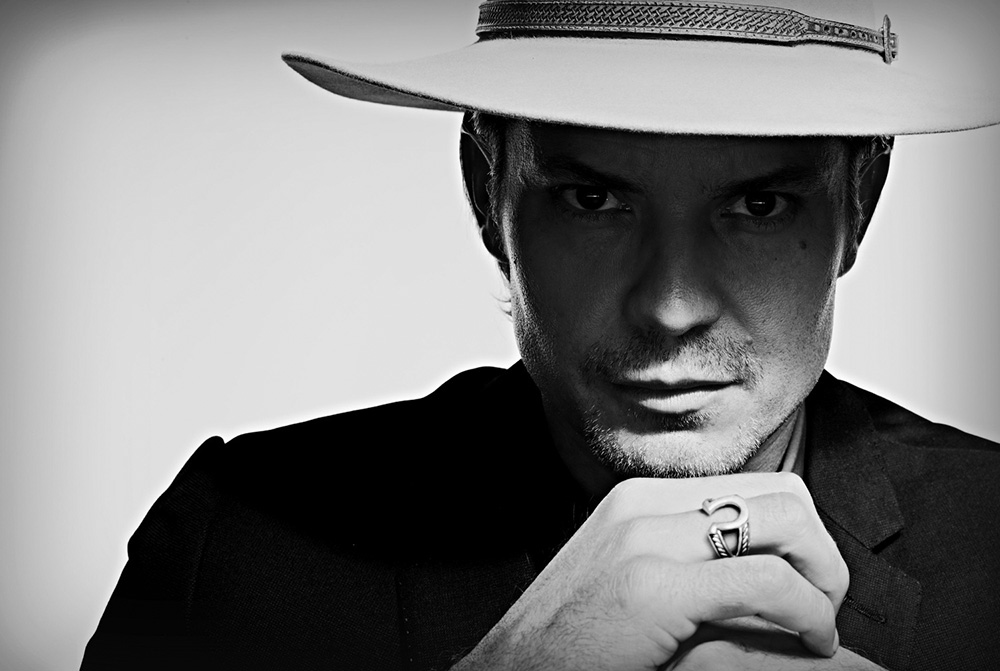
I have my own theory and it expands into all movies, TV series seasons, and possibly books, and whatever requires a narrative structure. I formulated it while watching Justified, a show that had a great first season, a pretty good second, and a third that fell into absurdity. Now Justified began with a wild-west premise transported into a contemporary rural culture: A U.S. Marshall in Miami, Raylan Givens, gets a guy to draw first, so that he can kill the man. His antics get him reassigned to Kentucky, which I guess still retains vestiges of this Wild West culture. So we have the 19th century west in contemporary Kentucky with local criminal cartels.

See the source image
What unravels starts in coolness but gets stranger and stranger until it surpasses believability, such as Raylan falling for someone (exciting new fling) until it can't work anymore and he has to fall for someone else the next season until we know neither who he's attracted to or why. [Aside: it would have been interesting to watch a series that tested the boundaries of a US Marshall without overstepping them at will, as this show may.] Why does this happen?

It may be the desire to have good plot and character except the character logic has to give way to exciting plots. In the twentieth century, we were happy with flat and static characters and a never-ending variety of plots. It didn't matter what order you watched the shows in. You could pick up the show at any point and catch reruns later.

Then someone realized [in the 90s?] that if you marry plot and evolving character you can have more enthralling plots. Viewers are enthralled in the first season when the plot and characters make most sense. They enjoy the second although weird stuff makes you question what's happening, but hey, it's a wild ride, so viewers keep going, but then the third season hits and you realize how stupid the series is (or has become).

See the source imageI tried watching in the middle of the X-Files series and was incredibly bored. When I started at the beginning of the series, I was hooked although I want to believe that it would eventually arrive somewhere that it never arrived. It was just a never-ending mystery that never resolves, which is sort of interesting until you figure that out and realize that watching more will reveal nothing, so you quit.
That's the problem with a good show. No one wants the cash cow to end--neither the viewers nor the creators who are making good money putting on the show. But it must end, or the cow will become emaciated and run out of milk. "Leave them wanting more" is a better operative phrase than "Beat the dead horse [cow]."

Enough premable. Let's look at the Avengers. They begin as individual movies, inventing character histories and cultural identities.

Captain America works on the myths of the individual power, the power of sacrifice, the weak becoming strong enough to take on the powerful, and good triumphing over evil. The movie should be trite, but it succeeds. I enjoyed rewatching it--probably because it touches on so many issues that are relevant to us all: that we have power over to improve our lives and those around us. The movie is sort of over when Red Skeleton Head runs away because Captain A is on his trail even though he has a ton more resources and upgraded tech than Cap. Just imagine all of those expensive industrial complexes he abandons too easily. In a way, though, apart from fleeing too easily, one can understand Red Skeleton Head doing what he does based on his character, which believes in the myth of the superior man, over even the technology he's developing, but it still seems strange that he doesn't think he has the upper hand since he himself is a superior man plus technology plus greater man power.

Cap has a touch of the tragic in that he doesn't get to dance with the woman he's attracted to although if you think about it, it shouldn't have much power since they never dated and have no idea whether their relationship might work. Still, that too is probably mythic. Captain America has sacrificed himself for the good of the world and his love has waited for him: Penelope and Ulysses.

Unfortunately, where do you take Cap's character from there? He's at a dead-end. You can bring him back, make jokes about how good he is, how old and antiquated he is (although he's frozen in time and young looking), but you can't do anything with this character. We love him, though, and want to see him again.

Thor is seemingly more mythic on the surface, but he's actually an interesting case--potentially more of a character study. Loki has led him down the path of his destruction, but it's still a destruction of his own choosing. He choose to be an impulsive warrior, to resolve conflict through violence, but the movie never goes into this fully and the series doesn't take this flaw on. What's interesting is that the hammer is both meant to build and destroy, but all it does is destroy. There is room for Thor to grow as a character, but it is never realized.

Loki is another character who comes into play from the same movie. In Thor, he's awfully clever. Rewatching is impressive in his Iago-like deceptiveness. But he loves his father in Thor, a figure Loki is trying to impress. This thread gets totally lost. He becomes just an average bad guy. A weak god. You can't kill him, but then he isn't strong unless he's wielding someone else's weapon. This is the problem of the sequels. They don't develop from what has gone before. Where do you go with a guy who has tried impress but been rejected by his adopted god-dad? This could go somewhere but doesn't.

Hulk has no backstory (in this series) except in The Avengers where he is working in the third world presumably as a medical doctor although they talk about him as if he were a physicist. Apparently one advanced scientific pursuit is the same as another. The only time Hulk is particularly interesting is when he says something clever ("puny god") or when he's paired with Thor, which should have been more interesting since Thor's flaw is that he tends toward destruction as much as Hulk's "smash." The old TV series has arguably more character in a mythic sense in that he can never settle down since once he reveals himself and must move on. But everyone knows who the Hulk is here and don't care, so that aspect is not at stake. Interestingly, Banner does reveal he hit a low where he tried to kill himself but Hulk spat out the bullet, yet this seems a dead end.

The Black Widow gets her greatest scene in The Avengers movie--perhaps the greatest scene of the movie. Although there are arguably more exciting scenes, hers is most revealing and shows her craftiness: When she looks low, she may be at her strongest. She has a replay of this in her scene with Loki, but if you look at the logic, it's not there. There's no reason to suspect from the dialogue that Loki is somehow using Hulk to destroy his enemies. In fact a nefarious plot involving his capture to get at the Avengers seems a little too convoluted. Anyway, the Black Widow has been through a lot of pain and uses it to get at people, but this  is never developed

Barton, like the Hulk, never gets developed. He has a family whom he loves, but what about them?

You'd think that the director of SHIELD who is mysterious and whose "secrets has secrets" and he has bosses who are at odds with him, so he should be fascinating as we learn more about him, but nothing revealed about him is particularly interesting. Side note: Surely, on a flying battleship, surely he'd have sensors to pick up hostile forces flying at him.

Captain Marvel is flawless, all powerful and self-important, so she's is the least interesting of all the Avengers. Her first half of her movie is interesting while the last is a spectacular explosive dud--possibly because her creators were afraid to give her flaws and a tough enough opponent. Her movie is like chewing on those hard banana taffies the begin in delight  and becomes tiresome after chewing and chewing until your gums begin to bleed.

Now Guardians of the Galaxy are an interesting case study. They had two good movies but both were origin stories of their own kind, plus they are all so quirky, they have a fascinating dynamic. However, when they show up in an Avengers movie, it's more like "Hey, there's that raccoon I like. He's so quipful, hateful, and funny!" But really, that's what all of the Avenger movies devolve to, especially as they add more and more characters who have to have cameos put in an appearance.

Black Panther is a case in point. We are introduced in an Avenger movie where the mantle is passed father to son. This should have had baggage attached to this, especially in his/their own movie, but instead they abandon this character thread to dangle and chase after a red herring bad guy who is too easily dispatched to reveal the true bad guy who, therefore, doesn't get the character development he deserves. They should have focused on the dangling character thread and contrasted the bad guy and good guy with their daddy issues.

Black Panther may have been a box office success, but it demonstrates the fundamental problem in all of these movie sequels. Character is abandoned for a chase after plot baubles until we realize the creators don't care about the characters--at least in that they make sense across the series.

When I was a kid, I couldn't get into the superhero comic books as much as I'd have liked to--probably due to the same reason I couldn't get into X-Files. They felt like walking into the middle of a soap operas--melodramatic and chockful of juggling character inconsistencies. Note that every now and then, creators cut the cord and just start from scratch. These are generally good until they accrue too many character defects and dead-ends and dangling threads.

Why was Age of Ultron good? Ultron. He was the most interesting character, breathing life into the series. The other characters ran through the same hoops.

What can a show do to remain relevant over several seasons or movies? Pay attention to character established, obviously. Another possibility is to set the end at movie three and call it quits. Think of Star Wars. We all wanted the succeeding trilogies to succeed, but they've all been duds. Someone needs to step back re-see the series and re-invent. The fact they've blown up the death star so many times should be a major clue that something has gone wrong. There's no reason that a new trilogy couldn't be done well, but so far the characters haven't and invention just haven't shown up to play.

Tony Stark or Iron Man is an exception. He's got an interesting character in his second movie. You may question whether the action arc is as good (the problem is that the villain is mostly an underdog (Mickey Rourke), which is what we usually root for and while he's tough, we don't get to see develop into something grander but for a blip). While Stark is labeled as a narcissist, he clearly cares about others, saving lives. So he isn't who he thinks he is. He is more. He is complex. The saving of the boy dressed like him is particularly telling. While the kid is him, the kid isn't him, and he gives the kid credit for doing something he didn't do.
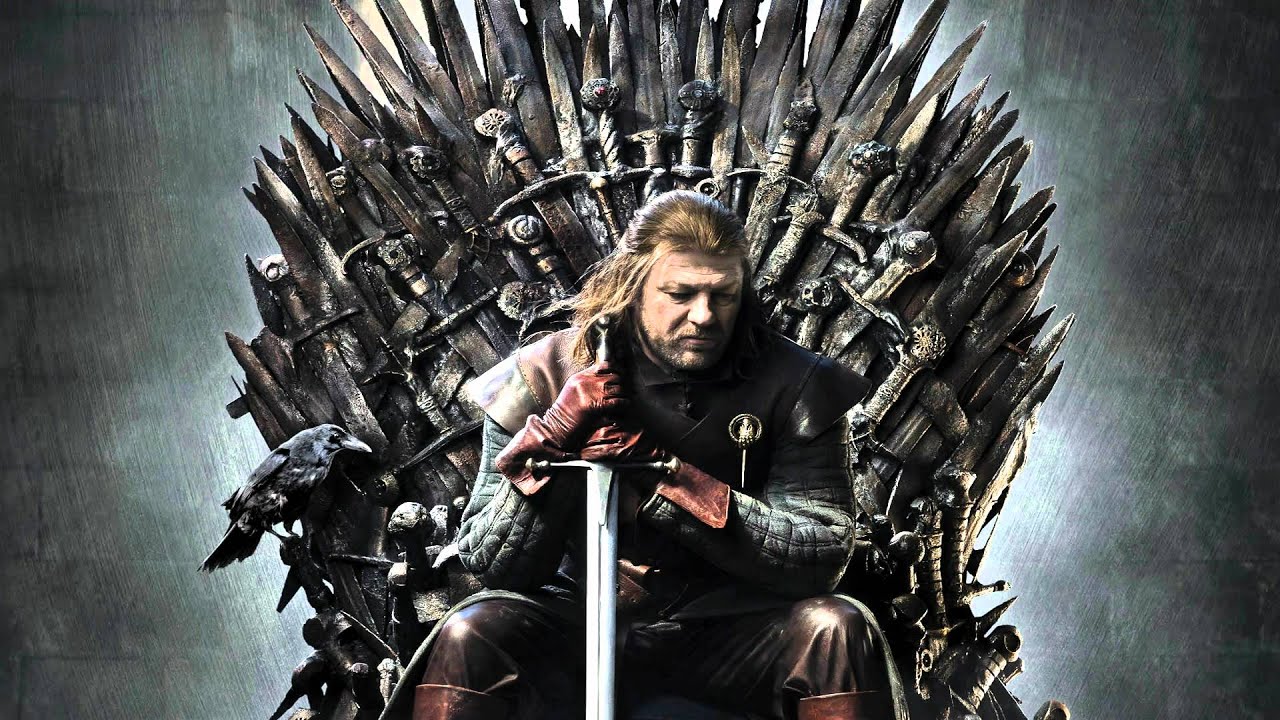
See the source imageGame of Thrones demonstrates the viability of a series over many seasons although we must admit that GoT did devolve into episodes of standing in strange rooms and debating with mandatory scenes of one boob shot and one scene of shocking violence per episode. But mostly, the show remained fresh and relevant. How?

It had a large cast of characters it rotated through. When a character ceased to do interesting things, they had a tendency to get killed off. That meant sorting through the other characters and developing them into something different or introducing a new guy who would do something fascinating to force others into new development.

Thursday, August 1, 2019

What's to love in "The Boys"?


Why did I watch the first season and look forward to the next? Moral ambiguity.

Spoilers follow, but as few as possible.
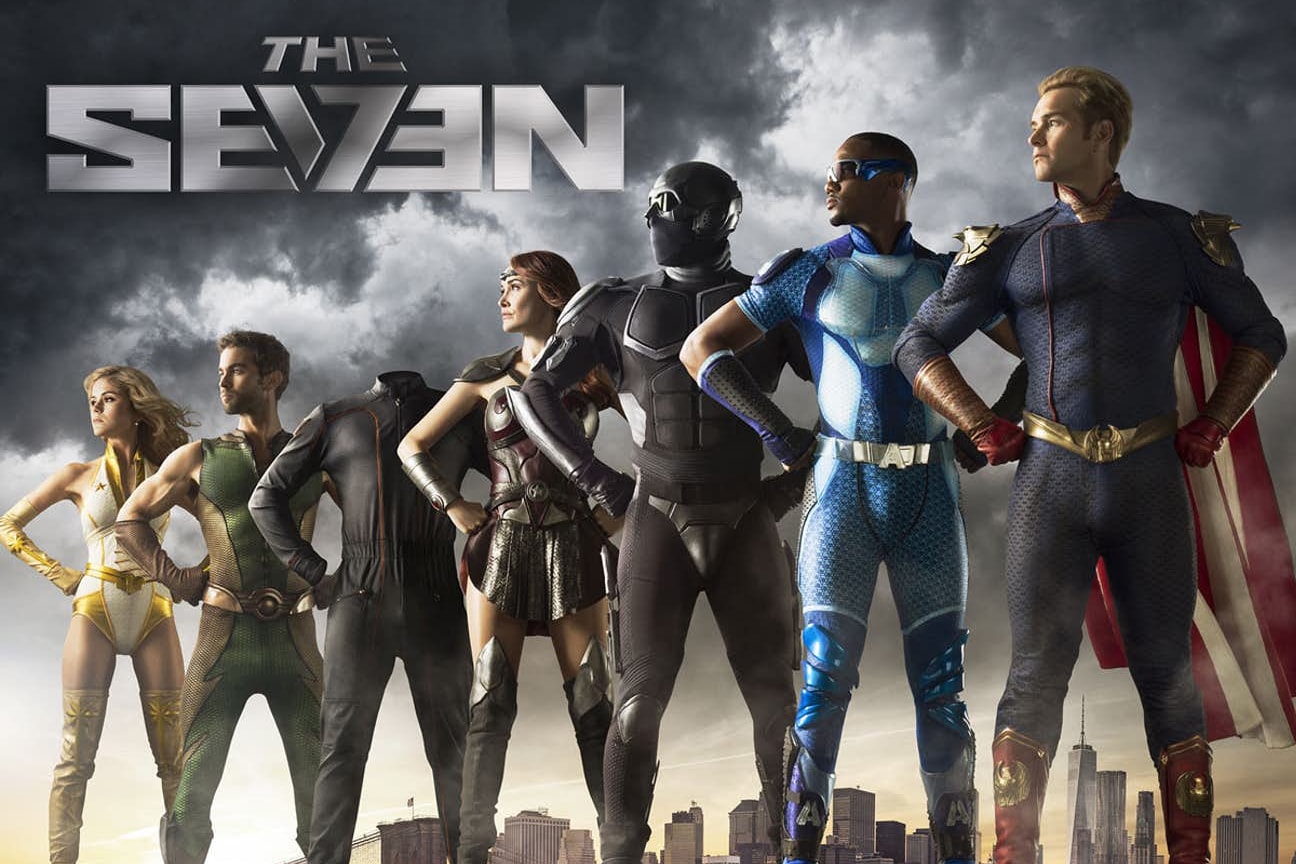
See the source imageHughie Campbell, average John Doe of the tech world, is standing at the curb with his ordinary girlfriend, making their next big move in their relationship when A-Train zips by. Hughie is holding his girlfriend's hands. Nothing more.

A-Train tells the cameras that he had to prevent a robbery, but it turns out that is incorrect, according to a Fed, Billy Butcher, who learns that Hughie has not yet signed his non-disclosure worth $45,000. So a major superhero, who is supposed to be good, kills an innocent bystander and lies about it.

He has a reason, which we learn a little at a time. Meanwhile, Hughie joins forces with Butcher to learn more about what happened, which gets Butcher and Hughie embroiled in their own moral quandaries although Butcher has been at this for quite a while.

Madelyn Stillwell, the manager of "The Seven" superheroes, has to maintain not just the reputations of the superheroes, but also to enhance them financially.

Starlight, the newest addition to The Seven, learns that her childhood idols aren't so squeaky clean. Somehow she manages to dodge all of the moral ambiguity mud slung around. It will be interesting to see if they will hose her with moral ambiguity or leave the too shiny cellophane on.

Besides the religion angle that should be more realistic or cleaned off, my only gripe about the show is that there are only eight episodes.

The show is available on Amazon Prime.

Monday, July 29, 2019

Aesthetics vs. Beliefs/Morality in "The Boys"

See the source imageWatching "The Boys" is rather mesmerizing. It is an interesting, dark, acerbic take on the superhero phenomenon--a long awaited critique. Warning: the show is violent and gruesome.

One of the intriguing promises was the use (or abuse) of religion, but it was at best disappointing as the writer seemed unaware there's actually a whole philosophical/narrative thread behind people's beliefs. There are reasons why people believe what they believe. Every speaker at that two-dimensional cardboard cut-out religious conference would have been analyzed and picked apart, critiqued by a host of religious leaders--on TV, on the radio, on the internet.

Where characters like Starlight eventually wind up with their beliefs matters less than presenting coherent belief systems--that is, when we're talking objectivity and aesthetics which, of course, differs from personal beliefs. This is something that people have lost the ability to do--to separate art from belief. That inability leads to a loss of objectivity. A loss of objectivity also leads to a less meaningful critique of the art. To critique "X," you have to inhabit X. You have to put it within its proper context. Otherwise, you're critiquing either nothing or something else entirely (hence, the new addendum I added above, so I wouldn't have to repeat myself).

Now if Starlight has been involved with religion, she would have to know the philosophical and narrative framework of that religion. She would speak to that framework. She'd work within and/or against that framework. If she doesn't, it's like being thirteen and claiming to have been at Woodstock. As is, it is impossible to believe anyone at the conference has anything but a superficial knowledge of religion.

It's like putting cacti, camels, mirages, sand dunes and horse chases in the middle of New York City and pretending it's a serious critique of today's NYC. It doesn't make sense.

To critique a thing, you have to understand it. Remove the proper context, you remove the critique. (This is not to say that morals are not important, but you can't discuss art meaningfully unless it's on a level playing field, with terms people agree upon. You can't communicate unless people are speaking the same language. Otherwise, the quality of art would depend solely on whether it matches your particular belief system, which may change.)
Still, I finished the season. Hopefully, if they do anything more with religion, it will make sense.

Wednesday, July 17, 2019

Blake's 7

File:B7-Logo1.jpgWhen Paul Darrow recently died, I decided to revisit the series, Blake's 7, one of the first SF TV series to have a grand narrative

The Set-up: 
Roj Blake is invited to a meeting of political dissidents undermining the Federation. They tell him that he used to a major rebel against the Federation, but he's had his memories erased. He struggles with this and goes off on his own, only to witness, helplessly as Federation troops massacre the twenty defenseless dissidents.

Blake is caught and made to look like a child molester. His defense lawyer doesn't believe Blake's claim until he looks at the records himself. Meanwhile, Blake is shipped off to a penal colony. En route, the Federation guards get greedy when they find an empty ship, full of alien technology. After a few guards die under mysterious circumstances, they send a few prisoners aboard to claim the ship, rescue or find out what happened to the guards, so as not to lose further, vital crew.

The Good
What's working is this disparate crew--misfits, forced to align in order to circumvent the Federation. Some of them are true criminals. It's hard to know who to trust and how far.

They also have this alien technology they have to learn to use.

The best may be the suggested narrative arc in the first season when Terry Nation was writing. He did create narrative threads that were better used later (e.g. telepathy), but we had a sense that this would be a big tale.

Tanith Lee wrote a few episodes, including a somewhat odd tale called, "The Sand."

The very last episode of the series ends in the same way as a famed Western movie less than a decade old at the time. It's interesting and disappointing at the same time.

The Bad 
After season one, any pretense of a grand narrative is abandoned except "Federation bad, we good." The viewer is best advised to watch season one as what-might-have-been, and then watch the rest as tales of a never-ending space opera--watch less for arcs than episodes although some pretense is made toward continuity. The end of season four makes an interesting finale but a somewhat sloppy way to tie off loose ends. The series actually seems to build toward the opposite thematic conclusion, but it's still interesting.

The characters that were forced together still stick together although based on their original characters, they should have abandoned one another long before. Their character natures are abandoned for episodic plots.

The writers have no sense of gravity in particular, physics in general.

Comparisons
This reminded me of the promise of the first season of Orphan Black, which when it got hugely popular, it had come up with more and more absurd ways to further the plot. Milk milk milk the dead cow. Murdered by its own success. Blake's 7, however, abandons any idea of a grand plot. Was it ever intended to be a grand plot? It's hard to say.

Apparently a new Blake's 7 is in the works, according to IMDb, but hopefully it doesn't fall for the same trap as its predecessor--a victim of success.

Thursday, January 4, 2018

Outerscope I (Episode 12 - 16)

Episode 12:

The kids discover oranges with sparkly hair who speak like they're tough 1940s Hollywood gangsters. They have the secret to happiness. The youngest Outerscope kids don't trust the oranges so they plan to stand guard by the ship while the others go to find out about the secret to happiness. The promise to take the kids to the Yun-yun theater.

The set-up could shortened and less repetitious.


# 13

The Yun-yun theater stars none other than stinky... onions. They seem to be the butt of their own jokes. Clearly, the secret to happiness is laughing at someone else's expense. If you didn't get this, they reinforce it with a direct explanation. The oranges (or tree treats) subjugate the Yun-yuns and force them to tell jokes about themselves, so that oranges feel beautiful and powerful. No subtelty here.


# 14

The older kids thought the show was funny until they see Yun-yuns coerced to put on a show.


#15

The Outerscope kids want to turn the tables and make fun of the Tree Treats instead. The Outerscope kids play on the vanity of Tree Treats to make them pretend to be Yun-yuns and plan to put on a better show.


#16

The Yunyuns boo and laugh although some Yunyuns don't care for the turned tables. Meanwhile, the Tree Treats have learned their lesson about making fun of Yunyuns. They discover that either way is wrong. Celebration!


#17

If you didn't get the moral of the story the first time, they expound it again as they travel to another planet.

They hit a bouncy object but it is too dark to tell what they hit. Eleanor decides to go on a space walk without a space suit and has lots of fun. They have to talk her into investigating. What looked like a keyhole from the spaceship turns out to be...

a keyhole! Eleanor swims through space to look for a doorknob.

Am I exaggerating by calling this a science fantasy? They've dropped the ball on wondering to what extent if any they are living in reality.

To be continued...

It strikes me that these episodes are way to short to convey much. Due to their brevity, they had to make certain aspects redundant. If you could recut them to eliminate the pedantic aspects and redundancy they might retain some of the fondness and mystery of the brief glimpses I had as a child. I do like the "To be continued..." but maybe right before an episode where one ends on this kind of mysterious wonder. But until these get trimmed, they are rather tedious. I wonder how many episodes a kid would sit through. Certainly most adults might accidentally lose the disc before getting to the end.

Saturday, December 16, 2017

Outerscope I (episodes 5-11)

Welcome to Sani-land, where scrub brushes, mops, sponges, soap, and scissors clean and polish all the time. They conclude the Outerscope kids dirty.

The scene begins promising enough: white stone and a surreal black and white tile path. They are surrounded by cleaning utensils--the scissors presenting the only menace, though--and herded toward the King and Queen of Sani-land. The King and Queen are duds, though. They flatten the estrangement into something banal. But maybe cleanliness is an issue that troubles kids when they feel they are clean. Moreover, there's the racial epithet of being dirty if not one of their kind. It does have resonance. However, they kill whatever ambiance it's built by singing, accompanied by shrill pipes. Edit that out.

When they exit Sani-land they have a brow-beating discussion that the viewer can guess. Cut? They do bring up the idea that space is like a dream, returning to the idea that their journey is not one of reality but of imagination.

Next we enter Technovek, a land of living machines (living?) with a Papavek, Mamavek, and Babyvek. They seem a bit arrogant about their intelligence while the kids seem to have prejudices/preconceptions to overcome. The kids get directions back home, but don't trust them, so they're going to go in the opposite direction. They are rather odd directions, requiring loops--maybe they're celestial slingshots, but if so, you can't simply reverse them.

The repetition was no doubt necessary for the episodic series since there may have been time between viewing episodes when they first appeared, but now it is tedious. There's a smidgen of charm in the "To be continued" and the recaps, but they are too frequent and exhausting to watch in one sitting. Plus, even within an episode there's unnecessary reinforcement of ideas--maybe in an effort to make sure each kid had something to say and pound home the lesson to be learned.

At this point, the show has something to offer, but it is labored perhaps under the limitations of its original format. When viewing individual episodes, they capture some of home-spun wonder that I recalled. But the repetition bogs it down. Can the show be edited into something worthwhile?

One might argue that it's a kid show, but does that mean it can't be done a little more artfully? Education does require repetition, but 1) the educational value is only in its education of cohesive social values among so many varieties of people, and 2) making it watchable will make people want to watch it once and maybe again.

Time to put this show on pause.

#5


#6


#7


#8


#9


# 10


# 11


Thursday, December 14, 2017

Outerscope I (series continued and reviewed--episodes 2-4)

I have to admit that these need serious editing. One gets the feeling that the writers were either uncertain where the story was headed or they wanted to streeeetch out the moments they thought were wonderful. Still with careful splicing (jettisoning up to half) and perhaps even cheap CGI, this series could be cool.

Cynthia comes up with the bright idea of using yeast, (which raises dough, right? so why not a spaceship?) to lift their scrapyard craft. She questions whether this is imagination or reality they were dealing with. The older kids treat everything matter-of-fact. Still there are moments of steering in space with bicycle handle bars (with what rudder? against what medium?) or getting the ship off earth, for that matter, (ethanol won't cut it as it is 644 times more dense than air) that makes the reality of what they're doing an intriguing question. If it is eventually addressed, then maybe the series has some small heft.

Other intriguing aspects of the series--then and now--include 1) the fragility of their craft, so rickety, cobbled together with scrap boards, hope, and imagination and 2) the nagging desire of going home, if they ever can.

Why CGI? Part of the charm of these is the awful special effects, much as early Doctor Who episodes relied on the audience's willing suspension of disbelief. But staring into space to see white blobby stars is not quite as enthralling as they seem to believe. Maybe it can be done on the cheap. You don't want to lose the obvious green-screen effect here.

#2


#3


#4


Outerscope

Every now and again, I hunt down this old educational series that piqued my imagination: Outerscope. Kids--er, small puppets with largely frozen expressions juxtaposed against adult human hands that move with human grace--build a clubhouse out of scraps and go flying off to other worlds. The episodes came in tantalizing bits--tasty morsels but you'd never get any closure. Did they ever get to where they were going? Where did they escape? Will they ever get home? Was it as good as my memory said? Why did I like it?

In the past, I haunted Youtube and Amazon for the collected episodes with no success. It came up again, and this time I found the first episode, and yes, I enjoyed it as much as I did as a kid.

Nick Sagan and others have called it creepy. The puppets are somewhat lifelike, somewhat not, so maybe a little creepy, but you just have to use your imagination, suspend disbelief as you did when you were a child. Even then, I didn't believe they could survive in space with what little they had, but that they did anyway stimulated the gray cells.

Finally, here is the first episode, cued up for you:


I'll see if I can hunt others down.

Here are Nick Sagan's comments on the show:
"[M]ost disturbing of all: the "Outerscope" segments. "Outerscope" was a serialized puppet show about a multicultural group of kids who turn their clubhouse (or maybe just a bunch of old junk) into a rocketship and explore the universe with it. They meet aliens, have all kinds of adventures, and along the way they learn lessons about tolerance, friendship, etc. Not a bad premise for a kids' show. Just two problems with the idea. 
"First, the puppet children were incredible creepy. They had a certain "dead mannequin" quality, with weird, oversized hands. "Man hands" some might say. 
"Second problem: These segments are frightening just in their tone. Again, imagine you're six years old. You watch these dead-eyed big-handed (but otherwise likeable) puppet kids fly off into outer space and get lost. They try to get home, but each episode they just get further and further away. Everything goes wrong, one puppet kid sadly looks at the other and says, "I guess we're never going home." End of episode. Sleep tight, kids. 
"Vegetable Soup scared me silly when I saw it, and yet I couldn't turn away. Why did I keep watching it? And why do I remember it fondly today, nightmarishly weird though it was?"

Tuesday, August 23, 2016

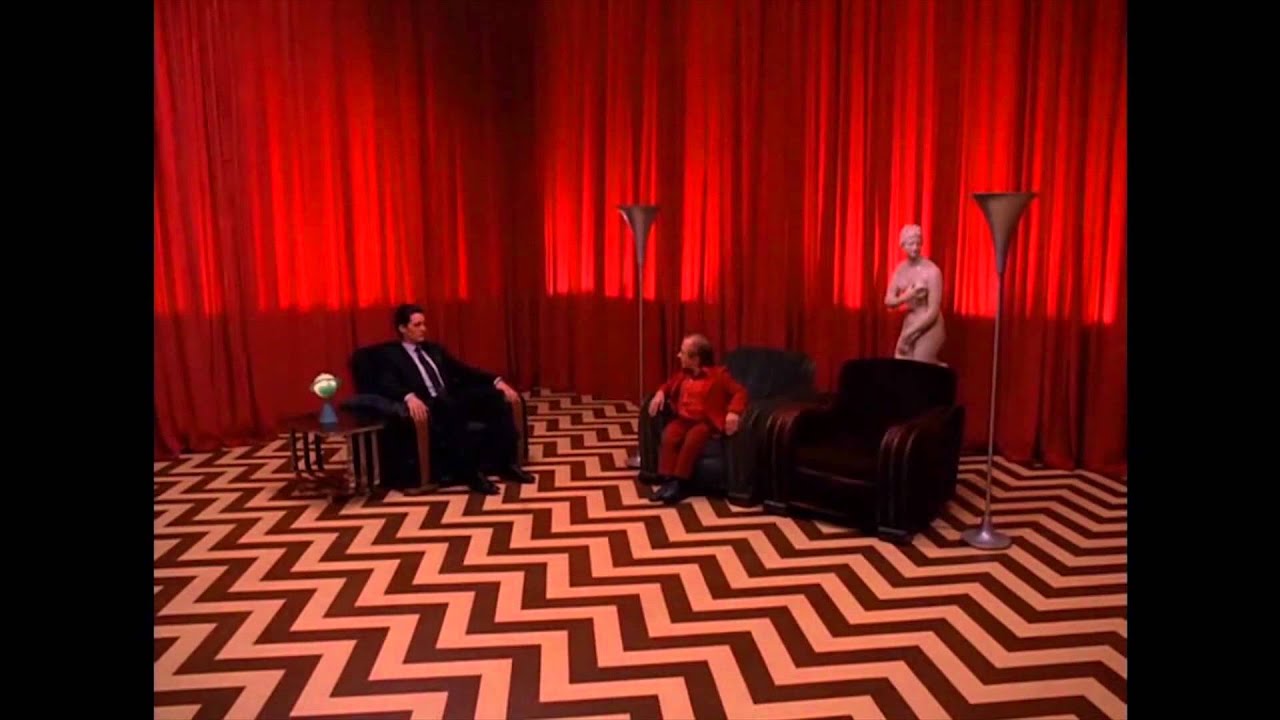
Twin Peaks: Season 1

Twin Peaks is two-season TV series, directed by the auteur David Lynch with his characteristic surreal moments set in a small-town murder mystery. The show attained such a cult status--listed in several all-time top fifty tv shows lists--that writers David Lynch and Mark Frost will return to the series for Showtime nearly thirty years later.
Set up:
Twin Peaks, Population 51,201, is a small set inside Washington state on the Canadian border. Pete Martell, who helps run the local sawmill, discovers Laura Palmer, dead, wrapped in plastic tarp on the lakeshore. The local law enforcement, Sheriff Harry S. Truman and his deputies, are immediately on scene.

Ronette Pulaski stumbles into town in a daze, skimpily dressed, with the same twine marks found on her wrists that Laura Palmer had.

FBI Special Agent Dale Cooper arrives, having been on a similar case where other young ladies have died. The letter J is found underneath her fingernail and implicates everyone whose name begins with J, which is nearly every character on screen.

Discussion with Spoilers:
John Gardner in The Forms of Fiction argues that the form helps create meaning. This can be true if with limited utility. I'll start with the "mystery" as a form that shapes what is and isn't going on here.

We have a crime--murder--and typical clues, such as the letter J. But the show veers from the form in its unorthodox methods of detection, primarily in its use of dreams, clairvoyance, and intuition. We accept this, in part, because Sherlock Holmes our founding father of mysteries, worked with such encyclopedic knowledge that it often seemed supernatural. However, one might attribute their use to scientific observations such micro-expressions or body gestures although none of that is specifically used.

Agent Cooper accepts his dreams and hallucinations as a legitimate form of evidence, and investigates on the basis of them, which no one questions. He throws rocks at a bottle to decide whether a person whose name starts with J is related to the murder of Laura Palmer.

The letter J is not only the name of the perpetrator, but also segues into the name of a culpable place. Even clues have double meanings.

Doubles are everywhere. Nearly everyone leads a double-life relationally--a bad one and a good one. If you're blond in Twin Peaks, your primary relationship is bad. Laura Palmer leads a double life as a popular student, but also a destructive one as a professional call girl who has a cocaine habit, which she uses to force her popular, football-playing boyfriend into the double life of dealing the drug. Palmer doubles again when her cousin arrives (played by the same person, except with dark hair). At one point, the actress plays the doubled cousin doubling as her cousin.

Most of the characters have these double relationships, double employments. Benjamin Horne, for instance, not only owns an above-board lodge and department store, but also has plans for the destruction of the sawmill and its owners, not to mention some stake in the prostitution ring in the casino on the other side of the Canadian border. Canada isn't Canada, per se, but that borderland of personality where people aren't who they display on the surface.

The town and its attitudes and limited locales feel more provincial and casual than a town of 50,000. 5,000 may be more accurate. This, too, might be considered a double: plenty of employment opportunity of a larger town but with the casual and intimate relations of a smaller town.

Interestingly, the secondary double assumes the primary role within the narrative in most cases.

I'd be curious to learn what true-form mystery aficionados thought of the series when it aired. One imagines a lot of grumbling consternation.

Saturday, January 30, 2016

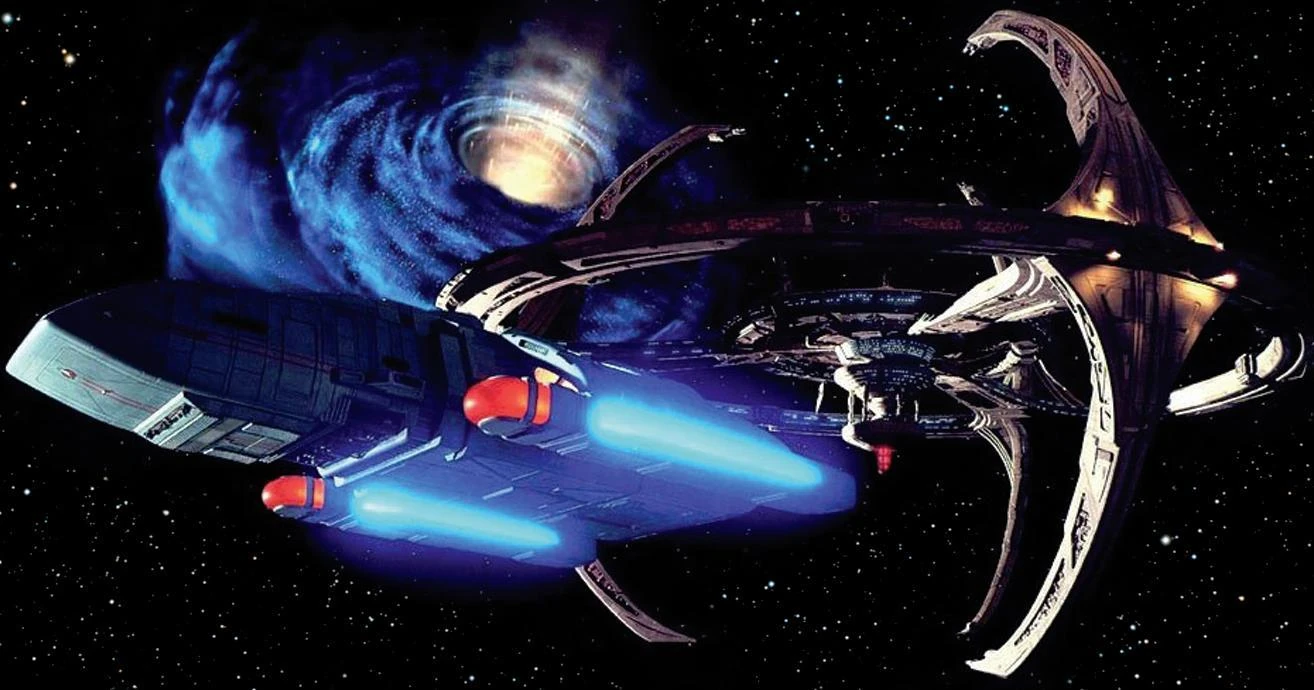
Deep Space Nine, abridged

I missed this series when it aired originally. When I caught tidbits, Quark, a Ferengi, was purposefully designed to annoy: large ears, pointy teeth, whiny voice, cowardice, attitude. Worse was the way other characters treated him. While I didn't care for his character, the behavior of others toward Quark was off-putting.

The last three months, I sat down to give the series a fair shake. The show survived an impressive seven seasons, not that it was overwhelmingly popular. According to Wikipedia:
Author Terry J. Erdmann commented: "DS9 was never as popular as its two predecessors, although it arguably was a more critically acclaimed series".
In fact, it struggled to get a third season. Fans successfully managed a letter-writing campaign to keep the show on. That seemed to be the kick in the pants it needed.

From the beginning, the plots tended to be engaging and strong. The attitude toward religion was largely positive, without needing to beat up characters for whatever belief system.

The actors didn't immediately take to their roles until the last episode of season two when it initiated a more cohesive plot thread uniting the show (possibly due to the threat of cancellation?).  From there, the actors occupied their roles in ways that made them feel like actual aliens, not going through the motions. Except for Miles O'Brien and Worf (characters from other shows who had already accustomed themselves to their characters), the actors must have gained a slow, intimate understanding of themselves in relation to the other characters.

In some ways, it may be best to start with the finale of season 2, "The Jem'Hadar", yet one does need context. The most character-driven episode also happens to be the season 1 pilot, "The Emissary", setting up the series. Commander Sisko has been put in charge of a space station out in the middle of nowhere. He wants out of the military, period, still suffering from the loss of his wife. But then a wormhole opens that changes everything.

One of the best episodes of the series, "Duet," guest-starring Harris Yulin should not be missed from season 1. Yulin plays a Cardassian who contracts that he could have only gotten from being part of--if not running--a Bajoran concentration camp. That's the mystery: Who is this humanoid really, and what role did he play? Yulin's acting is impressive, swinging wildly by turns, but always on point.

Minor episodes from season one might include "Dax" which deepens one's understanding and philosophical complexity of such a being. Popular season 2 episodes--"Necessary Evil " and "Whispers"--have good plots but don't really add to the series arc.

The most moving series episode is when Gul Dukat tries to persuade his daughter to leave Deep Space Nine space station in season 6's "The Sacrifice of Angels, part 2". 

Two-part episodes, season openings and finales, on the other hand, tend to develop the series plot, so they are essential if you want to give the series a shot. And it is worth it. Fair warning: you might give up if you try a complete series marathon in the proper order.

My main problem with DS9 is that the Ferengi were not well portrayed, which is the opposite of the Star Trek, usually--especially for a regular. The Ferengi are supposed to be great businessmen of the galaxy, but too few humanoids like them. Who can blame them? Conniving, shrieking, repelling.... They are not intended to be liked. Their evolution makes little sense. Supposedly, they believe in survival of the fittest, but always run. That's fine, but how did they become the intellectual, space-faring powers of their planet by running away? And how did they become salesmen when they are universally disliked? The deck was too stacked against them. The end of the series transforms Ferengis into American liberals without any transition.

The Ferengis need 1) an evolutionary past, 2) an ethos (it's present in the Rules of Acquisition, but this should spring from their evolution), 3) changes/interactions with others based on their ethos, and 4) acceptance in the same way Klingons are accepted in the series--however uneasily. We have seen nothing to lead a wholesale change in the Ferengi way of thinking. DS9 characters change in attitude to more acceptance of the Ferengi, but if they're going to be salesmen, they need to be better charmers and/or talkers.

That aside, I heartily recommend the series.

Friday, March 20, 2015

Turning the Corner from Season 1 to Season 2: Orphan Black and The Americans

I have never been sucked into a TV program like Orphan Black. The first few episodes were edge-of-your-seat spectacular. In this program, we discover a character has been cloned mysteriously, and the clones gather to find out who/what has been killing them.

The Americans was similarly enthralling, if not quite as spectacular. Here we have a Russian spy couple who sneaked into the U.S., posing as an average Americam family, but one with principles that may make you cringe as they are more than willing to cover mistakes with murder. You have a weird feeling empathizing with a couple with whom you may share little except common humanity. One's own response to the series is nearly as interesting as the show itself.

The plotting and character fascinate. Both have incredibly versatile actors who can throw themselves into an entirely different role and look like someone else. In fact, while being the same person, some characters were attractive while others were not.

Both suffered, at least in terms of consecutive-episodes viewing from predictable sexual escapades averaging once per episode for Orphan Black, two or three in The Americans. With the upshot that there was little sexy about their sexcapades. In  The Americans, one wonders if that were part of the point. This is part of their job as spies. You can even note which sexual liasons were distasteful to the characters. The Americans uses several sexual events as points to create later plot tension, though not always. One wonders if more people will want to become spies after this--a more respectable profession that prostitution.

Something happened in season two with Orphan Black. Rather, something didn't happen. The writers wanted to keep the show going with continual surprise, to keep viewers on their toes--which I do love--but it felt like surprise for surprise's sake (or for the series' sake), rather than for the story's. Revelations were few. At some point the players'/protagonists' motives need to crystallize. I'm reminded of the Lemony Snickett series that built up a grand mystery only to open an empty box. Perhaps if it were a one-book or a short-story deal, this could work. Not fourteen books leading up to nothing. Otherwise, the story becomes mechanical and reveals nothing new. Which is what happens with soap operas. You start to feel you've seen it all before and there were will be nothing here to satisfy/conclude/ponder. I hope Season three reveals more than season two. I'm still debating whether to keep watching it.

Season Two of The Americans, on the other hand, seems to be working well. The difference? There isn't one grand narrative. A number of concurrent narratives allow viewers to be satisfied when resolved, yet they introduce new narratives to complicate scenarios. For instance, they resolve who murdered the couple's best spy friends, only to discover a plot that embroils their own children into a similar scenario.

While I love the period aspects, I'm not sure if I've ever watched a program with so many ugly ties before.

Friday, August 15, 2014

"Space Seed" from the original Star Trek, Season 1, Episode 22

Summary
Episode 22 of the original Star Trek series, "Space Seed" has the Enterprise meet 70-odd, 200-year-old cryogenic chambers.  One breaks down, so they save the man and bring him aboard, planning to cart the cryogenic ship to Starfleet.  The man's name is Khan who was a leader during Earth's Eugenics War.  He was a tyrant who held a quarter of Earth at one point.  Held in sickbay, they allow him to read up on the ship's specs.

Meanwhile, Lt. has been painting and studying these Alpha-male leaders of old.  She initially fights her attraction, but he toys with her, complimenting, touching, pushing her away if she decides she's not interested, which works up her desire.  He demands that she obey him, that she help him take over the Enterprise.

Spoilers
She agrees.  They succeed.  For some reason, Khan's assaults are slow to report.  He has time to wake up his comrades and bring them back over to engineering where they take over all ship functions, including the bridge, cutting off fresh air until the bridge officers all pass out.  They put Kirk in a pressure chamber and lower the pressure until someone offers to mutiny and join Khan's cause.  None do.

Meanwhile, the Lt. is disillusioned with the violence they threaten against her fellow woman, Uhura.  The comm goes down, presumably by the Lt.  [The pressure chamber keeps dropping below 10 and then falling below ten again and again.] The Lt. semi-redeems herself by freeing Kirk.  Together with the next intended victim, Spock, Kirk saves the ship.  Of course, there's the ever-essential, Shatner-patented fisticuffs.

The Interesting Stuff
What's fascinating about this is the officers' admiration of such Alpha-males, even though they're ruthless killers and tyrants.  They oppose but admire.  Spock does not understand the humans.

They also show an Alpha-male at work, which seems to hold well with playboy-wolf strategy, if a bit agressive.  The woman eats this up. 

There's a point where the woman seems to have learned her lesson, watching the men manhandle Uhura, and her betrayal of Khan.  In the denouement, the Lt and Khan face judgment.  Khan is given a planet of his own, a wild one--named Botany Bay after the Australian penal colony--despite having nearly been killed.  Likewise, Lt opts to stay with this man whom she betrayed.  Everyone seems happy with this arrangement.

All are curious what will happen to this colony.  As we viewers are curious.  But is this the best solution?  I don't offer a different, but it's a rather curious outcome to choose.  It seems a not-quite celebration of the audaciously nasty Alpha-male.

The 80s and 10s revisit Khan and have a rather different view of him.