Search This Blog

Showing posts with label Omni Magazine. Show all posts

Monday, March 8, 2021

"Night of the Cooters" by Howard Waldrop (with updated analysis)

First appeared in Ellen Datlow's Omni. Reprinted by Gardner Dozois, Kevin J. Anderson, Jack Dann, Gina Hyams, Mike Resnick, Neil Clarke, and Norm Sherman. It was up for the Hugo and Locus awards. The can read online at Clarkesworld and listened to.

"Night of the Cooters" may well be the best starting point for someone wanting to get acquainted with Howard Waldrop's oeuvre. It displays his characteristic panache for mixing oddities (what Gardner Dozois often termed "gonzo"), humor, historical verve, and singular style. Dozois considered Waldrop one of the best writers of his generation, comparing him to R.A. Lafferty. Though their styles differ, their voices are both unique within the speculative field.

As far as I can tell, the only places you can get the story where the writer will benefit are as ebooks [Kindle or Weightless]: Things Will Never Be the Same.

The story follows the 68-year-old Civil-War veteran, Sheriff Bert Lindley, as he starts what seems to be an ordinary day, but ends up bombarded by meteors that happen to be Martian war-machines in disguise.

Analysis (spoilers):

 After the aforementioned writerly effects, the main power of the narrative comes from its contrast with the H.G. Wells's original War of the Worlds. It highlights the difference between the American (particularly a small Texas town) and the British response. The opening helps characterize these motley humans as the unlikely heroes who come together and repel an invasion. 

Wells might have been incensed, given that his whole point was to pit the British against their own colonial attitudes at the height of its empire. Waldrop's version is not completely an idealized version of America as some problems of the era are set up. Still, the story's a good deal of fun.

It is the only reprint in Anderson's War of the Worlds anthology, which might lead one to suspect that it might have helped crystalize the anthology. Apparently, Waldrop selected it as his funniest (according to Resnick's anthology).

Style, Structure, and Meaning

It struck me, belatedly, that the above description was intended to show Waldrop--knowingly or unknowingly--inverting what Wells did. Well, sort of yes, but no. Some of his stylistic choices should illustrate.

The story opens:

"Sheriff Lindley was asleep on the toilet in the Pachuco County courthouse when someone started pounding of the door. 

" 'Bert! Bert!' the voice yelled as the sheriff jerked awake. 

" 'Gol Dang!' said the lawman. The Waco newspaper slid off his lap onto the floor." 

1) Pachuco is not a county in Texas. It is a zoot-suit-wearing, swing-and-jazz-listening rebel from the 1930s--one who did not conform to the predominant culture.

2) That older gentleman has fallen asleep on that location is not unbelievable, but certainly laughable--as is his euphemistic vocabulary. Waldrop plays with words as you can see above, and Waco looks a lot like wacko.   

3)  The sheriff sits on what is mockingly called a "throne." This is the first of several power structures referred to. He also has humble origins: "He had been born in the bottom of an Ohio keelboat in 1830." This could be considered the American dream: to rise above poverty into a position of power.

What follows is the description Sheriff Bert Lindley's dream. The dream--especially one this long--breaks conventional writer rules. Waldrop is unafraid to deploy as a long vision appears in "The Ugly Chickens."

The dream brings in some Aztec culture, full of what seems like amusing mistakes the some of us might feel momentarily superior: like "Moctezuma" vs. "Montezuma," both of which are actually accepted variations, and "I-talian" priests. Probably they'd be from Spain alongside the conquistadores--ha, ha, that idiot sheriff. But then you think about it, and those priests are part of a hierarchy that peaks in Rome. Rather clever inversions.  

Now the conquistadores overthrew the Moctezuma, which is one power structure--one that mimics what Wells may have been up to--however, that isn't the dream. Moctezuma is atop another power structure where players will be sacrificed. Power structures within power structures. There is a rebellion.

Keep in mind the comic tone. Any sense of mocking we might feel toward these rubes should be balanced by their pluckiness and success at mounting a defense.

The next power structure (prior to the aliens) is the visit to the rich De Spain's [another Spain] property where two boys were caught stealing peaches. Although De Spain not only wants the boys to be charged with trespassing and thieving but also beaten, the sheriff lets the boys go with a threat about schooling if they get caught again. 

Then we have the battle with the aliens. It seems dubious that where the British failed, some small-town Texans could succeed, but maybe the improbability mirrors how the aliens are defeated by the smallest organism on the planet.

The story ends with another dream. This one is a bit puzzling in how to read it in terms of the story. 

1) The sheriff now sees himself as the king of Babylon. It's hard to say where to put the emphasis. It may be that at the beginning was not sure of himself as a policeman, but now he's proven himself, he accepts this power, so it shows his character shift. Lindley may have felt uncomfortable in his position as two details might suggest this:

"He had become sheriff in the special election three years ago to fill out Sanderson’s term when the governor had appointed the former sheriff attorney general. Nothing much had happened in the county since then."

and

[Lindley:] “You’ve got sixteen months, three weeks, and two days to find somebody to run against me. Good evening, Mr. De Spain.”

Perhaps this dream, not interrupted while sleeping on a faux throne, suggests that, after not doing anything to prove his his worth as a sheriff, he has finally entered into self-confidence about his work.

2) A Babylonian king would be no picnic: Conquer and coerce obeisance. Severe penalties. It could be that Waldrop suggests that there will always be a power structure and, as such, it will problematic. However, the text doesn't support this, except perhaps suggesting that a power structure will always exist.

3) The Babylonian king Hammurabi may not have been a perfect ruler, but he started introducing some of our modern ideals of justice such as assumption of innocence and presentation of both sides. His rule may have been sometime/somewhere near the construction of the tower of Babel. This seems a likely intention. Perhaps with the above mention of the sheriff's handling of the boys suggests his type of rule. The beating of the boys would go beyond Hammurabi Code's Eye for an Eye, so perhaps this strengthens this point.

Friday, October 16, 2015

"Mr. Fiddlehead" by Jonathan Carroll

First appeared in Patrice Adcroft and Ellen Datlow's Omni. Nominated for the World Fantasy award. Reprinted in various major retrospectives by Ellen Datlow, Terri Windling and Peter Straub. Collected in The Woman Who Married a Cloud.

Summary
Juliet married Eric Rhodes while her friends Lenna and Michael Rhodes married. After Juliet divorced Eric, Michael and Lenna supported Juliet after the divorce, somewhat to her surprise.

On Juliet's fortieth birthday, Lenna gives Juliet fantastic earrings, which Lenna claims to have made. Except Juliet finds them in an expensive jewelry store.

Digging deeper, Juliet learns jewelry-store owners claim someone else has made them.

Commentary with Spoilers:
The creator turns out to be Lenna's imaginary childhood playmate, Mr. Fiddlehead, who appears when she's distressed and disappears when she's not. Lenna, immediately smitten by Mr. Fiddlehead, plots how to keep him around--despite how it will affect her friend.

With friends like this...? And who hasn't a few of them?

Thursday, May 14, 2015

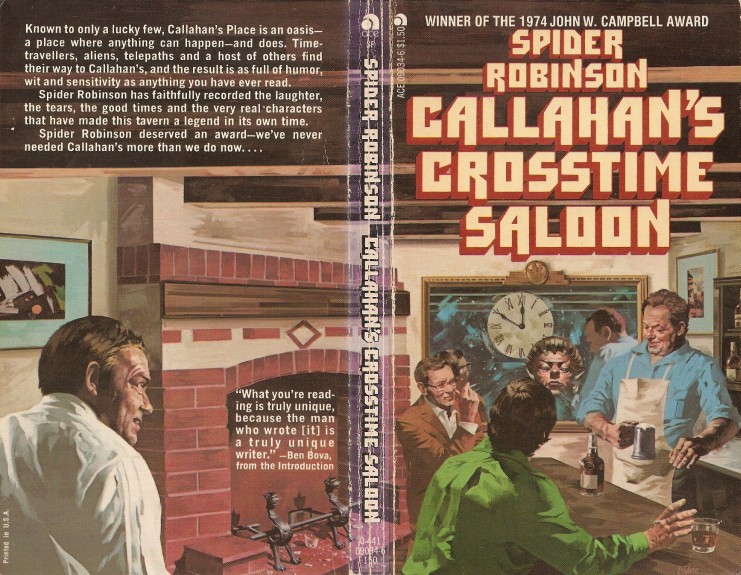
The Callahan Chronicals: pt 3 Time Travelers Strictly Cash by Spider Robinson

Other discussions of The Callahan Chronicals:
  1. pt 1 Callahan's Crosstime Saloon
  2. pt 2 Callahan's Crosstime Saloon
  3. pt 4 Callahan's Secret
Summaries and Commentaries with spoilers:

  • Fivesight: First appeared in Omni. Reprinted by Ellen Datlow. Two regulars tell rather embarrassing personal stories where they learned better. A gal tells her story where Cass, her soon-to-be husband, helps prevent a migraine from an accident he foresaw. He has limits. If he tries to avoid an incident, something worse occurs. They marry and he side-steps or ameliorates various incidents. She's happy until her son Bobby died in a bus accident. He knew in advance but did nothing.
Commentary: She makes a date with a supermarket stockboy, and finds a gun brought into the house. Murder? Hers? the stockboy's? She runs to the bar. Suicide, they learn. They help her date escape with an alibi.

Jake finally tells his story--how he caused the death of his wife and child trying to save money doing his own breaks--to help her see he can empathize with her sorrow. In fact, it's the fifth anniversary, which was why other regulars told their embarrassing tales.

This is the first we get much background on our narrator, Jake. The title is a pun. Cass is likely a reference to Cassandra from Greek myth, who foretells events no one believes. 
  • Dog Day Evening: First appeared in Analog. It was up for the Hugo and Locus awards. A German Shepherd and a man enter bar.  The man wants to prove his dog can talk. Callahan allows the bet so long as it doesn't follow the famed joke [see below]. Callahan puts an apple in the man's mouth. And the dog talks.
Commentary: Not only does the dog talk, but the man is mute. So the dog talks for him (not the opposite the regulars had anticipated). They can't make a living without conning people. The Callahan regulars come up with jobs for both: Radio talk show for the dog and typing for the mute.

Play on the old joke about a talking dog that goes into a bar. The dog answers questions about what's on top of a house? "Roof" Who's the best baseball player? "Ruth," etc. The joke's barkeep throws the man and dog out, and the dog asks his owner, "Should I have said Jackie Robinson?" Robinson cleverly inverts this joke.

Title refers to a 1975 film, Dog Day Afternoon, about a botched bank heist to pay for a lover's sex change. Some loose correlation.
    • "Have You Heard the One...?"First appeared in Analog. It was up for the Locus and Analog Readers Poll awards. A Santa pretender--he says he's an alien in a Santa disguise since no one would question Santa--brings gifts: The Universal Panopticon. He has a machine the improves one's mood, etc. All at the cost of pennies.
    Commentary: No trick about the pennies. That's what he wants because he's actually a time-traveler who needs copper pennies to navigate his machine since the future lacks copper. His inventions, though, are all an illusion. Josie, the time-cop lady arrests him--a ten-dollar crime. She wants to prevent paradoxes. It's not clear why the time-cop gal wouldn't allow the guy pennies to time-travel [after all, she explains what he's doing to the past--the explanation of which, one would think, might create paradoxes as well], or why she waited to reveal herself, but so it is.

    Still a fun and semi-sophisticated tale, especially compared to the earlier stories. The protag-/antagonist feels something like the disruptive harlequin in Harlan Ellison's "'Repent, Harlequin!' Said the Ticktockman."

    The last two stories present interesting scenarios where three people, backed into a corner, perform minor swindles. The dog and the mute not only get away with it despite the Callahan regulars' knowledge, but they also get full-time employment. Santa, on the other hand, gets hauled away. It's not clear why the different treatments. I point out a similar predicament that occurs at the end of  Starseed where two criminals attempt the same evil deeds yet get treated differently.
      • Mirror/rorriM Off the WallFirst appeared in Analog. There are no mirrors in Callahan's [to prevent vanity--ha, ha], but one appears, anyway. Meanwhile, where a stranger sits in the bar, the mirror shows the stool empty. The regulars move away, nervous about vampires. The stranger, Trebor, willingly trades great liquor for poor. Seeing a trick clock with the numbers reversed, Trebor tries to jump through the mirror. Callahan catches the fleeing figure for not paying his bill and paying with phony money.
      Commentary: Trebor is the reverse of Callahan's. He tricks the "Trebor" of Callahan's world to take the fall for a crime in a different dimension. He wants to swap irritating pollutants for non-irritants, but just as dangerous. Through a trick, they push him into the correct dimension. Interesting that they stopped the guy from exiting then forced him into it, minutes later. Still fun, though.

      "Pyotr's Story" nicely reverses the vampiric expectations.

        Series Commentary:
        Apart from "The Mick of Time," these may be my favorites in the series. Robinson combined idea well with milieu. He really hit his stride here.

        Monday, August 5, 2013

        The Problem of Pain, "Fat Farm" and Understanding the Work of Orson Scott Card

        First appeared in Omni, 1980

        Spoilers aplenty.

        The Worthing Saga opened my eyes to seeing how pain could function.  In Card's work, it often serves the function of water or fire in others:  baptism, refining, renewal.  If you don't understand this about Card, you'll likely misunderstand much about his work.  I need to reread the book and address specifics later.

        In "Fat Farm," there's a new wrinkle.  The first time I read it--before The Worthing Saga and before  I read that Card has struggled with the subject himself--I misread this story as a tale against obesity.  Rather, it's a tale of loathing the self, hating who you were and will be.  We are truly our own worst enemy.

        The story begins with Barth becoming too overweight and has somehow signed a contract against himself so that he is no longer himself but a letter:  "H."  Barth cannot kill himself but endures what must come next.  Barth, now H, actually loves his excess, his girth, and love of woman.  He goes to a farm where a skinny old man tortures H, making H work on the potato farm and shocking him if he does not.  Eventually, H becomes skinny and realizes he cannot destroy the old man though he loathes him that he would like to kill him.  The skinny H is to be transferred to a new job.  Meanwhile, "I" has come in.  The loathing that H feels for the old man is reciprocated for I, weak, flabby, incompetent and excessive.  The old man, H learns, is A.  The cycle is complete.  Almost.  H still has other, worse jobs to go through, he's been told.  Before he takes A's job, he will, no doubt, encounter B-G.


        A fascinating dissection of self-hate.  Keeping Card's idea of pain in mind, though, the story is not necessarily irredeemably grim.  A lets H go at one point and seems not hate-filled as he had seemed at the beginning--even accepting if not embracing.  Perhaps not unlike a boot-camp instructor at the end of boot-camp:  This is just a pain-filled phase you have to endure in order to graduate to the next.

        Saturday, June 8, 2013

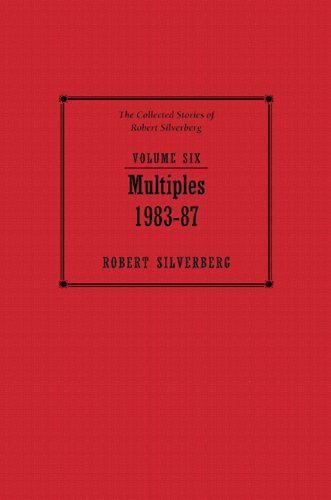
        "Multiples" by Robert Silverberg

        Originally appeared in Omni.  Reprinted in Dozois' Year's Best Science Fiction.  Collected in Silverberg's collection, Multiples.

        Cleo goes to a Multiples' bar to pick up a Multiple, a person uncontrollably changes from one personality/person to another.  Multiple persons can even be present in one body at one time.  She, however, is only a Singleton--like you or I.  She pretends that she, too, contains multiple people, but eventually she's caught.  In fact,  She returns to "singleton" life, but it's not the same.

        Possible, intriguing metaphor for the attraction between complex and simple personalities.

        Monday, May 27, 2013

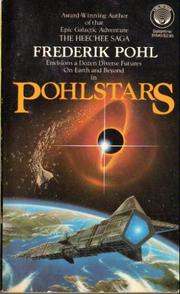
        Review: "Second Coming" from Pohlstars by Frederik Pohl

        Pohlstars
        by Frederik Pohl

        This is a new ebook from Baen Books.

        The left image is the original.

        Half of the first novella, "The Sweet, Sad Queen of the Grazing Isles", is available online.

        This story first appeared in Ellen Datlow's Omni.

        Jesus comes back to Earth.  People feel sorry for him being kidnapped by aliens and kept in a zoo. Jesus makes an appearance after visiting the world, but he's disappointed.  Enter a pretty good irony.

        Sometimes when we pity others, we don't view our own pitiable condition.

        Saturday, October 20, 2012

        The Mystery of UFOs

        Having recently rewatched the 1977 Close Encounters of the Third Kind, I wondered what made this such a phenomenon.  The aliens are totally cloaked in incomprehensibility.  Later, Spielberg would make the alien human in E.T., which makes the popularity understandable, but the complete mystery of Close Encounters must have tapped into a 70s zeitgeist.  Perhaps piggybacking on Close Encounters, Omni Magazine, 1978, survived the era's surfeit of science magazines by including paranormal phenomena and treating them as seriously as science.  But that era's acceptance of mystery had to have precedent.

        In discussing aliens, Wikipedia notes the background events of Orson Wells' 1938 radioed Martian hoax on the public, 1947 Roswell, and subsequent proliferation of UFO religions.  Literary precedents include H. P. Lovecraft's (~1920-1930s) inexplicable horrors and James Gunn's 1972 The Listeners, which is said to have inspired a number SETI scientists.

        Lovecraft's focus, however, is the evocation of horror and Gunn's is the scientific progress needed to uncover communication with aliens.  Close Encounters, meanwhile, touches on all of the above:  government cover-up, horror, hoax, science, and perhaps most significantly an almost spiritual encounter with the other.  Spielberg plays up the mystery of light, simple music, and visions of mountains reconstructed in mud, clay, charcoal, and most famously mashed potatoes.  Not just the aliens behave inexplicably but those visited by aliens.  Roy tears up his and his neighbor's yard to the spectacle of the neighborhood.  Every time Roy tries to patch up things with his wife, his obsession with aliens intervenes.  He asks, "What is it?" and "What's going on?" but there are no answers except MacGuffins like the mountains and light and sound.

        Music of the film, the soundtrack of which went gold, plays a more integral part of the storytelling as the UFO's theme is revisited.  Wikipedia states, "In 1998, Spielberg recut Close Encounters again for what would become the 'Collector's Edition' .... but omits the mothership interior scenes which Spielberg felt should have remained a mystery."  And Roy volunteers to be taken away from his family into the bright unknown.

        What a curious film, and how curious that it captured the imagination of so many, relying as it does on the impact of mystery.