Search This Blog

Showing posts with label book review. Show all posts

Saturday, February 22, 2025

Vital Signs by Deborah P Kolodji

Vital Signs: Kolodji, Deborah P: 9781735025780: Amazon.com: Books

Vital Signs appears to be Kolodji's final book--at least while she was alive. It chronicles her journey through cancer via a series of haiku. The first haiku opens:

the blush of dawn 

through a hospital window

vital signs

The hope and fear infuse the poems as the speaker crawls through visits to the hospital, trying to claw back her life. 

The California condor, pictured on the cover, is for her a personal image of a vital sign. It has survived near extinction and bounced back.

sturgeon moon

my pillowcase covered

with fallen hair

Not much is gained by explaining the sturgeon moon, but it is "[t]he [f]ull [m]oon in August... because of the large number of sturgeon fish that were found in the Great Lakes in North America this time of year." [Timeanddate.com]

his old toolbox

no way to fix

all that's broken

Be ready to have your heart broken.

Kolodji's work has won the Dwarf Star and the Touchstone. Her chapbook, Tug of a Black Hole, was runner-up for the Elgin. Born on August 11, 1959, she passed on July 21, 2024. She has left behind several potent poems. A book of selected verse would worth pursuing.


Monday, February 10, 2025

Review: The Road to Sugar Loaf, by Eric T. Renolds

The Road to Sugar Loaf: A Suffragist's Story: Reynolds, Eric T:  9781735093833: Amazon.com: Books

Eric Reynolds, as a writer, has been published in Galaxy's Edge, Sci Phi Journal, Starship Sofa, and various anthologies. He has published Arthur C. Clarke, Lavie Tidhar, Nisi Shawl, Elizabeth Bear, K. D. Wentworth. Michael Burstein, Rudy Rucker, Stephen Baxter, Tery Bisson, G. David Nordley, Tobias Buckell, Frank Wu, Jay Lake, James Van Pelt, Eric Choi among others. But he's published anthologies of writers who are a complete unknown--at least to me.

Reynolds's writing is not far from his own personality. Simple, sweet, clear, straight forward. Here's a taste from early in the story:

During the fourth week of school, lockers and the lingering scent of freshly painted walls greeted civics teacher George Fielding as he walked the long, echoing hallway. He stopped outside Principal Holt's office when Violette emerged and handed a string-clasped envelope. He peeked inside to find Suffrage leaflets and other printed materials.

Violette looked around the hallway. "It arrived today from The Kansas Equal Suffrage Association," she whispered.

He thanked her and continued to his classroom where several students stood laughing next to the open door. They looked away when he approached. Upon entering the classroom, some students tried to suppress their snickering. Their glances toward the blackboard revealed what amused them.

George saw a caricature of himself wearing a dress while holding a sign that said, "Women Vote."

He smiled and turned to the class. "I see some of you are interested in Women's Suffrage, and I commend the artist for making more handsome than I actually am, but that dress should persuade you not to pursue a career in fashion design."

The narrator voice of the story melds perfectly with its era. At first, being from a different era, my brain's knee-jerk reaction was to question the novel's overall tone, but then I realized that it fit well. In fact, it's a bit annoying when writers try to make the past sound like the present. Reynolds's voice captures a slice of the past and brings it to us, more than a century later.

Reynolds relates the story of not just the vote in Kansas but across the fruited plains. The characters march to Washington and get thrown in jail under difficult circumstances, fueled by determination and will through protests and hunger strikes. His characters, particularly the women, are strong and well drawn. The quiet scenes were some of his strongest.

More variety, particularly among the men, might have been preferable. I met men, not from that era but immediately following the one Reynolds describes, and I still recall a gentleman joking that my grandmother thought women shouldn't have the right to vote. I turned to her, but she didn't respond, which sheds a lot of light on how people felt and behaved toward this era. There could have been a range of motivations for either party--from being totally true to totally untrue and a million subtleties between. He was clearly amused while my grandmother suppressed any response. Neither had been born during the movement, yet here it still impacted their conversation, decades later. For me, this showed more variations in character than what one might think from a casual glance.

Like a lot of other writers, writers meet writers in the course of writing. It's a small world. I edited a small journal, Mythic Circle, which required a theme of myth. He wrote a small tale set in space where myth was featured. I liked it but requested revisions. He obliged. I showed it to the lead editor and professor, Gwenyth Hood, who also liked it, and we published it. 

It may have been Eric's first publication. He may have told me that, years later, to my surprise. Possibly I am mistaken. But it was solid work if memory serves. I wouldn't have published it had I thought otherwise.

I didn't publish everyone. I had a writer of some note whose work I've praised in public. But none of the things he submitted quite fit. He was a little irked by that. I was a little surprised, too, that I hadn't, but I think if he'd have sent ten works, I'd have found one that felt right. Not unlike Picasso, he was going through a period--a style not so much to my liking.

Eric and I may have met in an online workshop, later at a convention by chance. He and his wife and kids made for an attractive family. This photo is a more recent one. He had more and darker hair back then.

Eric, later, started his own press, publishing original anthologies of speculative fiction, and in a few of these, published stories of mine, so full disclosure. 

Also full disclosure: I have a relationship with you all as well. So I try to direct the people who might be drawn to Eric's work and steer away those who would not. You have enough information to see which you are.

Eric Reynolds has published two other historical novels: The Lost Town of Garrison (a time-travel novel) and The Legend of Mulberry School (a paranormal novel).

Eric T. Reynolds Books - BookBub

Wednesday, December 15, 2021

Love Behind Enemy Lines by Jeanette Anderson

 See the source image

Here's a contemporary romance thriller or thrilling romance for those who have a penchant for thrillers and romance. Both play a significant role. 

Glancing at the cover, I assumed that the novel was primarily romance, and put it on the back burner--to read as soon as I'd read these others. Romance fascinates me but usually as part of a mix, so the title and some of the subtle imagery should have suggested the strong impact of the thriller genre. 

In the novel, Jannah has a reason to become an activist. Effron and she make mistakes and hide secrets that get them in trouble. But even in a desert, they will bloom.

The strength of the writing took me by surprise. Anderson takes on a bestselling style, as expected for the genres she's mining, but puts effort into making her scenes vivid, more than most bestselling writers do.

Let's prove this by opening the book at random and picking a passage that illustrates this:

"When Shaphier came into view, Jannah’s heart quickened. She cranked the window down and leaned her head out to feel the stiff breeze on her face. Though home to 23,000, to an outsider, it appeared a backward town with unpleasant residents. She admitted it was a broken-down community. The power cables sagged between pine-log poles and gusting wind cartwheeled plastic grocery bags across the fields of gray stubble—after being a prisoner, it was a sight to be cherished."

What a keen eye for choosing the right word to carve out an image.

This is no easy love story. Setting it in one of the most controversial regions on the planet would probably not occur to most. But that challenge becomes a draw.

Does it accurately portray the conflict in the Middle East? That I cannot address. It feels like she has made a valiant effort to portray the conflict with difficult and admirable nuance, but those closer to the issue might have another perspective.

The opening sample might suggest whether you'd be interested:

Chapter 1

Wrongly Accused

For too many days, Jannah al-Jorbouni lay on a frayed and smelly mattress in her dim jail cell in Lachish Detention Center. The corridor light cast a yellow glow on a colony of ants climbing through the concrete cracks. Their black oval bodies darted into the bedding, food, and clothing.

Jannah clutched a handful of knotted sheets as the pain in her stomach spiked. A bizarre fever had raged through her body all night.

Like ice crystals on a frosty windowpane, she was freezing cold one moment, clutching the thin blanket under her chin, then suddenly, burned hot, her bedding drenched in sweat. The noxious odors of sweaty bodies and sewage further sickened her, and she felt like a caged animal.

She licked her cracked lips, which did little to moisten them, and stared at the two swallows of water left in the cup she held.

She leaned up, took a sip, swished it around to let the liquid bathe her tongue, then held it in her cheeks before swallowing.

As the gray days passed behind bars, each day drearier than the one before, a kind of hopelessness gripped her. She struggled against despair more than she did against the pain in her abdomen and ran her hand over the tally marks scratched into the wall near her bunk. Six months in this hellhole. How much longer can I hold out? she wondered.

The first few months at Lachish, she’d believed she could handle anything, but her Christian spirit had been drained. Too much wrath and retaliation had left her soul riddled with holes. The only evidence that she had not been entirely broken was when she left the boiled egg yolk or crust of bread on the dinner tray for Besan, who was more sister than cousin.

Thursday, July 22, 2021

Shotgun Lullabies by Sheree Renée Thomas [part 1]

The voice driving the stories and poems of Sheree Renée Thomas does have a lullaby quality, sung through the mouth of a shotgun--explosive and melodic, it pleases even as it bites:

See the source imageIn the beginning God walked barefoot ’cross the land. She spread Her big toe wide ’cross the rich, deep earth and danced. She stomped so hard with Her rockbottom feet, the earth split right open. Still She danced. Her big toe sunk deep, and the sweet waters rise quick, quick. That’s how we got the rivers, and the lakes, and the creeks.

Thomas often uses dialect as once was popularized by nineteenth-century American writers like Mark Twain but fell into disfavor by the next generation that saw it as a gimmick or cheaply sensational. Here, though, it's digging into the music of the voice, listening to the native language of speakers--sonorous and sensuous. 

A powerful draw to this chapbook is Thomas's voice. It seduces and mesmerizes. It speaks from the fundament of images, sound, and earth.

As you can see by the above sample, Thomas is interested in not just sound and voice but also myth--the larger than life, tall tales that aren't so tall that you might wonder, "Maybe?" They often crawl into the space between realism and speculative fiction. The narratives are less stories than myths where the mythic figure emerges, say [Sukie Diamond, for instance], unscathed through the Antebellum South where the world and the people she encounters are shaped by her being there.

Listen to a reading of Thomas's center story, "Malaika Descending," here.

If you haven't anything by Thomas yet, this is a great place to start. Mildred meets with the neighborhood, some weeks after her "Aunt Malaika" had passed. Her memory isn't a pleasant one altohugh the "aunt" raised Mildred. Somehow Mildred makes a trip to Hell and find Malaika there. It's a dark tale but, nonetheless, full of hope--even for a life after life. This isn't high-octane invention, but suggestive and moving. Well worth your time to check out.

Wednesday, July 1, 2020

Review: Futuristic Violence and Fancy Suits by David Wong


Futuristic Violence and Fancy Suits  
by David Wong 
St. Martin's Press  
Thomas Dunne Books  
Sci Fi & Fantasy


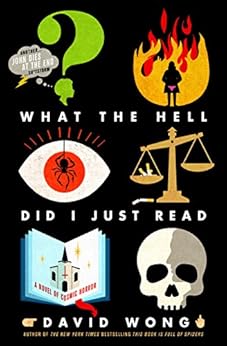
David Wong's unique, humorous voice is a major draw for his fiction. He wrote the strange paranormal investigator series, John Dies at the End (the last book, What the Hell Did I Just Read, reviewed here).

His best characters are deeply flawed and have a modus operandi, a philosophy for living.

Zoey's father, a deadbeat beat dad who happens to be a famed rich inventor, has just died, which means that people are trying to kill her since she has the key that everyone wants to unlock some technological wonder. The novel opens enticingly enough:

The radio had stopped working years ago, and so Zoey made up for it by singing a hit pop song from her time called "Butt Show (and I Don't Charge Admission)" while she plugged in the strand of Christmas lights she had tacked around the top of the car's interior. She peeled the lid off her chili, watched steam waft into the frigid air, and decided that things really could be worse. Zoey always tried to appreciate the little things in life, like the fact that just a generation ago you couldn't devote both hands to eating a bowl of fast-food chili while the car drove itself (how did people use to eat car chili? With a straw?). She had also recently upgraded her phone to one that displayed a little holographic image of the caller, but so far she had found this feature was only useful for terrifying her holophobic cat, which hardly justified the cost of the upgrade. However, a moment later that feature did allow her to see that the call that saved her life came from a man who was fond of wearing fancy suits.

And we're off to the races in her Toyota with her hopeful would-be abductor trailing close behind.

Zoey isn't sure whom to trust--just as she finds someone to trust, even becoming attracted to him, he's dead. Somehow Zoey has to get past those who want to kill her, and those who want to use her for money for the technology she unwittingly has the key to.

Part of the pleasure of the novel is the near-futuristic milieu--a city so deeply rich in money and technology that we join a wide-eyed Zoey at the surprises that await her. Everyone's online and recording everyone, so that it's impossible to run away and anonymously melt into the crowd. She hates her father's absence and resents his using her this way, but she becomes accustomed to the lifestyle as she sticks around.

Part of the mixed pleasure and pain is that the author may love Zoey too much. She isn't terribly flawed in a significant way. Occasionally her personality takes off when expressing her desire for what clothes she'll wear, but as is, she's a little too idealistically drawn. In the John Dies at the End series, the female protagonist is defined by her contrast with her boyfriend. Zoey doesn't really have a companion here to be defined against.

Her antagonist is powerful and possesses a most wondrous reason for being--wondrous, not in that he's agreeable but fascinating. Unfortunately, he is so generously mocked, we don't quite believe he's a real threat to our protagonist.

It may be that since Zoey Ashe has a whole series planned around her, the author has a long-range arc laid out for her that isn't yet visible. She does become a master of her destiny near the end of the novel, but one can hope for an increased dynamic in the next novel of the series. Still, with Wong's skill for odd-ball characters, readers should look forward to the next novel, soon to be released--October 13, 2020.

Sunday, May 24, 2020

What the Hell Did I Just Read by David Wong

See the source image
David Wong, pen name for Cracked editor Jason Pargin but also the protagonist of the novel, has been launched on a third supernatural adventure. I somehow missed that this was part of a series and started with this novel because it was "cosmic horror." The previous novels did not seem relevant until I got closer to the end when "familiar" characters appeared that I was unfamiliar with, so I suspect the previous novels would have helped to a degree.

The novel begins simply enough. Three private investigators of the supernatural (David, John and Amy, who tend not to receive compensation for their work) look into the case of an abducted child. A stranger had threatened to take the man's daughter and seems to have done so. The abductor is a shape changer and leads the investigators on a wild chase, finding a child's faux cell phone that one can talk into and see photos on. The novel grows increasingly complex due to the nature of the horror getting our heroes to question the reality of what they are witnessing. While I may not be fully convinced that ending follows, the novel is highly readable.

I've perused definitions of cosmic horror, but few satisfy. For me it's where SF meets horror: wild speculation explains the crazy horror that's been loosed on the page. Usually, these are the most fascinating passages in Lovecraft's longer pieces, such as in The Mountains of Madness (I thought I had mentioned my favorite passage in the link, but mostly I critique Lovecraft's style).

Wong's novel isn't quite cosmic or quite horror by my estimate. The horror is dispelled in part by humor and situations that don't nail the dread and despair. The protagonist narrator does have his own philosophy, which is fascinating as it intersects existentialism and pop culture. A few samples (in the first, Wong discusses a painting of a clown who slowly mouths something):
as far as I'm concerned, if the object isn't killing anybody, it isn't "cursed." I've had it in the junk room for four months and it hasn't inconvenienced me once.
and
Let me tell you what's bullshit about every supernatural horror movie. Whenever the monster or angry ghost lady turns up, everyone is skeptical for at least the first third of the running time. It's usually between forty and fifty minutes in that the protagonists begrudgingly admit that the ominous Latin chants emanating from the walls aren't a plumbing issue. In real life, the very second Mom sees something red oozing from the ceiling, she thinks "blood" not "water from a rusty old pipe." I wish people were as skeptical as they are in the movies.
Much as the protagonist reflects on the events in an interesting manner, the horror never comes with escalated speculative explanation that piques one's imagination.

The style is immediately compelling. He (author and protagonist) is fluent in pop culture and its flaying. Much of the humor is male adolescent bathroom or locker-room humor, which Wong gets away with by putting it mostly in the mouth of another character and critiquing it. One running gag the appearance of asses. Other examples:
I finally found the phone sitting atop a bookcase, next to a VHS box set of a series of 90s action movies starring Bruce Willis (The Ticking Man, The Ticking Man 2, The Ticking Man: The Final Chapter, Ticking Man Resurrection) that as far as I could tell, did not exist in this universe. We never watched them, nobody has a VCR, and they looked kind of shitty.

and
The last such call I had gotten from him was two weeks ago. It was just a few seconds of ambient party noise, before I heard John's voice say, "What's that sound? Everybody quiet, I — Ha! Hey Munch, check it out! I farted so hard it dialed my phone!"
That last illustrates something that may be a flaw. We could not have overheard that whole speech if he farted once. He may have farted twice, though.

One interesting aspect is that Amy, Wong's girlfriend, sees Wong's doppelganger. Its actions surprise and beg for an advance of one character or another. When we find out the antagonist's modus operandi, it seems almost imperative that this issue be resolved. But it never plays out. Perhaps this is a long-term character development over the novel series.

Because of Wong narrative voice and compelling narrative, I do plan to read more of his work. I may backtrack and read the earlier novels in the series.

Monday, March 23, 2020

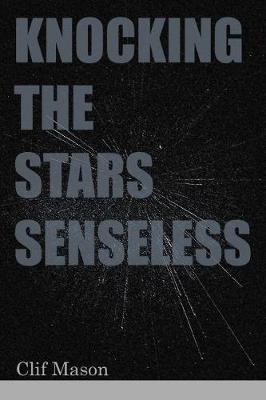
Review: Knocking the Stars Senseless by Clif Mason (II)


Part II


This recurring theme [that beauty can enlighten tragedy] returns in “Ghost Music” as it deals with the speaker’s loss of his father: “The singing tongue is cut from autumn’s river.” In essence, Mason’s speaker asks us in his songs: How can we keep singing when the world is full of pain? The answer comes, through much pain, at the poem’s end:

Wind picks his pocket again as he ambles.
It steals again sweat from his body, music from his ears.

It takes again the gait from his legs, the taste from his tongue.
The more it steals, the less he feels bound by gravity.
He laughs as the wind bears him off like a kite.

Knocking the Stars Senseless (Paperback)When I critiqued his poems, I often slammed Mason’s use of “stars” in his poetry as I’d seen too many awful poems written with that in them, but through judicious use and careful building of his motif, he’s made the stars his own. It is in the book title and the titular poem, after all. And it’s cleverly deployed, to boot. The stars could be incandescent dots that candle the night, or those whom society reveres, for whatever reason, or the heavenly afterlife (“to drink from the stars’ chalice / the black anodyne of sleep.”—“Fugue for the Sandy Hook Dead” or in “I Wore the Night Like a Roquelaure” where when a grandmother passes, the speaker’s song becomes “the new star of resolve / in her brain’s core.” That last poem, especially at its titular moment, seems to be the transformation of the speaker who turns grief into something transcendent.). And “senseless” could be unconscious or a lack of meaning. All of these senses fuel Mason’s poetry. (Am I eating crow? Very well, I eat crow.)

In “The Sea Anemone Must Wed Lightning” Mason writes of suffering as a thing we carry, perhaps belongings we should value:

What can I say of this suffering,
except that it is mine? I will carry it

into autumn, holding it over
my head as, crossing a river,
I would a bundle of clothes.

Later, the speaker sings what he wants songs to do:

I want the song that will lift
the moon’s white bone back
into its black socket. I want the song....

that will raise a fallen
child, if only for a day

The final poem, “Thanksgiving Song,” refines this idea of song (brought up in “I Wore the Night Like a Roquelaure” – discussed above) as the magic that words carry in them and the magic that we carry within us:

I can sing with the broken bone
of the yellow half-moon....

Each name sings
light needles into ebony dusk....

we are all
yes, each & every one, the last
least, best unexpected thing.

This poem—with a few rivals for being the best in the book—deserves to be anthologized in a dozen or two good anthologies. Poet Patrick Hicks also singled out this poem. Forgive the excerpt as only the whole poem can do it justice.

Judith Sornberger writes that his work is “Incantatory as Whitman” which you’ll find in a poem like “Depression”:

All the harvesters are falling apart, shaking & shuddering
& collapsing before they can leave the fields.
All the luxury automobiles are falling apart
in garages & shops & on the street
All the bridges & skyscrapers are falling apart
falling to rust & poisonous dust & bent & sheered rebar.

These excerpts and examinations should more than adequately suggest why you should acquire this book for yourself (or get your library to do so, if you cannot afford it).

What makes these poems stand out above most contemporary poetry: His poems tell you why you should read them. The images and sounds—even interesting philosophic content—suck the reader in. Not the particular political stance as if poetry were more about politics than aesthetics (although, yes, Mason toes the line of the politically correct), not the surreal inscrutability (although, yes, Mason uses some of that), not a bolus of images that are hard to swallow (although, yes, Mason’s imagery astounds and confounds), but he uses his silvery tongue to get us to leap after, to travel to this strange land we tread upon and intriguing scenarios, or some other spark of interest to keep us reading and rereading.

For example, “Darkfall” opens with intrigue and mystery:

For centuries we seeded the cemeteries
so it was no surprise the soil
grew nothing but headstones.

How can those lines not get one to read on? This is part of what makes this book rise above its peers. If poets and poetry readers aren’t flocking to this book this year, then there’s too little justice in the world, but at least it exists and we the lucky, who have read it, can lift it over our heads as if crossing a river and call on others to hear these songs.


Friday, March 20, 2020

Review: Knocking the Stars Senseless by Clif Mason (I)

Clif Mason and I met at a poetry workshop, not quite a decade ago, and he was an excellent poet then. An English professor and Dean of Humanities, he is gentle, soft-spoken and rounded out by insight. This is a man who writes poems whose speaker stands before a stuffed otter in a museum and mourns its passing (see “The Otter”).

Knocking the Stars Senseless (Paperback)What poems was he workshopping? If you have Knocking the Stars Senseless in your hands, then you have some of them. I have the sense that he’d been working on these poems long before we saw them. He kept working on them after they were published.

So when I read people being amazed at Clif Mason’s suddenly being “prolific” because he has had three different poetry books released from three different presses within a year, I feel his pain. He has been agonizing over these for perhaps more than a decade—a handful maybe twice that. So prolific? No.

He wasn’t just adding and removing commas, either. Merciless as Ming, he’d quarter poems to stubs or stretch them on the rack beyond their original form. They’d appear in form, aligned as a stone army, and be stripped out of uniform to throw them into cubist arrays. He was tireless in his revisions.

I review books—of friends, strangers and people who chose to be enemies—as subjectively as possible. There are nigh glowing reviews here of people sharpened themselves into daggers and sweet dismissals of candied personalities. I try to review as if I’m friends with the reviewee and the people looking for good books to read. As a matchmaker, I don’t want to let either down.

Moreover, Mason’s voice is a new voice that needs to be heard. Have you devoured the sounds of Ocean Vuong’s words? Does your heart quicken at the submerged wisdom and surreal images carved by W. S. Merwin? Then savor Clif Mason because their sauces flavor his volume’s stew. Until I read the other two volumes, I’m not yet willing to concede that he is a major writer—he may be, but time will have to decide that, anyway. I will say that his voice (not to mention this volume in particular) is one that needs to be reckoned with.

To get a sense of the book’s trajectory, peer into the opening prose poem, “Double Narrative: This Waking Life”:

When I yearned for the incense of candle & canticle, I sought the fulcrum of trance & tragedy, hawk & hook.
           
The book I wrote unwrote itself as I typed. Characters disappeared as if kidnapped.

This is both true in his personal life and in the larger world. The personal, literal truth is how, as I mentioned earlier, the book has gone through its own radical changes, but in the larger sense Mason laments violence—such as Sandy Hook and Auschwitz—where people did “disappear,” lives brutally brought to an end. He writes in “Day of the Dead”: “Have you found the trunk of moldering toes? // This is the age of amputation // We learn to live with less & still less.”

“This Waking Life” from the title has its own double hook. “Waking” suggests that we are awake, but also that we are still asleep, in need of being roused—a perpetual state.

In “Nightwalk in the Republic” the poem is more or less a palindrome of lines—the same forward as backwards, except for tiny alterations you have to pay close attention to. The speaker fears sleep as the news of another mass shooting torments his dreams—a perfect scenario for this poetic form. The opening/closing change are perhaps the most potent. It opens (I had to stop myself from quoting more—just one thing, you said):

Owl calls on a cold night—
solemn, commanding hoots.
I wander, lost, full of midnight’s wanderlust

and closes:

as I wander, lost, full of midnight’s wanderlust
& command solemn hoots
from the owl calling on a cold night.

Note the owl, in the first instance, lacks an article (aan or the), which makes it more mythic—a name, perhaps—the owl of all owls, the god of owls, the original progenitor. The owl could be a symbol of wisdom or of its power, its predatory nature. Perhaps both.

(All of the above do seem to apply. The poem “Insomnia” confirms and further sketches the owl’s nature: “Night is the owl’s kingdom....//The owl rules the world of shadow & hazard.”)

The owl “calls on” which could be a simple sound, or it could be visiting or asking help from the cold night. The commanding hoots helps determine its powerful intentions, hinting at a supernatural nature that gets the night to do its bidding.

When we return to these images, the speaker now commands. He is no longer powerless, but his powerlessness, his lostness, his lust for midnight’s wandering have become a kind of power as he demands the owl to call. Given the voice, we assume he can do this in this transformation although one is free to question that ability. We would have two very different poems, depending on which one chooses.

Strangely, both do seem to apply to the situation. This duality applies to the opening poem (seen above, such as the “candle & canticle, fulcrum of trance & tragedy, hawk & hook”) and throughout the book. The poet sings in a beautiful melancholy voice as he raises a candle to shed light on our place in the world. It is a fine balancing act since it calls on beauty to enlighten our tragedies.

Thursday, March 5, 2020

Larque on the Wing by Nancy Springer


 See the source image
You will know from the first paragraph whether you’ll want to read this book or not:

Mother used to call it change of life, but Larque never expected to change quite so much. Gender, for God’s sake, which is really basic, the first thing anybody notices about a person. Then, becoming not only male but gay—what a way to do the big Four-Oh, when all along she thought she was quite happy.

This won the James Tiptree award, which is all about gender examination, and this is a tour-de-force of such an examination. So if you believe in two genders, or immutability of sexuality (especially by puberty), read no further.

The strange gender extrapolations is the novel’s strength. The narrator is a painter in her mid-life and suddenly to the chagrin of some of her family undergoes changes and gains a doppelganger named Sky who says, “Boogers” upon meeting our protagonist. The doppelganger is a youthful version of the protagonist:

“Who are you?” 
“Traitor,” the kid shot back, “you should know. I’m you.”
Sky is Larque’s adolescent escort not only through the changes of life, gender, and sexuality but also through adolescent difficulties—high expectations from her mother, abandonment of her father once her mother divorced him. There’s also Shadow, the cowboy animus, who knows the male side of her.

The weakness is the voice, which feels more light-hearted YA than adult, although perhaps that can be explained by the narrator going through a second puberty—a time of confusion. It isn’t just the colloquial expressions but the reactions. Examples:
“for God’s sake.... Childhood’s a bitch.... Adolescence was hell.... She’s a twerp.”

and

See the source imageSky snorted like a pony and got up from the table. “Look what you turned into,” she muttered. 
“Look what I was to start with,” Larque shot back. 
“You like this place you’re living in? Looks like a dump to me.” 
Larque felt all the attractiveness of child abuse as a life option. Yet, the obnoxious kid spoke truth. The place was in fact a dump. Dog hair rolled everywhere.

and
[Hoot, her husband, inquires about her doppelganger’s abilities:] “Does [Sky] walk through doors?” 
“I don’t think so.” 
“Are you sure?” 
“Reasonably sure.” Actually. I don’t know and I don’t really care. Give me a break.
 
and
“Liar. You lie all the time.” 
Larque slapped the brat.


If you like many extrapolations and playful YA, you may well like Larque on the Wing. It takes lots of risks.


Monday, February 3, 2020

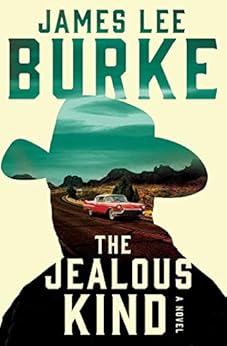
The Jealous Kind by James Lee Burke,


See the source image

I can't recall if I've read James Lee Burke before but perhaps not. His characters are razor-sharp in their realism, his plots gripping as slides the blade.

Where to start? He won Edgar Awards for Black Cherry Blues and Cimarron Rose while Amazon readers ranked Purple Cane Road as his best. He also has two collections of stories published in literary journals like Antioch, Chariton Review, Southern Review, Shenandoah, and so forth. So I think I'll try those out next.

Someone at The New York Times Book Review called The Jealous Kind's examination of the 1950's “nostalgia noir.” I didn't realize it was part of a series (the Holland Family), but I didn't feel left out.

Aaron Holland Broussard gets embroiled in a fight with a rich kid, Grady Harrelson, over his soon-to-be-ex-girlfriend Valerie Epstein, which involves the delicious dialogue exchange:

“I thought maybe something was wrong and y’all needed help.” 
“Get lost, snarf.” 
“What’s a snarf?” 
“Are you deaf?” 
“I just want to know what a snarf is.” 
“A guy who gets off on sniffing girls’ bicycle seats. Now beat it.” 
The music speaker went silent. My ears were popping. I could see people’s lips moving in the other cars, but I couldn’t hear any sound. Then I said, “I don’t feel like it.” 
“I don’t think I heard you right.” 
“It’s a free country.” 
“Not for nosy frumps, it isn’t.” 
“Leave him alone, Grady,” Valerie said. 
“What’s a frump?” I said. 
“A guy who farts in the bathtub and bites the bubbles. Somebody put you up to this?” 
“I was going to the restroom.” 
“Then go.”

Grady's family is connected to high and low places, so this seemingly one-time bold perhaps foolish act carries long-term consequences that get worse and worse. Fortunately for him, he gets Valerie on his side (as his girl) and, less fortunately, Saber, his best buddy, who is the problematic kind of best buddy at best:

Saber was the only kid in school who how to stick porcupine quills in Krauser [the shop teacher who billed himself a WWII war hero but was a pain in the students' butts] and keep the wounds green on a daily basis. Krauser believed it was Saber who'd hung plunger through the hole in the ceiling, but he couldn't prove it and was always trying to find another reason to nail Saber to the wall. But Saber never misbehaved in metal shop, whereas other guys did and in serious fashion."

My main problem with the novel is the main character as an adult telling the tale. He seems to buy into his teenage reasoning, but the kid makes foolish choices which only makes things harder on himself. I didn't quite realize this until I was three-quarters through the book. His father had excellent advice of not even talking to these people, but Aaron does anyway. By luck, Aaron's mistakes are shown to be nothing and his enemies have done all the real damage. Writerly ingenuity would have been the better path, but the plot was rather convoluted, so maybe Burke needed to tame the multiplying threads.

It's a good enough novel, but probably not the place to begin.

Thursday, January 23, 2020

Bring the Jubilee by Ward Moore


Ward Moore’s most famous novel opens with a wonderful paragraph of just two sentences:

“Although I am writing this in the year 1877, I was not here until 1921. Neither the dates nor the tenses are error—let me explain:”
--Chapter 1. Life in the Twenty-Six States

That opening chapter is in fact a whirlwind of speculative alternate history wonder. It details a history of the Civil War where the South won and the North grew embittered, complaining even seventy years later. In the North the people tend to have indenture themselves to get ahead (although this isn’t fully explained why since it isn’t to go by ship to a different country). But it is apparently extremely difficult to get ahead.

The narrator is a clumsy farmhand for his family although he does come to a love of writing. Trackless locomotives, minibles (small dirigibles, it seems), and the post-office lottery sparkle in this strange new America which is plagued by poverty, indentured and prison labor, and gangs. The telegraph is still the main mode of communication. America’s new future (of the past) creates ripples of changes throughout the world where France still appears to carry out Napoleonic wars.

He briefly comes across a slave pursued by his master and he laments not jerking the horseman’s reins to give the slave a chance to escape. This becomes a key thematic moment about the ability to change the future.

Two women manage to train our narrator into a professorial writer who charts the course of Civil War. When he gets stuck, they help get back in the saddle by the invention of a new time machine with a chance to witness the past.

The novel dives into discussions of polygamous sexuality and gender and racial equality—possibly one of the first in the genre to do so. It is perhaps too didactic about these issues, however. Compare this to his story “Lot” which leaves much to readers to discover for themselves.

An early version first of the tale appeared in a presumably shorter form in F&SF, edited by Anthony Boucher and J. Francis McComas. This version was later reprinted by Frank D. McSherry, Jr., Charles G. Waugh, Martin H. Greenberg, and Harry Turtledove—one billed as The Best Alternate History Stories of the Twentieth Century. Dozens of critics and writers have recommended the novel version. Gollancz reprinted it as part of their SF Masterworks series. David Pringle included it in his Science Fiction: The 100 Best Novels. And it is discussed in various critical anthologies.

Nonetheless, the F&SF novella version, edited by Boucher and McComas, may be the best version though I haven’t laid my hands on a copy to investigate. The novel has discursive and abstract passages that bog the middle part of the novel down:

“I noticed however that he treated the consul no differently, either in politeness or honesty, from his other patrons, and by this time I knew Tyss well enough to attribute this courtesy not to the self-interest of a tradesman but to that compassion which he suppressed so sternly under the contradictions of his nature.”

and

“The new Catty was no more than the old was disingenuous or coquettish. She was simply mature, dignified, self-contained and just a trifle amusedly aloof. Also she was very busy. She did not pretend to any interest in other men; at the same time she had clearly outgrown her childish dependence on me. She refused any competition with Barbara. When I sought her out she was there, but she made no attempt to call me to her.”

Being trapped in a narrator’s semi-rambling thoughts for too long didn’t seriously mar his short fiction, but here it quagmired the narrative until the narrator was able to climb into a time machine. Thank God for time machines.

One might guess that he had planned to expand on these, or maybe the novel was too long to publish in 1953 that he compressed them without little grace. The middle has aspects to recommend it, but an expansion may not have improved the speculative aspects, so a ruthless excision (e.g. the novella) may be the best choice for aesthetic readers.

That said, the novel remains an established, influential classic, worth discovering for yourself. The intriguing ending, for instance, leaves the reader to wonder which future the narrator lands in. Also, the novel demonstrates how a small action (or inaction) can lead to devastating or beneficial effects. The novel’s merits and charms may overwhelm infelicities for some. I will await a cheap price on the Turtledove ebook before investigating the novella.

It is time someone collected his best short fiction—perhaps even this novella—into a book. Moore’s stories are difficult to chase down.


The Author
Ward Moore won no awards or nominations yet was respected by writers. Despite the appearance in several best-of anthologies, he seems to have never had a collection. Apparently, he appears as a character in books by Kenneth Rexroth, himself, and Jean Ariss. He is also well known as the author of the critically acclaimed stories, "Lot" and "Lot’s Daughter", which I discussed here

Sunday, January 19, 2020

Ivory by Mike Resnick


Ivory was up for the Nebula and Clarke awards.

            Summary

See the source imageThe novel opens telling how the Kilimanjaro elephant tusks were lost by a Maasai in a card game (more or less tricked). And then it alternates between private detective, Duncan Rojas, was hired by Bukoba Mandaka, the last Maasai, to track down the legendary ivory tusks lost some 3000 years earlier—so long ago that the information trail is fragmented at best. Rojas finds stories showing how museum curators fought to protect them from being sold into private hands.

Slowly, Rojas builds an idea of not just where the tusks are located but also what the tusks have meant to the possessors, the Maasai, and this last man who is finally hunting them down, no matter the cost.

            Discussion

The best thing about the narrative is figuring out its shape. It becomes clear that Rojas is finding these stories we read—apart from the first that appears before Rojas is put on the case. It isn’t clear who observed the first story.

More apparent on the second reading is that not all of the stories involving the tusks are equally compelling. The novel may have been stronger if some of the weaker chapters had been cut—ones not building the legend of the Maasai, the elephant, and Mandaka. This would have made a slender volume, which might have persuaded fewer to buy—those who are motivated by how heavy it is, but a slender volume might have created more rereadings and made its fans more avid.

Now comes the flaw that reveals the strength. When the last Maasai has to be destroyed, not only does it render that character’s life meaningless, but also his peoples’ and the tusks themselves (if they are said to derive their true meaning from the Maasai)—not to mention Detective Rojas himself who has absorbed himself in this mysterious pursuit without knowing the end goal. The tusks become the ultimate MacGuffin.

We cannot allow our lazy reading to stop there, however, as the penultimate chapter describes the meaning of life (since everyone’s going to die, anyway) as being one of a worthy pursuit, even if it is ultimately a MacGuffin. Rojas could be said to be pursuing money, which he was initially, but even money is a MacGuffin if we consider that it cannot be taken with him into some afterlife. He knew less than Mandaka about the end goal.

The opening chapter, the gambling chapter, shows the Maasai trying to talk the poker-game victor out of taking his people’s tusks. He tells her the monetary value of the tusks is less than other items “she” could take. She says it is the value that he invests in them that makes the tusks more valuable.

The tusks change in value as they are transported from setting to setting. In one, they are thought to be invaluable as part of an exhibit, but lose all value (except monetary) when they learn that the tusks don’t belong in said exhibit.

The novel becomes a lens to examine the meaning of life—an intriguing perspective.

It might be useful useful to look at the novel through biological conservation back when biologists held up animals near extinction for protection as opposed to ecosystems.. 


Thursday, January 9, 2020

Analysis of Pierre Boulle's Planet of the Apes


Pierre Boule’s Planet of the Apes is one of the good ones. In spite of two major flaws, it stirs the thought pot, at times verges on hilarious (although mostly serious), and is expertly constructed.

Summary:

A couple goes “boating” in space and pick up a “message in a bottle.” The story they read is our main story.

A crew from Earth land on a planet where the humans (or at least creatures who appear human) are as unintelligent as beasts. They seem to hate clothes, for they strip the Earth men to their birthday suits. Why isn’t exactly clear and it becomes less so when we stumble into one of the major flaws.

When the apes appear, they wear clothes, which suggests that maybe they fear the clothes as a thing attached to apes. The apes seem to have a hierarchy or class structure and this later proved true, but the differences have ironed out to lumpiness. They round up the humans to cage.

Discussion (with Spoilers):

The whole point of the book is to show the simians as humans. Their behaviors are human and the humans, simian. The narrator tries to communicate his intelligence but his captors refuse to see it. Besides, like his fellow captives, he has no civilized tongue that can be understood. He slowly learns the language and with the help of a female primate, who encourages him to wait to reveal himself until he’s mastered the language and can explain himself at a scientific meeting.

There’s a huge difference here between the book and the shows (really, the first movie with Charlton Heston captures most closely what the book is up to). The books sets up the simians as humanity around the time the book was written—1960. The humans have advanced to a space-faring race, so there is a distance in civilization between the space man (our ancestor) and the ape men. But the ape men are as developed as we are. So we cannot claim technical superiority in the same way the French astronaut narrator can. The movie has the ape race less technologically advanced, so that we feel a distance between us.

Moreover, their ethics is ours. Much of it feels like a critic of how at least the French thought and did science. When the astronaut reveals himself, they let him live, not try to kill him as might occur in a movie—although the apes are dubious. The astronaut, when thought primitive, was held a cage with a beautiful female human and is forced to copulate with her although he feels a little like he’s mating with a beast. Still he falls for her. When she is with child, ape woman who has been helping our narrator, helps him escape to his intact space ship and the small nuclear family escape.

The first flaw is the race memory. At one point, though this has happened generations ago, presumably, a human-beast woman suddenly rattles off how the apes became the masters where they were servants and eventually the humans bowed out due to the simians’ greater strength.

  1. Such a race memory, if such a thing could exist, would not be so detailed.
  2. Humans would not bow out of any kind of superiority race to become dumb animals, discarding their abilities to speak and reason. Perhaps they’d fight. Perhaps they’d work together. Perhaps both.
  3. (A blank for you to enter other problems with race memory or voluntarily losing intellect as a species.)

Another problem with this is that one of the doctors of the Earth crew loses his intelligence. At first I guessed he’d been lobotomized in an experiment (did that happen in one of the films?). But no. He voluntarily shucks knowledge just as these other former Homo sapiens did.

The ending and frame story are just shy of brilliant, and I wanted to love it though I do admire it still. Basically, the family returned to Earth to find it run by apes.

The space-faring couple who discover the message in a bottle (in the frame story) are also apes. This last is flawed brilliance. As it stands, it seems to suggest that apes are superior and will take over everywhere, no matter what. While it suggests that apes will conquer space as our descendants might one day and that the apes at the end are superior to us today, it might have better to suggest no species is superior. If the apes share our flaws, won’t they have our failings and deserve to lose their civilization to an entirely different species?

The book title is a misnomer. It should probably read Planets of the Apes, but maybe that reveals too much.

A thought-provoking book, nonetheless.


Sunday, September 8, 2019

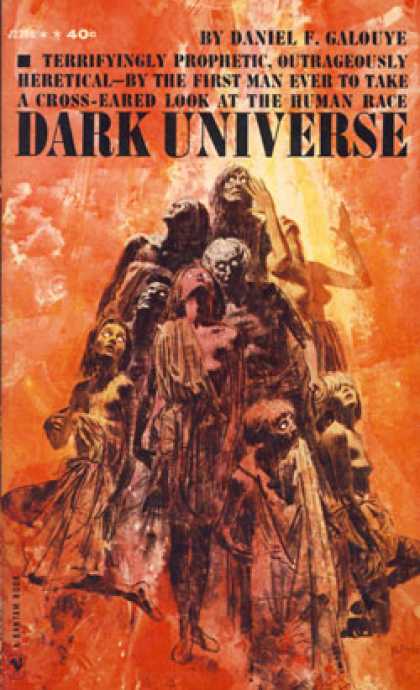
Dark Universe by Daniel Galouye


 See the source image
This novel was up for a Hugo. (According to Mike Resnick, if Galouye had voted for himself at the awards, he would have tied for a win.)


While there may be a few things I disagree with Richard Dawkins about, I do agree on the worth Galouye’s novel—not because I agree with the politics but with the quality of the speculation. However, we do disagree on ultimate destination, some significant science errors (interpretations?) that make it fun to discuss.

The novel is fascinating dissection of human society that (perhaps due to accident has fractured society by how it observes the world and, due to that, how they interpret the world. One group uses their ears to “see” while others use their eyes to pick up infrared while there’s a mysterious third group of “monsters,” little understood—those taken by them never return—not to mention assorted creatures of the cave system like the soubat.

I must admit to being put off by the novel, initially, because of the writing (obnoxious dialogue tags like “he determined”) and coyly hiding itself at first behind pronouns without antecedents. I was going to give up on it when I flipped to the end and read the ending and started over, which enhanced my enjoyment. If you struggle with it, try that.

Spoilers with Analysis:

Everybody’s living in caves (great literalization of Plato’s Cave metaphor). I’m not sure how large a population could actually be supported by a cave—probably not all of these levels with all of these people who have presumably adapted new genetic traits to survive in these habitats.

Dawkins loved this book because, essentially, a kind of atheistic science prevails; however, much as this was intended, a few problems remain. First, the "monsters" are destroying habitats of different cultures in the name of spreading its “superior” culture—another Manifest Destiny, which is no longer in favor. Or is it? Sometimes people today try to force their morality on others and punish them with loss of jobs. Should this be or not? In the novel it is definitely coerced although it’s ultimately presented as a good thing.

What if some of these people could not survive outside their habitat? In fact, if they evolved to live in a cave, they may have lost the ability to survive in other habitats.

Still, I loved the different descriptions of how various groups navigated the caves in different situations. Highly recommended.

Saturday, August 31, 2019

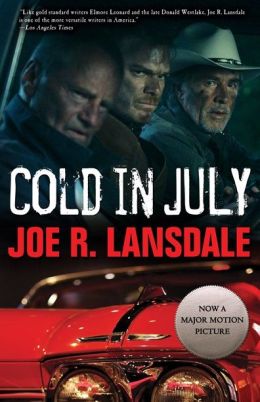
A Man’s Gotta Do: Cold in July by Joe Lansdale


Cold in July 
by Joe R. Lansdale 
Tachyon Publications 
General Fiction (Adult) , Mystery & Thrillers

Ann hears a noise and wakes her husband, a young father, to listen. He hears the sliding glass door open, so he grabs his .38 and ventures downstairs to greet his uninvited guest, who is passing a flashlight over the walls including a cheap landscape painting, which the narrator cover a Picasso (probably a joke since the subject doesn’t come back up).

When the two men meet, face to face, the narrator freezes and the burglar gets the first shot, missing the narrator which finally wakes him to action, putting a bullet in the burglar’s head.

The cops investigate the scene and recognize the burglar as Freddy Russel, who like his father, has been in and out of prison. They take the narrator down to get his and his wife’s statements. They assure him it’s an easy case of self-defense.

Ann and the narrator clean up the mess back home. The narrator struggles with guilt that even the temptation of snuggling with his wife can distract him from.
 
Even through the next day, guilt plagues him, despite the kudos he receives from the locals who all already know. Thinking of the burglar’s sparsely attended funeral, he drives to the cemetery to watch, despite the police chief warning him not to. The burglar’s father is there, none too pleased. He makes veiled threats about the narrator’s son, Jordan, kicking off the next series of crises where the narrator has to do what he can to protect his family.

Joe Lansdale described his novel, Cold in July, as having come from a dream. It doesn't feel exactly dreamlike, but it does have an unusual structure (I described Dan Braum's short novel as having a similar shifting structure over here but this one doubles Braum’s).

It’s a story of manhood: what it is, what a man has to do. By the end, it becomes less and less clear of the necessity of the narrator''s involvement although some might claim that, yes, he needs to be involved, yet the novel has to work to justify this involvement. That, though, may only make the investigation of what makes a man all the more interesting.

To some extent, manhood is always under the microscope in a Lansdale tale, but I have yet to read a more thorough investigation by Lansdale.

#

What follows becomes less of a review than a discussion of the work itself. If you read the novel, consider that a pass key to the rest of the discussion. If you haven’t read the novel, note that the literary police are watching you on your computer cameras and will raid your house if you read on.

Warning: Spoilers (to an extent)

The novel’s structure is unusual. That it works, throws into question structural plots. We open with a thriller, followed by a mystery, and end with a vigilante justice tale. Other plots, such as psychological (guilt about killing, guilt over fatherhood), might be thrown in as well. What holds the novel together is the question of manhood. What is it? This is what I love most about the novel. It isn’t just blind acceptance or total questioning of what manhood is, yet to some extent it expects us to accept some manhood justifications that should be questioned if not necessarily jettisoned.

When they find out Freddy Russel isn’t Freddy Russel, the protagonist has less and less reason to be in the novel. In fact, the novel focuses more and more on the other men. The protagonist does gain a lost father, perhaps finds his own fatherhood (if it was ever in question—which maybe it is since he has taken off, leaving his son, to go on an adventure he doesn’t have to take).

In this regard (not in the excitement department, which doesn't flag), the novel is flawed yet so is manhood. So maybe that’s all right.

#

I didn’t realize at first that this had been made into the movie. The movie departs in that the narrator isn’t justified in shooting an unarmed burglar and he slips on the trigger, which may be a more interesting question—something that could trigger more guilt (although the question of guilt melts away in both book and movie as soon as the narrator has to protect his son).

In both the novel and movie, the narrator discovers that Freddy isn’t Freddy, but the movie lacks motive for literally throwing Russel Sr. on the train tracks. The perpetrators have no call to do so and aren't challenged for doing this (although that does make it easier to make the narrator and Russel Sr. sudden allies, which makes less sense in the novel).

The movie has a more visceral motive to launch the boys into a vigilante story. The protagonist and I had to turn our heads. Still, for the most part, the narrative and themes are intact. Both are worth checking out.

Thursday, August 29, 2019


How to Fracture a Fairy Tale 
Jane Yolen 
Tachyon Publications 
SF & Fantasy, Teens & YA

How I feel about Jane Yolen’s How to Fracture a Fairy Tale has a lot to do with the book’s title. It is what drew me to the book, as a reader and as a writer. I started at the beginning and was reading through. The first couple of essays and stories caught my attention, but my interest started to flag. Maybe because I’ve read so many fairy tales and rewritten fairy tales, they lose their shininess after a few. A writer really has to alter the fairy tale significantly or remove the traces of the fairy tale in an updated telling. It isn’t enough to wave politics to reflect today’s mores (unless this is your first book of revised fairy tales).

I skipped to the poetry to see how those fared and found what I was looking for in the title. The commentary and poems show the writer’s mind at work. The writer herself said the poems were written to go with the stories, so I wondered why they were so separated from their story pairings. Maybe some people don’t like commentary. Maybe some don’t like poems, but the design should at least stand the poems beside the stories if not the commentary as well. Let those who only like stories turn one page instead of making everyone else—who is intrigued by the interplay between works, the way a fairy tale can be reconstructed in different ways—flip to the end of the book to read together what was intended to go together.

To me, the ordering affects how I’d rate the book. As it stands, it’s fine with some interesting retellings. If it were ordered as it seemed intended from the title and from the commentary, I’d recommend readers mob the book. At least, my mind became more engaged when I reordered.

The highlights of the collection include “Snow in Summer” (a Snow White retelling with a down-home voice) and “The Bridge's Complaint” (a bridge tells his version of the troll and the billy goats, mostly for the surprising perspective), “Great-Grandfather Dragon's Tale” (this describes an unusual “man raised by wild animals” tale—dragons, no less—interesting for its frame structure and the emotion evoked by a simple symbol). In “Cinder Elephant” Cinderella is overweight and can speak in the language of birds.

Even if the stories aren’t stunning, they contain intriguing aspects such as “Happy Dens; or, A Day in the Old Wolves' Home” where wolves in a nursing home get to tell their side of the story (a curious and ambiguous ending). There’s a nice wish-fulfilment one where the prophet, Elijah, saves Jews from concentration camps while another tells of a mother who’s died to return as a vampire.

A few, like the thrilling novelette “One Ox, Two Ox, Three Ox, and the Dragon King,” could have been improved by updating the fairy-tale-ness a little further, perhaps modernizing the language a little more or erasing more of the fairy-tale tracks.

The collection is definitely worth investigating. Maybe you agree with the present ordering, or maybe you can try it as the book seems to suggest it wants to be. Either way, turning the page isn’t too hard a chore to get the book that you want. I, for one, want How to Fracture a Fairy Tale.

Saturday, August 17, 2019

The Mad Scientist's Guide to World Domination: Original Short Fiction for the Modern Evil Genius, edited by John Joseph Adams


In preparing to review this John Joseph Adams anthology, I grappled with what it means to be a "mad scientist." The quintessential anthology was Stuart David Schiff's Mad Scientists. From these and from scientific ethics (at least that was why the subgenre originally arose), I distilled the quintessential elements of the sub-genre--that is, a scientist believes himself working for the greater good though he may not be. It seems that now, at least in reading the anthology under review, we have lost sight of the original point of the trope, which is both good and bad: good, in that we trust scientific endeavors (no questions asked); bad in that science, to be rigorous, requires that we ask questions, not just to challenge our assumptions bound to be behind any study but also to probe our own ethics.

I pointed to this story as the basis of the Mad Scientist trope. (I have other thoughts on the use of the trope here). Some stories just have a scientist doing something crazy, like Arthur C. Clarke's "Big Game Hunt" which has a scientist try to control a giant squid, but it lacks the dynamo that makes the sub-field fascinating.

Most famously, we have Mary Shelley's Frankenstein, the scientist who wanted to create life. What was his motivation: to bring back loved ones? to spawn new creatures? to play God? Whatever his motive, I think we can understand it at least to an extent, so long as we isolate his original motive from the outcome. Frankenstein's sin may be his lack of follow-through, or maybe just the attempt itself if you believe the movie versions. Whatever his motive and whatever his sin, it is their contrast that powers Shelley's famed novel. Otherwise, the mad-scientist tale comes off flat.

Some narratives contrast two ethical stances, one or both of which may be problematic (who is the mad or madder scientist?) Sometimes the mad one isn't even the ostensible mad scientist. While the narrator isn't always "mad" or a scientist, the ones who aren't problematic is some fundamental manner dull the narrative.

Many feature unreliable narrators, but that need not necessarily be as we witness in Frankenstein. As you can tell by the title of this anthology, the stories can run from humorous to the serious, but still a contrast between one's goal and ethical outcome make stronger stories. If it's just a gag, the story will fall flat.


  • Professor Incognito Apologizes: An Itemized List • short story by Austin Grossman
This is an apology told in the mad scientist's voice, which is this story's primary strength. It feigns at the mad scientist trope to talk as a metaphor for the failure of relationships.
  • Father of the Groom • short story by Harry Turtledove
This literalizes a common joke about bad brides. 
  • Laughter at the Academy: A Field Study in the Genesis of Schizotypal Creative Genius Personality Disorder (SCGPD) • short story by Seanan McGuire
Interesting thought-piece on the creation of mad scientists.
  • Letter to the Editor • short story by David D. Levine
This is a kind of tour-de-force critique of Superman (or Ultimate man) with a call to action. What makes this succeed is the switch on whom we should root for. The ending doesn't carry the same weight, but as a letter-to-an-editor format, it's still impressive for those limitations. 
  • Instead of a Loving Heart • short story by Jeremiah Tolbert
A robot, who serves a mad scientist, has to contemplate his existence against the impending arrival of something more intelligent and more powerful than anything that has existed before.
  • The Executor • short story by Daniel H. Wilson
A mad scientist has set up a legacy for his descendants, but in order to get it, someone has to answer the riddle within five seconds.
  • The Angel of Death Has a Business Plan • short story by Heather Lindsley
The protagonist works with mad scientists on their monologue. Cute.
  • Homo Perfectus • short story by Dave Farland
Damien uses pheromones to get in with Asia, but as he approaches what he thinks he wants, he recognizes a subtler and more accurate approach.
  • Ancient Equations • short story by L. A. Banks
A mad scientist need not use science but call up Kali, for more than one reason.
  • Rural Singularity • short story by Alan Dean Foster
A reporter finds a young girl capable of miracles--scientific ones--but he doesn't quite buy into what he's told. Interesting but ends still questing for significance.
  • Captain Justice Saves the Day • short story by Genevieve Valentine
A good secretary is needed to keep these guys in line--not that they'll ever notice.
  • The Mad Scientist's Daughter • novelette by Theodora Goss
This was a runner-up for the Locus award. It has inherent drama just from the scenario: a bunch of mad scientists' daughters gather to tell their stories. They are neglected and abused but from so great a remove that the narrative gears are absent. Interesting concept, though.
  • The Space Between • novella by Diana Gabaldon
While this sounded interesting, it may require knowledge of the series, which I have yet to explore. It seems interesting, but probably not a good entry point into the series.
  • Harry and Marlowe Meet the Founder of the Aetherian Revolution • short story by Carrie Vaughn
Carrie Vaughn gives a thrilling episode in her series with. Although the story can be appreciated alone, it would help the reader to be versed in the background of this dynamic duo. Their relationship seems to be developed elsewhere.

  • Blood & Stardust • short story by Laird Barron
Laird Barron has an ugly henchwoman who was been raised as the mad scientist's child but steps out (see also Goss's work, albeit a bit more dynamic)
  • A More Perfect Union • short story by L. E. Modesitt, Jr.
L. E. Modesitt, Jr., more than most of the writers here, really works on the trope in "A More Perfect Union" and takes it into an interesting direction: political science. Unfortunately, the writer must have had constraints for the tale isn't as engagingly told as it could be.

  • Rocks Fall • short story by Naomi Novik
Naomi Novik's "Rock Fall is more of superhero comic-book villain, but the scenario is the setup is unique. The follow-through didn't fully click.

  • We Interrupt This Broadcast • short story by Mary Robinette Kowal
Mary Robinette Kowal's place us empathetically in the mind of a true mad scientist who makes devastating miscalculation. Solid work.
  • The Last Dignity of Man • novelette by Marjorie M. Liu
Marjory M Liu's "The Last Dignity of Man" has a similar slipstream which flips Ford's situation (opening and development are fascinating, the closing not so much). 
  • The Pittsburgh Technology • short story by Jeffrey Ford
A handful of works don't really engage the trope but still provoke thought. Jeffrey Ford's "The Pittsburgh Technology" tackles a familiar set-up: a loser looks for a better life and is given the opportunity (arguably slipstream--the opening isn't strong, but that ending zings).

  • Mofongo Knows • short story by Grady Hendrix

Grady Hendrix's "Mofongo Knows" is really the highlight of the anthology. It takes you inside the decline and "fall" of a dynamic superhero Steve Savage and his foe, the "Gorilla of the Mind, Mofongo," who can influence people and things through the power of his mind. However, Mofongo has been captured by Savage and they've been a sideshow ever since. Mofongo seems to exist merely to have someone to taunt and be taunted by. When Savage passes, the course of Mofongo's life will change--for good or for ill. It starts humorous and becomes surprisingly moving.

  • The Food Taster's Boy • short story by Ben H. Winters
The collection closes with strong work by Ben H Winters. A mad scientist conducts a cruel experiment just to witness cinematic results that don't quite pan out as he expected. Interesting (since it's intentionally problematic) thought piece.


Monday, August 12, 2019

Review: The Serpent's Shadow by Daniel Braum


Daniel has constructed a story (call it a "half-novel") that is both simple and exceedingly strange. It opens with this to set the stage and tone which gains significance later):

The Serpent's Shadow by [Braum, Daniel]"My sister’s voice eclipsed whatever it was I had been thinking of. Something about space. And the stars. An image of opal green scales faded from my memory. Regina was right. I was staring out our balcony doors at the Mayan ruin on the shore and I…I must have nodded off. I shifted my head and all I saw was glare and the reflection of our fancy hotel room in the glass."
Dave and his sister, Regina, fly with their parents to Mexico over Christmas to vacation anong the Mayan ruins. Dave runs into Anne Marie, a Guatemalan from Albany, attending SUNY but visiting Mexico like Dave. Dave is immediately smitten:

"a tall girl in blue jean cut-offs and a tight shirt. The shirt was one of those black t-shirts with the white sleeves.... She was wearing one of those palm hats from the guy at the curb and unruly dark curls stuck out in all directions from beneath it.... I couldn’t look away even though she was looking right at me and was totally going to notice. She looked over her shoulder as if expecting someone to follow through the exit. Then she glanced around the crowd, smiled and walked in my direction. I guessed she was about my age but something about the confidence with which she carried herself made her seem so much older than everyone milling about, jostling for position in line and the crowd."

They hook up and travel with her sister and fiance to the Mayan ruins where they meet a guide whose ideas of contemporary and ancient Mayans are mystical.

This is where it gets strange. The story primes us for horror. We're given Love Story A, which slides into Horror Story A, and morphs into Horror Story B (and possibly Love Story B). This isn't to say that Horror Story B wasn't lurking in the background all along, but I, at least, was surprised where the story lead.

The flavor of the tale is very much Lucius Shepard at his best (the 80s and early 90s) when Shepard used Latin America as a dark, inexorable, supernatural thrum, edging his readers closer to the ineffable.

This tale could have been tighter with more character development although the characters are etched with deft strokes: "Regina made that exasperated look she reserved for Mom and Dad’s more embarrassing parental displays such as blatantly hoarding extra bags of peanuts on the plane ride down here."

Overall, it's a satisfying read. Horror fiends will be pleased.

Tuesday, July 23, 2019

Cassandra Rose Clarke: The Mad Scientist's Daughter

The Mad Scientist's Daughter 
by Cassandra Rose Clarke 
Angry Robot

See the source imageIn a post-ecological-disaster world, Cat has been her own teacher, wandering nature. But her dad, a cyberneticist, brings home Finn, a being Cat initially took for a ghost. Finn becomes her teacher, a great resource for stories, math and science. At a party it becomes clear Finn is a robot although Cat remains convinced of his being a ghost until he admits what he is.

As she gets older, she becomes more and more fond of Finn. She gets in a fight at school with a kid who calls Finn an "it." She dates other boys, but they are all dis-satisfactory. One night she kisses Finn with disastrous consequences. Her father doesn't seem to buy her excuses but also doesn't seem to mind, either.

She goes to college. Her mother dies, and there is a see-saw between Finn and human lovers.

While it isn't heavily science fiction, it is SF--hypnotically told. Although Clarke's exploration of tropes is limited, she can tell a good tale. Because of the romantic nature and the serious treatment of romancing an AI, the novel doesn't seem well named except for her father's reaction to her kiss (not that he knows for certain what happened--or does he?). What's fascinating is what remains unstated but holds Cat's riveted to Finn. It must be unquestioning devotion. Even when she takes on other lovers, he does not. He remains faithful and hurries to her side when he's needed.

The narrator voice opens wonderfully childlike, aging as the narrator ages, and the detail is precise and evocative. The story title is predated by one written by Theodora Goss (I reviewed it as part of this JJ Adams' Mad Scientist anthology). They seem to have little overlap, and this has a stronger narrative thread, perhaps due to focusing on one character and being a novel.

I don't read many love stories as I don't find them realistic. Strange then that I was taken in by this one with an automaton. The ending did push character credibility, but still recommended if you're in the mood for a good storyteller.

Sunday, July 7, 2019

Review: The Planet Thieves by Dan Krokos


The Planet Thieves
by Dan Krokos 
Starscape 
Macmillan-Tor/Forge 
Children's Fiction , Sci Fi & Fantasy
This won the Hal Clement (Golden Duck) Award for YA SF fiction.

Cadet Mason Stark boarded the SS Egypt with seventeen of his fellow cadets from the Academy for Earth Space Command. It was supposed to be a routine trip, so he sneaked off to where he wasn't supposed to be to pull a prank on his sister. Except suddenly there's a red alert indicating the Tremist were near. The Tremist were aliens who had been at war with humanity for sixty years.

Stark is caught and sent to the brig. A friend springs him as the battle isn't leaning toward the humans. He, Tom, and Merrin grab projectile weapons and sneak up on the Tremist kind who is gloating over the vanquished humans, demanding to know where the "weapon" is. The cadets launch into battle but their weapons have little effect. The king's armor just seems to absorb the energy. All seems lost, but Mason has a few tricks up his sleeve and gets a Tremist suit of his own. Can he and his cadets be enough to turn the tide against the Tremist?

I picked this one for its fantastic pulpy title alone. Pure genius. It's a thrill a minute--perfect for readers who want high-impact, high energy narratives.  Here's a sample to get a feel for it:

Tom waited for them in the elevator, holding it open with his arm. “Get in!” he hissed. 
Just as the talon stopped cutting into the wall. 
“Shh, quiet,” a man’s voice said from down the corridor. “Listen.” But Mason knew there could be no men left; the chuffing sounds the P-cannons made had faded to silence. So who had spoke? It didn’t matter: facing the Tremist unarmed would help no one. Mason and Merrin padded toward the elevator as quietly as they could. Now he wanted to run, but their footsteps would give away their presence. 
Then the ship’s computer, Elizabeth, said, “Cadet Renner, please stop blocking the elevator door.” 
Mason and Merrin jumped into the elevator and spun in time to see three Tremist charge around the corner. They were at full sprint, faster than he thought men could move. Their plate armor shimmered wetly, shifting between purple and black, catching the sterile light of the spaceship and making it alien. Mason saw his own face in the flat mirrored surface that was the leading Tremist’s faceplate. 
Tom had moved his arm, but the door was still open. They were only thirty feet away now. 
“Shut the door!” Mason yelled, pressing himself against the wall. 
“Thank you,” Elizabeth replied airily, and the door began to shut. 
The three Tremist paused when they realized they wouldn’t make it in time, and then lifted the talons to their shoulders. The soldier part of Mason’s brain, the part that didn’t get afraid, noted the angle at which the Tremist held their weapons, how, in the next second, each beam would slice through them at the breastbone.
The door sealed; Mason dragged Merrin and Tom to the floor as the talons’ green beams crisscrossed through the door and heated the air above them until it was crackling. Then the car descended, giving the illusion of the beams rising up through the door until they disappeared through the ceiling. 
The air was hot and baked and smelled like electricity. 
Image result for The Black Stars The Planet Thieves, Book 2 By: Dan Krokos noble "excerpt"The door opened on the next level down, into a corridor identical to the one they just left.  
Tom had his dataslate plugged into a port on the elevator. “Erasing our destination level . . . now! Bought us a few minutes.” 
Merrin took the pad out of his hand. Her fingers danced over the screen until it flashed red. “There—the elevator is frozen.”
I loved it, but did wish for a little wider scope or canvas. There is some bogus science here--about a planet throwing off the balance of gravity in a solar system, but oh well. The novel's a blast and hopefully it will encourage kids to stretch their imaginations and maybe investigate the sciences.

There's a second book in the series where Mason is on edge of getting kicked out of Academy II for defending cadets from bullies. Fun stuff. Fingers crossed that more in this series are forthcoming.