Search This Blog

Showing posts with label killing characters. Show all posts

Sunday, February 2, 2025

Night-Rise by Katherine Maclean

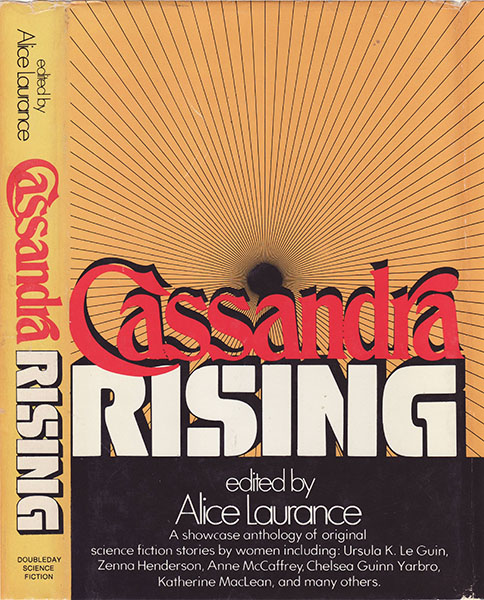
 First appeared in Alice Laurance's Cassandra Rising. Reprinted by Ursula K. Le Guin and Brian Attebery.

Summary:

A reporter takes in the story of a "Dark Christ"--a person or people who are, in this world, not necessarily anti-Christ or maybe they are. They are described more in terms of Yin-Yang--the destructive version of Christ. The reporter is witness to a murder.

Discussion (with Spoilers):

The reporter does not report the crime. Drunk, he goes down to the docks and he himself is killed by the same group.

It has long been a debate whether journalists should be involved in news or just report on it. If the journalist had reported them, perhaps he might have still been alive.

This is philosophical fiction, yes, but is this SF? It speculates on this religion, but it could as well be of our world now or in the past.

Probably the most interesting thing about the story is where it appeared. The editor opens with a small window on women in SF and probably one of the more interesting looks women in SF, looking at the male writers, too, discussing what she considered worthwhile portrayals of female characters. 

Moreover, some complained about the political nature of Le Guin's The Norton Book of Science Fiction. And we have a story that no one else noticed (which could be cool, rescuing a good story from obscurity), but it isn't really SF, which lends some credence to the complaint.

While written by a woman, however, the story is about a man. Given the above, is this meant to be a critique of men? Let's come back to this after parsing possibilities.

So we have a religion who feels free to take lives. There's no discussion of the beliefs, per se, so maybe it could be any affiliation--political, social--except they define themselves as like but opposite of Christ.

They kill a man who is interested in boys. Is this ethical? If it is, then a journalist who doesn't report this murder, shouldn't be held responsible, but yet he is killed as well. Why? Is it because he drank? Is that ethical? Are both murders justified or neither or only one? How do you as a reader feel about the murders?

Once we establish this, we might understand better how we might feel toward the murder of the journalist. Because we inhabit the journalist, my suspicion is that we are meant to find some empathy toward him. Not always, of course. And maybe not completely. 

"[The journalist] imagined he saw young, sympathetic faces around him, sympathetic but mistaken. But it was took black, he could see nothing.

"Trying to speak, felt the caress of white silk around his neck." 

The speaker gives positive attributes to the killers ("sympathetic" and caress") but also calls them "mistaken." In retrospect, he sees himself as blind (or "could see nothing.") 

Back to the topic of men and women, then, what does this suggest about male and female traits? Is this meant to suggest that men are more likely to kill and turn a blind eye?

Tuesday, April 25, 2023

The British TV Mystery -- Successes, Drawbacks

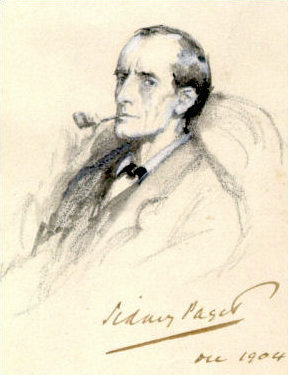
 Sherlock Holmes Portrait Paget.jpg

The British are known not just for their rich literary history but also for their mysteries: Sherlock Holmes, Miss Marple, Hercules Poirot. It's their most common export to American television.

My parents used to stay up to watch British mysteries--a highlight of their Sunday evenings--preferring their intellectual engagement over the American variety although they watched American variety as well. Dad, despite or because of having been in the FBI, never lost his penchant for police investigations.

Mom, however, has become a powerful story-telling barometer. If the story is good enough, she'll stay awake. If not, she sleeps. It's not that she does this intentionally, but a good story will keep her up. Show her a literary adaptation, and she'll remain rapt.

Now why should she still love British mysteries if half lull her to sleep? One thing they're selling is their culture. What is ordinary life in England like? They often will show a pub, a committee meeting, a family home, a school house, a police department. Whatever. How aware they are of this? Keenly? Or not so much? Americans at least recognize it as one sponsor is a cruise line that briefly advertises at the beginning and end of a show. So the mystery is a vicarious travelogue.

Clearly, this alone, however, won't hold one's attention

There's almost always a status quo scene, which American shows may skip. But it plays a vital part of setting up the story. Now if done right, the status quo scene(s) can hold one's attention. An episode of Midsomar Murders Spanish dance scene at a local dance hall that held fairly strong tension as people displayed their attitudes. This led into the first murder. 

These status-quo scenes can be rich and powerful opportunities not just for culture, but also character, which can make the mystery memorable. But sometimes the British mysteries trudge a bit too slowly--I'd qualify this "for American taste" but how is that we remain rapt for the British literary adaptation? 

Beside tension and characters, another powerful draw is the unraveling through-thread that provides a pull throughout the story. It is the scaffolding that allows us to cobble together the story from the investigation. Take the compelling game of the power of attorney in "Sauce for the Goose." While the murder itself may be absurdly improbable, the unraveling of this game of power is riveting.

I'll come back to this topic again later.

Friday, October 8, 2021

Badlands, Springstein on character, and losing parts of a narrative to great effect

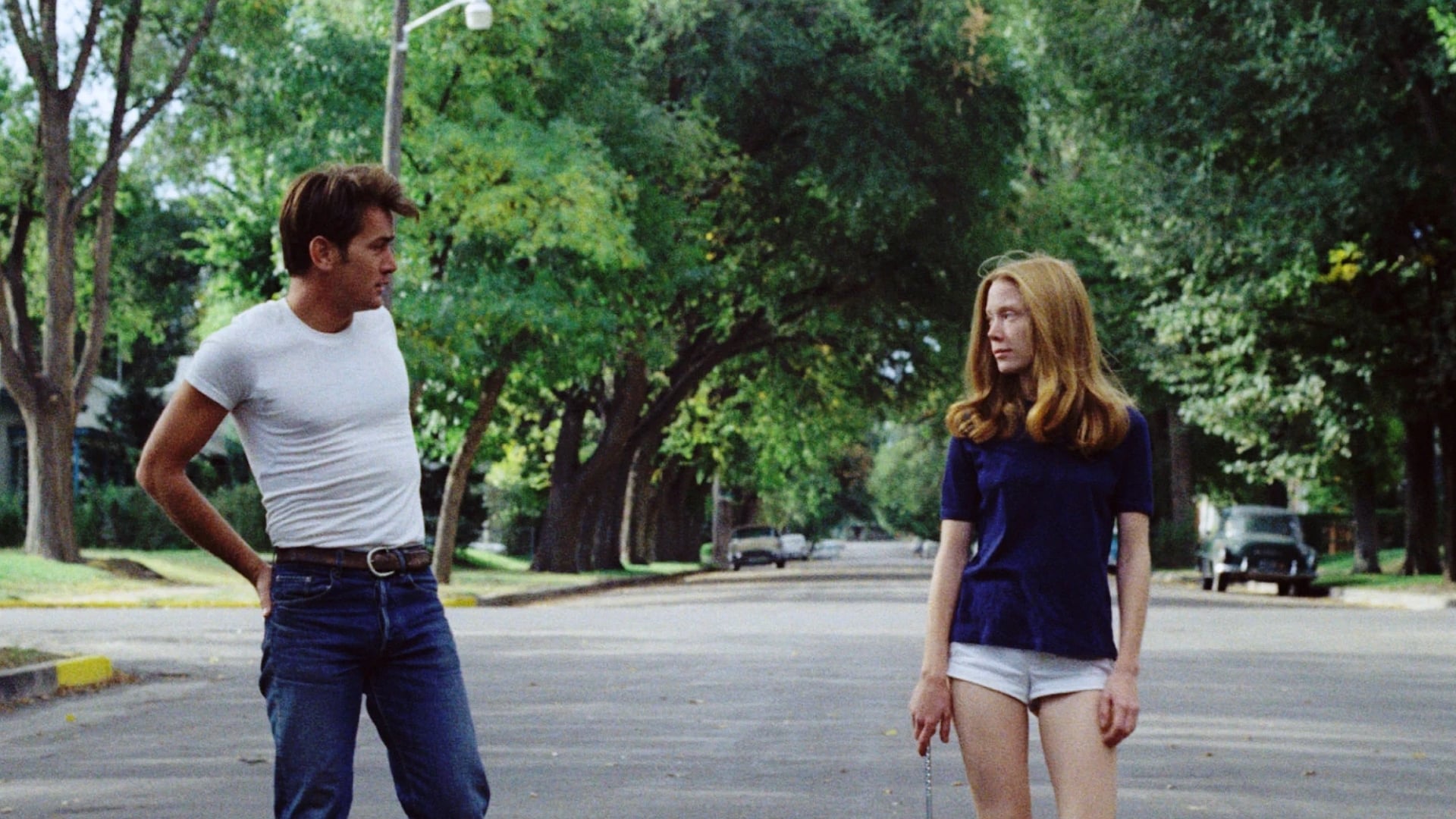
"You've got to find out what you've got in common with that character, no matter who they are or what they did," says Bruce Springstein on writing his narrative songs.

"So 'Nebraska' is a song written with the premise that everyone knows what it's like to be condemned." 
 
The above was inspired by the movie Badlands and Charlie Starkweather, whose life the film (and song) was loosely based on.
 
Tony Tost wrote, "This may be the greatest American film ever made without a single character with an IQ over 100." 
 
Is this following spoiler? Maybe a little. Watch it first. 
 
I may not have ever felt so much for characters who were serial killers--certainly not for their crimes and here mostly for her... until that last line which recasts him in a new light (the light had been there, but it clarified). Amazing how one line can change everything.
 
Also, that whole build up. There's no exciting climax*, no final show down. Just the impending doom and his reaction to what's happening. Heartbreaking. It's interesting what can be excluded from a story and yet remain powerful.

*One could claim that it is exciting, after a fashion--the sheer number of bodies suddenly on screen where there had been so few before. Also the climax is exciting in terms of one's psychological make-up. So perhaps what one takes out, one must replace.
 
See the source image