Appears in Nightmare.
The title says it all. Any townie--who has had to walk out, late at night, to talk to a kid or a drunk or whoever has their truck revving, music thumping, or headlights blasting into you bedroom--will empathize. Maybe this is a lower-class problem.
I read this on Cat Rambo's recommend. While I didn't find it chilling as Rambo had--probably because I guessed the outcome from the title--it didn't need to be to be enjoyed. Boskovich does a great job evoking sympathy for our protagonist.

APB-SAL is a blog about education, science, science education, fiction, science fiction, literature, literary stories, poetry, and anything else that strikes the blogger's fancy. NOTE: This blog interrogates art. It rarely make moral proclamations. For that attend the church or politician of your choice. This blog concerns aesthetics, not propaganda. Consider this as interviews with books where the interviewer presents interviewees, so you get what you need to do your own thinking.
Showing posts with label Nightmare magazine. Show all posts
Showing posts with label Nightmare magazine. Show all posts
Tuesday, August 26, 2014

Monday, January 13, 2014
"Bonfires" by Marc Laidlaw
Appeared in Nightmare magazine.
The pyromaniac narrator and his lover create a great bonfire. Young woman was talked into going in (sacrifice?), but narrator pulls her out, says it was a lie, what she'd been told. The lover says it wasn't a lie, says she come back, goes back out to sea.
Since the lover's actions are enigmatic (the narrator's a little less so), this feels like an epic battle between gods who love but war in our hearts.
The pyromaniac narrator and his lover create a great bonfire. Young woman was talked into going in (sacrifice?), but narrator pulls her out, says it was a lie, what she'd been told. The lover says it wasn't a lie, says she come back, goes back out to sea.
Since the lover's actions are enigmatic (the narrator's a little less so), this feels like an epic battle between gods who love but war in our hearts.
"All My Princes Are Gone" by Jennifer Giesbrecht
Appeared in Nightmare magazine.
This surrealistic mythic riff is based on the Ereshkigal and Ishtar myths of the ancient Mesopotamian religion--from ye olde "cradle of civilization." This last may be the key to getting under the story's skin. It relates basically a battle of monster-gods, some of whom want softer creatures, not animals. The gods appear to bide their time for their opportunity.
The story captures well the rhythm and sound of myths. Have the monsters ever left?
This surrealistic mythic riff is based on the Ereshkigal and Ishtar myths of the ancient Mesopotamian religion--from ye olde "cradle of civilization." This last may be the key to getting under the story's skin. It relates basically a battle of monster-gods, some of whom want softer creatures, not animals. The gods appear to bide their time for their opportunity.
The story captures well the rhythm and sound of myths. Have the monsters ever left?
Tuesday, January 7, 2014
"Construction Project" by Desirina Boskovich
First appeared in Nightmare.
The narrator couple try to keep a beast outside their house. They build and build--including a safe room--until they've sealed themselves inside. Once inside they're not sure what to do until they're not sure what to do since they've been building so long. However, they realize that they've built the beast inside. Into the safe room. All that's left, they initially think, is a ritual. But once performed, could they have come up with another choice? Th climax is gruesome.
The narrator couple try to keep a beast outside their house. They build and build--including a safe room--until they've sealed themselves inside. Once inside they're not sure what to do until they're not sure what to do since they've been building so long. However, they realize that they've built the beast inside. Into the safe room. All that's left, they initially think, is a ritual. But once performed, could they have come up with another choice? Th climax is gruesome.
"The Beasts of the Earth, the Madness of Men" by Brooke Bolander
First appeared in Nightmare.
Interesting, surreal if grotesquely described work. The emphasis is on style over plot, which is essentially:
Perth eternally chases after a whale. In the end the whale drives itself ashore, refuses to play the game anymore. But Perth insists and somehow--because the gulls pick the carcass clean--they've started anew.
It seems to be a tale in conversation with Herman Melville's Moby Dick. When we were in Clarion West, Howard Waldrop told us that another whale story couldn't be written. Here it is, Howard! I'm not sure if he heard me.
Anyway, Melville's is about the impossibility or folly of attacking a universal God. He was very keen on Nathaniel Hawthorne's opinion on his work, which Hawthorne blessed. So maybe Bolander suggests that we constantly attack the whale, forever, and just when you think you've killed it, it goes on. Or it could just be a gender examination contrasting how women attack a thing versus men. Ahab was bent on destroying, Perth the chase was all. Or it be a genderless thing where people have this illusive goal we relentless pursue.
Lots of food for thought.
Interesting, surreal if grotesquely described work. The emphasis is on style over plot, which is essentially:
Perth eternally chases after a whale. In the end the whale drives itself ashore, refuses to play the game anymore. But Perth insists and somehow--because the gulls pick the carcass clean--they've started anew.
It seems to be a tale in conversation with Herman Melville's Moby Dick. When we were in Clarion West, Howard Waldrop told us that another whale story couldn't be written. Here it is, Howard! I'm not sure if he heard me.
Anyway, Melville's is about the impossibility or folly of attacking a universal God. He was very keen on Nathaniel Hawthorne's opinion on his work, which Hawthorne blessed. So maybe Bolander suggests that we constantly attack the whale, forever, and just when you think you've killed it, it goes on. Or it could just be a gender examination contrasting how women attack a thing versus men. Ahab was bent on destroying, Perth the chase was all. Or it be a genderless thing where people have this illusive goal we relentless pursue.
Lots of food for thought.
Tuesday, October 8, 2013
"The Mummy's Heart" by Norman Partridge
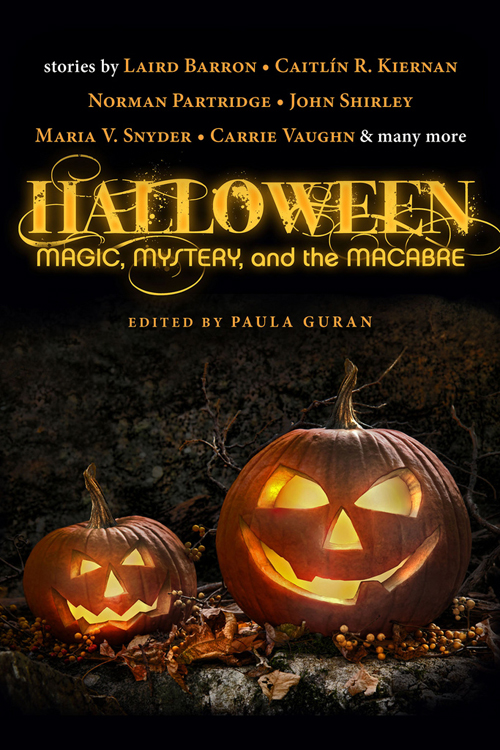
The cops get the guy, but the narrator's brother is dead and the girl has disappeared. If the tale had ended here, the story would have been competent but forgettable.
But it keeps going. We wonder if our narrator has lost his wits. Was he imagining this all?
Our narrator goes to Vietnam, returns to be a cop in town. But then a similar scenario plays out: A biker gang is herding a young woman into the lake using flares. They have a shootout, and this time the narrator saves the girl. Or does he?
I like a good, brief philosophical opening, but this one goes on too long. Maybe skip it and come back to it after reading the tale through. There are some open-ended, impossible-to-resolve aspects that some readers may enjoy speculating about: Is there something in the lake?
Definitely check this one out. This made me look for more of Partridge's work. Most recently he's appeared in Nightmare magazine: "Bloody Mary".
Subscribe to:
Posts (Atom)