Search This Blog

Showing posts with label Henry James. Show all posts

Wednesday, March 18, 2020

The Romance of Romance (II)


So I subscribed to Audible Escape and have read several to get a sense of their structure. Also, a female poet and I are collaborating on a book about a relationship that evolved over time. This structure might be worth knowing to follow or to buck. I didn’t know how to tell which writers were good, which not, so I skipped around, sometimes looking at popularity, sometimes brevity to get a feel for the genre.

In romances, the above barriers are often just initial hurdles to appreciating these books. I really like Debbie Macomber’s [Debbie Macomber?] Shirley, Goodness and Mercy, which is about a man who owns an ailing vineyard and has neglected his wives in the past but will turn around here. The title refers to not only a Bible verse, but also three angels [angels? can a good book be written about angels?]. But it unfolds a sweet, lovely tale with a semi-sophisticated theology along the lines of the prodigal-son parable. Its closest literary kin would be “A Christmas Carol” by Charles Dickens.
Cassie Edwards wrote a few with the word Savage in the titles, which I had no idea what they meant. Maybe a primitive or “violent” love, but instead it referred to a racial slur about Native Americans and turned that into steamy romances about falling for Native American men in the Old West, which repurposes something negative into something positive although some may still balk. Caucasian cowboys tend to be the bad guys.

Often, both protagonists are struck by the “thunderbolt”—an unreasoning, unreasonable love-struck state that Mario Puzo described in The Godfather (discussion here). However, since there are often a good guy and bad guy who both are struck by the thunderbolt—why should one thunderbolt make her fall in love but not the other? Sometimes in the novels it’s sheer persistence (if she has only one suitor), which men aren’t supposed to do any more. If she says no, then that’s supposed to be it although some romance novels suggest otherwise, especially if it’s an opposites-attract type.

A number of romances—especially from decades prior to #MeToo, which went from confession to a political movement—involve the male pushing physical boundaries, not simply pursuing with words. The man presses her lips with a kiss, which if she doesn’t melt immediately, she will eventually. You can glimpse it even in literary speculative fiction like John Crowley’s Little Big, so it seems to have been a literary expectation in romances. In fact, it is often male desire that initiates female desire. I read an article that romance writers vowed not to write this way, anymore, but I’m guessing, given the nature of the humanity’s distribution of tastes and attributes being cast along bell curve, it will continue to be written.

Not that I’m taking feminist stance, but romance stories without reason were most striking from a “scientific” or objective study of human nature, but I’d be more interested in tales about like minds uniting—a type I never found in my forays across the genre (undoubtedly, they exist in a dusty library alcove). Often, the couple’s reaction is immediate and without logic. This isn’t to say that love isn’t like this, but why aren’t there stories where people slowly fall in love, taking tentative steps forward? Yes, this seems right. No, I’m not sure about that....

You’d think caution would be reasonable since the commitment is supposed to last, as the novels often conclude with this being “forever” or “always.”

Usually the couple are of unlike minds; bizarre circumstances thrust them together; and the couple accidentally fall into each other’s arms and unable to resist falling in love. There sure are a lot of alpha males out there with money breeding in their pockets.

In some stories, the male protagonist is conveniently contrived to know exactly what’s happening in the female’s mind, which would be nice, but highly improbable, especially if he’s an alpha. If he’s a beta, he may well have the ability to sense emotion, but not read minds.
Think about it. One type takes action. The other observes. Which will be more likely to read? But there are exceptions to any rule—probably someone who has spent time in both categories.

Why not a romance where, strangely enough, the characters might be able to gauge emotions, but not know the reasons behind them? Or maybe they mistake emotion “X” for curiosity. Perhaps this is too literary and complex for a genre romance—much as male lovers of thrillers want definite good guys and bad.

Romances seem to be more wish fulfillment than an attempt to mirror reality, which carries no shame. That vein is the same men mine from James Bond, especially the early films. Whether or not a romance story stretches credulity throughout, most seem to be sweets for those weary of a dismal life and dismal news reports.

(I may or may not revisit this topic as I finish this Audible Escape trial. My plans include more, ahem, Debbie Macomber, Georgette Heyer (Kij Johnson recommended her, if I recall correctly), and the usual literary suspects, and anyone else who comes recommended.)

Monday, March 16, 2020

The Romance of Romance (I)


When I worked on a dredge ship as a lad, I had a boss who recommended that I read romances so that I could understand the feminine mind and woo them. I didn’t (see four reasons why below)—at least, none but the Pulitzer-winning Gone with the Wind by Margaret Mitchell and literary classics like those by Jane Austen, George Eliot, the Bronte sisters, etc.

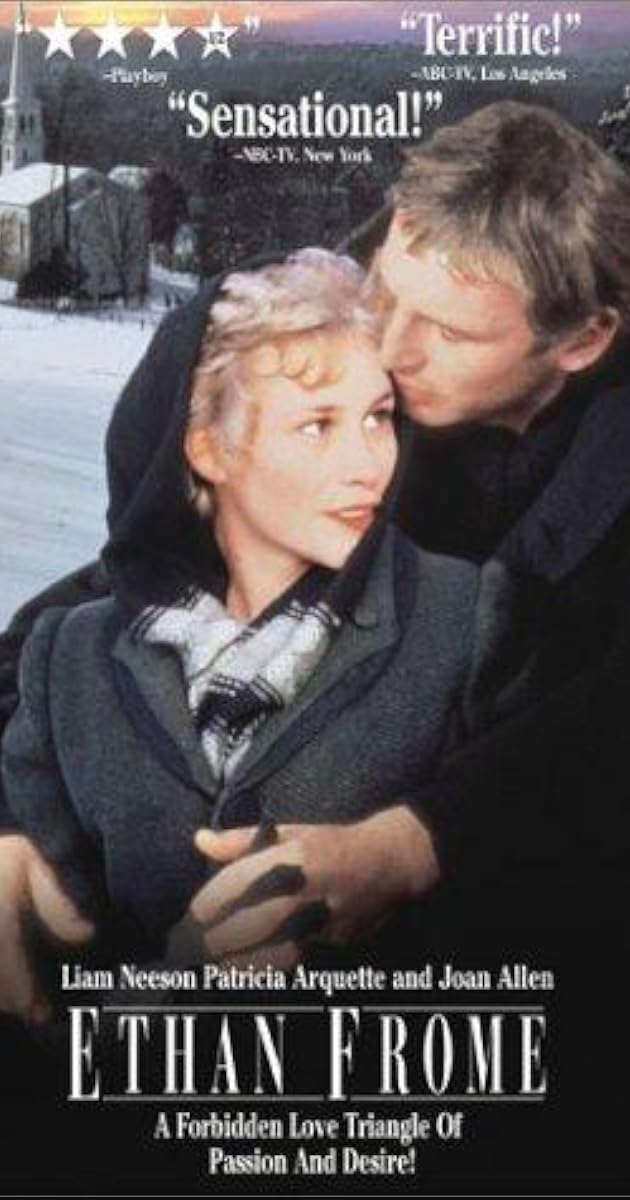
I recently reread Edith Wharton’s Ethan Frome, which is labeled as a romance although I’m not sure why. A man abandons his wife for a younger woman who has been living with them—a cousin whose father and former wealth have both passed on. What makes the novel powerful is not the ill-fated couple’s love despite a wife who tries to separate them, but that of long-suffering wife’s who by the end is suddenly thrown into new light by the foolish impetuosity of the other two. (Your mileage may vary, of course.) If it is a romance, then the modern romance seems to be riddled with tragedy.

See also Henry James’s DaisyMiller, which is also lumped into this category. Two men fall in love with a woman, and she doesn’t seem to love either although she seems to love them being in love with her. And then she [Spoiler redacted. See link for spoilers un-redacted.] This is a love story?

Maybe just the fact that someone is in love with someone else—requited or not—is enough to qualify a story to be a romance. In other instances, the romance seems merely pleasant, not involving romantic love at all. So maybe in some instances, a romance could be a story with a happy ending.

Four things barred my interest in the non-literary romance.

The first being their covers. Bare-chested men—or otherwise, a hunk. Women with wind-blown hair. Sometimes together, sometimes separate, with nothing more to indicate their complicated situation. The covers are often fluffy, brightly colorful and designed to catch the feminine eye. I like the kind of cozies and locked-room mysteries that Agatha Christie wrote but so many modern covers of this ilk are littered with dogs, cats, prettily colored cottages. The mind reels. Make the sign of the cross, to protect yourself.

The second are the openings. The characters are way too idealized. This perfect woman meets that perfect man, but the imperfect community strives to keep them apart (or the man is imperfect until she reforms him). Despite being the lead characters, too few have imperfect women like Gone with the Wind. Although Scarlett may have been a little too imperfect, she eventually makes herself admirable. And spoiler alert, she doesn’t even get the guy. Is that romance?

(It is interesting that readers of these books long for the idealized view of people, rather than a realistic picture. Maybe men are the same: idealizing men as unflawed, conquering heroes, battling mastermind criminals, but I don’t think most men see themselves in place of such heroes but rather wished they could be that flawless. I’ll discuss James Bond in a different post.)

Third, the initial scenarios are hard to buy. Jennifer Blake’s Roan starts enticingly enough: A woman is kidnapped but she escapes with a gun only to be shot at by the police, thinking she had Stockholm syndrome like Patty Hurst. [Consider the rest of this to be spoilers although it’s necessary to establish the length the genre goes to stretch credulity.] Her shooter is a rugged cop who lives in the beautiful country and takes her to be a prisoner under house arrest in his own home because the prison is full of evil men who might touch and leer at her, which of course the cop does when he makes her a prisoner, but it’s ethically okay because he’s a handsome cop and one of the good guys. She, of course, is a rich heiress which she cannot tell us or the cop until toward the ending when they happen to bump into her former fiancĂ©.

Finally, the writing at times is awful. Some passages may be nice enough description, but it’s awkwardly done: Why would the character be studying her house now? Why is she looking in the mirror to observe her over-looked beauty? It’s almost as if she knew the reader was present and she’s trying to sell us on all her good points while at the same time pretending to be modest about her good points.

Last February, Audible had a free two-month trial of their Escape program, one of which was James Lee Burke’s Black Cherry Blues, which I wanted to read anyway—possibly his best book. His main character, Dave Robicheaux seems to embroil himself with men still haunted by Vietnam, twenty years after the war, but here he has lost his wife and his job and is trying to clear himself of a crime he didn’t commit all while trying to raise a young orphan. Somehow not being chained to being a cop frees the book to become a literary mystery, which I suspect has been his aim. There has always been an element of this in his books, often digging into character pasts to realize them, but here the characters pop out. Go read it. (I’m not sure why it is bundled with romance books except maybe his love of wife and child is almost idealized, but the usual genre awkwardness is eschewed.)


Monday, March 9, 2020

Daisy Miller by Henry James


Daisy Miller by Henry James

Set Up (summary):

The story begins in Vevey, Switzerland where “in the month of June, American travelers are extremely numerous; it may be said, indeed that Vevey assumes at this period some of the characteristics of an American watering place.”  The protagonist, Winterbourne—not the narrator who remains an unnamed first person—meets Daisy Miller, an American free spirit, unencumbered by societal rules. Winterbourne falls for his countrywoman while abroad and tries to educate her in the customs of Europe, which she ignores. At first, she seems to insist on his attending to her, perhaps suggesting her interest, but that changes when an Italian, Giovanelli, courts her without a chaperone, which is scandalous to everyone except Miller’s family. There are hints that maybe if her father had left Schenectady with his family, this would not have occurred, but that’s hard to say. It may be just Winterbourne’s jealousy or the narrator’s opinion.

Discussion with spoilers:

Daisy Miller seems to string both of these young men along although initially she seems to have no interest in Winterbourne. Once she secures Winterbourne’s interest, she mostly ignores him but even then she would entertain both gentlemen at the same time. Although she spends more time with Giovanelli, he doesn’t think she ever loved him, either—at least not enough to marry.

She gets sick and dies. The narrator, Winterbourne, and perhaps Giovanelli himself to a degree think this is due to taking her out on the town during late hours. If only she’d been chaperoned....

This could be read as a morality tale: Follow the ancient customs of the foreign land you find yourself in. In fact, some critics put James into that category, pointing out that the author defended writing about customs:

“[I]t takes an old civilization to set a novelist in motion – a proposition that seems to me so true as to be a truism. It is on manners, customs, usages, habits, forms, upon all these things matured & established, that a novelist lives – they are the very stuff his work is made of.”

But this doesn’t take into account the frame story. Why develop the frame story at all? Keep Winterbourne the protagonist and have him lament at the funeral. Instead, there’s more complexity here. Furthermore, just because an author prefers European customs in his fiction doesn’t mean he has to follow them in his theme.

The narrator’s identity is shrouded, but perhaps he is not American and/or not young, saying of the protagonist: “in whatever fashion the young American looked at things.” At one point, describing details about the protagonist, he writes, “I hardly know” although later writes commandingly about the details. He speaks for instance of the man’s friends who would say he is “studying” at Geneva—the narrator’s quote which suggests he knows the young man intimately although intriguingly. He writes:

“When his enemies spoke of him, they said—but, after all he had no enemies; he was an extremely amiable fellow, and universally liked.”

It’s possible that Winterbourne has no enemies, but consider his name and that Daisy Miller found him “stiff.” Perhaps the narrator knows what the enemies would say and catches himself and feigns that Winterbourne has none. Certainly, the author wants us to catch the hiccup or he’d have cut this from the story (unless James were too lazy to edit, which seems improbable for a writer held in high regard).

This dialogue with Daisy Miller’s young, little brother suggests his family’s attitude toward Europe or at least a key interpretive passage (Winterbourne has just told the child to be careful with his teeth, eating sugar):

“I haven’t got any teeth to hurt. They have all come out. I have only got seven teeth. My mother counted them last night, and came out right afterward. She said she’d slap me if any more came out. I can’t help it. It’s this old Europe. It’s the climate that makes them come out. In America they didn’t come out. It’s these hotels.”

How do we take this? Is this a natural process that would happen anyway, no matter where he was?  Given that his sister dies due to climate, does the boy have a grain of truth? Yet he says “I haven’t got any teeth to hurt” while admitting he still has seven teeth. He, perhaps like his sister, discounts his own actions as having an effect on his predicament.

James himself discussed the story with people who spoke of the Daisy-Miller type. It seems to surprise him that his character has been typed. Sociologically, it’s interesting that Miller typified the behavior of some other women—perhaps a woman unready to settle into a marriage but very keen to develop multiple admirers (see Scarlett O’Hara in Gone with the Wind although Scarlett did have a man she wanted to marry, but was more than willing to encourage multiple admirers)—but James’s reaction seemed more surprised that his character was not a character but a type, suggesting that the morality was not necessarily his aim.

Giovanelli, for instance, thinks she was “innocent.” This seems likely in multiple senses since when she first encounters Winterbourne she hates European society and doesn’t understand why she didn’t have all the attention she received in the U.S. Like her brother Randolph, she doesn’t see how her actions affect her reception. Before she passes, she tells her mother to tell Winterbourne that she wasn’t engaged to Giovanelli. The mother doesn’t know why that was important to share. There are two possibilities: 1) She realizes belatedly that Winterbourne was the man for her all along, or 2) Winterbourne is her moral conscience and she wants to be remembered as innocent.

The latter seems more likely since she never really seems fully invested in Winterbourne. When she first meets him, she keeps looking around for something else—perhaps the society she has been looking for. Interestingly, at this encounter, Winterbourne is willing to bend the rules of etiquette to pretend they were formally introduced so that he can talk to her (which suggests that breaking societal rules is not really what killed Daisy):

“It seemed to Winterbourne that he had been in a manner presented.”

The narrator says that Winterbourne’s real reason to be in Geneva was being “extremely devoted to a lady who lived there—a foreign lady—a person older than himself.” What is meant here by “foreign”—American? Swiss? neither? Could it be referring to Daisy Miller at this point? Or someone else? This is also how the novel ends: “he is much interested in a very clever foreign lady.” Is this the same foreign lady or a different one? Again, what is “foreign” to an ex-pat living abroad? He does say, “I have lived too long in foreign parts” (yet continues to do so). This indicates that foreign to him is anything not American, perhaps.

Perhaps this indicates that Daisy Miller was more exciting to him than the foreign lady—that he abandons her yet returns when Daisy passes. Perhaps Daisy is the only remarkable episode in his life.

Who is Daisy Miller? She’s a simple flower, ground up and/or who grinds others up. Perhaps they are all ground to a useful purpose to become flour. However, it isn’t clear that these events made anyone wiser.

Tuesday, November 6, 2018

Henry James on the Novel

This link shows Henry James' compressed view of the novel, in a letter to Deerfield Summer School.

James spends some time discouraging what he thinks the director's predilection of the novel might be and presents an overview of James's own perspective:

  1. do something from your point of view
  2. an ounce of example is worth a ton of generalities
  3. do something with the great art and the great form 
  4. do something with life
  5. see the actual or imaginative... and... paint it.
He expands on point of view:
  1. any point of view is interesting that is a direct impression of life
  2. You each have an impression coloured by your individual conditions
  3. Make that into a picture... framed by your own person wisdom, your glimpse of the American world
  4. The field is vast for freedom, for study, for observation, for truth.
On life, he writes:
  1. Consider life directly and closely
  2. [don't] be put off with mean and puerile falsities
  3. be conscientious about it. 
  4. It is infinitely large, various and comprehensive.
  5. Every sort of mind will find what it [the mind?] look for in it [presumably life].
  6. Whereby, the novel becomes truly multifarious and illustrative.
On liberty, he writes:
  1. give [liberty?] its head and let it range.
  2. nothing but freedom can refresh [the English novel] and restore its self respect.

Monday, April 28, 2014

Sales + State of the genre

20% off all Mad Scientist Journal Quarterlies with these coupon codes.

2 ebooks 
by Cassandra Rose Clarke
-- finalist for Philip K. Dick award for The Mad Scientist’s Daughter
$1.99

Horror 101: The Way Forward 
by Steve Rasnic Tem, Graham Masterton, Edward Lee, Jack Ketchum, Harry Shannon, Ellen Datlow, Iain Rob Wright, Ramsey Campbell, Joe Mynhardt, Mort Castle 
$0.99

State of the Genre:

How America’s Leading Science Fiction Authors Are Shaping Your Future By Eileen Gunn at Smithsonian Magazine
"The literary genre isn’t meant to predict the future, but implausible ideas that fire inventors’ imaginations often, amazingly, come true"
Why Today's Inventors Need to Read More Science Fiction by Rebecca J. Rosen
"MIT researchers Dan Novy and Sophia Brueckner argue that the mind-bending worlds of authors such as Philip K. Dick and Arthur C. Clarke can help us not just come up with ideas for new gadgets, but anticipate their consequences."

The Underrated, Universal Appeal of Science Fiction by Chris Beckett
"Why do so many readers still look down on the genre of Orwell and Atwood?" 

The genre debate: Science fiction travels farther than literary fiction*
"In the second of our series on literary definitions, novelist Juliet McKenna argues that far from being inferior to literary fiction, science fiction and fantasy can create debate around the most complex political issues"

* -- clearly an article of bias, especially as it's written by a speculative author.  Each genre has its merits and probably should not be compared, lest lines be drawn and someone do an actual comparison and show similar lacks because, say, the speculative field does not concern itself with such topics.  H.P. Lovecraft trashed Henry James because Lovecraft examined James through a single lens: Does James evoke fear powerfully enough? Still the article's worth checking out.