Search This Blog

Showing posts with label song. Show all posts

Friday, October 8, 2021

Badlands, Springstein on character, and losing parts of a narrative to great effect

"You've got to find out what you've got in common with that character, no matter who they are or what they did," says Bruce Springstein on writing his narrative songs.

"So 'Nebraska' is a song written with the premise that everyone knows what it's like to be condemned." 
 
The above was inspired by the movie Badlands and Charlie Starkweather, whose life the film (and song) was loosely based on.
 
Tony Tost wrote, "This may be the greatest American film ever made without a single character with an IQ over 100." 
 
Is this following spoiler? Maybe a little. Watch it first. 
 
I may not have ever felt so much for characters who were serial killers--certainly not for their crimes and here mostly for her... until that last line which recasts him in a new light (the light had been there, but it clarified). Amazing how one line can change everything.
 
Also, that whole build up. There's no exciting climax*, no final show down. Just the impending doom and his reaction to what's happening. Heartbreaking. It's interesting what can be excluded from a story and yet remain powerful.

*One could claim that it is exciting, after a fashion--the sheer number of bodies suddenly on screen where there had been so few before. Also the climax is exciting in terms of one's psychological make-up. So perhaps what one takes out, one must replace.
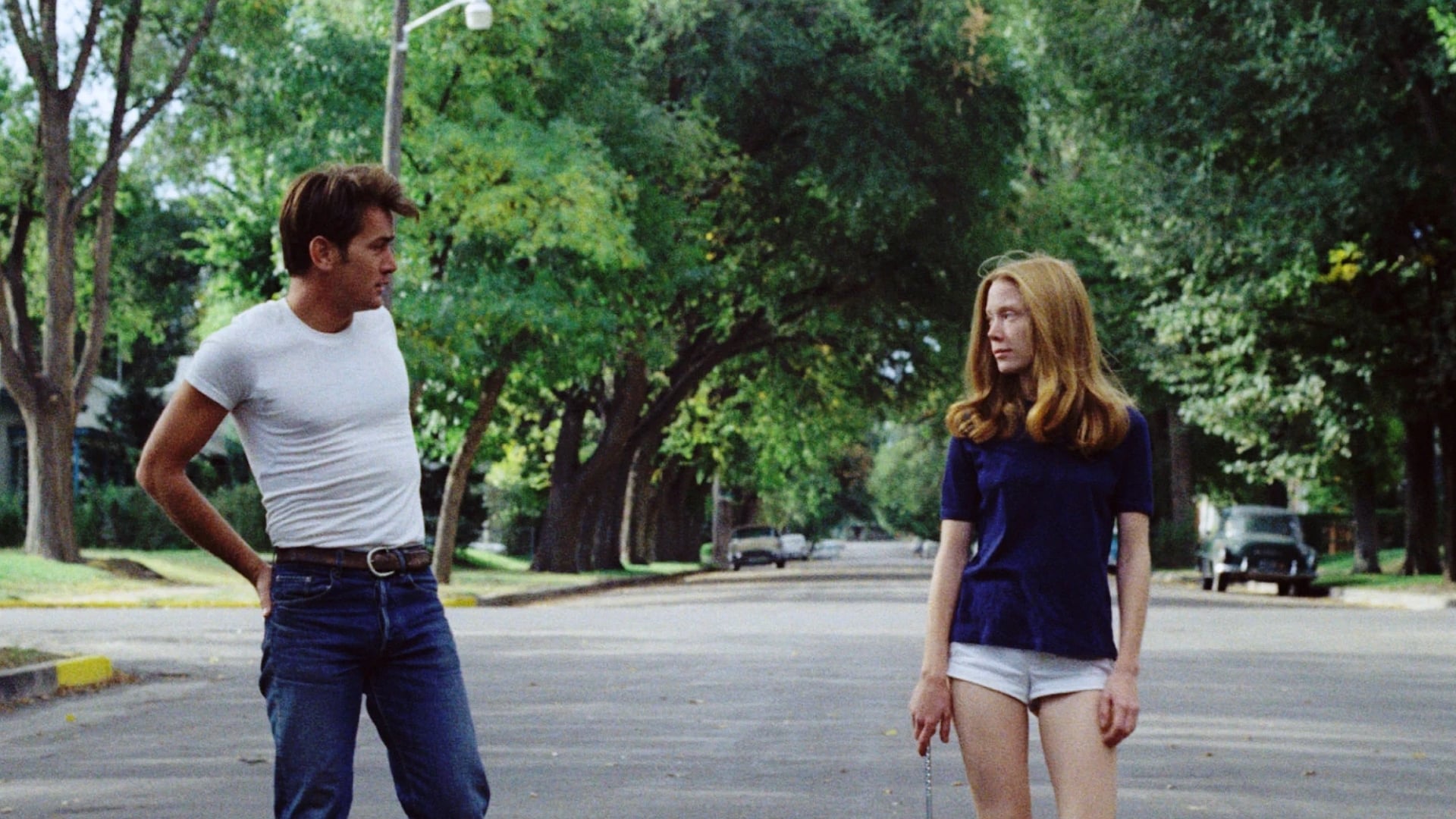
 
See the source image

Sunday, December 2, 2018

Baby, That's Cold (analysis of subtext)


Apparently, a Cleaveland radio station made international news for deciding not to play "Baby, It's Cold Outside," citing the #MeToo movement. If it triggers bad memories, then change the station, but is it a rape song?

Historical questions to ask:  Would the 1940s era radio knowingly play a rape song? Would the FCC have allowed it?

Read the ending before debating. They both agree about the outcome. Both sing together, "Baby, it's cold." If they agree, the implied statement is that the wooed will stay. He has accepted her argument.

The song is a standard that switches things up. In the above video, the genders are flipped, changing who is wooing whom. However, this wouldn't alter whether the song is about rape.

Think of the song as a negotiation, as a sales pitch. It isn't necessarily a sexual pitch although that seems likely, especially given that the temperature won't get warmer until the morning. But a night of all kissing or touching might be all that is on the agenda.

Let's analyze the lyrics:
"I really can't stay... 
I simply must go
"Really" and "simply" suggests that the speaker is contemplating staying but is telling himself and the wooer he should go. "Simply" is doubly intriguing as it suggests it should be easy for him to choose to go, but it isn't.

Both admit they've had a good time up to this point:
This evening has been
(Been hoping that you'd drop in) 
So very nice
(I'll hold your hands, they're just like ice)
You've really been grand...
Note the touch. They apparently are in a touching relationship. He accepts her invitation, which is how she is able to pronounce the hands cold.

He refers to this touch later, where "warm" is both literal and figurative ("nice" indicates he likes her physical and personal warmth):
Your welcome has been... 
So nice and warm
In fact, their touch progresses to the lips. Note the change in her dialogue, she must have confirmed her suspicions with a kiss (it could be a non-consensual kiss; however, there are no complaints about the kiss, and he does end up staying):
(Gosh your lips look delicious)... 
(ooh your lips are delicious)
He doesn't say that he has to do something, or be somewhere, or doesn't want to be with the wooer, only that his family and others might have a problem with his sticking around, not to mention the gossip of neighbors. In other words, it isn't he who has a problem being there but others (or at least he says so):
My mother will start worry... 
My father will be pacing the floor... 
The neighbors might think...
My sister will be suspicious... 
My brother will be there at the door... 
My maiden aunt's mind is vicious... 
There's bound to be talk tomorrow... 
At least there will be plenty implied

Now there are a few problematic lines:
The answer is no
This seems to be definitive, but he's been showing doubt all along. There's also the next set of lines:
But maybe just a half a drink more
(Put some records on while I pour) 
Say what's in this drink
Now that last line sounds like the date-rape drug; however, what would be implied in the 1940s would be alcohol, something to lower his inhibitions. He did ask for the drink. His asking for more says they have already been drinking. Had they not been drinking alcohol before? Was he wanting alcohol? Was he wanting his inhibitions lowered, wanting to be convinced? Was there more alcohol than he expected? The song doesn't say or imply.

However, he does admit that he wants to stick around a little longer, making excuses to stay. Here he is again, making excuses to stick around:
But maybe just a cigarette more
He is hopelessly attracted to her:
I wish I knew how... 
To break this spell
She asks for permission:
(Mind if I move in closer)
He admits that he's going to stay and come up with some excuse to tell the family and gossipers:
At least I'm gonna say that I tried
To make this song about rape ignores a lot of subtext. There is one line that's problematic, but the others put it into a different context. The ending says it all.

ETA: Here is another, earlier article that I just read that says similar things with less analysis but more historical context.

Thursday, April 20, 2017

On Dreams, Song, Alice, and a Lewis Carroll Poem

"A Boat Beneath a Sunny Sky" or "Of Alice in Wonderland"

A boat beneath a sunny sky,
Lingering onward dreamily
In an evening of July —

Children three that nestle near,
Eager eye and willing ear,
Pleased a simple tale to hear —

Long has paled that sunny sky:
Echoes fade and memories die:
Autumn frosts have slain July.

Still she haunts me, phantomwise,
Alice moving under skies
Never seen by waking eyes.

Children yet, the tale to hear,
Eager eye and willing ear,
Lovingly shall nestle near.

In a Wonderland they lie,
Dreaming as the days go by,
Dreaming as the summers die:

Ever drifting down the stream —
Lingering in the golden gleam —
Life, what is it but a dream?

*

This was Poetry Magazine's poem of the day last week, and the last line struck me as familiar. Ah, but of course: 

Row, row, row your boat, 
Gently down the stream. 
Merrily, merrily, merrily, merrily, 
Life is but a dream.

Wikipedia lists this song's first printing as 1852 (although it was possibly in existence before that). Which came first? Was he the originator or merely referencing the song? Carroll would have been 20. Possibly the phrase predated both. Carroll references Alice in Wonderland (published 1865 although he'd written earlier versions prior it's first printing. 1862 is listed as the date he first orally told the tale, so he had to have at least written that--likely later than 1862, then. Bartleby suggests the poem's first printing was 1895 under the above alternate title.

Carroll may have been referencing that song although it is an American song, which hampers that possibility a bit. However, if the poem was composed nearer 1895, then Carroll's likelihood of hearing the phrase from the verse seems probable.

When you hear "Life is but a dream," what does that mean? In "Row Your Boat", the use of "gently" and "stream" and the repetition of "merrily" four times (not to mention the lilt of the song itself) suggests that the song presumes "Life is unbearably wonderful." Is that wishful or hopeful thinking, or indoctrination of young minds? Who thinks of life being a dream? BeyoncĂ©? At least she had a documentary called that. Songwriters in the fifties released sugar-coated songs with that title. It just seems odd or perhaps someone was born extraordinarily lucky and/or rich.


Carroll's use of the phrase seems quite different. His interpretation adds a bittersweet flavor, especially if it were composed so many years later. The persona's voice sounds wistful for the time he rowed the young ladies out ("Lingering onward dreamily") as well as for the Alice of the tale ("Still she haunts me"). Throughout, he mentions the end of things: evening, frost, Autumn, not to mention "Echoes fade and memories die").

In fact, he equates the dream with Alice herself: "Never seen by waking eyes." So a tale is a dream. When Carroll gets to his final line, he references the old song's blind devotion to believing life is unbearably wonderful, but ties to that idea that life is fleeting and story-like, perhaps due to the uncertainty of memory.

Interestingly, the poem that references a song became another song, which seems to mirror the moods mentioned here. The song (or poem?) is apparently famous enough to get riffed here and here.