Search This Blog

Showing posts with label Jane Yolen. Show all posts

Thursday, August 29, 2019


How to Fracture a Fairy Tale 
Jane Yolen 
Tachyon Publications 
SF & Fantasy, Teens & YA

How I feel about Jane Yolen’s How to Fracture a Fairy Tale has a lot to do with the book’s title. It is what drew me to the book, as a reader and as a writer. I started at the beginning and was reading through. The first couple of essays and stories caught my attention, but my interest started to flag. Maybe because I’ve read so many fairy tales and rewritten fairy tales, they lose their shininess after a few. A writer really has to alter the fairy tale significantly or remove the traces of the fairy tale in an updated telling. It isn’t enough to wave politics to reflect today’s mores (unless this is your first book of revised fairy tales).

I skipped to the poetry to see how those fared and found what I was looking for in the title. The commentary and poems show the writer’s mind at work. The writer herself said the poems were written to go with the stories, so I wondered why they were so separated from their story pairings. Maybe some people don’t like commentary. Maybe some don’t like poems, but the design should at least stand the poems beside the stories if not the commentary as well. Let those who only like stories turn one page instead of making everyone else—who is intrigued by the interplay between works, the way a fairy tale can be reconstructed in different ways—flip to the end of the book to read together what was intended to go together.

To me, the ordering affects how I’d rate the book. As it stands, it’s fine with some interesting retellings. If it were ordered as it seemed intended from the title and from the commentary, I’d recommend readers mob the book. At least, my mind became more engaged when I reordered.

The highlights of the collection include “Snow in Summer” (a Snow White retelling with a down-home voice) and “The Bridge's Complaint” (a bridge tells his version of the troll and the billy goats, mostly for the surprising perspective), “Great-Grandfather Dragon's Tale” (this describes an unusual “man raised by wild animals” tale—dragons, no less—interesting for its frame structure and the emotion evoked by a simple symbol). In “Cinder Elephant” Cinderella is overweight and can speak in the language of birds.

Even if the stories aren’t stunning, they contain intriguing aspects such as “Happy Dens; or, A Day in the Old Wolves' Home” where wolves in a nursing home get to tell their side of the story (a curious and ambiguous ending). There’s a nice wish-fulfilment one where the prophet, Elijah, saves Jews from concentration camps while another tells of a mother who’s died to return as a vampire.

A few, like the thrilling novelette “One Ox, Two Ox, Three Ox, and the Dragon King,” could have been improved by updating the fairy-tale-ness a little further, perhaps modernizing the language a little more or erasing more of the fairy-tale tracks.

The collection is definitely worth investigating. Maybe you agree with the present ordering, or maybe you can try it as the book seems to suggest it wants to be. Either way, turning the page isn’t too hard a chore to get the book that you want. I, for one, want How to Fracture a Fairy Tale.

Friday, May 9, 2014

"Become a Warrior" by Jane Yolen

First appeared in Warrior Princesses.  Reprinted in a few major genre retrospectives by Ellen Datlow, Terri Windling, Jacob Weisman, David G. Hartwell.

Summary:

The father of a princess is killed in battle.  She promises the god in the moon that she will avenge.  People are amazed she does not cry.

To protect her maid, she forces the maid to have her hair cut like a boy.  Then when the maid turns, the princess kills the maid:
"It was a mercy, really, for she was old and ugly and would be used brutally by the soldiers before being slaughtered, probably in a slow and terrible manner."
For three years, she works as a serving lad, building strength.  For three years, she lives in the forest, gaining more strength, skills, and beauty.

"If anyone had asked her if she was content, she would have nodded.  
"Content.  
"Not happy. Not satisfied. Not done with her life's work.
"Content."
She is found by the lord who is immediately smitten and saves her for himself.

*Spoiler*

She kills the son and then the king.  Her mother who is now the wife of this new king, tries to stop her, but the princess doesn't listen.  She later has a child.

Commentary:

The story's subtitle reads, "Both the hunted and hunter pray to God."

This sets us up for dramatic irony, but the tale does not focus on religion as one might expect from such a subtitle.  Rather, it plays against the anthology title it first appeared in.  Often in sword and sorcery there's the revenge that must be avenged.  War is not seen with its psychological consequence.  Yolen grapples with war and its effects on a person, the way it may poison a personality.  The character doesn't even have a name.  She kills people she loves, in her way--her maid, the prince and king--because it's part of the path to successful revenge.  The victory, to the reader, rings hollow, but the oblivious, anonymous character has won.

"When the cat wants to eat her kittens, she says they look like mice."

When the anonymous character has a "warrior", we know this is where the emotionless breed comes from.

Thursday, September 12, 2013

"The Face in the Cloth" by Jane Yolen from Dragonfield: and Other Stories

This first appeared in Fantasy and Science Fiction; reprinted in Arthur W. Saha's Year's Best Fantasy Stories and Terri Windling's The Armless Maiden: And Other Tales for Childhood's Survivors.
.

"The Tower Bird" by Jane Yolen from Dragonfield: and Other Stories


 This first appeared in Ariel: The Book of Fantasy, ed. Thomas Durwood; reprinted in 100 Great Fantasy Short Short Stories, ed. Martin H. Greenberg, Terry Carr, and Isaac Asimov.
This little tale tips expectations on their head.  A king begs a bird to give him answers.  The bird only responds in riddles until one day a response out of exasperation changes everything.

The perspective change may alter the way the reader views the universe.

"The Lady and the Merman" by Jane Yolen from Dragonfield: and Other Stories

Since it first appearance in F&SF, September 1976, this has been reprinted in two anthologies edited by Isaac Asimov, Terry Carr, Jack Dann, Gardner Dozois, Martin Greenberg.  

This simple, little tale is doubly and profoundly tragic.  A mariner has a plain child, so he sets sail.  The mother, heart-broken, dies.  The mariner, enraged, refuses to speak of his wife.  His daughter, he refuses to love.

One night the daughter finds a merman, with whom she tries to reach out to the fish of this man.  The obvious, primary tragedy can be considered not to be tragic, the less obvious, perhaps unacknowledged tragedy cuts twice.  Seek this one out.

Tuesday, September 10, 2013

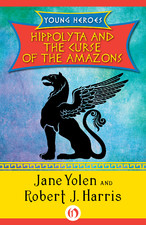
Review: Hippolyta and the Curse of the Amazons by Jane Yolen and Robert J. Harris

Hippolyta and the Curse of the Amazons Jane Yolen, Robert J. Harris Open Road Integrated Media

Due to a prophecy, to keep themselves pure, Amazons must kill their second son (the first is given to the father).  Because Amazon Queen Otrere refused, she is deposed and thrown in jail.  Her adolescent daughter, Hippolyta, takes the infant second son to the father, Laomedon, King of Troy.

Laomedon accepts the child but rejects Hippolyta's idea of Laomedon taking over Amazon to save her mother.  She mocks him, and he throws her in a dingy jail where she awaits to be a late-night snack for the sea monster that attacks the city.

In prison, Hippolyta meets her first brother who wants to know about his mother.  Thinking him like their cruel father, Hippolyta rebuffs him yet craftily guides him to believe he needs her to learn about his mother.

However, when she's chained to rocks, awaiting the sea monster, she prays to the gods that hate Laomedon, giving her promise to avenge them, and a kind of deliverance arrives.  She and her savior make their way back to Amazon.  On the journey, a mysterious stranger helps Hippolyta learn control to become a better warrior.  Later, the stranger will become familiar as Hippolyta must not only battle her own goddess, who wills the death of her brother, but also another.

Hippolyta and the Curse of the Amazons is an adventure story.  The characters don't scrape deeply, but it's full of "one damn thing after another."  With its strong female, youthful warrior, this is likely to appeal to those whose hearts crave brave thrills battling against impossible odds.

Theme spoiler: As in The Dragon's Boy, religion as a theme appears, ringing several similar notes, but this time to let us know it should not be a part of wars.

Monday, September 9, 2013

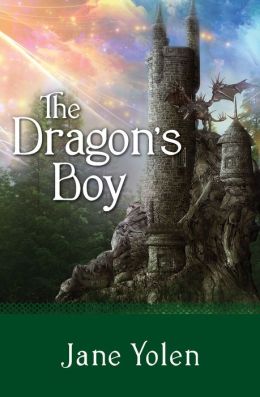
Review: The Dragon's Boy by Jane Yolen

The Dragon's Boy 
Jane Yolen 
Open Road Integrated Media

Jane Yolen's works have won numerous awards:  the Caldecott, Nebula, World Fantasy Award, National Book Award nomination, and Mythopoeic Fantasy Awards, among others.  Reading the newly reissued ebook, The Dragon's Boy, it is easy to see why.

Despite more accoladed works, this book sticks to your ribs (and your brain) as it works on multiple levels:  The literal tale of a boy working for a dragon, the deeper tale of the boy who tries to peer through the mist on the border of truth and wisdom, and the tale for adults, the ones who bear wisdom often distorting events for deeper truths.

Artos, looking for the prized hound he is responsible for, stumbles on to a cave.  He encounters a dragon inside.  Knowing dragons to be sly, Artos doesn't trust the dragon when it offers the boy jewels or wisdom.  Artos chooses wisdom, thinking it what the dragon wants to hear.  Although jewels sound more appealing, he's afraid of becoming lunch.

Nonetheless, the dragon gives Artos a jewel, and Artos promises to return to the dragon with stew, but he does not intend to fulfill that promise as it was made under duress.  He tries to show off his new jewel but none pay attention.  Finally, guilt drives him to return to the dragon with a pot of stew after having paid for it by giving the kitchen girl, Maggie, a kiss.

Bit by bit, the dragon doles out wisdom--the art of reading between the lines in books, and the art of deception.  That last comes into play and brings the whole of the book together as Artos deceives and is deceived, and learns that such deception--the engrandizement of the seemingly insignificant--makes him wiser.

Because some readers might want to know this upfront, I will peel back a corner of the book's theme. The dragon speaks in language that ties him to Jehovah, but his reveal creates multiple possible religious themes:  1) that Jehovah isn't the aloof powerhouse he initially seems, 2) that Jehovah is a deceptive if broken necessity, or 3) that we are all flawed gods, necessarily magical in the beginning.  Some readers, however, may choose to gloss over this reading for a more secular view of maturity.  Hippolyta and the Curse of the Amazons covers similar thematic territory. [Review released on 9/10/13]

The Dragon's Boy is not a page-turner nor a thriller, so it may not be for reluctant readers--unless read with an adult.  Still, the literary layers enrich the telling so that readers can visit again and again.  This will also be popular with readers who love to hear the Arthurian legends retold.  If Yolen has written a better book, I'd love to know what that is.

Friday, September 6, 2013

"Sister Emily's Lightship" by Jane Yolen from Sister Emily's Lightship and Other Stories

This first appeared in Patrick Nielsen Hayden's Starlight, and won a Nebula award.

Employing many of Emily Dickinson's lines along the way, Yolen tells of Dickinson's life and afterlife.  Dickinson has these attacks of light that blinds and causes her to faint. She fears her father will send her away.  But the roof blows and she's taken into the sky to meet a different kind of maker--a traveler.

"She had already dwelt in that greatest of possibilities for an hour....  The universe was hers, no matter that she only lived in one tiny world."
"World" here might mean Earth or remaining locked inside her house, for
"I do not need to travel farther than across this room."

A metafictional tale about the possibilities in life and literature.


Thursday, September 5, 2013

"Godmother Death" by Jane Yolen from Sister Emily's Lightship and Other Stories

This first appeared in Datlow and Windling's Black Swan, White Raven, and can also be found online here.

A man in his haste accidentally calls on Death to be his son's godmother.  He sprouts and encounters success, and she makes him a doctor.  He knows whether his patients will live or die by where Death stands near the bed.  He tricks Death once to marry a princess, but Death has a trick of her own.

This has a lovely authorial voice which is occasionally amusing:
"Ah — now you think I have been lying to you, that this is only a story. It has a king in it. And while a story with Death might be true, a story with a king in it is always a fairy tale. But remember, this comes from a time when kings were common as corn. Plant a field and you got corn. Plant a kingdom and you got a king. It is that simple."

Jane Yolen [and Lewis Carroll] on sense, sound, moral and the reader

[Quoting Lewis Carroll:] " 'Tut, tut, child!' said the Duchess. 'Everything's got a moral, if only you can find it.' "
and 
“Take care of the sense and the sounds will take care of themselves.”
and 
“[I]t's ridiculous to leave all the conversation to the pudding!”
and 
“When I use a word,’ Humpty Dumpty said in rather a scornful tone, ‘it means just what I choose it to mean — neither more nor less.’ 
" 'The question is,’ said Alice, ‘whether you can make words mean so many different things.’ 
" 'The question is,’ said Humpty Dumpty, ‘which is to be master — that’s all.” 

[Yolen:]  "I have tried to be master in these short stories.  I am sure they have morals somewhere.  I took good care of the sense.
"The rest is up to the readers--you, dear puddings."
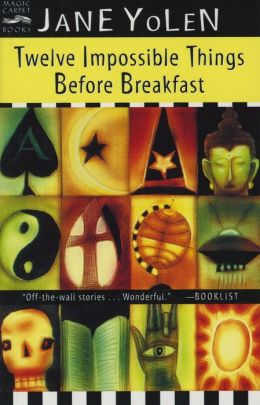
from Twelve Impossible Things Before Breakfast by Jane Yolen

[Note:  I cut out one she did not refer to and extended the quote on another which I found of note.]

Wednesday, September 4, 2013

Free ebook + 2.99 ebooks (Jane Yolen)

Free
Midnight in Death by J. D. Robb

2.99
Invisible Cities by Italo Calvino
Tinkers by Paul Harding (won Pulitzer)
George R.R. Martin's Wild Cards Trust (today only)

Jane Yolen
The Dragon's Boy
The Wizard of Washington Square
Dragonfield: and Other Stories
Hippolyta and the Curse of the Amazons (Young Heroes) (with Robert J. Harris)

Jane Yolen on the short story

"A good short story throws long shadows.  Like Coyote, the Native American trickster god, the short story throws a shadow that is not black and white but full of color."
from Twelve Impossible Things Before Breakfast by Jane Yolen

Tuesday, September 3, 2013

"Angelica" by Jane Yolen from Dragonfield: and Other Stories

Since it first appearance in F&SF, December 1979, this has been reprinted in a half dozen or so anthologies by Isaac Asimov, Terry Carr, Jack Dann, Gardner Dozois, Ed Gorman, Martin Greenberg, Marvin Kaye, Larry Segriff, and Charles Waugh.  You can read it online here.

Addie is a rebelious boy.  Despite a fever and the lateness of the night, he sneaks out but falls into a river--sure to drown, but for the kindness of an angel who spots him and saves him because his own guardian angel had disappeared.  For good or for ill.  No good deed goes unpunished.

Jane Yolen on the reading and writing of fantasy

[Quoting Lewis Carroll:  Alice said:] "[O]ne can't believe impossible things."
 "I dare say you haven't had much practice," said the Queen. "When I was your age, I always did it for half-an-hour a day. Why, sometimes I've believed as many as six impossible things before breakfast."
[Yolen:]  "The reading of fantasy and the writing of it take that kind of practice, too."
from Twelve Impossible Things Before Breakfast by Jane Yolen

Monday, September 2, 2013

"Lost Girls" by Jane Yolen from Twelve Impossible Things Before Breakfast

First appeared in Twelve Impossible Things Before Breakfast.  Reprinted in Realms of Fantasy.  This won a Nebula award.

Darla isn't crazy about J.M. Barrie's Peter Pan because she doesn't like how Wendy did the housework while Peter and the boys fought Captain Hook.  In a dream or transported while asleep Darla encounters Peter himself where she's made into a Wendy, for he cannot be bothered to learn other girl names.  The Wendys clean while the boys fight pirates and eat more food.  Darla, the daughter of a labor lawyer, proposes the girls go on strike.  After much wrangling, they do.  Only Peter is all too happy to let the Wendys go, for new ones will come their way; and the girls are all too quickly captured.  But pirates aren't what they were made out to be.

"Mama Gone" by Jane Yolen from Twelve Impossible Things Before Breakfast

First appeared in Vampires.  Reprinted in The Year’s Best Fantasy and Horror: Fifth Annual Collection, edited by Ellen Datlow & Terri Windling and in Vampires: The Greatest Storiesedited by Martin H. Greenberg.

When Mama died, they didn't chop her up and fill her with garlic as thought to have, her being kin of vampires, but let her be.  So Mama comes back and tries to attack her old home.  The narrator, however, has spread garlic which keeps her away.  That for the night.  But Mama keeps coming and has to find a way to stop, to talk her back into her senses--if such is possible for a dead thing.

Friday, October 19, 2012

Writer Interviews

Paul Tremblay

John Kessel audio (14 min in; discusses the singularity of AI)

Minis with Ellen Datlow's After anthology contributors:
Richard Bowes

Jane Yolen 

Gregory Maguire