Search This Blog

Showing posts with label Kingsley Amis. Show all posts

Friday, June 14, 2013

"The Game of Rat and Dragon" by Cordwainer Smith

Bibliography: First appeared in H. L. Gold's Galaxy.  Available online.  Also part of Dozois' ebook, Magicats, and in a number of major anthologies:  Dikty's Best SF; Robert Silverberg's The Mirror of Infinity: A Critics' Anthology of Science Fiction; Patricia Warrick, Martin Harry Greenberg, Joseph Olander's  Science Fiction: Contemporary Mythology, James Gunn's The Road to Science Fiction #3: From Heinlein to Here; Kingsley Amis' The Golden Age of Science Fiction; Isaac Asimov and Martin H. Greenberg's Great SF Stories: #17 (1955); Robert Silverberg's Century of Science Fiction 1950-1959; Wesleyan Anthology of Science Fiction; Pat Cadigan's The Ultimate Cyberpunk; David G. Hartwell and Kathryn Cramer's The Space Opera Renaissance.


The above list ranks this as a major story in the field.  Interestingly, not only is this important, but Cadigan lists it as a forefather to cyberpunk and Hartwell/Cramer to space opera.  It is due in large part to its inventiveness--inventive with amazing if dizzying economy:

"Pinlighting is a hell of a way to earn a living."
What kind of occupation is Pinlighting?


"As he waited for the pin-set to warm up, he remembered the girl in the outer corridor. She had looked at it, then looked at him scornfully.
" 'Meow.' That was all she had said. Yet it had cut him like a knife."
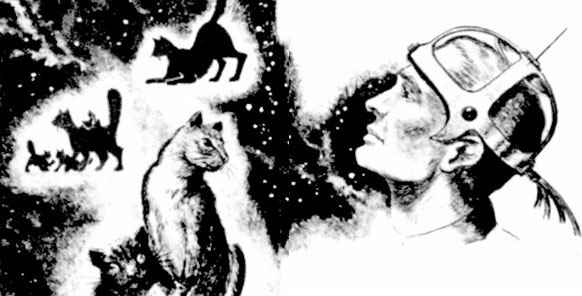
Girl = cat?

"As he relaxed, the comforting solidity of the Sun, the clock-work of the familiar planets and the Moon rang in on him."
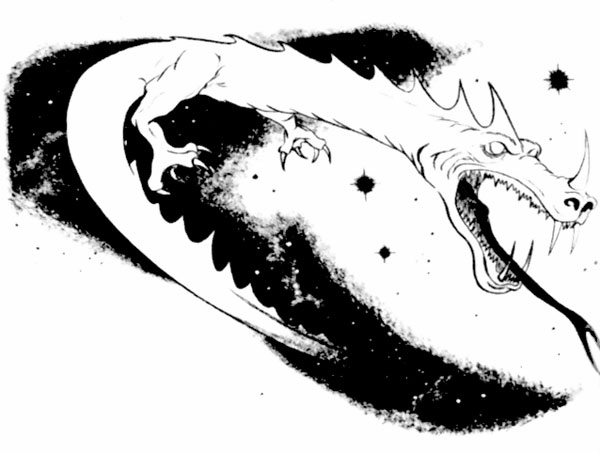
Comforting solidity of the Sun?  This is the strangeness that pushes away some readers, but pulls in the true-blue, the die-hards.

Underhill pinlights with his cat, where they mind-meld and hunt creatures they call dragons in space.  Only cats are fast enough to kill the dragons.  They kill off dragons.

Curiously, like Fredric Brown's "Mouse", the cat measures favorably against women (hinted at in the above, early quote.
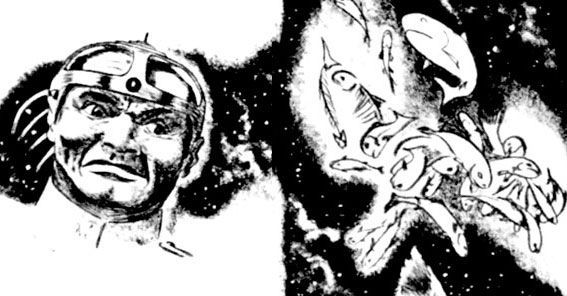

Tobias Buckell recently did a semi-controversial homage to Smith at Lightspeed:  "A Game of Rats and Dragon".


Commentary:


Monday, May 27, 2013

Review: "The Tunnel under the World" by Frederik Pohl from The Best of Frederik Pohl


The Best of Frederik Pohl
by Frederik Pohl

new ebook from Baen Books

The first stories, including "The Tunnel under the World", are available online.

I gave this classic story a second gander here--with a slightly different perspective.


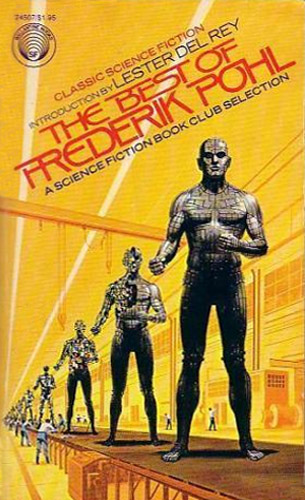
The left image is the original cover and on the right is the one.  The right is cool enough, but the left one spurs my imagination a wee bit more.  Your mileage may vary.

It first appeared in H.L Gold's Galaxy, but later was collected by such luminaries as Brian Aldiss, Kingsley Amis, Isaac Asimov, Orson Scott Card, Gérard Klein, and Tom Shippey--all of whom said it was one of the best.

I may have heard it first on a recording of X Minus One.  Lamentably, this type of audio drama is no more.  Video killed the radio star.  Harlan Ellison often ranted about the superiority of radio--as had my father. The generation of the radio said that it was better for the imagination.  Truly, the mental special effects were cheaper yet better than could be simulated on screen.  As a member of the video generation, I have to admit, these were good.  You have to accept they are a product of a certain age, first, but a pleasure.  I'd go for a night jog and listen to them on my headphones,  You can find these old programs online ("Tunnel under the World" is #43).

On June 15th, Guy Burckhardt follows his usual routine.  But the world is a bit off.  They advertise unfamiliar products.  Guy notes another fellow, Swanson, behaving strangely toward but ignores him.  Despite an obnoxious repetitive ad for a freezer, he ends up buying one because a nice saleswoman takes him out and apologizes.  When he gets home, he learns his wife has bought one as well.   he goes into his basement and finds not only a boat but the walls and floor covering metal plating.  He falls asleep and wakes but the world says it's June 15th all over again.  When he sees Swanson again, they try to get to the bottom of this, literally and figuratively, to turn these people in.  They can't treat humans this way.

The story covers some of the territory Pohl and C M Kornbluth covered in The Space Merchants, but from a slightly different angle.  (Here I ruin the theme for you.)  Guy is clearly an everyman name.  Like Guy, we are bombarded with advertisements--against our will--and yet we buy the products even though we're annoyed.  Basically, we've become robot consumers through commercials.  The first line says it all:  "On the morning of June 15th, Guy Burckhardt woke up screaming out of a dream."  It's a dream that isn't a dream.  It's a nightmare.  The problem isn't just society but ourselves although society programs us, deletes and adds memories at whim and will.