Search This Blog

Showing posts with label movies. Show all posts

Tuesday, April 23, 2024

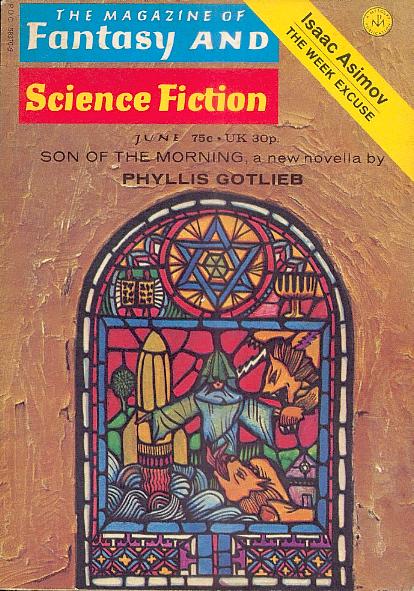
"Sad Screenwriter Sam" vs. "Sad Solarian Screenwriter Sam" by Frederik Pohl

https://www.isfdb.org/wiki/images/b/b1/FSFJUN72.jpg

First appeared in Edward L. Ferman's F&SF.

Summary:

Sam is a screenwriter. After the discovery of the Martians, he wants to capitalize on this and make a new movie, which is essentially Edgar Rice Burroughs' Mars. He has to get past his agent's and director's reluctance to sell it.


Discussion with Spoilers:

All is for naught. The aliens look nothing like those of the real Martians once the photos come out--more like seals. They can't even be made sexy.

Like Pohl's tribute to Doc Smith in "The High Test" or to Jack Williamson in "The Mayor of Mare Tranq," here is a tribute here to Burroughs--the popular appeal, its power. But also it bears a critique to the aliens in Burroughs' Mars, their realistic possibilities (perceived, of course, since we have no aliens to compare to).

Side-bar: This story may prove interesting to compare and contrast against Geoff Ryman's "The Film-makers of Mars" (audio link).

What's interesting about the story's appearance in the novel, The Day the Martians Came, is that the story is streamlined just to this bit of narrative, which is interesting but not necessarily profound. What it loses in profundity, it gains in a smoother narrative that works better in this novel atmosphere.

This spurred me to speculate that this may have been Pohl's original core of the story--a narrative he found compelling, but missing the necessary piece to elevate it from the ordinary. Here it is one example among several of the impact of species of creatures that impacts without ever having set foot on planet Earth, as yet. A rather intriguing prospect in that light.

While we don't other possibilities that Pohl may have tried, we do have the original publication, which has our protagonist, Sam, being studied by aliens who will use his character to decide whether humans are worth saving or destroying. Once our alien protagonist knows Sam and his fellow Earth inhabitants are doomed, he wants a different Earthling to examine, but he cannot. Earth is doomed. 

But the interesting bit is that the death ray won't arrive for 64,000 years. (If that information that was beamed to them also took 64,000 years, then that would mean Earth has 128,000 years to prepare after Sam's departure. So a story that began, announcing humanity's doom actually ends in the possibility of hope. This is fascinating, but it does bog the narrative down.

One suspects that this core of the story was looking for another part to give it significance. The original is in some sense the more powerful, but also perhaps a swamp of narrative.

While the great-aliens (who seem to be in the same galaxy but maybe on the opposite side) part of the story seems not to be wholly lost. It survives in a few conspiratorial mentions. See the comments on the story "Saucery" for more on this.


For links to other stories in this series/novel and comments on the novel they make, follow this link. 

Tuesday, March 26, 2024

Fantastic Planet or La Planète Sauvage

Fantastic Planet (1973) | The Criterion Collection

In honor on Stefan Wul (pen name of dental surgeon and SF writer Pierre Pairault) on his 102nd birthday, we will discuss the movie based on his novel, Oms en série: Fantastic Planet. The script was written by Roland Topor and the director, René Laloux.

It won the 1973 Cannes Film Festival's Grand Prix special jury prize, was nominated for Nebula and British Fantasy awards. Rolling Stone listed as #36 among the greatest cinematic animations.

The main plot involves the Oms who are human-like creatures who have been enslaved as pets by the larger blue Traags, who have technology, power, strength, and size over the Oms. There is little one could do to exercise one's independence from the Traags. Our protagonist manages to escape and tries to convince and help the Oms have their independence.

Paradoxically, it is both a strange and familiar film. A number of factors contribute to this. 

  1. the animation itself. It is both two-dimensional and three, sliding between them in the same frame

  2. both surreal yet standard SF. So many of the events that strike us bizarre could really be standard biological behavior in an ecology we are just encountered--cruel and heartless even among the intelligent species

  3. sexualized yet in a biological manner. Certainly, in 1973, this would have been standard preoccupation in much art of the era, but it is less provocative than mundane as if it were meaningless to the players

  4. heartless everywhere yet, here and there and ultimately, humane

  5. bewildering yet understandable. It seems to suggest that this distant alien although the beings may look like us, have minds far removed from our own. Yet one hardly needs to understand anything of what the characters say to get the gist of the story. In fact, much of the storytelling seems to through us off the scent.

  6. described, apparently, as needing to be watching with mind-altering narcotics. But this isn't true. However, even the aliens partake in inhaling some cloudy substance.

Both sets of aliens are us. We are sometimes the powerful, sometimes the weak. Yet even the weak have strength and the powerful are powerless in certain regards.

Being at the tail end of a strange decade in the arts, which this seems to attempt all of the various rebellion's the arts were participating in at the time. Even a kind of cross-dresser, who seems initially oblivious to his dress until his fellow Oms mock it. The film is like an Easter egg, full of the things that was meant to take it out of its time made it fully part of that time. And yet there are interesting, science-fictional apparati to appreciate.

If you are looking for something strange, here you go.


Thursday, April 27, 2023

American Psycho [Analysis]: Worth the Hype? the Controversy?

The age of this movie approaches a quarter of century--its silver anniversary. It is probably in the top 10-20% of films--worth rewatching. But it was hard for me to buy into it.

I remember spotting the book by Bret Easton Ellis in the bins and my being attracted to the title yet put off. I have a recollection of some claiming it was overrated, a must-read by others. My experience of the film must have been similar, hearing opposing opinions, and running into the show in the late beginning and sensing jarring double tones. 

It is not a movie you can pick up anywhere. You must start at the beginning with the opening credits:


Feel the contrast of tones. Yet feel how they meet, collide, slide past one another, compliment and negate. It's all well done.

The opening title and the knife create one expectation, then serve up another. But both exist together with the elegant yet playful music, set against plates decorated as much for design as for taste. The laundry list of foods is probably outside most people's checkbook, let alone taste buds.

We come upon the men gathered at a table with crude joking contrasted with serious business discussion, adding a dash of confusion over who and where Paul Allen is.

Now Paul Allen was a real person, one of the wealthy who helped Bill Gates forge the early PC revolution. So there's that play going on here as well since the Paul Allen discussed here is fictitious and has nothing to do with the early PC revolution. But this play, this contrast, this misdirection, this confusion--all play into the story.

Stop here if you haven't seen the film and you plan to do so. Spoilers lie ahead--thematic along with suggestive ones.

#

The book was apparently accused of being "overly violent and misogynistic." [Wiki] I can't form an opinion of this, without having read the book yet. As for violence, well, it's been outdone (before and even more so after). 
 
As for misogyny, the movie is written and directed by women. It piques my curiosity about the work of these two ladies due to the risks they took here. 
 
I did read the novel opening and it has a quite different feel from either it's detractors or even the director and the screenwriter's rendition here. But I will have to revisit this at a later date.

The theme is interesting, rather blatant -- for those who are seeking such things. At no point did I view it as an attack on women. Maybe? There is misogyny, but it's part of a greater blindness to people. Such a viewing would have to leave out the rest of the film. It's strange to mistake design for flaw.
 
A better theme? Capitalism kills? Or, at least, it makes you want to. It is cleverly played not just in the dialogue and scenes, but also in the music lyrics themselves. I thought the theme was going to hang itself (the same kind of problem that people have there being real vampires), but it pulls its head out of the noose in the nick of time. So that the theme ends up being a bit more ambiguous towards its theme. It explains some luck, but the 90 degree turn is a bit too fast. It might be worth planting clues and making it a bit more realistic. However, because of that turn, a whole new question has to brought to the table. Is the movie about what it seems to be?

Note, too, how the film plays with what the actual genre of the story is. It starts in one place, suggests the primary one suggested in the title, shifts naturally into the detective, and then becomes...

Check it out if you haven't already. Watch it again. Rich, nuanced (despite initially appearing anything but), it repays multiple viewings.

Monday, March 20, 2023

Pulp Fiction, Nearly Thirty Years Later

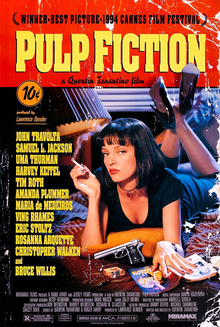
A pulp-magazine themed poster shows with a woman in a bedroom lying on her stomach in a bed holding a cigarette. Her left hands lays over a novel that reads "Pulp Fiction" on it. An ash tray, pack of cigarettes, and a pistol is laid down near her. The top tagline reads "WINNER - BEST PICTURE - 1994 CANNES FILM FESTIVAL". A sticker below the title reads "10₵".
Pulp Fiction [PF] came out almost 30 years ago. If the audience or critics ranked their favorites of the 90s, I bet it would come out on top. It's hard to argue with Titanic or Silence of the Lambs--popular films in their time that people continue to talk about--but PF should still rank the highest. 
 
This might surprise some, for reasons I'll discuss below, but I still think it'd be at or near #1. My favorites of the 90s weren't nearly as big. Time Out and Rotten Tomatoes rank it #1. Probably others. (A bunch of other movies I should rewatch.)

I don't recall my first viewing or if there were multiple viewings, but my latest viewing differed from the first. My first viewing loved everything. There was a coolness about it. The title, the characters and their blithe approach to murder, the way the film repurposed old things and made them feel new and refreshing, the memorable dialogue, the funky plot. Memory told me this was one of the greats.

I rewatched it to see what made it tick, and was surprised. The plot, while beautifully intricate, is rather thin. It's almost like the movie was composed of Tarantino's favorite outtakes (i.e. "Kill your darlings") from every script he'd ever written. Memorable lines, albeit asides. They don't actually advance a plot. Rather, these are show pieces. Dialogue that actors would love to speak. If I suggest Tarrantino is show-boating, this isn't bad-mouthing. It works.

Crazier still is how he brings in five decades of film and music together in one work. I suspect this aspect would be lost on younger generations. They'd probably only see the plot unless they did some deep-diving into movie and music history.

The cussing, when I'd first watched it, felt normal after I'd worked on a ship that had deployed a similar barrage. Since PF, everybody and their dog has drowned the media in cussing so that it's lost its original power. Some find a barrage hilarious, but to me, it's like saying, "Nissan that Nissan guy!" Okay, so what? But Tarrantino makes the swear words hilarious, spins straw into gold-plated art.

The title, while cool, detracts. Crime Stories might be more accurate but less compelling. Only Bruce Willis's story feels pulpy. 
 
One description called it a gang story. Follow the characters. This isn't a gang story--even if it's a pervasive element--at least it's a far cry from being a typical gang story.

The movie uses these definitions, for pulp/fiction:

1. soft, moist, shapeless mass or matter.

2. A magazine or book containing lurid subject matter and being characteristically printed on rough, unfinished paper.

Is this a self-critique? Or maybe a modus operandi? "rough, unfinished" and "lurid" and "shapeless"? Apart from "lurid," which is accurate, only in a nonliteral sense does the title sort of work. Shapeless, sort of--you could ask a number of scenes why they were included--but some of it is beautifully sculpted, and it has finish (some of it, pyrotechnically so) if a little rough in places. Certainly it is not your usual blockbuster. Maybe this is what they had to do to justify the film to the producers (or critics) who might have complained.

Off topic: the movie made 25 times its original investment, the low operating cost is somewhat surprising considering the names that worked on the film.

Minor spoilers:

I misremembered the plot. I thought it was more of a Shakespearean tragedy where nearly everyone died in the end. Instead it ends with the character who has the most compelling story: Samuel L. Jackson's. The narrative switches around and really, few of them land. Just Jackson followed by Willis but his story, while it takes us on some wild loops, isn't as surprising. Jackson's transformation is wildly surprising and feels so authentic. He reframes his whole existence in a line (rewritten from the original, btw)--plus, his newfound change is immediately put to the test. Frankly, I don't recall that at all. Travolta's character story only works in light of Jackson's as a sort of foil.

Could a writer replicate this work as a novel? I don't think so although, no doubt, many have tried.

Thursday, February 3, 2022

Larry Cohen, Maverick B-Movie Maven and his Six-Shooters

Larry Cohen 2010.jpg

Larry Cohen (July 15, 1936 – March 23, 2019) wrote for TV and movies, with TV shows dominating his early career--mostly crime and cops but also an alien invasion show called The Invaders, which he described as The Body Snatchers about the Black List.

He moved into movies with an inauspicious debut Return of the Seven (a sequel to the classic Western, The Magnificent Seven). While that bombed with audiences and critics, later movies grew strange. Perhaps he was constrained by budgets, perhaps by an imagination formed by TV, but the ideas are often small. Most of his movies on IMDB fell around 6/10--with a few falling below. 

One movie Phone Booth was rather impressive because of its limited scope: The setting is a phone booth. An agent is trapped in a phone booth by a gunman. It is his highest rated, and I'd recommend it. Despite the limitations (or because of them), it feels like a movie of some ambition. If this had been his career, his motives would have been clear and traditional.

However, for most of his career, he wrote B-movies. They seemed to hearken back to the older B-movies. They were both serious and not. Certainly, there were no jokes, but the situations were over the top. 

One of these, a friend tipped me off to: The Stuff. Frankly, I'd never heard of any of Cohen's movies, ever. And you can see why. They aren't ambitious in a tradition way, yet confidently aimed at the small. In The Stuff, we have a yogurt-like substance found emerging from the ground near a mining facility. The material seems to take over people mentally and, eventually, bodily. 

My friend thought it was written in fear of yogurt which, after being in the country thirty years up until then, had taken America by storm after a commercial touted the possibility of longevity if one ate it (a history of Yogurt in America). To me, the movie was driven more by the SF impulse: industrial phony products mimicking the real thing since there were other yogurt products that were not attacked as the culprit, but just this problematic brand (I can't find the article, but there were questions in the press about products claiming to be yogurt, but were not). Although in an interview, Cohen seemed to suggest that my friend's theory was closer to the truth, I still like my interpretation better.

The absurd premise is small potatoes. That's not really the fascinating thing. The best part of the narrative is a guy who describes himself as an industrial saboteur (this also suggests my interpretation is better; Cohen may not have remembered fully what he was up to). What in the world is an industrial saboteur? Who hires him? Why? How does he get money?

The movie shows how he gets money: black mail and other nefarious means, which makes him an odd yet compelling figure.

In an interview, Cohen claimed not to be an SF or horror writer, yet he does use "Frank Herbert" as someone important at the FBI, and one movie It's Alive! gets its title from The Frankenstein SF-horror B-movie classic He's paying homage to the things he loves, consciously or not. 

He also pays homage to character actors. The protagonist in It's Alive! imitates the famous Western character actor, Walter Brennan. Moreover, Cohen hired a ton of actors on their way up or out, which added experience and actor recognition to all of his movies. He said he'd find out about actors looking for work and give them a job. A good chunk of his actors had plump acting pedigrees.

In an interview titled It's Alive! Cohen states:

"B-movies. God bless them. B-movies become A movies over the years. That's when they remake them. They take a million dollar movie and spend 100 million to remake it." 

Not sure how true that was for him, but it does show his passion for them. I actually formulated my ideas for Cohen and then found corroborating evidence in a handful of interviews. What he's doing is fairly transparent.

As far as patterns go, there's often a primary crime driving the narrative, and a past crime that drives or informs the protagonist and/or antagonist. As bad as his movies might be, they were entertaining and often displayed some technical writing brilliance, often in the protagonist, which is strange for B-movies. Usually, it's the bad guy or the monster that's the most powerful force, but here the protagonists outweighed the antagonists.

Cohen had a couple of movies become franchises: It's Alive! and Maniac Cop. The former had Bernard Herrmann as a composer, the latter starred Bruce Campbell. The film It's Alive! was going to be killed when new producers arrived, but three years later, new movie producers gave the movie a new release and it became an instant cult classic.

If you like good bad movies, or cult movies, Cohen's oeuvre might be something to explore. It's Alive! and The Stuff both place on a number of lists as ranking among the best B-movies. It's amazing he was able to build a lucrative career writing these.

Friday, January 28, 2022

Review: The King's Daughter

 Almost two and half years ago, I ended a review of Vonda N. McIntyre's The Moon and the Sun, writing about the "lost" movie:

"The movie, starring Pierce Brosnan, has been filmed but remains unreleased pending special effects, four years later.

Maybe something went wrong elsewhere, but you'd think they'd try to recoup some financial losses by releasing it as straight-to-video, or have a limited release first. Surely, book fans would flock."

 The movie is now released and has grossed about a million so far in the first week (#10). 

Here's a clip of a scene paired with the trailer:


The trailer doesn't give a good sense of the story, which is mirrored in this strange review from The Guardian, which says the movie's good--I would agree--but obsesses over the problem of the title. However, the reviewer may not have pondered long enough. The title is rather thematically potent, and in a few other regards.

The problem of the trailer and the review may be the movie's failing to nail its identity at the start. The movie opens as a story book, which would be useful as a children's story, a comedy, or a fairy tale. The closest the movie approaches is the lattermost, but the focus isn't on a fairy tale nature. Perhaps it would have been better done without the storybook and skipped straight to the daughter's arrival in the castle. Or perhaps better still, would be to establish the previous life and her desire to exit that life. A leisurely opening would have worked fine--or at least better. Perhaps they hadn't enough film footage for it to flow.

The main body of the film is solid, tightly woven and seems quite aware that it is a historical fantasy with strong elements of romance--perhaps "love" is the better operative word, in a broader sense than romance that only concerns a couple. 

Without the opening, I'd have said the movie deserved an 8 or so out of 10. Solid entertainment with some thought.

The opening should only drop the movie to a seven, not to a five, which is where it is at the moment, unfortunately, but people were probably confused about what kind of movie they were seeing. I had the advantage, having read the book first. Hopefully, the numbers go up as it progresses. 

It should be popular with the female type holding some measure of history, court, and adventure. A good date or family movie? Maybe go buy popcorn while the storybook unfolds.

The director, Sean McNamara, talks about the movie here:


Wednesday, January 19, 2022

Cultural Ephemera: Xanadu

XanaduBroadwayPoster.jpg
 A friend recommended this movie as of possible interest though the story, he admitted, was bad. I do like weird stories, true--making sense of strange things in life, no matter how odd--but less fond of bad weird stories.

I didn't see the whole but whatever clips I could find. However, I was interested, interested that this was made at all (and how). 

For clarity, by "ephemera" I mean things that take the world by storm for a brief period of time then evaporate, almost without trace.

Xanadu would seems to both fit and fail that definition. As a movie, it barely broke even. As a soundtrack, though, it had five songs chart on the Top 40 and the album went platinum. The stars were huge: Gene Kelly was a major star to pull in the older generations while Olivia Newton-John and Michael Beck had just come off major successes. On other other hand, it pretty much stunted their acting careers. Meanwhile, the musicians and much of the film crew had major careers that continued beyond the film, which wouldn't fit. But the writers and director really never hit it out of the park, afterwards, although the director found more success when he focused on stories with a nonfictional frame. 

Perhaps it could classify as a cult film as it spawned a hit Broadway musical a quarter century later (this Wiki article makes it sound like they were able to make a plausibly good story out of the raw materials), and a killer who thought.he was guided by it.

The main reason I'm calling it ephemera, though, is the treatment: roller skates and rainbow color schemes. It mashes up classical Greek culture with Romantic Xanadu but without understanding either culture, so that it's alien to both. Yes, we have Gene Kelly but not in a way that utilizes him well. We have two generations represented here, but neither seem realistically depicted.  

It's as if aliens (or someone from the present or future with no understanding of the past) were given a time machine to kidnap talented music and dance and music video people from the past and told them to update the musical with a laundry list of things that once was popular from two different eras, to shake well and pour into a story. "Okay," the alien movie moguls said, "we want modernized versions of older clothing styles with dancing from Gene Kelly, music and weirdness for the younger Star-Wars set, cowboy outfits for those whose home is on the range, and cartoons for the kiddies. Famous music makers will help us sell the accompanying soundtrack. A recipe for million dollar industry!" 

This is what you'd get. Here's the identifying clip that sort of outlines the movie's presumed modus operanadi:


It's almost a parody of the eras it's trying to reach, past and present--and parody of basic storytelling. It doesn't seem to belong to any time period.
 
Yet there is so something visually and auditorily fascinating--not to mention the other-woldly perspective. The only way to interpret the movie that makes sense is as a music video that isn't trying to make sense of the story but of the music. The logical flow resolves as a music video would. 
 
Proof? See the last moments of the film, which would only work in a music video. Music videos often have compressed moments at the beginning and end which try to make sense of the music. This works just like one of those (cued up for you although you can rewind to watch the glitzy cowboy routine to get how it tried to rope in the rural and country crowd):


The only problem with this theory is the film occurred just before MTV. But maybe it was trying to ride the same cusp that MTV was riding. It sounds like music videos got their start in 1970s Australia (where Newton-John is from), and this has the same feel.
 
As such, the music-video movie is somewhat innovative--perhaps too innovative, Yet it had a huge musical impact and perhaps inspired the musical video industry. If you consider the project as having multiple revenue streams including Broadway musical parody (you can sense the mockery in the promotional poster above), it's hard to say it's a failure. No doubt, all of the above, the murders, and the Golden Raspberries (started in part because of the film) helped create the film's cult status.
 
However, you would have to pay me handsomely to watch the whole thing.

Friday, December 24, 2021

Wheel of Time vs. Lord of the Rings

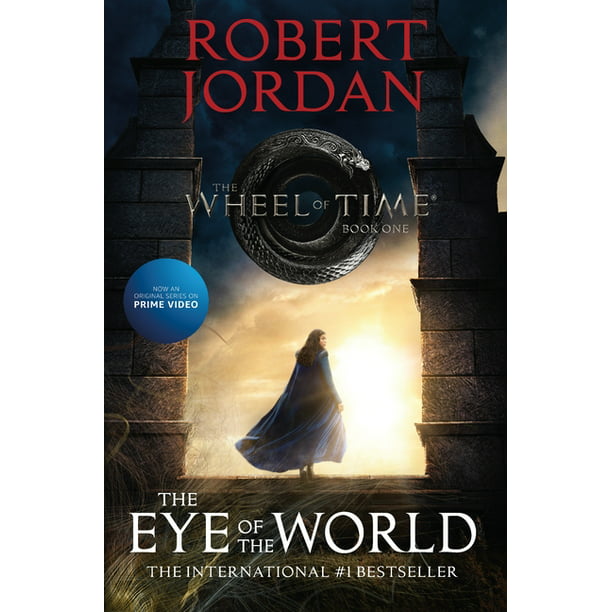
Wheel of Time: The Eye of the World : Book One of the Wheel of Time (Series #1) (Paperback)

Season one of The Wheel of Time is complete. I was fond of episodes two, three, and eight. 

Here was my hopefulness about the series after episode 3 of the Amazon series. Ah, youth.

I seem to have parted ways with viewers, in terms of episodes. They love four, and eight seems to have been their least favorite--not that eight is my favorite, but it offered me hope for season two when my faith in the series was waning.

Hopefully, they'll get another season to develop the characters...

Trent's law: "If you abandon basic storytelling in one area, make up for it elsewhere."

I'll be rereading book one. Here were my initial thoughts on reading it.

- - -

Stephen Colbert celebrated the 20th anniversary of Lord of the Rings' opening night. I find this less interesting for the humor than the claim that it is the #1 trilogy, beating out Star Wars and Godfather. Maybe? They're hard to compare since they all have different territories they mark.


I will say that I was disappointed yet hopeful at the first movie's ending.

On a rewatch, I noted how slow the opening was and how Gandalf remarks to Bilbo that he hasn't changed, but though Ian McKellen as Gandalf does flash some grim concern, it comes off as casual conversation. Besides he does look changed from earlier scenes. Not a major point, but interesting.

Thursday, December 23, 2021

Krampus (2015)

See the source image

Some minor spoilers. 'Tis the season.

Several movies have tried on the old legend (Wiki). If the IMDB and Rotten Tomatoes ratings are to be trusted (6.2/10 and 66%), this is the best of them--a slice above tolerable, although horror usually does get lower ratings. 

As a family unites and divides over the Christmas holidays, Krampus and his little helper wreck havoc on a family that's already torn apart.

The writers, who were nominated for a few speculative awards, have done animation, kaiju, and superheroes. They display brilliance mixed with suspect choices. It seems to be the story of one person although it shifts through many--some of whom don't make logical choices, or at least we are not privy to their logic.

The final frames show the film could be interpreted two ways--asking viewers to reinterpret the movie a bit--but each possibility is undermined by earlier events, so the way of interpretation is up in the air.

In some ways it's very much a Christmas film, in other ways it's warped (although some might maintain any horror movie about Christmas warps the Christmas spirit).

Interesting effort, nonetheless. Watch for the brilliance, and roll with the less admirable choices.

Wednesday, November 24, 2021

Alien, Aliens, mothers, Alien 3 vs. William Gibson's script (spoilers galore)

Apparently, a new Alien movie is coming out along with a new Blade Runner, with Ridley Scott at the helm. Sounds promising.

This is my belated follow-up to this earlier post about the William Gibson script.

So Alien, the first movie in the franchise, gets a solid 8.4 on IMDB while the sequel Aliens gets an 8.3.

They are not without flaw. The biology of the species has a gaping hole and seems improbable although that doesn't interfere with the story. Namely, how is that creature growing bigger?

One pleasure, outside the obvious plot tension, is the mother motif. In the first, the seemingly benevolent mother is in the ship's computer  helping make their lives easier, but later we learn that "mother" is an amorphous authority running the ship from the outside, steering them into danger for its own benefit. A stand-in for authoritative governments that lack regard for its citizens and only use them as pawns to whatever that larger goal might be. The only other "mother" present (the alien) is meant to be seen as a visual metaphor for how destructive their government is.

In the second, we get an expanded metaphor of a positive mother where Ripley plays a surrogate mother to an orphaned child. The metaphor is now a contrast of mothers. The original metaphor has to be understood within the context of someone naming their native country their mother or father. The metaphor in the second loses bad government metaphor, but explores mother in a new fascinating way.

The followup, Alien3, got a 6.5 on IMDB. Why? This website lists ten possible reasons why.

It also explains why Gibson minimized Sigourney Weaver's role, which seemed a strange choice since she was the main player in the first two.

My first impression of the audio script was that it was too similar, which was why I needed to rewatch the first films as the audio drama was catching listeners up to speed.

Now Gibson's strength is teasing out an intriguing threat made in the first two that somehow never really made it into the series: namely weaponizing this alien species. This isn't settled here in his script but it leaves the door to be discovered in a further sequel. In retrospect, Gibson's choice is the most logical expansion of the series. 

Instead, the movie that got made was more creative in the sense of setting it on a former prison colony where a religion sprung up around their conditions--in theory. Granted, whoever created the religion could have tried harder, but it was still fascinating. Part of it may have been the necessity due to eliminating weapons. Nonetheless, the original concept feels fresh and should have breathed some life into it.

But it didn't build on what we knew. Ripley's character isn't expanded (apart from sex which isn't explained), and characters get killed off, probably to simplify the narrative. You certainly want a child visiting this colony. Also, we get no closer to understanding the species in the way that Gibson's makes us feel like we are approaching.

Finally, it didn't expand the motherhood metaphor except now Ripley is carrying a mother-alien child within her. Yet she doesn't follow the same lifecycle as the aliens did before. So again, biology problems. No explanation for why this creature the size of a baby isn't detected by the mother. And the metaphor isn't clear. Perhaps she's like the opposite of the Virgin Mary--with a kind immaculate conception. And she does sacrifice herself as a savior, falling in the shape of a cross, but to kill the infant this time. But there'd need to be more clues throughout to draw this conclusion. Perhaps I need to give it another viewing to see how well it built toward this view of "mother."

The real problem of Alien3 is the idiot plot. Sure, they kill off the one intelligent guy, so that it really is an idiot plot. But even that doesn't make sense. Why was she drawn to the guy where she didn't seem drawn before? Why develop his character then kill him off?

Now the brilliance of the first movie was that it explained why people didn't do the intelligent thing. The least powerful guys had the best advice, but it went unheeded. Why? "Mother" computer/government.

Alien3 was an decent movie with some fascinating premises that could conceivably have paid off. Perhaps, had it not had its predecessors, it'd have been seen as a stronger movie with less to live up to.

Would Gibson's script have been better? Hard to say. Certainly it would have at least expanded the series and moved it toward a long-term goal. It probably needed some revision to bring in some of the brilliance of the first and second films, which could have happened had the right director sculpted the script toward what the series had been building. Still, while not as powerful as the first two, both have something to add for fans of the series. It's good that it saw the light of day.

Friday, October 8, 2021

Badlands, Springstein on character, and losing parts of a narrative to great effect

"You've got to find out what you've got in common with that character, no matter who they are or what they did," says Bruce Springstein on writing his narrative songs.

"So 'Nebraska' is a song written with the premise that everyone knows what it's like to be condemned." 
 
The above was inspired by the movie Badlands and Charlie Starkweather, whose life the film (and song) was loosely based on.
 
Tony Tost wrote, "This may be the greatest American film ever made without a single character with an IQ over 100." 
 
Is this following spoiler? Maybe a little. Watch it first. 
 
I may not have ever felt so much for characters who were serial killers--certainly not for their crimes and here mostly for her... until that last line which recasts him in a new light (the light had been there, but it clarified). Amazing how one line can change everything.
 
Also, that whole build up. There's no exciting climax*, no final show down. Just the impending doom and his reaction to what's happening. Heartbreaking. It's interesting what can be excluded from a story and yet remain powerful.

*One could claim that it is exciting, after a fashion--the sheer number of bodies suddenly on screen where there had been so few before. Also the climax is exciting in terms of one's psychological make-up. So perhaps what one takes out, one must replace.
 
See the source image

Tuesday, September 7, 2021

Howard Waldrop's “Night of the Cooters" & George R.R. Martin's 1993 TV pilot, Doorways.

In other news, George R. R. Martin announced that Howard Waldrop's story, “Night of the Cooters,” has been adapted for film.  

It's been done on green screen with the long road ahead for the post production process.

I discussed Waldrop's story over here.


In 1993, George R.R. Martian wrote a TV series pilot that got filmed but didn't find a home:


Largely, a low-tech operation, which can work (famously, the early episodes of Dr. Who), but it might have done better if it were shopped around ten years or so earlier.

Some intriguing premises here. Some unrealized plot ideas generated, but I'm curious how well that might have worked across an entire series. Great cast although they might have turned in better performances as they worked longer together, understanding their roles and relationships.

It opens on a woman running with and across traffic without explanation. Perhaps it needed more back story, or maybe needed to be shorter or even cut straight to the hospital.

The doctor eventually takes off with the stranger, which might have made more sense were he in love, but he doesn't seem to be. Maybe another explanation would have been forthcoming.

The character of Cat (her inability to speak or count) and those pursuing them across the parallel universes would have hopefully had made more sense as the series progressed. Also the rules of the universes could have been better explained such as a universe where there's no fuel yet we have hot air balloons.

IMDB rates it a 5.6, probably due to some of the above issues. Two years later, the show Sliders makes a go with a similar premise.

It's a shame Martin, the master storyteller, wasn't able to finish the project. There is a graphic novel that maybe fills in the gaps. But ah well, better he finish the Game of Thrones / A Song of Ice and Fire series.

Monday, June 14, 2021

Re-evalutating Back to the Future (Part I - III)--the power of ending well

 After the commercial success of Romancing the Stone, Robert Zemeckis was able to create Back to the Future, reaping in what comes to, according the Inflation calculator, nearly a billion in sales in today's dollars. He was initially unable to find a studio, shopping it around to forty, none of which were interested in his humor. 

My initial viewing of the first film was bedazzlement. I don't recall laughing, but its zany, light-hearted tone was a definite draw. The "humor" won't make someone laugh out loud over goofy clocks or a Rube-Goldberg device. Certainly, it'd been done before. However, it is amazing to watch such an elaborate construction burn toast and open a can--or similar mundane tasks. The draw isn't realism, either. What inventor ever constructed an elaborate device to execute a mundane task? Doing so requires far more work than doing the simple task itself. Yet its elaborateness is simple enough that we buy into it. 

The pouring of dogfood with a worryingly absent dog, missing plutonium that ends up under the bed (revealed by a skateboard), and hitching rides on a skateboard while late for school are nice touches, but not particularly hilarious. They do set up the mood of the film. They suggest inventiveness, resourcefulness, and a touch of danger.

If we drilled down very far, we'd expose the lack of realism, but it's just enough realism we buy into it and we're shown not to take any of it too seriously. Later, the main body of the film becomes a vehicle for nostalgia for one generation to explore its parent's generation. It's an intriguing recipe for success.


But what happened to the next films? We go from an 8.5 on IMDB to 7.8 to a 7.4, from $1 billion to $0.8 to $0.5 (Rotten Tomatoes, my least favorite indicator, goes from 96 to 66 to 80). The second film in ways is far more inventive--not only in painting the future but also in playing with time. It is perhaps somewhat less believable, but the established tone prevents this from being a problem. When I was a kid, my problem was outrage that it wasn't a complete film, that I'd paid money for an incomplete experience.  

The final film completed the experience and returned a little more believability, but the inventiveness dropped way down. My first viewing as a kid was that it was an excuse to make a mediocre western. My feeling as a kid might have ranked them as IMDB and the money seem to indicate.

Viewing the films as separate entities, my initial critique of the films stands up. However, as a series, the critiques miss the mark. As I discussed earlier regarding the Alien movie franchise, a series hitches movies together as a team, so that it averages out deficiencies--so long as one of the films isn't DOA. 

Viewing them as a series, my estimation of the films changes. Given the above, you'd conclude that if you only watched one, it should be the first. However, my rewatch inverted my favorites. My new favorite is the last. Mostly, it is because Doc Brown has become, in some sense, the protagonist, and Marty is not just trying to get home but also aiding his friend to find home and/or love without time paradoxes. This increases our affection for both characters and deepens their characterization, albeit not profoundly. Also, gratefully, there's no moment at the end where it suggests we should watch the next movie. Instead, it is a fulfillment of all protagonists and all films with a final vision of wonder.

Sadly, the second, despite its frenetic and pleasurable inventiveness, lags far behind the other two. It seems the filmmakers didn't take time to leave its viewers at a moment where they can assess the events they'd traveled through. It could just be cut from the series without loss. You could say that the first is about going from lucking into life to making strong choices, the second about avoiding making bad choices based on how people goad you, the third about making choices that enhance one's life. But really, there's no platform to do that in the second, which is a shame since moment by moment, it's the most exciting of the three. Unfortunately, Zemeckis can't climb into a time-traveling DeLorean and reshape the ending of the second movie.

Strange how just the ending can affect one's estimation of the whole. There's a quote attributed to Raymond Chandler (?) that I cannot find at the moment, which states that good book is one that you'd read even if the last page were missing. There's something to that, but a lot of mysteries do gain power in that final confrontation, superhero tales that final, grand battle, literary stories that final moving scene. We can't neglect to power of a good ending.


Sunday, June 13, 2021

Alien III by William Gibson

What happens when you cross a popular SF movie franchise with a popular SF writer? That's the question here when William Gibson was handed the writing reins of the second sequel--a version ultimately abandoned by the moviemakers. Apparently, Gibson gave this two runs, styling each draft after the first and second movies. Neither accepted.. 

It was floating around the Internet for decades and you can still find it. The popularity of both writer and franchise has created the unusual phenomenon of having a script that was rejected having been made into a comic, an audio drama, and even a novelization by Pat Cadigan.

Another reason this version appeals to fans is that it offers an alternative to the actual Alien3. The first three movies are ranked by IMDB fans as 8.4, 8.3 and 6.5, respectively--a substantial drop. 

This post is more of a place-holder I hope to revisit the series and compare the two versions. My feeling upon listening to the Audible drama is that it is firmly a part of the series. Most series, for me, melt into one another. Individually, some movies may surpass others, but they have an overall leavening. 

For instance, some feel that Aliens was superior to Alien, but any achievement that the second movie had rested, in part, on the inventiveness of its predecessor. It seems a strong addition to the series, but again the invention was in prior films. The movies are hitched. Perhaps as separate entities, the movies might have been greater success or failures, but together they become somewhat uniform like a thematic or sonic concept album like Pink Floyd's The Wall or The Cure's Disintegration. Though some songs may be better than others, the album succeeds or fails based more on its entirety. Likewise, a series like Star Wars has weathered failures due to the initial successful movies pulling the franchise and fans into new iterations.

This offering did not seem exceptionally more inventive than other offerings, but I'd need to rewatch the first and second, and then compare. Perhaps it would have been the boost the series needed. After all, IMDB lists the audio as ranking with the second film.

If you're a fan of the series, you owe it to yourself to check it out.

Friday, September 11, 2020

Dune: the Book, Movies and Trailers


Interesting that the editor of the trailer chose to follow the Lynch trailer.

Supposedly, no publisher liked the book, and it couldn't get published except by a publisher of car manuals. It later won a Hugo and Nebula. And then it was beloved. As a child I struggled to get into the novel but succeeded on the second or third try, loved the wonder and political intrigue. Perhaps I was too young.

Supposedly, no one liked the first film, claimed to be confusing, and Lynch disowned it. I understood it and loved it. The second was supposed to rehabilitate the book's image the Lynch mauled. At first critics claimed it did, and later it was also proclaimed a disappointment. And then critics came out saying that they actually liked the Lynch film better.

I found the debates strange as I liked all three: book, movie, miniseries. Movies are an odd translation, especially with anything so complex as Dune.

What is confusing is how people can judge a movie based on a trailer. Some trailers suggest a bad movie if you can't figure out the general plot.

However, it's difficult to get the general idea of the plot out of these trailers--probably due to the complex plot--although they do touch on some of the wonder.

Tuesday, June 23, 2020

Free ebooks, understanding and preparing for COVID-19, Foundation trailer

Kristine Ong Muslim (a talented poet) writes:
If you haven't done so yet, you can download for FREE and in three digital formats Lightspeed Magazine's People of Colo(u)r Destroy Science Fiction, as well as two other volumes in the groundbreaking book series. Nalo Hopkinson and I selected the short stories for the original fiction section of POC Destroy SF, which went on to win the British Fantasy Award for Best Anthology in 2017. The books can be downloaded here [at destroysf.com]
#


Be careful of graphics like this. Do you see the problem?

We have percents but no sense about what kinds of numbers they refer to. Cut 1000 by 50% and get 500. Add 50% to 10 and get 15. Which number is greater? 500 or 15? [In my classroom if a student left a number like 500 unlabeled, I'd ask, "500 what? Ostriches? Hippopotami? Orangutans? But here I'm leaving open possibilities and assuming that 500 and 15 represent similar comparable figures.]

Look at the number and the trends. Kansas is going up, but 50 new cases per million is actually better than most states. Hawaii is up, but they've been super low (less than one case per day on average). They shot up, sixty times where they were. Yes, 60. But that's stll low in comparison (7 or 8 cases per million per day, which is far better than nearly everyone in green). 50 seems to be a dividing line between states that have work to do although, of course, we'd like the numbers to be zero, but is that realistic? Discussion about this later.

#

Face-shields preferred over face-masks 

#


I loved the first three books of Isaac Asimov's Foundation trilogy although I was just a kid when I'd read them. They had grand imaginative scope. I'm not sure how they'd transfer to screen, but as a series, this sounds like it might be promising.


Monday, February 24, 2020

Addendum to, Deconstruction of, and Lingering Mysteries in “The Godfather” by Mario Puzo (part II)


1.

I needed to revise my estimate of the timeline. The time may have only run into the 50s. My reading of Johnny Fontaine’s aging and the passing of years for other characters skewed my estimate. Michael has come from the war (1945?). Michael has to avenge his father’s shooting (1946?). Michael lives in Sicily (1947?). Michael returns home quietly (Kay has been teaching several years—two or three? 1948-1949?). They marry and have two kids (1950-1951?). They wait two to four years to be able to move to Las Vegas (1952-1955?). They become godfather and kill Carlo and years later after Connie recovers, she remarries happily (1952-1958?).

These are ballpark figures. Perhaps a safer range is anywhere within the Fifties, so five to fifteen years of elapsed time (neglecting flashbacks).

2.

My rereading of Lucy Mancini, Sonny’s mistress, and Jules, the doctor, lowered my estimate of certain sections. It is sensational—there largely to titillate, excite, and stir controversy—but possibly also to pass on auctorial philosophy about how the world should work.

All deconstructions are problematic. They pretend to read the minds of a person, which is, at present, impossible. People pretend deconstructions deliver facts, but they do not. They suggest, and suggestions can be wrong. Plus, not everyone is equally good at it. Therefore, treating deconstructions as facts is like building sandcastles on the beach, which are impressive until the tide comes in.

Nonetheless, I strongly suspect Jules speaks for the author. Why? The doctor is an authority of the body, of science, and of the material world that impacts us humans. We have a name for that: “The White-Coat Syndrome” wherein we automatically loan our trust to doctors. Moreover, the doctor turns out to be right about love for this woman, her malformation, and the vocal chords of Fontaine. Lastly, apart from losing his job as an abortionist (which paradoxically lends him credibility every time he speaks—so that the “bad” thing is actually a “good”), nothing ever goes against the man. Therefore, we readers are expected to trust this man and what he has to say.

Jules does a lot of opining about how the world should work—thoughts that were sensational in their day and remain so to an extent. 1) He believes in abortion (in part because), 2) he believes in a freer sexual society. For instance, a man should make a pass at a woman (on a date?) or else she will not feel appreciated. The book was published in 1969, so these would have generated sympathy with the more liberal elements of the day.

Were other characters portrayed in so sympathetic a light? Vito and Michael Corleone. Vito becomes a father not only to orphans but also to everyone in his community, serving justice where it had failed in society. He refuses to take more than “an eye for an eye.” He also refuses to peddle drugs—a conviction that creates attempts at taking his life. Gambling, drinking, whoring are acceptable vices, but illegal, addictive drugs go too far. Now there is an attempt to justify the drugs by Barzini [the book’s villain]. When he states that African Americans should have drugs peddled to them since they are animals anyway, this is not only to create dislike of Barzini but also, by association, drugs as well. A conservative story element.

Also at stake in 1969 when the novel was published is military service. The standard is to get one’s children out of service, which Vito Corleone is willing to do (and presumably did for two of his other sons); however, Michael chooses to serve and becomes a war hero. So we mix conservative and liberal elements in this one.

Feminism is more complicated than it may at first appear. Men are in charge and conduct violence against women. However, 1) it is a way of life that both Vito and Michael are trying to get their families out of (into the current power structure), 2) violence is strange and mostly pointed at men—strange in that violence is seen as business until it isn’t business (yet every slight is eventually accounted for in this system of justice, so in a sense it's always business and always not business)—so Vito at first tolerates the violence and presumably was waiting to see, to give time for the son-in-law to become a good husband (after all, trusting emotions and rushing into action is what kills Vito’s first son—presumably Vito’s justice would have been more of the eye-for-eye strategy although he also wanted to preserve the family structure), 3) none of the admirable men (the doctor, Vito, and Michael) conduct violence against women, 4) Kay gets a degree and a job, 5) it is Kay who pursues Michael, 6) only Kay can change Michael’s mind, and 7) Vito’s wife works behind Vito’s back to bargain him into heaven (two things implicit here: 1) she has higher connections than her husband, 2) she can do things that the Don may or may not want her to do).

There’s the eighth aspect of her being at the epicenter of the novel’s conclusion, but it’s problematic. She’d accepted his way of life years before, so why does she need reassurance now? As I mentioned earlier, it also doesn’t hit at the heart of the novel’s scope, either, but maybe that’s too tall an order, given the massive scope. The movie’s solution, shrouding the dealings in the mystery of closed doors, may be a stronger choice although that, too, is problematic in its lack of realism.

3.

One strange mystery in The Godfather is violence. Violence (and the threat of violence) is culturally curious in the mafia way of life. It is the blood that courses through its arteries and delivers nutrients to all the body. But the proper way to wage it, only the good Dons like Vito and Michael Corleone know how to do. I don’t think how it works is clearly delineated, much as the novel pretends it is. Why, for instance, would someone assume that if someone lowers an offer, that a death threat is imminent?

Johnny Fontaine, however, remains a tantalizing intrigue, especially in how he treats and is treated by his death-wish friend, Nino. They provide a contrast of something I can’t quite put my finger on. One wants to live and cannot while the other possibly could live but wants to die. One had it all and had it temporarily taken from him; the other lived in comparative poverty and belatedly is given advantages that could have been given earlier but were delayed. I can’t find in the text now , but in a moment of clarity, Fontaine realizes that their talents are similar, but Fontaine got all the big breaks.

The text mentions that Fontaine got a woman that Nino did not, which doesn’t quite feel right except as a miniature of the real deal. Maybe it has to do with getting breaks early in life creates a sense of entitlement, while getting the breaks late doesn’t help. Could that be? How does that spring from the rest of the novel? Are these two a version of the contrast between Michael and his brothers? The answer to that last would seem to be “No,” but who knows? There’s a moment at the end of Fontaine’s POV where he speculates simply that Nino had nothing to live for, but that doesn’t quite complete the picture since it doesn’t answer “why.” Maybe it will come to me later, or maybe this part of the story wasn’t fully developed.

Wednesday, February 19, 2020

The Godfather by Mario Puzo -- novel vs. movie (part I)

As always, there will be spoilers; however, I try to limit and minimize them, describing obliquely.

Many have seen the movies. Until I saw Francis Ford Coppola’s movie, I wasn’t particularly drawn to mob movies. But this one etches in the mafia way of thinking. It’s a culture, a way of life that is like living in a foreign country. On my first viewing, I enjoyed the trilogy as a whole although some knock one film or another.
See the source image 
I just read (and reread) the book to compare. When one thinks of a mafia story, one thinks of creative deaths—concrete boots, strange burials—where often the punishment fits the supposed “crime,” blood baths, riches, luxury, women, paid protection, gambling, booze, angry revenge, vendettas, etc.
Puzo does some of this; however, he focuses on the family aspect. Don [Vito] Corleone is not just father to blood sons—one wild and angry, one a little too craven to people outside the family, the other controlled but wanting out of the mafia life—but also father to everyone to whom he does favors. He grants favors like getting washed-up singers back on his feet, and getting revenge for ruining the life of a young woman. He expects favors in return. Moreover, if one loses family, one has to see it as “business” in a way that most mob movies don’t go into.

The author aligns us with Don Corleone’s value system. Sometimes the law is unfair, so one has to take it into his own hands. The justice is less poetic, and more familial and deeply loyal. For instance, a man’s only daughter chooses not to have sex with two men. The men are connected (only explained in the book) so that when convicted, their sentences are suspended. So the father comes to Don Corleone for vengeance—murder—but Corleone points out that murder goes beyond justice. The daughter isn’t dead but maimed for life, beauty lost.

Now Don Corleone is not just an alternate justice system you can suddenly turn to when you need him, but a way of life. Corleone wanted the father to have been respectful before the Godfather is needed and to have used Corleone’s justice first, without ever going to the police. There should have been visits for coffee, etc. He expects a lifetime of friendship and gratitude, which one does by kissing the don’s hand (which the movie may or may not have explained well enough to convey the ending).

Puzo sweeps us through history from the 40s to the 50s (ETA: See addendum post), occasionally telling past stories or revisiting the past, alternately sprinting and leaping through history. Some readers may take issue with exposition as he tries to generate large scope without dipping into every moment. Of course, we become involved with what happens in a moment, but there’s also something pleasant about the scope of time, not having to taste every event. Perhaps the scope is sometimes a crutch for Puzo, but we feel the muscular crossing of time as if we were in seven-league boots.

One advantage the book has over the movie—apart from the obvious ability to explain mafia culture when the movie cannot—is the ability to climb into every character’s head. In a few instances, this adds more scope to the culture that the movie does not explore. For instance, Woltz the movie mogul, after the unexpected appearance of a head in his bed, doesn’t immediately decide to accede to Don Corleone’s wishes. It is a train of thought interesting to follow.

Also, Sonny has an extramarital affair with Lucy Mancini (the extramarital affair in the movie, I suspect, merely portrays Sonny as a ladies’ man, perhaps a man of virility too big for just one woman). Lucy is actually looking for sexual satisfaction (intimated in the movie by the wife’s widening of hands, just as Sonny stands to partake in an affair... although I’m not sure this subtlety is clear except for readers of the book).

However, one has to wonder if Puzo needed all those character minds to that extent. Puzo gives Johnny Fontaine and Lucy a lot of book time. To justify this in this novel, it’d be more interesting if Puzo would have delineated more how these characters came to be who they were only through the mafia system. Yes, it does somewhat already, but to justify their growing space in book, we need more negative/positive impacts and repercussions (direct or indirect). One character is trying to drink himself to death, for example, and it isn’t fully clear why.

[Note: I wrote the above before hearing Coppola’s commentary that Lucy's story was merely sensational. It was, and probably did intrigue readers of his day. Coppola and I agree that her story in the novel is out of proportion but she and the doctor represent outsiders whose lives were affected/protected by the mafia. Still, those story threads lost sight of the novel's big picture and should have been better developed, trimmed or cut.

There is also Fontaine, who has a fascinating transformation from powerless and virulent to powerful and impotent, but how and why? If it’s just his vocal chords, then his story could be trimmed, but what if it has something to do with living in the mafia system—failing to learn or being kept?]

One thing the movie does good to exclude is the violence against women (there is still some, but it’s minimized). If it had appeared, the movie may not have done as well since it would diminish our view of the characters. The book, however, may be more honest about the culture. Despite our greater thirst for violence, the casual violence may be as shocking today as Puzo had intended it to be. Woltz is intended to look lower than he is in the movie. Fontaine is a curious one, though, and it’s hard to say exactly a reader is supposed to feel toward his violence—as it forms a part of his growing impotence.

When Michael got the “thunderbolt” in Sicily and fell in love with another woman, we wonder if he ever loved Kay Adams. Perhaps it was an auctorial opportunity to develop Michael’s time in another land, so we can see what he’s been up to, putting off his return. The thunderbolt is a bit of romantic nonsense and the poor girl is immediately dispatched before he returns to the U.S. The movie does a better job of explaining Michael’s detachment or distancing himself from Kay (because of what he has to do); however, when Michael returns, his interest in her feels less sincere.

In the book, it’s actually Kay who pursues: She is the one who arrives at Michael’s house to learn that, despite her letters, she only just now learns that Michael is back in the States, a year after the fact. She is still in love and is disappointed, but still wants to see him. Michael’s mother approves suddenly, without explanation, makinf it sound as if Kay should have shown up earlier despite the mother’s earlier discouragement (probably when Michael had married). The story thread needs more development, especially considering their later importance.

The relationship is key because both the book and the movie end on it. The movie shows intimations that she is shut out of knowing what’s going on in her husband’s life; in the book she has to accept the reality of what she’d merely agreed to in theory. The movie is visually brilliant although the book may be more realistic—the person who is living with you is bound to learn of your secrets. Better to learn in advance if that person could deal with such news.

Apart from a little too much exposition and a little too much time spent with characters who do not help delve into the mafia culture, the main issue I have is the book’s ending which doesn’t quite capture the spirit of the novel as a whole. It does capture the familial side and justifies itself, but there’s more to the family than this—with the Don’s right hand man explaining life in a mafia family to someone outside it. For a big novel, it needs a bigger scene—not necessarily splashier, but more scope.

A younger viewer found the first movie was too long and slow—a curious remark that got me to study the opening scenes. We have a marriage interrupted by the Don’s hearing of people asking of favors, which he has to do within this culture. It’s a nice contrast, to alternate between the sweetness of marriage and the violence of the mafia culture. The violence is merely talked about, which allows the movie to escalate in later scenes. However, I think today’s culture expects more violence than when the movie was released. I don’t think more violence is necessary, but perhaps increasing our interest in the marriage scenes through moments like the FBI taking license plate numbers and perhaps increasing the significance of Sonny’s affair, etc.

If you enjoyed the movies, you’ll enjoy Puzo’s tour of the mafia world. Despite flaws, it dives into the culture and sweeps across more territory than a movie could hope . A TV series might be able to tap that scope by entering Vito Corleone’s past and journeying with the family to the 50s.

This discussion will continue on Feb 24.

Sunday, January 26, 2020

"Lot" and "Lot’s Daughter" by Ward Moore


Both "Lot" and "Lot’s Daughter" first appeared F&SF.  The first was filmed as Panic in Year Zero and was reprinted by Everett F. Bleiler, T. E. Dikty, Anthony Boucher, J. Francis McComas, Brian W. Aldiss, Sheila Schwartz, H. Bruce Franklin, Walter M. Miller Jr., Martin H. Greenberg, Isaac Asimov and Peter Haining. The sequel story, "Lot’s Daughter", was reprinted by Robert P. Mills. They were published together in a slender volume by Tachyon Publications.

            Summary

Mr. David Jimmon and family are packed and hurrying out the door to escape the effects of a nuclear blast. A neighbor, Warbinn, tries to intercept them before they leave, but Mr. Jimmon is in hurry. They meet briefly on the highway for Warbinn to say that he had Jimmon's tire jack back at the house. Mr. Jimmon is angry but brushes it off thinking he had one in this particular car. Meanwhile, Mrs. Molly Jimmon talks about going back to L.A. in a few days and wants to check to see if the lines to L.A. are working.

            Commentary with Spoilers

Of all his kids, only Erika seems to be most like him, seems to realize the magnitude of what is occurring although there are hints that maybe Jimmon doesn’t really know the magnitude of what is happening. Are there as many nuclear blasts as he assumes there will be? Will civilization be wipe out?

Mr. Jimmon is clever enough to drive in the inbound lanes, which were empty except for a bunch of military, fire, and police department vehicles. Jimmon is written a citation and told to turn around. But he doesn't.

This section provides a clever solution and complication. However, it seems dubious, even pointless, that anyone would remain with the fallout radius. Staying behind sounds noble but also foolish and deadly. Surely, no one would have these groups drive into a dangerzone. Why? To save victims, they'd become victims. Maybe something else is going on.

Besides, once Jimmon leads the way, at least a third of the traffic would follow suit, speeding up both sides of traffic. 

This was a major story that writers continued to talk about into the nineties, demonstrated by Tachyon republishing the two stories as short novel/chapbook collection. Michael Swanwick in his introduction, puts the story into historical context, pointing out the era’s concern for school children surviving an atomic bomb by hiding under a desk, which may have done little to protect the kids. Children today still drill for potential shooters and tornados although the scale of an atomic bomb (and survival) would have been a far greater destructive and long-lasting effects. Those who drilled for an attack were probably the most moved by nuclear holocaust narratives so prevalent between the fifties and the eighties, which has dropped off even though nuclear explosion is still a possibility today.

The story’s details and dialog are mundane, focusing on the thoughts of a survivalist who has thought hard about this possibility. The family dwell on minor issues in the face of a graver danger—the father seeming to be the only one aware of the true danger of a nuclear bomb although presumably the kids were educated in the classroom, to some extent.

It has few speculative eyekicks, but its strength lies in a clever take on the Biblical tale of Lot, which immediately comes to mind today since the story is often paired with its sequel, "Lot’s Daughter."

One must take this in mind when interpreting the ending where he abandons his sons and wife—too concerned about the trappings of the past and civilization. In the Bible, Lot was told to leave Sodom and not to look back. In the story, none of his family wanted to leave, despite how abominably they treated his guests (and Lot promised them his daughters). Here though, we may only be expected to remember that they were told not to look back, but Lot’s wife did and she was turned to a pillar of salt. Here Jimmon takes the more active role of God and abandons her and their sons. Maybe they would be in the way in this new way of life that Lot expects. His wife does seem critical of a pudgy, aging David Jimmon surviving in a new world.

That Lot takes off with just his daughter suspends a second, suggestive meaning in their escape and abandoning the rest of the family. In the Bible, Lot’s daughters get him drunk and sleep with him to carry on the family seed.

But one should not forget the other possible meaning of “Lot” as in “much” and “portion” and “destiny.” Is Lot too much? What is Lot’s lot? Is it too much? Does he deserve it? Do his wife and children?
 “Lot’s Daughter”
If you’ve read “Lot,” you don’t need “Lot’s Daughter” (published about a year and a half later, so it’s difficult to tell if the story was written to answer questions that readers had) as the same theme carries on although it does answer some plot questions while leaving some of the same ones open.

The daughter becomes his wife, both physically and mentally (the incest stays mostly in the background). She has him explain why he left his family. He explains he left her $20,000, which would be a tidy sum, but she points out that that money would be useless to her if the economy collapses. After spotting jeep tracks and being dissatisfied with their present life, she sets out for what she hopes will be civilization. He, meanwhile, surmises what she did, sees the missing gun and carries on with their son despite the pain of molar that could be aided by civilization.

The story does answer that civilization was more devastated than his previous knowledge suggests as they have been using the car’s radio. Unfortunately, radio would have not have worked since the car battery, tires, gasoline, and even the engine itself might have all been dead after six or seven years. When Dad fell ill, we let Dad’s truck sit for two years without using it, and it had seized up. Gas goes bad over winter so they usually add additives to protect it, regular use of the battery would use up its energy unless they recharged it by driving it and he didn’t want to draw attention themselves by driving it.

The original editors, Boucher and McComas, insinuate that they saw David Jimmon as careful yet selfish. (They seem to be the ones who urged the sequel, according to their introductory material).

Editor Robert Mills, like Swanwick, calls the second story (and presumably the first) “a real treatment” of the nuclear scenario. The incest, despite being carefully worded and never displayed, apparently did not go without controversy, according to the back matter in the chapbook. Little wonder it got so few comparative reprintings, apart from the problem of being a sequel, much as it tried to stand alone.

It’s a good story although it depends heavily on the first, or it wouldn’t have lacked the proper impact. It is best read as a pair although the first story could stand alone. Perhaps the most fascinating aspect is how Erika both is and is not his daughter through this one act. These narratives are probably a critical piece of the genre in terms of discussing nuclear holocaust.

The Author
Ward Moore won no awards or nominations yet was respected by writers. Despite the appearance in several best-of anthologies, he seems to have never had a collection. Apparently, he appears as a character in books by Kenneth Rexroth, himself, and Jean Ariss. He is also well known as the author of the critically acclaimed novel, Bring the Jubilee, which I [will] discuss here. 

Thursday, January 9, 2020

Analysis of Pierre Boulle's Planet of the Apes


Pierre Boule’s Planet of the Apes is one of the good ones. In spite of two major flaws, it stirs the thought pot, at times verges on hilarious (although mostly serious), and is expertly constructed.

Summary:

A couple goes “boating” in space and pick up a “message in a bottle.” The story they read is our main story.

A crew from Earth land on a planet where the humans (or at least creatures who appear human) are as unintelligent as beasts. They seem to hate clothes, for they strip the Earth men to their birthday suits. Why isn’t exactly clear and it becomes less so when we stumble into one of the major flaws.

When the apes appear, they wear clothes, which suggests that maybe they fear the clothes as a thing attached to apes. The apes seem to have a hierarchy or class structure and this later proved true, but the differences have ironed out to lumpiness. They round up the humans to cage.

Discussion (with Spoilers):

The whole point of the book is to show the simians as humans. Their behaviors are human and the humans, simian. The narrator tries to communicate his intelligence but his captors refuse to see it. Besides, like his fellow captives, he has no civilized tongue that can be understood. He slowly learns the language and with the help of a female primate, who encourages him to wait to reveal himself until he’s mastered the language and can explain himself at a scientific meeting.

There’s a huge difference here between the book and the shows (really, the first movie with Charlton Heston captures most closely what the book is up to). The books sets up the simians as humanity around the time the book was written—1960. The humans have advanced to a space-faring race, so there is a distance in civilization between the space man (our ancestor) and the ape men. But the ape men are as developed as we are. So we cannot claim technical superiority in the same way the French astronaut narrator can. The movie has the ape race less technologically advanced, so that we feel a distance between us.

Moreover, their ethics is ours. Much of it feels like a critic of how at least the French thought and did science. When the astronaut reveals himself, they let him live, not try to kill him as might occur in a movie—although the apes are dubious. The astronaut, when thought primitive, was held a cage with a beautiful female human and is forced to copulate with her although he feels a little like he’s mating with a beast. Still he falls for her. When she is with child, ape woman who has been helping our narrator, helps him escape to his intact space ship and the small nuclear family escape.

The first flaw is the race memory. At one point, though this has happened generations ago, presumably, a human-beast woman suddenly rattles off how the apes became the masters where they were servants and eventually the humans bowed out due to the simians’ greater strength.

  1. Such a race memory, if such a thing could exist, would not be so detailed.
  2. Humans would not bow out of any kind of superiority race to become dumb animals, discarding their abilities to speak and reason. Perhaps they’d fight. Perhaps they’d work together. Perhaps both.
  3. (A blank for you to enter other problems with race memory or voluntarily losing intellect as a species.)

Another problem with this is that one of the doctors of the Earth crew loses his intelligence. At first I guessed he’d been lobotomized in an experiment (did that happen in one of the films?). But no. He voluntarily shucks knowledge just as these other former Homo sapiens did.

The ending and frame story are just shy of brilliant, and I wanted to love it though I do admire it still. Basically, the family returned to Earth to find it run by apes.

The space-faring couple who discover the message in a bottle (in the frame story) are also apes. This last is flawed brilliance. As it stands, it seems to suggest that apes are superior and will take over everywhere, no matter what. While it suggests that apes will conquer space as our descendants might one day and that the apes at the end are superior to us today, it might have better to suggest no species is superior. If the apes share our flaws, won’t they have our failings and deserve to lose their civilization to an entirely different species?

The book title is a misnomer. It should probably read Planets of the Apes, but maybe that reveals too much.

A thought-provoking book, nonetheless.