Search This Blog

Showing posts with label Cat Dixon. Show all posts

Wednesday, April 22, 2015

A Pair of Cats

Cat Dixon [interviewed here and here, reviewed here] has a new book of poems for pre-order, Our End Has Brought the Spring--possibly her best yet.


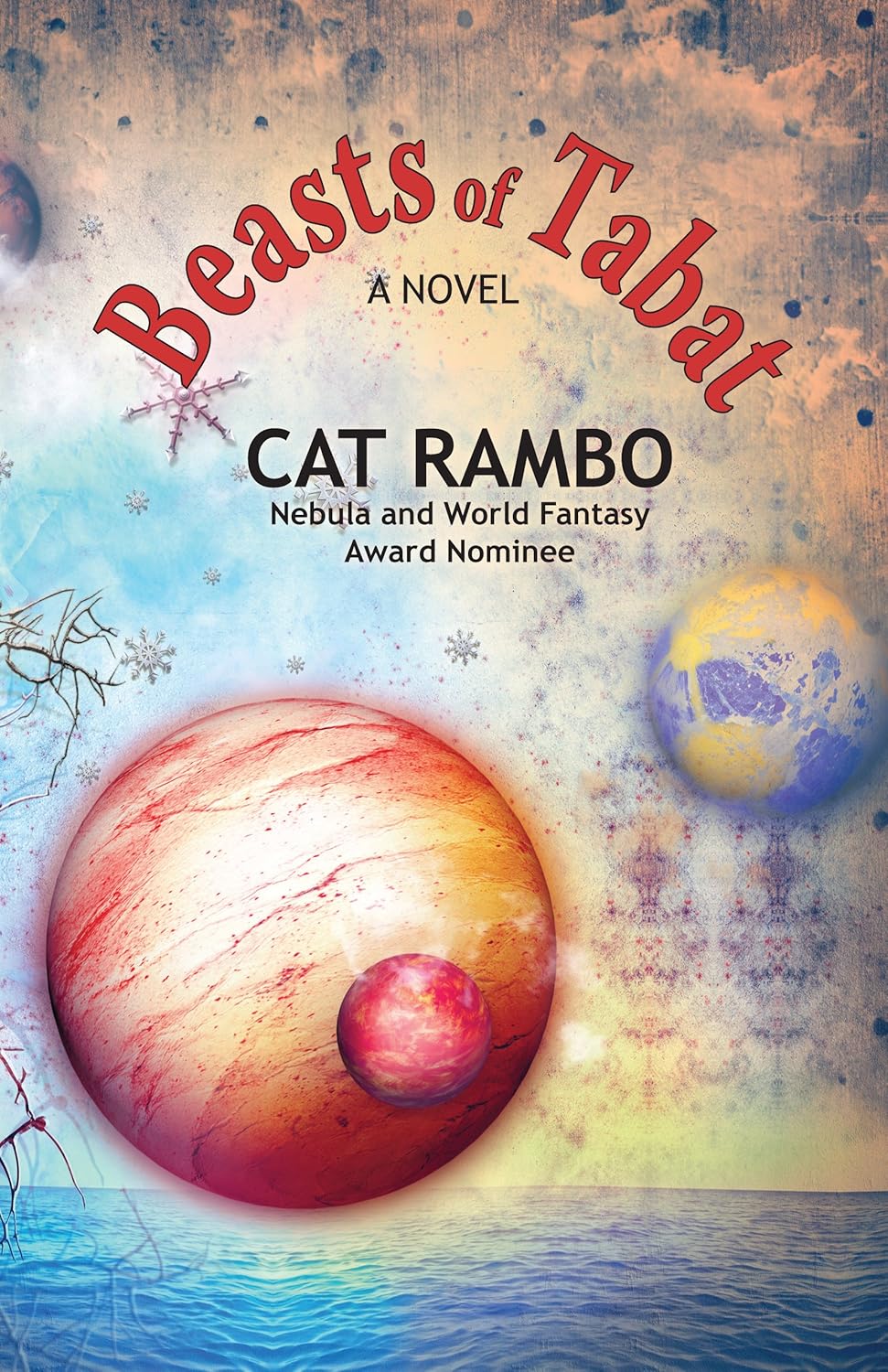
Cat Rambo [no relation] has her first novel out, The Beasts of Tabat. It is set in the same universe as a number of stories from her first solo collection, Eyes Like Sky And Coal And Moonlight--one story from which was up for a Locus award.

Thursday, September 25, 2014

Collaboration and/or Opposites = Creativity

"The Power of Two" by Joshua Wolf Shenk
"Despite the mythology around the idea of the lone genius, the famous partnership of John Lennon and Paul McCartney demonstrates the brilliance of creative pairs." 

I believe Shenk is on to something.  Cat Dixon and I collaborated on series of call-response poems--poems often better than either of us had written before, I think. Mine were eaten in a computer fatality--100s of poems I'd never submitted, gone--but a line in her book surprised me. My voice was preserved distinctly. I wondered where it had come from. She said it was mine from that series of poems, and she still has earlier versions. The creative friction seemed especially productive. The energy reminded me of Clarion workshops where one writer's creativity sparked another's. 


Here's a contest for similar ventures, Cahoodaloodaling's In Cahoots.


Speaking of collaborations, this one is genius although I suspect neither writer thought so at the time. It had me laughing so hard I cried. I wish they hadn't stopped when they did. Warning: a few swear words.


"The Creative Climate" by David Brooks

Interesting pair of articles. Brooks, who I've heard is unpopular with some, but he makes some good observations along the way--to a political end, not polemical (that I can discern).  But his observations about the arts I thought of interest.


Tuesday, September 16, 2014

Interview: Cat Dixon, poet of Too Heavy to Carry, Part 1: Looking Back

This is the first-part of a two-part interview with poet Cat Dixon [website], graduate from the UN's MFA program and published the book Too Heavy to Carry--reviewed here. The second part of the interview, "Present", appeared here.
When did you start writing?
I began writing stories in grade school around 3rd or 4th grade, I think. Encouraged by my teachers, friends and mother, I kept with it. Once I found Stephen King (in middle school) I wrote horror short stories. I always loved to read and wanted to create my own characters. 

Stories then, not poetry? How old were you when you tried poetry? 
I began reading and writing poetry my first year in high school. I started my BFA at UNO with the fiction track, but changed it to poetry after the first year. I still like to read fiction, and once in a while I will write a story, but I feel more comfortable with poetry. 

What poets initially turned your muse on?
The confessionals especially Plath, Lowell and Sexton. As an angst-filled teenager, I identified with their voices.


So what was the appeal? Real people, real struggles?
I'm nosy. When my husband and I got married, he brought his high school and college journals with him when he moved in and I asked him if I could read them. He said he didn't care, but he also couldn't understand why I would want to waste my time reading them. I read them all in one weekend. I am fascinated by what drives people, what angers them, what makes them tick. Reading the confessionals, I felt like I was getting an inside to their lives. I like memoir because of that reason as well.

What poets trip your trigger now?

What drew you to "Glacier" that you read it everyday? Can you quote a few of your favorite lines?

"The glacier's what's been piling up inside
you, mile-deep thicknesses of snow
and ice, until you're solid glacier, and no
one will come near, and there's nowhere you can go."
-- Alvin Greenberg

Every interaction we either build up or break down barriers.

Which shapes your work more: workshops or mentoring?
I love my mentors and I have found some of them in the most unusual ways. Their feedback and encouragement is invaluable.


What turns has your poetry taken along the way? When did you feel like you'd come into your voice or vision?
Every couple of years I become obsessed with an author. I read everything I can find by the poet and attempt in my own way to channel his/her voice. I'd like to think at this point I have their poems always in the back of my mind helping shape what I write next. I am not sure if I can declare that I have come into my voice. I feel I am always evolving.

You are evolving. When I first read your work a decade ago, it was angry or maybe not angry but confrontational always skirting the edge of controversial, often enough to disturb any political persuasion--first one group then another. You can sense some of that earlier poet still beneath the poems now, but there's more nuance, more acknowledgement of other perspectives even if you don't buy into it. How do you account for the new direction?
Life. When I was younger, I thought I had everything figured out and believed I had all the answers. When my life took a 180-turn, I realized that I knew nothing. 

Video of Cat Dixon reading

Cat will be reading at The Petshop Gallery (2725 N 62nd Street, Omaha) on Wednesday, September 17 at 7pm as part of the poetry movement 100,000 Poets for Change. She will read with Laura Madeline Wiseman, Natasha Kessler-Rains, and Sarah McKinstry-Brown. Their reading focuses on the prevention of gender violence.  Cat says about the movement, "Stories and details are what move people to action so it's imperative that poets and writers create and share work that gives a voice to those without one. Raising awareness is the first step to change."

For more information about this event, see the facebook event here.


-->photos by Greg Higgins

Monday, September 15, 2014

Interview: Cat Dixon, poet of Too Heavy to Carry, Part 2: Carrying on

This is the second-part of a two-part interview with poet Cat Dixon [website], graduate from the UN's MFA program and published the book Too Heavy to Carry--reviewed hereThe first part, "Looking Back", will appear here tomorrow on 9/16/2014.


How did you shape your first book?
My first book is confessional. When I read my poems from the book at readings, it's like reading my diary aloud.  Most of the poems were written 2008-2010 when I was going through a divorce and then attempting to start my life over. I went from being a full-time mother to working full-time at a church and spending far too little time with the children, from being a wife to a lonely woman searching for hope, love, security, etc., from being a MFA student to teaching creative writing part-time at the college from which I graduated, from being an atheist to a Christian. So much change in such a short amount of time. One of my mentors, Steve Langan, told me to have the end of one poem speak to the next poem's beginning. I attempted to do just that in my collection. The title comes from a song I have liked for years by Brenda Lee. Here are the lyrics. After my family was destroyed, I thought I was done, but I am still here, so I guess have more work to do. We all do.
 
When you use the confessional form, is it purely confessional, or are you willing to sacrifice true events for some other aim:  language, sound, truth, spontaneity, surprise?
No, not purely confessional.  [Cat laughs.]  If it was I would be at the bottom of a river right now (see poem "River" in my book). Sound and image are important to me so I will adjust as necessary, but the emotion is always real.


What's up next from you? What are you working on now?
Persona poems have taken over my writing life.  I have manuscripts written in the voices of Eva Braun and Medea. I am writing a short series of poems to Putin in the voice of his exwife. I have a chapbook written in the voice of Abel Washington, a 70-year-old man I created, who lives disconnected from society. To explore different perspectives in this way is something I have not tried very often and I enjoy it.

You seem drawn to driven, powerful women in difficult circumstances. Why is that?
I have felt helpless most of my life, so I guess I now prefer voices of power and control. I like to take on the persona of Medea in poetry, for example, because she was wronged and she retaliated. I don't agree with the murder of the children, but she exacted revenge, and she did it without suffering repercussions. Her husband was left begging her for compassion and she gave none.  Eva is portrayed is often as a naive mistress, some even claim she was ignorant of Hitler's final solution, but she was the woman behind the man--the one person he had to request things from--for example, Hitler was not able to bring his dog Blondi out of her kennel or his room without her permission because her dogs didn't like his dog and she didn't like Blondi either. Can you imagine the most powerful man in the world at that time asking a young woman for permission to do anything?

I like to imagine how these women would have felt, what their motives were, and what was hidden underneath which we can't possibly know.

Cat will be reading at The Petshop Gallery (2725 N 62nd Street, Omaha) on Wednesday, September 17 at 7pm as part of the poetry movement 100,000 Poets for Change. She will read with Laura Madeline Wiseman, Natasha Kessler-Rains, and Sarah McKinstry-Brown. Their reading focuses on the prevention of gender violence.  Cat says about the movement, "Stories and details are what move people to action so it's imperative that poets and writers create and share work that gives a voice to those without one. Raising awareness is the first step to change."

For more information about this event, see the facebook event here.

Wednesday, August 13, 2014

Review: Too Heavy to Carry by Cat Dixon

Every review I write, I write as if about a friend's work... to a friend:  What works well? What does not? And, fingers crossed, without offense.  Hopefully, you'll know enough whether you should read this book.  After all, if I don't warn you away from a book you may not like, you may not trust my judgment.  Besides, I've tended to be honest throughout my present incarnation, hopefully with more tact than I had as a grasshopper.

Being in Honduras, I could not immediately read my friend Cat Dixon's recent book of poetry, Too Heavy to Carry, but I've since learned it is a damn fine one.

It treats a woman's journey of being a woman--love, marriage, divorce, kids, life, and the conflicted feelings that tug at one when trying to wrestle with these issues. She isn't afraid of being real, of showing the hidden face of private life, regrets and hope.

She has always been bold as a poet--too bold perhaps for some readers--but her poems have gained a deeper nuance and richness of feeling I'd not seen before. Her tone is almost always on target. And her poems feel whole. You can lift them out and enjoy them for what they are, but they also rub against the other poems in the collection to give you a deeper understanding of what it means to be a woman.

Perhaps one of the more fascinating aspects is how Dixon adopts the cat as part of a shifting, molting persona.  Playful and somber, exultant and blue, funny and bitter, Dixon spans the gamut of emotions. I recommend the collection to anyone interested in poetry and/or the complex life of women.

These are my favorite poems--my votes for any Dixon greatest-hits collection.  These survived multiple readings:

"Commiserating with Another Parent"
The mosquitoes buzz into
the sweet bottles.  We watch
as they fly inside the glass--
then you cork them, trapped.

"Daughters over Sons"
the only memory I have of my father like that is when I was five or six and he took my foot into his mouth, wet and warm, told me he was going to eat it--my leg extended into the air like a kick and I'm sure I laughed like you, but I don't remember.

"Circus Man"
Killer last line, but it doesn't work well without the rest of the poem.
He juggled fire without scorching his skin.

"Black Cat"
I didn't cut my arms or hide
the marks beneath long sleeves.
It was the cat.

"The Reef"

The calcium exoskeleton is
broken and made holy
by the waves

"Once a Woman"
"Here," he brags to coworkers.
"I survived Catharine."

"River"

always one guy who didn't see the newscast or who just didn't give a fuck....
Everything that is too heavy to carry on, rests.

"Chance"

This poem is hard to quote without the whole.

"Tabula Rasa"
I tap the glass,
call over the mike
to the narrow, empty tomb

"Eulogy for John Berryman"
to grieve the loss
like I knew you.....
I, too,
sprang from a cigarette ash flick,
an extra shot of tequila....

"Glacier"

Also notable for the thought shifts that yet follow its thought.
a lover in a king-sized bed
who can't sleep alone....
Between us the brittle crevasses
are God's dentures.  He's taken
them out for the night; left them
soaking in Polident.

Here are a few surreal poems that struck and stick with me although I couldn't say why:

  1. "The Winter Moth Orbits the Light"
  2. "With the Zoologist in the Closed Exhibit"
  3. "Sunday Afternoon at Mission Park"
  4. "Whip with her Hair"

Sunday, March 30, 2014

Cat Dixon's debut book of poetry

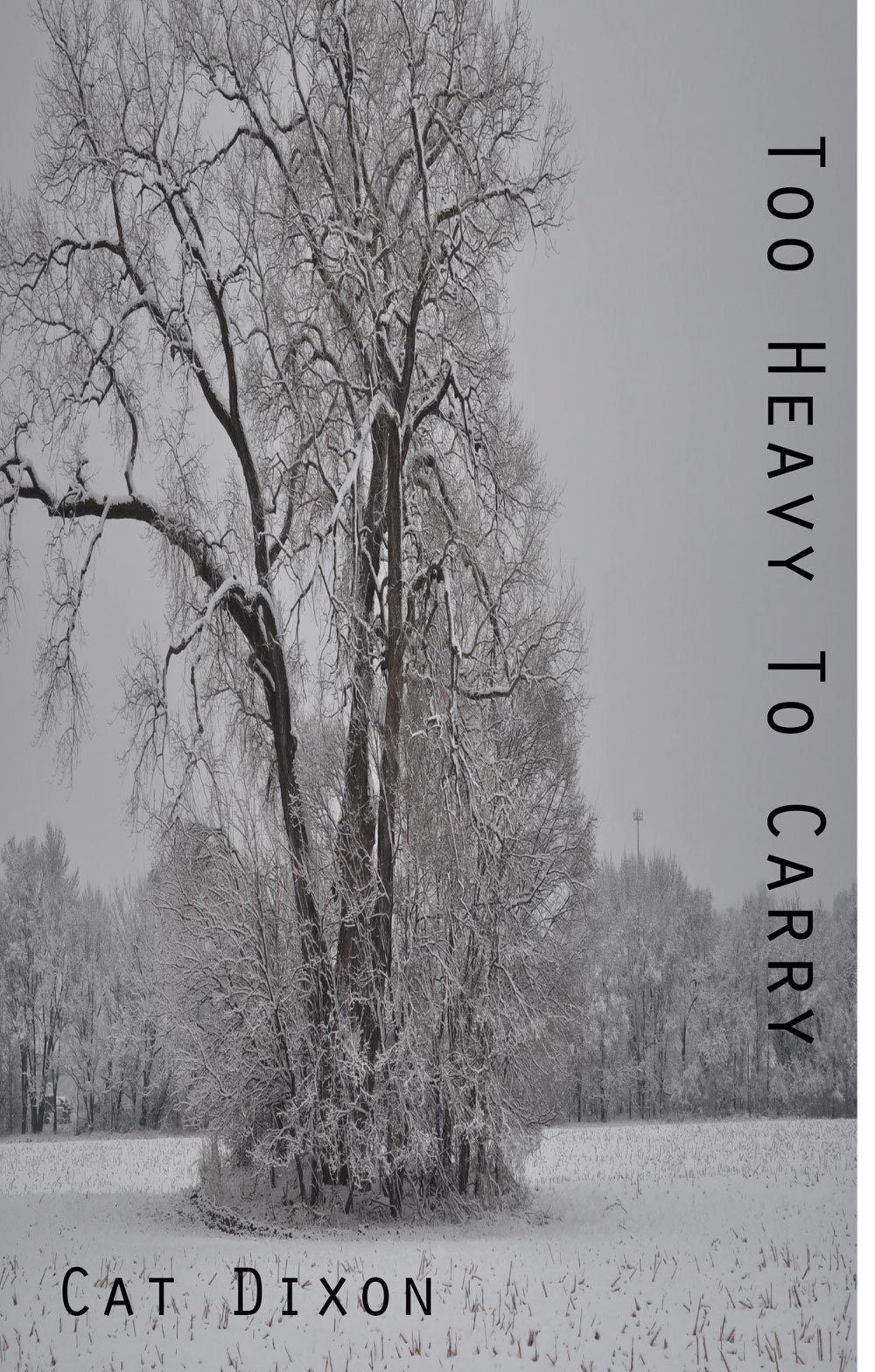
Cat Dixon, self-described confessional poet, had her debut book of poetry, Too Heavy to Carry, come out mid-February from Stephen F. Austin University Press.  Here's the jacket blurb:
"People expect that their lives move in majestic sweeps, but that’s only because memory and legend work that way, but reality works in the small moments of our experience. Too Heavy to Carry explores those moments by focusing in close. This wonderful collection aims to name the evils that people live through: loneliness, betrayal, inadequacy, and loss. Dixon easily captures not just the glimpse of hope, but shows the agony and obstacles one must endure before she crawls out of the bottom of the well. This is a must for survivors of any variety—divorce, depression, domestic violence, abandonment/neglect and other painful experiences."
Her poetry is often visceral as if carved out with a blunt instrument. Here's a video interview with the poet and a brief excerpt.  Here's her website with a few sample poems.