Search This Blog

Showing posts with label racism. Show all posts

Sunday, May 26, 2019

Analysis: The Postman Always Rings Twice by James M. Cain (Movie + novel)


Image result for The Postman Always Rings Twice by James M. Cain

I watched a lot of black-and-white movies with my pop growing up. They were his thing. He had a lot of the noirs, and we watched this one. I liked a lot of them, but not this classic noir. This one I hated and I couldn't explain why. I didn't try. I'll discuss it below

That's probably why it took me so long to read Cain's work. When I did, I found the novel a moving if awful kind of tragedy. Moreover, it had made it on Modern Library's Top 100. You can see why in the excerpt below. The novel is packed with energy, each line bursting with suggestion.

The book was apparently banned in Boston for the violence and sex. It is violent, one moment especially, but the sex is largely off stage. Different times.

This has had a ton of covers. My favorite is this first one. It captures all three characters in one shot.

Excerpt


That was when I hit this Twin Oaks Tavern.... I blew in there in a hurry and began looking down the road. When the Greek showed, I asked if a guy had been by in a Cadillac. He was to pick me up here, I said, and we were to have lunch. Not today, said the Greek. He layed a place at one of the tables and asked me what I was going to have. I said orange juice, corn flakes, fried eggs and bacon, enchilada, flapjacks, and coffee. 
Pretty soon he came out with the orange juice and the corn flakes. 
"Hold on, now. One thing I got to tell you. If this guy don't show up, you'll have to trust me for it. This was to be on him, and I'm kind of short, myself." 
"Hokay, fill'm up." 
I saw he was on, and quit talking about the guy in the Cadillac. Pretty soon I saw he wanted something. 
"What you do, what kind of work, hey?" 
"Oh, one thing and another, one thing and another. Why?" 
"How old you?" 
"Twenty-four." 
"Young fellow, hey? I could use young fellow right now. In my business." 
"Nice place you got here."

Notice how Frank hides everything about himself from Nick, in every line.

This discussion below will have no easy summary as I'll be spoiling it along the way. Here's a Youtube clip of the radio play adaptation, which is very similar to the movie version. They used to adapt movies for the radio.


Book Version

In the novel, Frank Chambers is tossed off a hay truck. He'd been in Tijuana. He shows up at the Twin Oaks diner, pretending a friend was coming in a Cadillac (i.e. rich), going to spring for dinner, and Nick Papadakis, the owner, cooks and asks if Frank wants a job. He's told immediately that Cora Smith is Nick's wife, which seems to be what keeps Frank there to take the job, fixing tire flats. When Frank compliments her on the burritos they made, she's very keen to dissociate herself from Mexicans and Nick, a Greek, which of course is interesting that she'd marry him. She later calls him greasy. Nick seems indifferent except as a way to get at her so she wouldn't treat his as her servant.

Frank uses a fallen sign to talk Nick into getting a new one. Once Nick leaves, he locks the door to be alone with Cora. He bites her lip at her request and bloodies her. Scene cuts as they head to the bedroom.

Nick is upset that Cora's lip was hurt by the swing door and he makes Frank fix it. He hits Cora in the legs and she seems to like it although she asks how he got that way. They get away every chance they get when Nick leaves. They share their pasts. She calls herself a hellcat except with Frank.

No reason is given for Nick's murder, but they plan it: Her hitting him in the head with a bag of ball bearings while he's in the tub and to hold him under, so it looks like he fell and drowned himself. When they plan the bathtub murder, Frank is to be outside and honk the horn if anyone comes by but he ends up chasing a cat and not being around when a state trooper shows up asking questions. They note the cat going up. The lights went out and she screams.

They feel they have to save Nick's life and rush him into the hospital. As soon as Nick recovers consciousness, Cora talks Nick into the story she wants him to believe. When they get back, they find the potential murder weapon on her. The state cop notes the cat caused the lights going out.

They try to run off, but Cora doesn't want to, so Nick runs off, and tries to make money at pool to get Cora. He bumps into Nick, who cajoles Frank into coming back. Nick seems proud of his accident.

That night Cora has an argument with Nick about bringing Frank back. Frank somehow hears her heartbeat and clicks on the kitchen light to find her holding a knife (whether to kill Frank, herself or Nick is unclear). They come up with a new murder plan.

The men get drunk. Nick yells that Cora, driving, will get them all killed. Foreshadowing. The worst moment is when Frank hits Nick over the head.

Frank rips her blouse and blackens her eye, so she'll pass getting into an accident. It doesn't go as planned though and Frank damages his back and arm. He goes in and out of consciousness as shipped around from mortuary to hospital.

They get interrogated. Nick acts properly confused. He seems convincing to the bald District Attorney is  and the reader, but the DA is tough and even catches part of the story in guessing... except the insurance angle. The DA with much cajoling talks Frank into signing a complaint against Cora. The DA seems to know everywhere he'd been jailed. 

Cora's lawyer, Katz, knows Cora will be get upset when she hears about Frank's signed complaint, so he hires a former dick to record her confession, so she can get it out of her. And then he has the complaint stuck a safe.

Frank is plagued by dreams of killing Nick, hearing the crack.

The DA crows about his sure win and bets Katz one hundred dollars on the court results. The insurance agent had gone to Nick and he told Nick that injury insurance was needed. Also there were two policies in effect at the same time, and even if they did hang Cora, the insurance companies still had to pay since Frank could sue injuries and the companies would have to pay. He had the insurance companies agree that she had caused the murder because they had a guest clause that if Nick and Cora caused an accident, then the companies had to pay. It's a bit complicated. So Nick put his insurance man on the the stand who said that they didn't think Cora had done it.

Nick decides not to charge Cora for the lawyering. The DA's check was enough.

Frank and Cora have it out. They hold each other responsible (him for the complaint, her for the confession) but seem to have forgiven one another.

They talk of selling the business, but Cora wants to expand it from car repair and hotdogs, to include beer outside under the shade. Frank is upset. He wants to move on.

While Cora's in Iowa, Frank runs into Madge who sells big Central American cats to zoos and movies. So he takes off with her. She asks if he's got "Gypsy blood" in him like she does. A match.

Kennedy, Katz's dick, extorts money out of Frank and Cora to get Cora's confession. Frank uses the sign to blind Kennedy and gets the gun and hands it to Cora to hold while he beats on Kennedy. Kennedy complies and tells his buddies to bring the photostats and original confession.

Cora finds out about Frank and Madge. Madge left a puma kitten to remember her.

Cora and Frank torture each other. He wants to kill Cora and she wants to turn him in. But Frank feels a love-hate. Cora is having Frank's baby and never wanted to hang the kid's father.

Frank dives underwater and finally feels clean, but Cora's sick and he carries her to the car. A truck is blocking the passing lane despite his honking of the horn. Cars are coming on the left, so he tries to go around the right and runs into the culvert wall. The puma kitten hadn't been taken care of so it was mangy and tried to bite Frank. Judge calls Frank a mad dog. He worries about what Cora thinks about him. He asks the reader for prayers for him, Nick and Cora.

Cats are their bad luck. We have the electrocuted cat who foiled their first murder attempt (although I'm not completely sure why), and then the lawyer who helped and now this puma which led him astray and now testified against him.

Movie Version

In the movie, the District Attorney gives Frank a lift to the restaurant, which is interesting. The DA seems to have an interest in the itinerant man's future. And yet, in a cosmic way, he's the one who delivers the doomed man to his fate. Plus we get to see the good-guy antagonist (and the cop who tries to give a ticket to the DA for parking in the road). Frank has apparently called about a job and tells Nick [Smith--they erased the racism for the movie] that he's got itchy feet [he moves a lot]. There's a wonderful sign "Man Wanted"--great triple entendre (for hire, for sex, for murder).

Nick is immediately smitten and picks up her lipstick for her. Did she drop it on purpose? We don't get to see. But she puts out her hand for him to deliver the lipstick as if he's her servant, but he steps back to lean against the counter instead, making her come to him.

Nick thrusts the young couple together when he encourages them to dance when he can't. Cora tries to get out of it, but Nick insists.

Frank uses the outside sign as a way to get in with Cora since she's long been wanting Nick to get a newer sign.

In love, they leave a note in the cash register that she's leaving him, and head out on the road, but Cora is miserable, so she has them turn around. She doesn't want the itinerant life.

After they attempt the bathtub murder, the DA follows in his car and notes the step ladder. Frank blames the cat.

When Nick comes home nearly run off the road, they come up with a plan to run him off the road. Nick has plans to sell the place, as his sister can't walk and he wants Cora to help take care of her.  He almost seems to know about their plans. Cora rejects this as she doesn't want to sell the place, but he had her sign a divorce agreement, not knowing what it was, so that she'd get nothing if she left him.

So they come with a plan to kill him. In this accident, she is uninjured and Frank accidentally get caught in the automobile.

They get pressured into marrying. To test him, to let him drown her or save her life, they swim out to where she can't swim any more. He saves her, but his distracted driving runs them into road. He's happy when they can prove he will die not because of Cora but because of his killing Nick.

In jail, Frank explains the title, in part. The postman rings twice, and you always hear the second time.

The Difference

The movie follows the book pretty closely with some ingenious improvements. Love that sign. Simplifying the insurance angle was good. I'm not sure I followed. Keeping the DA around developed his character and added tension and some symbolic weight. The racism angle was probably worth cutting although it did add a layer of characterization, a man proud of his heritage (though his wife was not). Nick isn't necessarily that much older than Cora in the book. 

Here's what broke me: In the movie, though older, he seems so sweet, I didn't want to see him hurt. The book had another advantage, perhaps due to not being pressed for time: It would add pressure and take it off. We'd feel the tension, but when it released, we had hope that the characters might improve their behavior. The sexual tension is there in the book, but it takes him a bit to encourage her. Maybe it's in my imagination, but it feels like they can succeed by running away, or by sticking to their (Frank with the DA), or by finally getting together. We get these little breathers that, even if we disapprove, we at least feel they're going to turn their lives around. The movie feels like a relentless road of misery, one bad move after another.

#

I'm catching up on reviews, so it was a surprise that once again my readings coincided with Scott Bradfield's. Here's his discussion on the writer.


Monday, March 25, 2019

Analysis: Get Out

It's a bit rare in fiction to mix SF and horror--that is a tale whose telling has fear as its modus operandi, but at its base, the speculative conceit hinges on a scientific concept. When it comes to movies, they don't shy away: the Alien franchise and look-alikes and zombie movies come to mind. Often a scientific disaster or mad scientist is the cause.

The trailer here makes the movie sound simpler than it is. It seems to have laid out its entire poker hand, which made the film seem less interesting, which explains my only getting to the movie now. Luckily, this is not the case. It mixes SF and horror well although it leaves a number of head-scratchers.

Get Out summary
Chris, an African American photographer, is headed out, with his girlfriend Rose Armitage, to visit her parents. He thinks it's a mistake not to tell her parents that he's African American, but she assures him that her dad would have voted a third time for Obama.

Rose, driving, hits a deer and she calls the police, who informs Rose that she needn't have called them. The cop asks for Chris's I.D., and Rose defends Chris, saying that an I.D. is unnecessary, creating a tense moment. Chris hands over his ID, anyway, and the cop lets her belligerence go.

When Chris meets the family, there seems to be a string of microaggression incidents where the members say a series of racially off-putting things. He meets their African American servants, who put on a show of being happy if a bit vapid.

Chris thinks he dreams that he sees the African American servants behaving strangely (running at him, staring in the mirror and adjusting her hair) and that Rose's mom puts him under hypnosis, using tea cup and spoon, to get him to stop smoking. But also she uses his feelings of guilt about his complicity in his mother's death (he didn't call right away when she didn't come home, and since she was involved in a hit-and-run accident, it was possible he could have saved her life if people had searched for her in time). The hypnosis works. He doesn't want to smoke. He later finds out, through Walter, that none of it was a dream.

Things get worse when at a party, the party-goers make more and more racially odd statements. They seem to compliment on the one hand but stereotype on the other. The movie's title comes when Chris tries to take a surreptitious photo of an African American he thinks he knows, Andre, who is a spouse to an older white woman. The photo flash starts Andre's nose to bleed (a common but unexplained motif in movies), and he rushes at Chris to tell him to "Get out."

Get Out spoilers + analysis
Chris is unnerved, but the Armitage family take the gentleman into a back room, and he's back to normal. Chris sends the photo to his TSA friend, who tells him that the guy in the photograph has been missing. Maybe they're some kind of sex slaves, he suggests and tells Chris to leave. Chris agrees and tells Rose to pack up to go. She seems to go along with this.

However, Chris finds a stash of photographs in a tiny closet that shows Rose in what appears to be relationships with the former servants. She seems to be the lure.

This appears to freak him out, but he somehow still trusts her. How the Armitage mother is privy to his guilt about his mother's death should have at least have made him wary before now--all of these data points leading to distrust. Instead of running, though, he yells at Rose to find the car keys, and she can't seem to. This doesn't seem to make him distrust her, either; he just yells more. Maybe he's in denial. Or maybe he can't drive himself. After all, when asked for his driver's license, he said he had a state ID, which suggests that maybe he didn't know how to drive or that he lost his license. (He does drive later and seems competent at it despite the accident, so maybe he just lost license.)

Mrs. Armitage taps her tea cup twice and he's under. They drag him downstairs and strap him to a big chair. Here, I wondered if he could have worked his limbs loose from his bonds, but maybe we're to assume he cannot. Or maybe he never gets the opportunity as the videos keep putting him under.

The series of videos indoctrinate him into what will be happening to him. That is useful to him and us the audience, so that we know what's going on, but I'm not sure what that gains the Armitages to reveal their hands. But the one guy who was reasonably nice to him at the party--a blind guy--plans to use Chris's eyes.

Chris, meanwhile, finds enough armchair stuffing to apparently dull the hypnotic effects of the video, and when the Armitage brother unstraps Chris, he goes on a killing spree of his captors. (The father may not need to be killed to make an escape, but one can hardly fault this. The weapon is unusual: a deer head. The antagonistic brother and the mother, who holds his hypnotic jailer keys, do seem critical deaths to make an escape.)

Other people also bar his escape: Two are the African American servants, which Rose reveals as Grandma and Grandpa. Chris accidentally runs into "Grandma" and feeling guilty (remembering his own mother), he backs up to take her with him in his getaway car. However, she wakes up and forces him to drive into a tree.

Next, "Grandpa" (or Walter) comes after Chris, but Chris uses his cell flash to bring back his true consciousness and shoots Rose with her rifle and then himself.

Did Walter need to shoot himself? It depends on how Grandpa is riding inside him. My first thought was that it was a radio connection, and Grandpa was an invalid, stuck in bed. If that were the case, I would think that 1) Grandpa would rather get healthy and be himself unless this is terminal (but then if it's terminal, he probably wouldn't be conscious much, leaving Walter to control his own body), and that 2) Walter could just run outside of radio range and be free of Grandpa's influence. Since the earlier photo-flash moment with Andre had to be corrected by the family, it would seem that Walter had the opportunity to escape if the mother isn't around to re-hypnotize.

Another possibility is that Grandpa is otherwise dead and has taken over Walter's body via hypnosis and brain surgery. Dr. Armitage did say that Grandpa had died. So we're talking a living consciousness transferred and uploaded into a living brain. While this technology seems improbable now, perhaps it will be possible in the future although one might suspect a hundred years down the line--if we ever figure out what consciousness is. But this would explain why he kills himself since Grandpa might at any point take him back over.

On the other hand, what if there's a procedure that could cure him? The blind guy said Chris would still be there, just not at the wheel. I'd think these guys might have been hatching escape plans if they ever got the chance. Why does Andre, when freed by the flash, come at Chris instead of running away himself? On the other other hand, it is possible to demoralize a person into inaction.

Another difficult thing to wrap the mind around is Grandma and Grandpa. Have they lost interest in each other? Why aren't they seeing each other like a couple? Also Grandpa Armitage looked to be the family patriarch in the video. Why were he and Grandma made into servants? This suggests an even stranger family relationship. You'd think they, too, would want out of this situation.

There are interesting parallels involving hit-and-runs.

  1. Chris lost his mother due to a hit-and-run. 
  2. Rose hit a deer. One might think that the deer hit was designed to have happened, but it'd seem a formidable and fortuitous accident to create. However, that might have intended to put Chris into a more suggestible frame of mind. There's an alternate ending where Chris ends up arrested when he's caught choking Rose. This might mean that a larger conspiracy was intended at one point. This event seems to have haunted Chris as he dreams about it, so there may be more to unearth here. Dr. Armitage does call them an ecological problem, so he's glad they're gone. If significant, does that make the Armitage the deer or the car? Maybe the car, and Chris the deer is enacting his revenge. 
  3. Walter, jogging, almost runs over Chris, but swerves.
  4. Chris runs over Rose's dad with a deer. This could be poetic justice if the deer were intended and was part of the greater conspiracy.
  5. Chris runs over a woman whom he tries to save but ends up killing, given her Grandma trying to kill him. 
There may be more. I haven't formulated anything overarching for this. Just intriguing.

What kind of people would get wrapped up in such a conspiracy? These people admire and maybe are jealous of African Americans. They want to be them. So they aren't your garden-variety racists, who would probably look down on being African American. They may be racist in the sense of seeing African Americans as the superior race and eager to become or marry one. Unless the Armitages are using Liberalism as a cover, they claim to be Liberal. Perhaps these people met online somehow and congregated. There were a lot of them at the bidding war--enough that you'd expect there to be more than one lure trying to satisfy their desires. This suggests territory for a sequel, especially since there are so many unanswered questions.

In terms of drama, the alternate ending would have amped up the drama, but it would have probably added too many extra complications. 

"Cinema sins" does this "Everything Wrong with ..." series. Although they apparently do it whether they like a movie or not, this is one they seem to like. They make a few salient points, and a lot of minor ones, like whether or not Chris is a hipster with a lot of lamps. I did notice an interesting photo with a child in a mask that I might have noticed otherwise, but I'm unsure how to load it with meaning. Who is the masked child: Chris or his antagonists?

If you've read this far, I'm assuming you watched the movie, but this video has a lot of spoilers, too.

Monday, March 11, 2019

Review of Agatha Christie's The ABC Murders (2019, Amazon Prime)

Amazon Prime did it's own version of Agatha Christie's The ABC Murders [link to movie], which is one of her more striking and elaborate mysteries. Thanks to the BBC, viewers have a certain expectations. While one expects murder, gore and the unpleasantries of life are minimized. What is maximized is the puzzle of the murder. This type--the "cozy"--has been so well defined that even Merriam-Webster has an entry for it:
"a light detective story that usually features a well-educated protagonist and little explicit violence"
Image result for Ian McKellen's Mr. HolmesThis definition already contains its critics' own condemnation as "light." A true aficionado would probably bristle at that and suggest that the puzzle is foregrounded, which can be an intellectual if a reader so chooses to match wits with the detective, so that it is not necessarily light. The "light" probably refer to its shrugging off of violence (hence, realism, in some minds) or perhaps of literary pretensions.


It's little wonder that viewers would bristle at an Agatha Christie mystery where violence in presented (if not gruesomely so) as well as the seamier side of life (if not salaciously so). Any fan upon first viewing this three-part series may balk, wondering if the additions are gratuitous moderizations of Christie's work. But if you liked Sherlock Holmes' updated, more personal treatment from Ian McKellen's portrayal in Mr. Holmes, you might well be intrigued by John Malkovich's portrayal of an older Hercule Poirot. They aren't mirror images. This one has a murder mystery at its heart whereas Mr. Holmes has a personal mystery.

Hercule Poirot has no sidekick (no Captain Arthur J. M. Hastings, OBE to bounce ideas off of), which makes sadder and lonelier. Worse, he's lost his ally in the police with only a detective (played surprisingly well by Rupert Grint) who isn't interested or doesn't trust Poirot. Poirot has been receiving taunting letters from "A.B.C." who eventually resorts to murder. The murderer seems to have a personal vendetta against Poirot, forcing him to rake through his brains for someone in his past. Since the police won't help, Poirot has to take on the murderer alone.

Poirot's own past and his ability to detect are called into question and have a bearing on the case. The mystery is not quite well delineated as a puzzle to match wits with the private detective as in most of Christie's work, yet I do believe well worth watching, even if (especially if?) you've seen it before.


Sunday, March 16, 2014

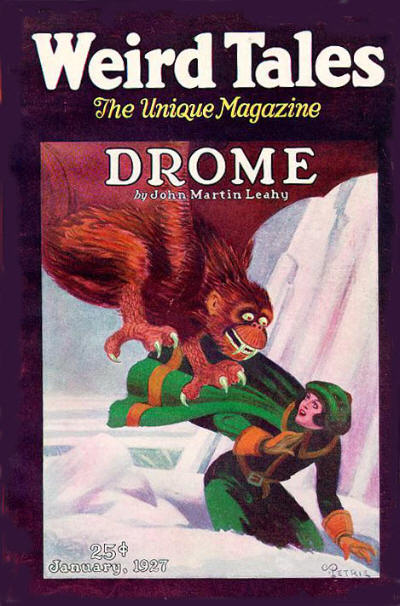
"The Horror at Red Hook" by H. P. Lovecraft -- Keys to understanding Lovecraft's work

First published by Weird Tales, reprinted by Christine Campbell Thomson, Herbert Asbury, Charles M. Collins, August Derleth, and Barry J. Gillis. Free online.

The impoverished children of New York are disappearing and Thomas F. Malone is on the case. Robert Suydam, who gets younger and more invigorated, comes under suspicion when a child's face is spotted in one of Suydam's basement windows. Malone stops by various properties and finds fleeing foreigners, charnel stench, mysterious instruments, and blood spatters.

Lovecraft wrote of the tale's origin:
"The idea that black magic exists in secret today, or that hellish antique rites still exist in obscurity, is one that I have used and shall use again. When you see my new tale "The Horror at Red Hook", you will see what use I make of the idea in connexion with the gangs of young loafers & herds of evil-looking foreigners that one sees everywhere in New York." 
From our twenty-first-century perspective, the tale's origin is an embarrassment of racism, yet Lovecraft's influence permeates the genre and wider culture. We need to understand where we've come from. Plus, it's too easy to be dismissive of times other than one's own. As Roger Luckhurst points out in his introduction to Oxford University Press's The Classic Horror Stories by H. P. Lovecraft, following the millions devastated by W.W.I and the Spanish flu, western civilization was felt to be on the decline. Moreover, social Darwinism gave racism an intellectual justification, with such prominent proponents as Jack London. Lovecraft likely considered himself an intellectual studying myth and even penning a chemistry textbook.

Lovecraft's racism comes from a slightly different place. Tragedy filled his personal life: a father who went insane from syphilis; the loss of the grandfather, his fortune, and displacement from his home so that Lovecraft felt like a wanderer; his mother's insanity; and Lovecraft's own financial instability. No wonder he felt the imminent, inexorable collapse, the encroaching horror that has no respite, no escape. This describes not only Lovecraft's key story elements but also his plot structures. The evil of the foreigner is inextricably linked to the uncaring and amoral gods--rather beings from another plane.

The story opens with the protagonist's madness ("Malone was content to keep unshared the secret of what could reduce a dauntless fighter to a quivering neurotic"--a term that Lovecraft, according to Lockhurst, once used to describe himself), and the opening quote from Arthur Machen discusses evolution:
"It is possible that man may sometimes return on the track of evolution, and it is my belief that an awful lore is not yet dead.”
So we witness the typical, inevitable doom of the Lovecraftian tale. His life mirrored civilization, and his fiction mirrored both. While many critics are dismissive of this tale, Lockhurst sets the story in a primary position, and it does appear to illuminate Lovecraft's work.