Search This Blog

Showing posts with label Trent Zelazny. Show all posts

Sunday, April 19, 2015

Three, Four, Five Fundraising Projects

1. Children's Special Effects Workshop 
(for disadvantaged children)

2. Fantastic Stories of the Imagination 
(with subscriptions and other rewards)

3. Finish Fixing Trent Zelazny's teeth

 4. Get Samuel Kolawole to Well Stone, Clarion West (funded)

5.  Stories for Chip: A Tribute to Samuel R. Delany

Friday, February 7, 2014

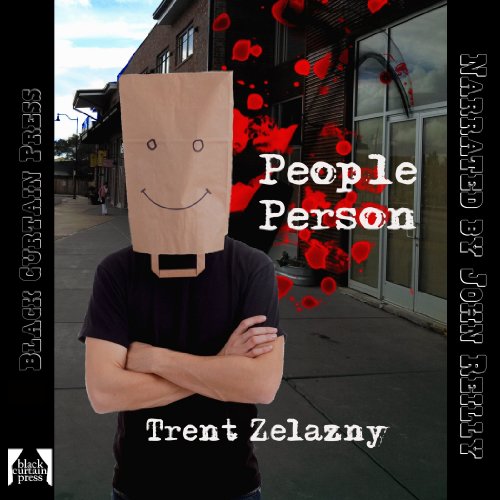
"People Person" by Trent Zelazny

My all-time favorite Trent Zelazny (interview) works must be To Sleep Gently, "Found Money" and "The House of Happy Mayhem" wherein we have gangsters, a humorous chase story with inept gansters, and a crazy man who isn't quite aware of this. "People Person" bangs at the door of his best works. It nearly made it on the Stoker preliminary ballot.

Jeffrey Carlisle is a normal--if slightly smaller than normal--male:  a baseball cap, T-shirt and jeans kind of guy. He's lost his younger sister, Jessica. He drives and parks where he thinks she's disappeared.

He works part-time as a mover for a guy who tries to cheat him at every turn.

The story really rolls as soon as he starts to involve himself in a neighbor lady who is no longer in love with the drunk who keeps banging on the apartment door where his name is still on the lease. Jeff urges the drunk to move on.

He runs into his neighbor, Maddy Eggars, the source of the drunk's woes. Jeff may be slightly attracted to her, but nothing has yet occurred. Nonetheless, he feels protective of her, and she turns to his aid when the drunk seems about to get out of hand...

Interesting protagonist whose motives are perhaps too veiled. It seems he overreacts--at least according to Maddy's characterization. This throws his other life mysteries into dubious light. The text does not supply answers, however. Recommended for those interested in troubled and troubling characters.

Wednesday, January 29, 2014

Slow Down + Blog Assessment + Writer Interviews + Posts You May Have Missed

Slow Down
Too many posts consume time. I must slow down. I have stories to write and submit, so enjoy what's here.

Blog Assessment
The last assessment was in December of 2012. I've been at this since Dec 2009--a little over four years (although I also blogged at s1ngularity:criticism and Mundane SF blogs before this). With nearly a thousand posts, that's about two posts for every three days. When I get bogged down at school, I post less frequently.

For two and half years, page visits have grown ten percent or so per month, which amounts to a twenty-fold increase. The per post view-rate has grown since last year from 35 to 55 or so, not quite a sixty percent increase. This is more dramatic when you consider the early posts with few hits are factored in (the hits were probably my mama who accidentally hit the refresh button a few times.

A year ago, one post--"Girl" by Jamaica Kincaid--outstripped all other posts and accounted for ten percent of the traffic (it's now five). I guess it's a good one. Fifty to a hundred folks stop by each month to take a look. Trent Zelazny's interview posts may have been the only posts that overtook her monthly lead.

Interesting to see which classic stories people are still fascinated by. Theodore Sturgeon's "Microcosmic Gods" and "Thunder and Roses" have drawn hundreds of readers in less than a year, but the other Sturgeon stories only about two dozen each.  I'll  be interested to see which stories of the big three--Arthur C. Clarle's, Isaac Asimov's and Robert Heinlein's--people are still fascinated by.  William Gibson and Ursula K. LeGuin drew less attention than I would have supposed although I need to do more or theirs..

In retrospect, part of the blog's growth was not only the quantity of posts but also the quality of their presentation. I changed presentation when I reviewed and interviewed. Take note if you blog.

Popular posts can be viewed on the right.

Writer Interviews
On file are the following:
  1. Loralee Leavitt
  2. Christopher Barzak
  3. Trent Zelazny
  4. Kenneth W. Cain
  5. I have upcoming interviews with G.O. Clark and Dustin Lavalley.

Posts You May Have Missed
These are posts I thought there might be more interest than they've received: 
  1. A Scene-by-Scene Analysis of the Movie, 2001: A Space Odyssey*
  2. Analysis of Flatland: A Romance of Many Dimensions by Edwin A. Abbott*
  3. A number of James Patrick Kelly posts--one of the best writers of speculative fiction in the 90s and 00s. I didn't put much time into pretty-fying them, focusing on content. Maybe I'll revise them one day.
* These two might make a nice contrast, treating religion from opposite ends of the spectrum.

Wednesday, October 16, 2013

Trent Zelazny donating 50% of proceeds to shelter

Trent Zelazny is donating 50% of proceeds of his ebook, People Person, to Esperanza, a local shelter for the battered.


Friday, August 16, 2013

Thursday, August 15, 2013

APB interview with Trent Zelazny, pt 1: Personal Life and Fiction

Reading your avid reviews and interviews, not to mention seeing how big a response I get whenever I post something about you, the response is so palpable that I find it difficult not to see you as a cult figure, if not quite at the level of Charles Bukowski, getting there.  Like Bukowski you’re not immediately part of the major presses.  To what can we chalk it up to? your famous father (even though you two write nothing alike and would be unlikely to attract many of the same readers)?  an unfortunate personal life (though you don’t exactly write memoir)? your particular flavor of contemporary noir? something else? 

I honestly don’t know.  I suppose there’s some truth in the cult status thing, though I’m not sure I could say how I’ve managed to achieve it, nor could I say why I’ve only achieved it.  So many things can play a part in somebody’s career, and often talent or lack thereof is only a small piece of the whole puzzle.  My father being who he was has helped in certain aspects and very much hurt in others.  People often comment or tell me I wouldn’t have a career had my father not been who he was.  I personally think that’s an ignorant and asinine statement.  One to which I can say, bullshit.  They haven’t had to experience the few ups and the multitude of downs that have come with it.  If I was writing Amber novels or something, a la Brian Herbert or someone like that, I think the statement would have a lot more validity.  But in my situation, I think it’s an easy dismissal for people who are threatened or jealous, or who just plain don’t like me.  But if you wanna get down to the simple core of the matter, if my father being who he was was really such a big help, then how come after over fifteen years in this business I don’t get better book deals?  If it’s because I’m not that good, then fine, but that also would cancel out the name being the reason I have a career.  Any angle I look at it from, it makes no sense.

As for my personal life, I think a lot of people want honest authors, but not too honest.

I think the noir angle is one reason I have a career at all.  I don’t wanna come off as a snobby prick, but like most any genre, noir is packed with stereotypes, and while I love the stereotypes and often use them, I think I also kind of break the mold, in the sense that I don’t really consider myself a noir writer.  I just think of myself as a writer (or, more accurately, a guy who writes) who happens to have been heavily influenced by noir and the old pulps.  So I’m just writing my stories.  I’m not telling myself that I need the tough guy, the femme fatale, etc.  I don’t sit down and say, “Okay, I’m gonna write a noir story.”  I’m just writing, and the cliches and stereotypes often jump in due to the influence, sometimes more strongly than others.

Long and short of it, really, I don’t know how I have a career at all, nor do I know why I’m not a best seller.  But you never know what’s gonna happen.  George R.R. Martin was a very well respected author for years and years and years, though certainly by no means a household name.  Then he wrote Game of Thrones.  Whoomp!  Pop culture phenomenon.  Conversely, Richard Bradford wrote the immensely popular 1968 novel, Red Sky at Morning, then a few years later he wrote So Far from Heaven and—whoomp!—career over.  Things can go any which way and can change at any moment, for better or worse or both simultaneously.

Easier said than done, of course, but I try to just write and not pay too much attention to what people say or think.  But let me reiterate that first part: easier said than done.

In most of your interviews, your interviewers are very keen on your personal life.  In some readers' minds, the two appear linked.  Is it in yours?  How do you feel about this? 

I think often—not always but often—my personal life is very linked to my work. Usually it’s the more introspective titles (Fractal Despondency, A Crack in Melancholy Time, Shadowboxer, Butterfly Potion) that are a direct result of my personal life.  Whatever I’m writing, I just do my best to be honest with and about myself.  There are direct facts from my life in my fiction, but I’ve found that, especially non-writers, often think I’m writing a biography.  “Did that really happen to you?” “Did you really do that?”  More often than not my answer is no.  While I base most of my stuff on my personal life, it’s still fiction.

So is "living life" your muse?  And/or is it wrestling with personal demons on the page as we humans often do in dreams?

A muse is an unexplainable thing that seems to border along the lines of something ethereal.  I’d say my muse is likely much closer to wrestling with personal demons than it is to living life, though they’re both in there, as are other things.

How does your real life inform your literary life?  Do you see this continuing to change?

The old adage, write what you know.  It changes all the time, sometimes from day to day or even hour to hour.  After my fiancĂ©’s suicide and my own attempt and my battle with alcohol, my stuff was incredibly gloomy, but of course, it would be.  You never get over stuff like that, but you can eventually shift it from constant blistering pain to a constant dull ache.

Growing up loving dark fiction and movies and so forth, that’s usually gonna be a part of my work, because that’s what I most often love to read.  But as I’ve found more hope in my life, I’ve noticed that many of my characters are finding more, too.

With Aaron Smith, you said that the opening scene in A Crack in Melancholy Time began as a memoir.  Was that unusual or is there usually some reality blended into your fiction?

There are lots of bits of true events in my stories and books.  Sometimes little things—waking up with my ear filled with blood in Fractal Despondency, for example, and sometimes long scenes, like the part in A Crack in Melancholy Time that takes place in Ocala.  Getting out of jail in a town I’d never been in in my life, walking for at least a few miles in flip-flops just trying to find a motel, all the way down to the guy at the motel and the screwed up television in the room and the phone that didn’t work.  All of that stuff is complete fact.  But there is another scene that seems like I could have drawn very much from real life, when the main character drinks himself into a blackout while living with his fiancĂ©.  That never happened, though it struck such a deep chord in me that it almost feels like it did.


Wednesday, August 14, 2013

APB interview with Trent Zelazny, pt 2: Character, Place, and Education

The characterization of male baddies in To Sleep Gently impressed me.  What was your method of generating such characters?  Do they have a basis on reality?  Or did you generate them from scratch?  Has your process evolved? 

They pretty much just came from out of nowhere. That particular book was primarily inspired by two things: the Parker novels by Richard Stark (really Donald E. Westlake), and the movie (as well as the W.R. Burnett novel) High Sierra, which starred Humphrey Bogart and Ida Lupino.

The baddies came out of thin air, as far as I know, but not all of the characters did.  The protagonist’s old buddy is based on a friend of mine, while both of the leading women were based on the same girl I’d at one point had a very obsessive (both ways) femme fatale experience with.  Other than that I think all the characters just kind of walked into the scene and said hello.

You say, "I’m a character writer far more than I am a plot writer."  So do you spend time sketching down lives for characters, base them on experience, or just plunk them into a bad situation and have to dig themselves out?

Usually a character just comes along and says hello, and I say hi back.  Then the character usually says something like, “Wanna hear a story?” or “Hey, could you come here for a minute?”  When I say sure, why not, then it’s more often than not just like meeting any other person.  I learn more and more about them as I go along.

Many of your works take place where you have been.  Are you inspired by the arid lands of New Mexico, or is it the idea of writing what you know?

I think it’s both, really.  I’ve lived in the Pacific Northwest and I’ve lived all up and down the western side of Florida, but I was born and raised in New Mexico, and I’m a desert rat at heart.  I love the desert.  Sometimes I make up cities or towns and sometimes they’re very specific.  Someone pointed out how geographically accurate Butterfly Potion was, taking place in Santa Fe.  But then my novel Destination Unknown needed things both deserty and mountainy and watery, so I made up a place called Watercrest, and I think it’s only named once in the book.  In my mind it was somewhere in California, but a friend said it reminded him of Pennsylvania.  Either works, because Watercrest doesn’t exist.  My Watercrest doesn’t, anyway.

How did you create Watercrest?  Did you make it first, or give it what the story needed?  Were you forced to draw up maps?

The story created Watercrest.  It is very rare that I create visual aids for myself, unless it’s something like a battle, one against ten or something like that.  Then I might do a quick little drawing, mostly so I can keep track of where each character is.

The world just forms in my mind.  For myself, I won’t believe my own story if I don’t believe the world it takes place in, and no plot or character can help that.  The main character, or characters, create the world for me, and if they stop building it, then it doesn’t matter what they do.  I no longer believe it, and when I don’t believe it the story stops, and usually gets filed away, unfinished.

You've spoken of poor education, lack of motivation, and class-clown-ism.  Since I'm a teacher who writes about teaching, how do you wish your teachers would have treated you so that you could have been more motivated?

Good question.  I honestly don’t know, to tell you the truth.  While I had some terrible teachers I also had some truly great ones—some I’m still friends with today.  One of my English teachers didn’t like me because she was a writer who couldn’t get published and my father was a multi-award-winning author.  Everybody knew that’s why she kind of picked on me.  But a lot of my school problems were really home problems masked as school problems, which I’d rather not get into at the moment.


Tuesday, August 13, 2013

APB interview with Trent Zelazny, pt 3: Influence

You list existentialists as an influence on your work, as well you've spoken of depression, a lowered mood often linked to hopelessness.  Are the existentialists fuel for your fiction?  Or does their work erode your energy?  If fuel, what do you find inspiring in them to keep your fingers tapping on the keyboard?  

Usually they inspire, especially when I’m down.  I’ve had depression and severe anxiety for as long as I can remember.  Someone like Sartre, or Kierkegaard’s not-so-religious stuff, or Spinoza, can fuel me, can help me embrace the darkness and, even if abstract or unexplainable to anyone else, can help me make some kind of sense of certain things going on inside me. Something like the book 10,000 Things to be Happy About (I guess it’s now 14,000) just doesn’t cut it, and I don’t see how a book like that could really help anyone, honestly.  It certainly doesn’t pull me out of depression or suicidal ideation or any of the other issues I deal with, anyway.  The book itself, I guess, is a good idea, but it’s merely a list of random things.  I don’t mean to knock any book, and I’ve no doubt that book has been instrumental in helping people, but it isn’t the kind of thing for me.

I was just in the Boston Logan Airport and didn’t need a book like that in order to find one of those things and know it was one of those things.  From the airport I posted on Facebook: “I have to say, something that still melts my heart is seeing a small child's excitement about getting on an airplane.”  But I digress.

It’s also the language of the existentialist writers that often excites me.  The way the words are put together.  The prose is often so beautiful that sometimes I only need to read a paragraph or two and I get fueled.

How has your father or his writing shaped your own writing?

My father was very encouraging with anything any of his kids did, especially creative stuff.  I was a musician for a long time and he encouraged that.  When I got more serious about writing, he encouraged that.  He may have been a bit more encouraging with writing, but I think that’s only because it was what he did, and therefore he knew it a lot better and could be more helpful.  I’m a fan of his writing, there’s no question there.  The things that get me most about his work are his prose and the philosophy he’d incorporate.

You mention that Jane Lindskold was a mentor.  How did she help guide you?

She had the patience and the kindness to deal with me.  She knew my educational background and that I was trying to learn and figure out all this crazy writing stuff on my own.  She was always willing to look at whatever I wrote.  She’d mark them up, tell me what she felt worked and what didn’t.  The final edit of To Sleep Gently, actually, is the Jane Lindskold edit.  A lot of folks don’t know, I guess, that I wrote To Sleep Gently six or seven years before it was actually published.  The first full-length book I ever sold was the tenth full-length book I’d written.  Out of the first nine, the only one I still truly believed in was To Sleep Gently.  The last thing she read of mine, at least as a mentor, was Destination Unknown.  She told me it would sell, and she told me the exact moment in the book that was going to make it sell.  She was right.  While one of my lesser known books overall, it was the book I received my biggest advance for me to date.

What about Lindskold's method of editing did you come away with?

She taught me a lot about simplifying, that I was often making things far more complex than they needed to be, or should be.  In To Sleep Gently I had a fairly lengthy paragraph describing something on the Santa Fe Plaza.  She crossed out almost the entire thing and, in the side margin, wrote, “Just say it was an obelisk.”  She also, at length, lectured me on the comma.  It’s been quite a long time, but I know I wouldn’t be nearly as far along as I am had it not been for her help.

What is it about David Goodis' work that you admire?

Simple.  His prose and his honesty.  Really, his plots are rarely very memorable, and I think I’ve read pretty much everything at least twice, but his characters linger and make you think, his prose sings to some kind of jazz tune neither Miles Davis or Thelonious Monk would have been able to touch.  Even the books of his I consider to be the weak ones still profoundly move me.

Joe Lansdale, another favorite author of mine, showed me, or taught me, if you’d rather, to not be afraid or run away from what was going on inside me.  Goodis then came along and helped smooth that out for me, and got me more comfortable with being honest in exploring myself.

How so?

Any answer I could give here, if indeed I could give an answer at all, would be beyond nebulous.

Music, you say, is a mood enhancer for you, but not while you write.  So do you plan ahead the moods you will invoke or do you just change it up when necessary?  What are some of your book's soundtracks?

The book or story creates the soundtrack.  I never know what the music is going to be until the book tells me what it likes.  It’s pretty cool, actually.  I’ve been turned on to music I might never have given a chance if not for a specific book telling me that’s what it generally listened to.

I love music, but when I write I need silence.  So when I know the book’s soundtrack I make a mix on my iPod and play it pretty consistently during the entire first draft.  I was psyched when I watched an interview with Kevin Bacon and he said one thing he does to get into his character’s mind is to make a mix on his iPod of the kind of music that character listens to.  I was psyched because I was already doing that, I’m a big fan of Kevin Bacon, and he kind of validated that as a legit part of the creative process for me.

Not every book has a soundtrack, but most of them do.  Destination Unknown is pretty much all eighties pop, while Too Late to Call Texas is mostly country with a bit of seventies folk rock.  Fractal Despondency, Shadowboxer and A Crack in Melancholy Time were all pretty much Miles Davis and John Coltrane.  I wrote a book recently but decided to put it away (at least for now) in which the entire soundtrack was essentially one band: the Fleetwoods.

Cool. What advice would you give a new writer? and to a writer with some experience?

The same advice you’d probably get from most writers.  Read a lot, and write a lot.  Don’t only read in the field or genre you want to write in, though continue to read that most.  But also read at least a little in as many genres as you can.  It’ll help enrich your writing, whether you personally realize it or not.

For a writer with experience, do your best to stay confident.  Know you’re good but don’t fool yourself into thinking you’re great.  There’s always so damn much to learn, and while you may think lots of things are great—as I do—time is the only lord of true greatness.

Ha, that sounds pretentious as hell!

Monday, August 12, 2013

APB interview with Trent Zelazny, pt 4: Present and Future

What are you working on now? 

Finishing edits and so forth on my newest novel, Voiceless, which is scheduled for release from Evil Jester Press in May 2014.  Also a bit over a hundred pages into a novel tentatively titled Trust Me.

What can you tell us about Voiceless and Trust Me?

The best way to describe Voiceless is a crime drama, heavier on the drama than crime, I think.  To me, at its core, it’s a story about relationships and inner strength.  Of course there’s death and other tomfoolery as well.

Trust Me, which likely will not be the final title, is a fast-paced thriller, again about relationships, though this time more focused on parent/child relationships.  It moves fast.  Maybe too fast at times.  Guess we’ll see.

Despite negative experiences, what motivates you to keep writing screenplays?

The format.  I enjoy writing in many different formats, prose, stage, screen, comic.  I’ve written in all of those and sometimes a story will only allow itself to come out in another format.  At least initially.  And there’s also the “You never know” aspect of it, though I learned a long time ago to never get your hopes up.

Do you pay attention to the direction your writing is going and try to veer?  Or do you groove on your own style?

I tend to groove on my own style, but that doesn’t mean I never try to veer, or that I never get stuck.  I’m a character writer far more than I am a plot writer, which sometimes makes it easy and sometimes makes it, if I’m not careful… well, boring.  My characters usually know what to do, whether they are being smart or foolish.  But sometimes it takes a while to coax something out of them.  Sometimes they just don’t feel like playing, in which case I think on it, meditate on it, as it were, or try kicking them in the ass or throwing something at them to get them to freaking move.

What don't interviewers ask you about your writing that they should ask?

This is one of the best questions I’ve been asked, and one of the hardest to answer.

Why aren’t your books selling gazillions of copies?

Just kidding.  I don’t really think there’s anything they should ask, but I definitely prefer interviews when we can talk more about me and less about my father.  Maybe that’s a bit egotistical, and I don’t mind it coming up because it’s true.  I’m Roger Zelazny’s son.  But I’ve had that shadow forever, even though I typically write in another genre.  It’s gotten much better, though, and I’m guessing it’s because I’m getting better, or I at least like to think that.  But dealing with it for so long, while I’m comfortable with it, there can be times when even the most harmless little joke can be a bit offensive, though that’s really my issue.

Why aren’t your books selling gazillions of copies?

I’m sure there are many reasons.  Maybe gazillions.  If it was one or two problems, and they were fixable, I would put an awful lot of time and effort into fixing them.


Have you considered writing a memoir?  or Have you been inspired by any particular memoir.

I've often considered writing a memoir. Many times. It's something to add to my bucket list, I guess. Yes, I would very much like to.

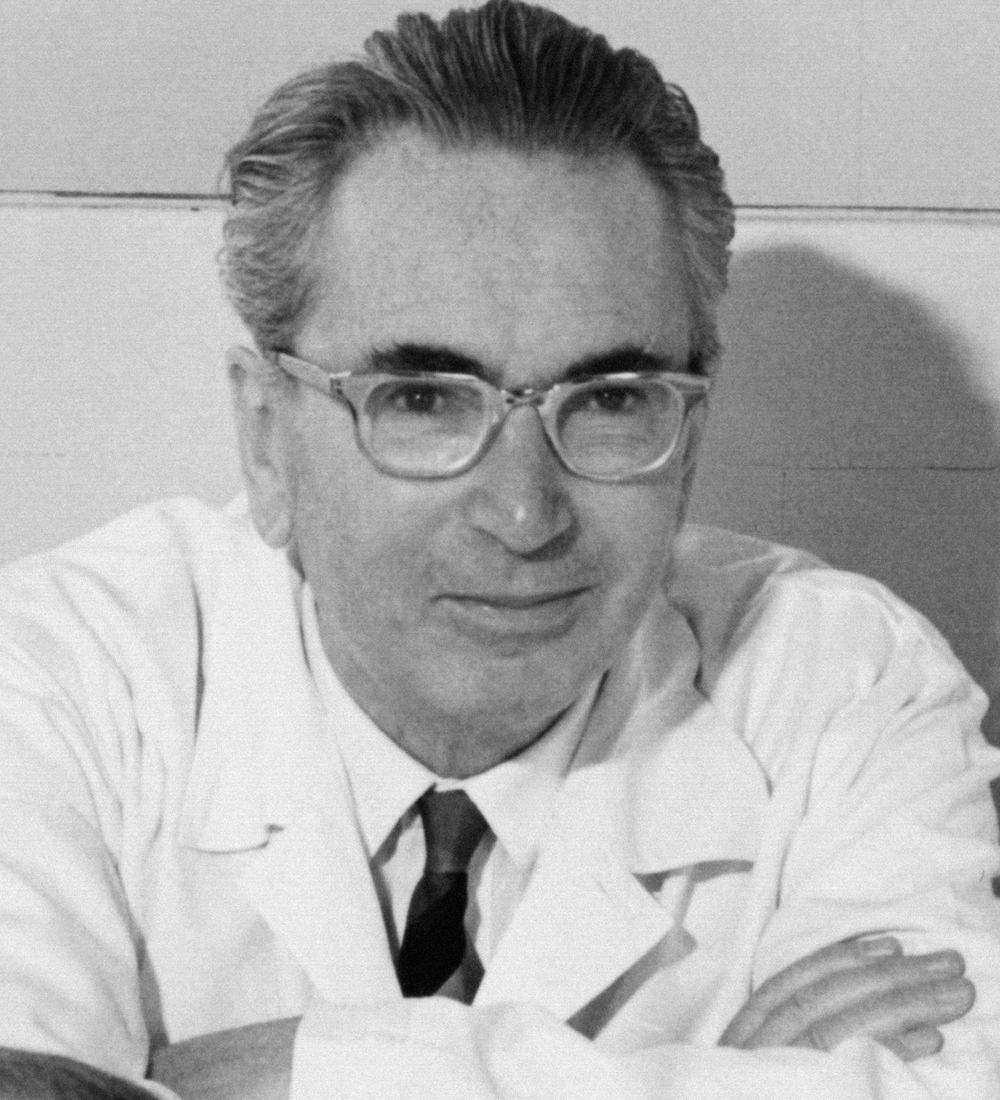
Off the top of my head I can think of two rather different memoirs that really inspired me. Man's Search for Meaning by Viktor E. Frankl, and Life Is So Good by George Dawson. One is very much observational and quite heartbreaking. While the other has its down moments, for sure, I see it as an amazing piece of feel-good inspiration.  Both are tremendous examples of how anyone can do anything, if they want to, or if they need to. We have more power than we believe.


Thursday, August 8, 2013

Review: Butterfly Potion by Trent Zelazny

Butterfly Potion stakes out similar territory as A Crack in Melancholy Time and Fractal Despondency (reviewed here).

"This particular day was sunny but there was an awful chill, and not a damn thing Perry could do about it."

Perry's not only lost his girlfriend but also everything he owned after a mugging he can't remember well due to his drinking himself into stupor the night before (a habit he's gotten into).  He's left with forty-five cents and Talia, a woman who's taken a liking to him.

Perry picks a fight with a friend before Perry encounters his muggers and must recover some of his stolen manhood.  Yet, even so, he struggles with his guilt, fleeing police patrol cars, as if he were the criminal.  Or is he?

The style, vision and writing here--at times reminiscent to Hemingway's Gatling-gun staccato--are superior to A Crack in Melancholy Time and Fractal Despondency.  It has the same visceral appeal that helped spur Zelazny's cult following. However, the narrative pulse has been stronger:  When Zelazny combines the improved style  with such darker suspense and tightly wound plots like To Sleep Gently, he will rake in the accolades.  Zelazny's upward climb continues....  

Another good quote:
"He turned his jacket collar up and huddled into himself.  The breeze was light but glacial.  The sunbeams and shadows made illusioned pockmarks on the sidewalk and street.  The cottonwood trees were all but dead.  He wished he had a heavier jacket.  He wished he had a lot of things, but... he walked.  He was heading into town.  He had forty-five cents in his pocket, which was enough to buy him nothing, and that was fine.  What he wanted was nothing."

Wednesday, August 7, 2013

"Let's get some sleep," she said.  "For just a little while, instead of nightmares, let's try to dream."
--Trent Zelazny, from Butterfly Potion

Thursday, July 11, 2013

Review: A Crack in Melancholy Time by Trent Zelazny


Crack in Melancholy Time (great title) is the sequel novella that began with Fractal Despondency.

Blake Gladstone has lost Sarah, his girlfriend, to suicide and doesn't know if he should join her.  Worse,  he loses another, Denise [Fractal Despondency treats their relationship].  Homeless, jobless, but full of alcoholism and cigarettes, he slinks home to Santa Fe.  Visions and memories of his old girlfriends return as he struggles with survivor guilt. He has to face his miseries and miserable thinking.

Blake gets a second (or third chance) with Laura, an old high school friend who's as lost,  and messed up with alcohol ss he is.  If he can save her, maybe he can save some of what he's lost.

Another reader compared these novellas to Charles Bukowski.  I immediately disagreed until I reread it.  Yes, they differ in humor and tone, but they share a concern for capturing the dark hole some have struggled to climb out of.  The events are a bit discombobulated, mirroring the title and Blake's own mind.

Whether you should read this depends on where you stand on these two aesthetic matters:

  1. If you groove on the opening line: 
  2. "A sad-voiced specter with piercing eyes flitted in the nightime as dewy air filled the malevolent room."
  3. and if you agree with William Wordsworth's idea that art should be "emotion recollected in tranquility" [Preface to Lyrical Ballads William Wordsworth (1800)].  This is a direct feed from the raw, real emotion, written when similar events had just occurred to the author. 
Good line:
  • "Her balance was that of an antique doll."

Wednesday, July 10, 2013

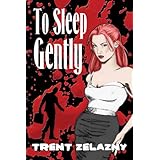
Book Review: To Sleep Gently by Trent Zelazny

After time spent in jail, Jack Driscoll or "Dempster" is picked up by Charlie to do another job.  This time in  Santa Fe, New Mexico, joining others professional criminals he's not sure he trusts to rob the El Dorado Hotel.

While there, though, he hooks up with old friends who are trying to make it, and he falls for Sandra, a young woman who might encourage him to go straight.  However, neither the relationship nor the hotel job go as he'd planned.

The middle sags some, but the beginning and end take up the slack.  The characterization--testosterone-driven male interaction, posturing and bullying--here is spot-on.  It's the impressive kind of characterization that convinces readers of their reality, demonstrating how Zelazny's work has gained a sheen of maturity and power.

Trent Zelazny interviews, etc.

Interviews with Trent Zelazny:


Other Interesting Bits:

  • According to Wikipedia: "Zelazny cites his biggest influences as those from the pulp era. David Goodis, Cornell Woolrich, Jim Thompson, Jonathan Craig, as well as Joe R. Lansdale and Donald E. Westlake, and several of the existentialists, most notably Soren Kierkegaard and Jean-Paul Sartre. He also commonly acknowledges Jane Lindskold as his greatest mentor."

Tuesday, July 9, 2013

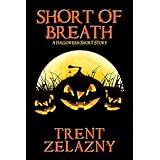
Short of Breath: A Halloween Short Story by Trent Zelazny

This is a short story available through Cemetary Dance.

Ian Cain suspects his wife has had an affair.  When he kills her, he thinks she's brought this on herself.  He covers up his tracks by pretending to have stayed at work, and later to go to the Halloween party she wanted to attend.  But irony strikes.

Zelazny does a good job teasing and milking the irony, slowly, drop by drop.

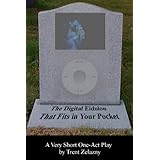
Review: The Digital Eidolon That Fits in Your Pocket by Trent Zelazny

The Digital Eidolon That Fits in Your Pocket is another 10-minute play by Trent Zelazny, but this one's more of a glimpse of the near future where a human can be uploaded into a digital eidolon.

Sean has just lost his wife, Jennifer.  Dobbs visits him right after the funeral to sell Sean an iPod of his wife--a wife that talks to and interacts with him as if she were right there.  Sean is less than pleased.

While this goes where you might expect it to, Zelazny is able to do something impressively potent with your emotions.  It's an interesting layered work worth reading and probably worth watching.  Zelazny says he doesn't write SF or fantasy, but this proves him a dirty liar.

Monday, July 8, 2013

Review: Not Any Little Girl by Trent Zelazny

A ten-minute suspense play on Amazon, first performed in Santa Fe.  

Grant Harrington, a new comer to New Mexico, wants to rent from Cora Newsted a coffee house in town.  But he's actually there to murder Cora's seventeen-year-old sister, Lecy. Grant doesn't want to do it, but the people he works for are putting the screws on him.  Lecy, though, is pretty worldly and suspects Grant's interest.  She's got her own game.

The set-up seems a little elaborate, renting a coffee shop just to kill someone and the person who has a different agenda, but the tale has a pleasant twist--that is, an unpleasant kind of pleasant.

Tuesday, June 4, 2013

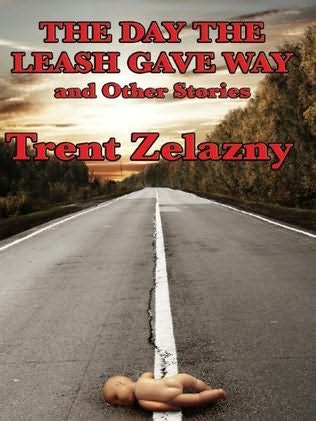
Review: The Day the Leash Gave Way by Trent Zelazny

One of my favorite writers since my youth has been Roger Zelazny.  I learned he'd had a son, Trent (clearly, a name destined to write), who also wrote, so I dug deeper.  Of father-son writers--Kingsley Amis and Martin Amis, Stephen King and Joe Hill, Richard Matheson and Richard Christian Matheson--this may be the biggest leap in styles although both Trent and Roger are intentionally stylish in their prose.  Where Roger in smooth, Trent is jagged and rough, noir-ish and dark, very dark.

The title story is a true oddity.  It begins, "Sam was surprised twice over."  Double that, and  you'll come close to what's in store for the reader.  Sam carries prize money to the Kellys'.  Before he's even in the house,  a dead dog is tied to its leash on the back bumper of a car.  On the dog's hind leg, the Kelly boy has clenched his teeth.  That's only outside the home.  Inside we find the Kellys have had the mother stuffed.  Men in suits arrive to take her away, but Mr. Kelly won't have any of it.  "At least Sam, our protagonist, is normal," you might say.  Not really.  He might be the star oddity in someone else's story, but here he shines as a beacon of sanity.  Sort of.  If you're looking for normalacy, this is not the place to look.  Expect to be disturbed.

Another standout which should appeal to most readers is "Found Money"--also sold as a separate ebook.  Nick lost his job at the bookstore because he was accused of stealing money which he could not have had access to.  However, he does find an envelope with $3,087 inside.  It was intended to go to a hit man, but the inept mobsters failed to deliver, and the head mafioso is ticked, not to mention the hit man.  Poor Nick tells his buddy about the money who accidentally discusses the find in front of the mobsters.  A delicious light crime tale and a palate cleanser for the edgier stuff.

My theory of opening stories in collections is that it should introduce the writer to something iconic about the writer yet also offer as easy a transition as the writer's work allows from traditional narrative (unless all of the writer's work is experimental).  Trent Zelazny's collection opens with "Hooch," a story of low-class people looking for sex, booze, profanity, and violence, all of which inundate the story.  If you can't stomach Quentin Tarantino, your stomach will disgorge any Tarantino you may have partially digested.  In "Hooch," Tim wants to get boozed and lucky but he's not so sure about Darlene, the girl he wants to make it with.  They move to the playground.  Enter low-life jocks who engage in a boozed battle, where one hero does not make it out.  Two escape the frying pan into the fire.  The relentless intensity dims some of its impact.

This is followed by the torture porn of "Acupuncture" where a man overdoes revenge for a man having an affair with his wife.  It's interesting--two stories in a row with the amusing if depressing theme:  Life sucks, then it gets worse.

"Harold Asher and His Vomiting Dogs" introduces us to Harold and choir of vomiting dogs who perform on stage to the tune of "Singing in the Rain"--with another weird surprise, in store.

My favorite is probably "The House of Happy Mayhem" where the normal-seeming narrator subtly reveals himself as deeply odd.  We meet him in the park as he watches people--in particular, a married couple. He comments to himself on their inner feelings.  Gradually, we learn our narrator absconds himself not just in the private lives of these people, but also in their houses, listening to their arguments and marital indiscretions.  It gets worse.

Zelazny has given us a collection of dark materials--from crime to edgy horror.  Some of it is an acquired taste, but others should appeal to broader predilections.