Search This Blog

Showing posts with label Kurt Vonnegut. Show all posts

Friday, April 11, 2014

New and reduced ebook lunches -- Updated with John Joseph Adams, Samuel R. Delany and Matthew Hughes

Military Science Fiction 1 by Bob Mayer $0.99
"2 Great Books for the price of one written by West Point Graduate and former Green Beret Bob Mayer."
Scott Nicholson
--from 99 cents to 2.99

Babel-17 
by Samuel R. Delany 
$1.99

The Compleat Guth Bandar 
by Matthew Hughes 
$2.99

The Galactic Center Companion 
by Gregory Benford 
$2.99

Ultimate Book of Impostors: 
Over 100 True Stories of the Greatest Phonies and Frauds 
by Ian Graham 
$2.51

By Blood We Live
 by John Joseph Adams, Editor 
$3.03

Awake in the Night Land 
by John C. Wright 
$4.99
--tales in William Hope Hodgson's Night Land
--first reprinted in Dozois' Year's Best SF

First Person Peculiar 
by Mike Resnick 
$4.99
--includes prize nominees

Age of Shiva 
(The Pantheon Series) 
by James Lovegrove 
$5.38

The Fall 
by Simon Clark 
$5.99

A Dark Traveling 
by Roger Zelazny 
$6.97

A Promise Of Stars 
by David Gerrold 
$6.99

The Adjacent 
by Christopher Priest 
$7.69


The Last Defender of Camelot 
by Roger Zelazny 
$7.97 

Dark Eden 
by Chris Beckett 
$7.99 

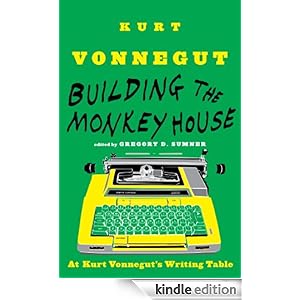
Welcome to the Monkey House: 
The Special Edition: Stories 
by Kurt Vonnegut (Author), 
Gregory D. Sumner (Editor) 
$7.99
--Editor analyses drafts and discusses how Vonnegut wrote title story.
--Could be a blast or a bomb.


 Waldo & Magic, Inc. 
by Robert A. Heinlein 
$8.99 

7 Steps to Midnight 
by Richard Matheson 
$8.99

Upon A Sea of Stars 
(The John Grimes Saga) 
by A. Bertram Chandler 
$8.99
--four novels/collections in series

The Time Traveler's Almanac 
by Ann VanderMeer and Jeff VanderMeer 
$11.04

The Revolutions 
by Felix Gilman 
$11.04

Terry Pratchett
--new Discworld novel
--two Discworld companion books
--forthcoming: nonfiction

Shipstar 
by Gregory Benford and Larry Niven 
$12.74 
--sequel to their Bowl of Heaven
--a look at a dyson-sphere world
--similar to Ringworld with more emphasis on characters.
--two SF masters at play

Other Worlds, Better Lives: 
Selected Long Fiction, 1989-2003 
by Howard Waldrop 
$9.95

Wednesday, April 2, 2014

Iowa or any MFA workshop

There have been a number of articles on "program fiction" condoning or condemning.  I say go if you find someone who's doing what you want to, or find a place that is.  Or simply go somewhere if you want time to write, or don't if you want to do your own thing on your own time without all the debt.

Stop blaming Iowa! MFA vs. NYC is a phony debate by TONY TULATHIMUTTE
The book world has a new phony debate. On the good side, at least we're not arguing about Franzen anymore 
How Iowa Flattened Literature By Eric Bennett
With CIA help, writers were enlisted to battle both Communism and eggheaded abstraction. The damage to writing lingers.  
The Iowa Writer's Workshop was instrumental in the Bay of Pigs fiasco, not to mention they helped Nixon negotiate with China.  Flannery O'Connor's sent emissary peacocks to Russia, which later led to the fall of the Berlin wall. Below is Kurt Vonnegut's attempt to take down Nikita Khrushchev (Bennett's article is interesting or I'd not post it):

Kurt Vonnegut’s Rules for Reading Fiction, A term paper assignment by Suzanne McConnell

  1. Read the fifteen tales in Masters of the Modern Short Story for pleasure and satisfaction.
  2. Grade from A to F. Like some stories better than others.
  3. Take three stories that please you most and three that please you least. Write a report on each (as if subbed to mag).
  4. Do so as a sensitive person who has a few practical hunches about how stories can succeed or fail. Do so rather flatly, pragmatically, with cunning attention to annoying or gratifying details.

Tuesday, October 15, 2013

Science Fiction and Mundane SF

"Elizabeth Bear proclaimed that [science fiction] was the literature of testing ideas to the breaking point."
--Lou Anders on Elizabeth Bear on SF, from Writers Workshop of Science Fiction & Fantasy, edited by Michael Knost

Notes:

Kudos to Elizabeth Bear.  That's about the coolest definition I've read.

Lou Anders treats Mundane SF as a subgenre, mentioning Julian Todd and Geoff Ryman, which is cool, but didn't mention my contribution, which allowed for Anders' explanation of MSF differing from hard SF.  Thanks to Ted Chiang and other critics--in and out of the group--I milled for years, chiseling out a solid ethos to ground Geoff's manifesto.  Should it matter?  Probably not.  As Kurt Vonnegut said, "So it goes."

Since I'm on the topic of Mundane SF, my contribution to the subgenre in terms of story--workshopped with Gene Wolfe ye these many eons ago--is forthcoming in Eric Reynolds' Global Warming Aftermaths.  Bruce Boston, Steve Ramey, Sue Linville, and Julian Todd critiqued it as well--probably others I'm forgetting.

Wiki:  Mundane SF:
Trust the manifesto, not the description.  We originally intended it to be projected into the far future as well as solar system developments (although a few only wanted it on Earth--you can't get everyone to agree on everything).  Future technologies were acceptable as long as it adhered to today's science. Moreover, it was after Clarion that we discussed this, spurred by my idea for the need of experimental SF, and Julian Todd's idea that we don't explore oceans much in SF.

Mundane SF blog :
The blog is largely inactive these days.  I had to stop posting when I started teaching, learning on the job.  It appears I'd done about 80% of the posts up until that time.  Since then, they averaged a post a month.  We also had an explanatory website (now Chinese) that got sucked into the internet's black hole of oblivion.  I may have access to rough drafts of the original posts if I dig around.  UPDATE:  Found some old posts from our original group, but Yahoo is a pain in the butt.  Maybe I'll access them later when Yahoo irons this out.  Leave a note if interested to remind me.
We edited an issue of Interzone and Geoff did his own anthology as well, When It Changed.  It's critique was that it was too science-y science fiction, but that sounds pretty cool to a science major/teacher.

Sunday, April 14, 2013

Review: Now Dig This by Terry Southern


Now Dig This 
The Unspeakable Writings of Terry Southern, 1950-1995 
Terry Southern
Josh Alan Friedman, Nile Southern, Editors
Open Road

Terry Southern is a major cultural figure of Sixties and Seventies, not unlike famed beats Alan Ginsberg or William Burroughs, but possibly more obscure for having dabbled in a variety of writing arts:  from novels, to scripts, new journalism, and comedy sketches.  He wrote novels Candy and The Magic Christian.  In one interview, Southern states that a novel brought his attention to Peter Sellers, who brought the novel to Stanley Kubrick who then changed his mind about the tone for his movie adapting Red Alert as a film.  Southern wrote screennplays for Kubrick's Dr. Strangelove and Dennis Hopper's Easy Rider, the movie that ushered in a new life to cinema.  During this same time period he invented the New Journalism.  After struggles drugs in the Seventies, his career went south although he wrote for National Lampoon, which led writing for Saturday Night Live in the early eighties.  He has also written for Esquire, Paris Review, and Playboy.  One story was reprinted in the O. Henry Awards.

These "Unspeakable Writings"--unspeakable in part because they are occasionally controversial, sometimes erotic, in part because they are mostly not intended to be performed as  movie--provide excellent snapshots into Southern's peculiar frame of mind.  The first interview introduces much about Southern's career, but considering the erotic tone it sets and the current political climate, some readers may be turned away.  Southern appears to be of the old-school American Liberal mind-set where women's liberation meant more sexual freedom.

But the primary herbs flavoring one's reading Southern is his sense of absurd, reminiscent of Joseph Heller's Catch-22.  It seasons all that he writes, be it journalism, stories, novels, or screenplays.  Some of his nonfiction feels fictional while his fiction captures a tone of realistic nonfiction.  Even the interviews have a feel of the surreal:

William Burroughs:  Now here's something that goes straight in the wastebasket--"Non-narcotic."  I don't want nything non-narcotic on these premises!
Terry Southern:  Listen, they can say "non-narcotic" but they may have some really weird definition of narcotic, like something out of Dracula...
The best here, for my tastes, are the New Journalism pieces.  "Fiasco Reverie" travels to Guatemala on a part party trip, part military chess game preparing for the Bay of Pigs.  "Grooving in Chi" talks about escaping the Chicago police with Allen Ginsburg, William Burroughs, and Abbie Hoffman during the 1968 riot while the Democratic Convention was carrying on.

My personal favorite would be "The Straight Dope on the Private Dick" wherein Southern investigates whether private investigating is a racket that cooks up evidence.  He cooks up an absurd story (for the time, the Sixties) about his mixed-race son experiencing prejudice from African Americans at his school.  He ends up discussing cases with a P.I. whom he trusts.  The PI tells how he exposed various men who were ruining the lives of other men, including Lenny Bruce.  This piece fits well with what's called the first "Tale" even though it introduces itself as a nonfiction investigative article probing cons and hustles in Hollywood.

This book may not be a book for everyone.  Included is an article about Southern's relationship with Kurt Vonnegut, which would make most readers uncomfortable if not apoplectic.  It was written for a tribute to Kurt Vonnegut but was left out.  Nonetheless, it is another key to understanding a time period and generation that is disappearing.

Works available online:

  1. "A Run of Dimes"
  2. Art of Screenplays (The Paris Review)
  3. "Grooving in Chi" (PBS News Hour)
  4. Niles Southern on his father (Gadfly)
  5. Excerpt from the novel, Candy
Thursday, April 11, 2013

Collected Theodore Sturgeon stories here at last


The stories of Theodore Sturgeon, the man who inspired Kurt Vonnegut's Kilgore Trout, are now available in ebook formats.  

Sturgeon was a writer of not only style--even early on (one of my favorite's of his voice is "Poker Face" included in Microcosmic God)--but also of the heart.  Other famous stories in The Ultimate Egotist are "It" and "Bianca's Hands"; in the Microcosmic God are the famous title story (discussed below), "Yesterday Was Monday" and "Shottle Bop."


The first story in The Ultimate Egotist is "Heavy Insurance" is more of a quickie mystery, where a con artist is trying to make off with carbon ice.  Two things stand out in the next, "The Heart":  One, we have a tough-guy-voiced female character who, two, delivers  some good lines:
"In that second I was deathly afraid of her, and that in itself was enough to get me interested."

Monday, December 3, 2012

Kurt Vonnegut on stories and their shapes


Above, the essential ingredients of a story.

Below, the shapes of stories: