Search This Blog

Showing posts with label Isaac Asimov. Show all posts

Wednesday, June 23, 2021

A Word That Means Everything by Andy Dibble

Appeared in Writers of the Future 36, edited by David Farland.

On the planet Murk, Pius is trying to translate scripture into a language for the Thulhu, aliens with tentacles and vestigial wings--aliens that look a lot like Lovecraft's creatures of Cthulhu. His first challenge is even to get them to respond to him. Translating the Judeo-Christian scripture into something these creatures can understand is proving nigh impossible.

Suddenly, Pius's slow and modest success is interrupted by a famous translator, David Nestor, sent to replace Pius.


Comment with some spoilery bits:

This tale of religion and language treads similar ground as Ted Chiang, James Blish and Mary Doria Russell--some august company to keep.

It's hard to tell what what Dibble's theological perspective might be, but he is clearly knowledgeable of his subject matter. People think they can deviate anywhere with a theology and proceed to make rookie mistakes, but deviations within a theology occurs within certain boundaries and Dibble seems keenly aware of those boundaries, aware of where he can play. It's stunning. Even on a second read, I'm just as hooked as the first. 

The language issues seem very genuine as if Dibble is equally skilled at languages, too, although I suspect it would be hard to begin the process of any language if your alien won't communicate (an issue I didn't think about until I was combing over it on a third read to pick at the story with a lens and tweezers).

Least probable are the aliens. I suppose one could say, given the vastness of the universe, anything is likely to occur. But a creature whose primary locomotion is water based (water propulsion and tentacles) is probably not going to have vestigial wings. Of course, there are flying fish, but these occurred with fish who leap out of the water, which an octopus is unlikely to do.

Of course, the whole point of the story is to ask what it would be like to communicate the concept God to a Lovecraftian creature. So in a sense, this alien biology critique is nitpicking.

Dibble's style is very Asimovian and it works well at this length. The density of philosophical or linguistic discussion--while almost pure joy--is a workout, and might tire out a reader at novel length unless it were specifically designed as a novel of short stories or novelettes, so that the reader can exercise, then rest on the side of the pool before leaping forward.

With impeccable timing Dibble throws the monkey wrench of David Nestor into the story which enriches and gives Pius a new challenge.

While all of these writers are a pleasure to discover, Dibble provides an old-school (or a Ted Chiang sensibility, if you prefer), uncommon level of speculation  As Dibble's craft improves, this writer might be the discovery of the decade.

The author has appeared multiple times in Sci Phi Journal

Thursday, December 24, 2020

James Gunn (July 12, 1923 – December 23, 2020)

 James Gunn was a science fiction writer, an educator, an advocate for science and all points between. No one quite codified the field as this man did. His life spanned nearly a century: from flappers to the Depression and WWII, to the economic boom of 1950s (including the proliferation of SF magazines) to Vietnam and counter culture, to the New Wave to the Cyberpunks, all the way to the present. He'd seen much.

He started in radio and moved to SF, publishing in Startling and Thrilling Wonder Stories in 1949. Considering the flowering of the field, it was the perfect time to enter. His first big sale would have been the next year to John W. Campbell's Astounding,  the leading SF magazine of the time, and in Amazing, the oldest SF magazine. 

Comparatively, it was a strange time to publish SF. Novels were not as common as the magazines, so one could find a home for their stories and later reassemble them into novels. Once the book market opened a lot of writers did that, so that it seemed the best way to make novels (Ray Bradbury's Martian Chronicles, for instance, was sold as a novel, but was really just a collection). 

Throughout Gunn's career, this was how he often built novels. He considered the novelette the ideal length for SF, and would publish them first in the magazines, later as a novel. Sometimes the stories were more successful as stories, sometimes as novels. Usually, the first story in the series got him the most attention. Examples:

  1. "The Cave of Night" opened Station in Space and was reprinted by Judith Merrill and Isaac Asimov as among the best of SF published that year.
  2. "Child of the Sun" opened Crisis! and was reprinted by Arthur W. Saha and Donald A. Wollheim as among the best of SF published that year.
  3. "The Listeners" of the novel The Listeners was up for the Nebula award and reprinted by Poul Anderson as among the best of SF published that year. [The novel was the runner-up for the Campbell award]
  4. "The Giftie" of the novel Gift from the Stars was up for the Sturgeon award and won the Analog reader's poll.
The novel The Immortals is sort of an exception where Barry Malzberg thought the opening novelette, "New Blood"  was an important work of the 50s, where as Isaac Asimov thought "The Immortal" was an important story of the year. It became a TV series of the same name. If you want SF built for fun, this is probably the best place to start.


"Breaking Point" from the collection of the same name is another starting place if you like short stories. It's a kind of Twilight Zone in space, if memory serves. Brian Aldiss collected it for his Space Opera anthology.   

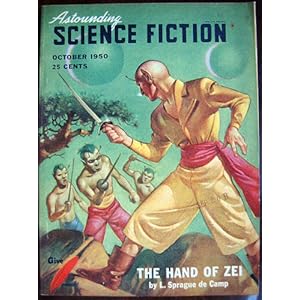
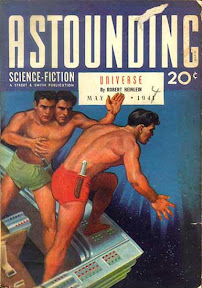
While he wrote fun stuff, his main aim, it seemed to me, evolved until his goal was to make SF realistic. How might it really happen? He liked the fun stuff, but he wanted to make SF serious (contrast this with the image above--fun, absurd, and perhaps helpful for sales off the magazine rack, but it undermined the serious intent that some wanted to invest in the field).   

He won a Hugo for his scholarly book about Isaac Asimov, Foundations. Asimov's SF, the magazine, will be publishing the last story he wrote next year. They also have an essay about religion and SF. The marvel of Jim Gunn--one of the reasons many called him a gentleman--was that everything was up for discussion, in person, in stories. You could disagree with him, and it did not affect your friendship. It will be good for humanity if we could have more of his kind on the planet.

I studied under him several times both online and in person: to learn about SF and stories. When it came to SF, his advice was always wise.

I restarted his online classes, and he tasked me to round up students. To make it happen, I had to use myself twice, once as myself and once as a pseudonym. I divided my artsy self from my science-y self and wrote SF and speculative stories. I varied my critiques, likewise. My critiques for myself, which might seem to be tricky, weren't too hard as they described what I intended to do in the next draft. I pulled off the pseudonym so well, that when I admitted to what I'd done, he didn't believe me. I pointed out that I paid for "both" students, which I think I must have originally explained that "he" didn't have a checking account. Electric Velocipede, a fun little zine sadly no longer in print, published the story under my real name.

I reviewed a number of his works over the years and interviewed James Gunn here.

If new memories occur to me, I'll add them here, later. 

    Tuesday, June 23, 2020

    Free ebooks, understanding and preparing for COVID-19, Foundation trailer

    Kristine Ong Muslim (a talented poet) writes:
    If you haven't done so yet, you can download for FREE and in three digital formats Lightspeed Magazine's People of Colo(u)r Destroy Science Fiction, as well as two other volumes in the groundbreaking book series. Nalo Hopkinson and I selected the short stories for the original fiction section of POC Destroy SF, which went on to win the British Fantasy Award for Best Anthology in 2017. The books can be downloaded here [at destroysf.com]
    #


    Be careful of graphics like this. Do you see the problem?

    We have percents but no sense about what kinds of numbers they refer to. Cut 1000 by 50% and get 500. Add 50% to 10 and get 15. Which number is greater? 500 or 15? [In my classroom if a student left a number like 500 unlabeled, I'd ask, "500 what? Ostriches? Hippopotami? Orangutans? But here I'm leaving open possibilities and assuming that 500 and 15 represent similar comparable figures.]

    Look at the number and the trends. Kansas is going up, but 50 new cases per million is actually better than most states. Hawaii is up, but they've been super low (less than one case per day on average). They shot up, sixty times where they were. Yes, 60. But that's stll low in comparison (7 or 8 cases per million per day, which is far better than nearly everyone in green). 50 seems to be a dividing line between states that have work to do although, of course, we'd like the numbers to be zero, but is that realistic? Discussion about this later.

    #

    Face-shields preferred over face-masks 

    #


    I loved the first three books of Isaac Asimov's Foundation trilogy although I was just a kid when I'd read them. They had grand imaginative scope. I'm not sure how they'd transfer to screen, but as a series, this sounds like it might be promising.


    Tuesday, March 31, 2020

    Review: The Hole in the Moon and Other Tales by Margaret St. Clair (3 of 3)


     [This is part three of a review begun here and continued here.]

    “The Continued Story” is rambling, rollicking conspiracy story. A man turns himself in to the police to get locked up, to escape from his alien hunter. The cop won’t do it, at first, because he doesn’t believe the man stole assembly kits from a toy store that disappears the next day—not to mention kits that create hallucinatory episodes like a Lunar Experience, a diamond mask, and so on. The story switches points of view and the alien pursuer’s target, but it doesn’t explain why this should be since the hunter was supposedly interested in the stealer of kits.

    “Brenda” [Weird Tales, also appears in Greenberg’s edition of her Best-of and is reprinted by Groff Conklin, Eric Protter, Roger Elwood, Vic Ghidalia, Carol Serling, Martin H. Greenberg, Charles G. Waugh, Stefan R. Dziemianowicz, and Robert Weinberg] is a classic. Like “The Hole in the Moon” it hasn’t been reprinted enough, despite half a dozen appearances. Brenda is a well-behaved, good little girl that none of the kids seems to like. One day she’s pursued by a gray man, stinking of rot. Through a bit of cleverness, she captures the man. But when no one else is interested in seeing her find, she lets him loose. She strangely identifies with (loves?) the creature and the ending is creepy and open-ended.

    “Stawdust” starts at a crisis moment—a man and a woman face off on a ship, surrounded by dummies, kidskin stuffed with sawdust of what used to be passengers, with both remaining suspects claiming to be innocent—and then reverses to the beginning when it all started. You’d think you were in a contemporary fantasy mystery, but no. We learn that the ship is a starship (leaping history and genres), and that soon enough the culprit was always known. The initial drama was false. When I was learning the field, I was told never to mix SF and magic, and it seems that St. Clair loves to do this. The title is both a clever and awful pun. The ending does turn the story into a minor irony although a more emotionally powerful ending should have been available.

    “The Invested Libido” and “The Autumn After Next” are two slightly humorous and thoroughly competent tales. The first immediately constructs a strange world and the man who chose to use Martian psycho-pharmaceuticals to cure his ills only to find it changing him. Literally. To a squid. He sneaks into an aquarium only to get caught. Under psychiatric supervision, he conforms to other shapes. [This story makes one wonder if it has a meta-fictional purpose of explaining why St. Clair switches point of view so often.]

    The next tale tells of a wizard who tries to get a village to do spells properly, but they are lazy and don’t listen. Trying should be their reward, the villagers think. Finally, he comes up with a plan that will get them to do spells right, but the best laid plans....  This is fun and well told, but not among her more ambitious works. It’s available to read for free here.

    The final story, “The Sorrows of Witches,” tells of a witch queen who loses her lover and tries to revive him through necromancy. Because she needs an heir, she needs a living lover who will become a stumbling block between herself and her lover. Over time, her writing style seemed to improve with solid entertainments although her scope, imagination and ambitions shrank.

    How does St. Clair compare to her contemporaries? Was she short-changed? She was better than Isaac Asimov when it comes to technique, but Asimov had a soaring, large-scale, methodical imagination that benefitted most from accumulated effects (his robot stories and the early Foundation books). Both writers suffered from talking heads.

    I dipped into C. M. Kornbluth to prepare for this and for future examinations (namely Mark Rich’s biography, C. M. Kornbluth: The Life and Works of a Science Fiction Visionary). One story of Kornbluth’s troubles me, but he has a strong, immediate evocation of main character and place (even in his worst, early stories)—his non-Earth societies are rich, lived-in. The one story where she rivals Kornbluth in this is “The Invested Libido”. Where St. Clair outdoes Kornbluth is her better ability to stick the endings and her rare use of dialogue tags and adverbs (“Stop using tags and adverbs to describe your dialogue!” the reader growled at Kornbluth menacingly).

    Ray Bradbury, whom Campbell compared St. Clair to, was a better writer in nearly every regard except Bradbury’s later work, which seemed less significant although sometimes he stitched together slight stories to greater effects.

    How does she compare? She numbers among the era’s better writers, especially if you like that era’s spare writing style—but only a handful of tales here showcase her talents to their best effects.

    Since St. Clair passed in 1995 and her work can no longer be edited with her approval without use of a time machine, what she needs is a Selected Stories, St. Clair Reader or Best collection to highlight her work to best effect. Martin Greenberg edited one, but it’s probably time for another. Three here deserve readers and inclusion: “The Gardener”, “The Hole in the Moon” and “Brenda”. A few cases could be made for the importance of others in this collection.

    This collection inspired me to read and reread St. Clair. To follow my progress, look here to see the results of my search to hunt down some of her best work.


    Sunday, March 29, 2020

    Review: The Hole in the Moon and Other Tales by Margaret St. Clair (2 of 3)


    “The World of Arlesia” [first appearing in F&SF] is another too-complex story that requires rereading to get what has actually happened. (I do love complex stories, but they require more set up.) A couple attend a double-header [Didn’t they called them double features? Perhaps she means to highlight the sports-like nature of what they are attending] “movie” [anticipating virtual reality?] where they go to an underwater world. However, the wife witnesses an entirely different world.

    One example of writing infelicity [the guide is trying to con our narrator into becoming one of many recumbent women, although what is happening to the women is never clear—perhaps something Matrix-like]:

    “I won’t,” I said. “You’re trying to do something to me, something to my mind. I won’t go in there.”

    “Ah, well,” she said. She dropped my wrist and was silent.

    So we have a vague menace [“something”] that is easily dispatched. The next time a mad scientist has a vague evil plan or a cut-throat thief tries to steal something he’s not sure about, just say, “I won’t let you” and that will take care of everything. Despite this, it’s still worth a gander.

    “The Little Red Owl” first appeared in Weird Tales and was reprinted by Peter Haining. Uncle Charles tells frightening stories to his nephew and niece—a story where the little red owl, their hero, dies. The children, aghast, deny this has happened. The uncle is forbid from telling new stories, but he plans revenge, having professionally made a sweet coloring book that tells the same story.

    It is a little spooky, adding a necessary change in point of view that some will take issue with, which also takes the key dramatic moment off-stage. It would probably work best on the screen—an anthology of horror stories like Cat’s Eye or Tales from the Crypt—the trick being to make an owl look both sweet, heroic, and terrifying.

    A rather moving and ambiguous piece, “The Hole in the Moon” [first appeared in F&SF—printed and reprinted by Anthony Boucher and J. Francis McComas], is simple yet ambitious. Men have been destroyed by a disease that sits dormant in women, but kills men although one can tell a woman who is diseased by her pitted skin. A machine or robot woman arrives (at least, she suggests this in her description of her “sisters”) and she can only be made real if this man loves her. He is conflicted by wanting to love her and drive her away, threatening violence. She leaves. A narrative gap allows a few different events to have happened—intriguing possibilities. And his decision may lead to a few different consequences—none of which exclude his final, moving decision. The editor, Ramsay Campbell, points out the ambiguity that the protagonist could be insane, but that’s not the most interesting of possibilities. The minor flaw in this tale is that his loneliness and desire should have been set up immediately—not to mention nigh magical nature of her construction (via his desire—see this discussion of genre romance). Still, it’s surprising that this tale has not been reprinted more often.

    In yet another genre bar story, “The Causes” [first appeared in F&SF, also appears in Greenber’s edition of her Best-of, and reprinted Darrell Schweitzer, George H. Scithers (an SF bar anthology) and Robert P. Mills] has one character after another describe why the world seems apocalyptic to the “main” character, George—going through Greek, Christian, and other causes. The ending saves the story, but if you aren’t a fan of world apocalypses, it’s skippable. Maybe read the first tale and skip to the ending to get the gist. However, Robert P. Mills seems to beg to differ in the tale’s quality by collecting it in a ten-year retrospective for F&SF. Introducing the tale, he wrote, “No collection of fantasy and science fiction can be considered representative if it fails to include a superior example of the bar-fantasy.” In other words, the above editors all included it because it was a bar story. It is a decent example, but what about superior examples of the Rana pipiens fantasy?

    From the pages of Weird Tales, “The Island of the Hands” has an intriguing premise about seeking his wife’s lost ship. His plane goes down at her last coordinates and he wakes from unconsciousness. The island was invented to recreate things lost, so they find people dancing with simulated partners, simulated babies, simulated gems—none of which have much reality. He goes down to the mists to create the wife he lost.... The tale is stirring up until he wanders the mist, and it seems to lose itself there, wandering too long, which seems an unusual lapse for St. Clair. The tale finds itself—or a version of itself—but it becomes something else, ambiguous in a bad sense. Campbell, in the introduction, latches on to secondary characters for what the tale is up to. I also suspect that the true protagonist is not the main character but not the one he selected. If true, it’s a more interesting, ambitious and ambiguous in a good sense although that would mean that island doesn’t have the rules it was said to have (even in a straight reading, where the main character is the protagonist, the island breaks the rule of what it said about the mist).


    Friday, March 27, 2020

    Review: The Hole in the Moon and Other Tales by Margaret St. Clair (1 of 3)


    Like many SF writers from previous generations, Margaret St. Clair is overlooked. Even all-consuming critics like John Clute miss out on some of St. Clair’s strengths (see his commentary at SFE) although he astutely points out her “work was at times daringly subversive of some of the central impulses of Genre SF.”

    See the source image
    In the past, I’ve taken a look at a few classic story by Margaret St. Clair and hope to do so in the future. She is a writer of economy, rarely overwriting—often writing her best work at the short-short or short-story length, a length that is sadly underestimated in the field, baring just enough ice to suggest the berg below. Reading The Hole in the Moon and Other Tales, one realizes that she can cram in that finite space a fine imagination to boot. She may take the germ of an idea for a lesser story and then takes it into several new directions, sometimes implying world’s from mere suggestions. If that doesn’t impress you, her endings tend to stick although the complexity and ambiguities sometimes tangle with too much to wrestle. Occasionally, she could have used a good editor to hash out the ideas.

    Not too too long after St. Clair started published, James Blish initiated his critical article series as William Atheling (see The Issue in Hand). He said that the market was flooded with thirty magazines, publishing a lot of stories without “technique.” This was what he aimed to correct in his series. On the other hand, this created a fine training ground for many writers to grow up in. Undoubtedly, bad writers forever wrote badly, but some improved over time.

    St. Clair, in her introduction to her Best of collection—a very humble if too brief recollection of a rough home life highlighted only by two kind uncles (if only she’d shared more so we could compare and contrast her life with her story “The Little Red Owl”)—wrote that the market did not support “humor and characterization,” which may go some length in explaining story defects. But her writing did “mature” through this magazine system.

    Her first two stories demonstrate the training-wheels program: “Rocket to Limbo” and “Piety.” The first anticipates the tradition of Galaxy magazine (see also radio programs like X-Minus-One and the popular TV show The Twilight Zone)—projecting the present into the near future in a fun, semi-realistic manner—a now uncommon trend. “Rocket to Limbo” unintentionally photographs its time period more than future, which is most of the story’s pleasure. A woman gets an ad—for her eyes only—that she can get rid of her husband if she follows her instructions. The story begs for a sequel. In fact, despite the ending suggesting something final, it is only starting to get interesting. Observe how the characters behave toward one another. Their response is not the expected one. There’s something intriguing going on between them that is worth investigating in a second tale (plus, we’d learn about this new place). If only I’d been her editor...

    “Piety” has a wonderful ending which you may or may not guess, but it goes on too long (despite its brevity) with “human” talking heads who try to pry the secret of immortality out of an alien. You may well guess both endings, which are somewhat satisfying, quelled by a less than stellar technique.

    The second pair of stories show promise. “The Gardener” [reprinted by August Derleth and Michael Parry] feels modern. If I supply the initial scenario, you’ll guess the outcome: A gardener chops down one of fifty rare and ancient trees. No one knows why there have always been just fifty. Still, the ending is killer.

    “Child of Void” [reprinted by Groff Conklin and Isaac Asimov] has a strong child-like voice about a single-parent family that moves to an area where the laws of physics don’t apply, and the boys find a talking egg. You cannot guess this ending, which explains the problem to a degree. As the story has a too-rich complexity that doesn’t gel, so the ending cannot resonate. It’s interesting, nonetheless, and demonstrates St. Clair’s fertile imagination. Both stories were collected in St. Clair’s Best of.

    Some readers may like “Hathor’s Pets” [reprinted by Groff Conklin] because the premise is well set up: In a society where women have lost ground societally, a husband and wife have been transported elsewhere (another dimension?). They see themselves as pets, so they come up with plans that will allow them to return to their home. However, the alien treats them as unruly pets.... But it’s hard to distinguish any of the characters. The intriguing set-up resonates with the ending only thematically since one idea does not flow naturally from the other. “Good” politics may not equate to “good” stories, but it’s interesting, nonetheless.


    [This is part one of a three-part review. Part two appears here and part three here.]


    Wednesday, March 8, 2017

    "Tower of Babylon" by Ted Chiang

    First appeared in Ellen Datlow's Omni, reprinted by Gardner Dozois, James Morrow, Robert Silverberg, and Mike Ashley. It won the Nebula and was up for the Hugo, Locus, and Science Fiction Chronicle Readers Poll Awards.
    Summary:
    Hillalum begins his own construction on the Tower of Babylon as it nears the vault of heaven.
    Commentary with Spoiler:
    Hillalum ascends and a storm sweeps him away, carrying him into the vault. The vault pours him through its waters to the other side: back on the surface of Earth, not far from the Tower Babylon.

    Assuming we are on a facsimile of Earth and its humans, the width of Chiang's Tower is approximately sixty to seventy-five miles, the height between 120 to 180 miles (calculated via Naismith's rule). There are other things to consider, such as rarefied air--"Earth's atmosphere is about 300 miles (480 kilometers) thick, but most of it is within 10 miles (16 km) the surface. Air pressure decreases with altitude"--but clearly these are not at stake in this universe. Hillalum would not be able to breathe so high. In fact, it probably would not be if we buy Hillalum's interpretation of what his universe is: a cylinder.

    I'm not sure I'm visualizing this universe correctly, but half-way to the vault, the walkers should have a hard time not bobbing off the tower's surface. In fact, at the half-way point--sixty to ninety miles, where the air is most rarefied and difficult to breathe--the builders should be able to leap to heaven. Granted, they probably wouldn't survive the fall.

    In one of his interviews, Chiang discusses that he didn't deem this one dealing with religion. The first time I read it, I assumed it was: The universe isn't what they thought. Religion is all built on lies, etc. This may have been part of what drew Thomas Disch, atheist, to champion the tale to Ellen Datlow, or so the traditional story of the story sale goes.

    My latest reading, after sizing up Chiang's literary MO, is that while that interpretation is possible, so is Hillalum's interpretation as equally likely:
    "[T]hrough their endeavor, men would glimpse how ingeniously the world had been constructed. By this construction, Yahweh's work was indicated, and Yahweh's work was concealed."
    Of course, the Bible's tower of Babel was destroyed. It states:
    "If as one people speaking the same language they have begun to do this, then nothing they plan to do will be impossible for them."
    In other words, God wanted some things to be impossible for humanity. Incidentally, I didn't realize at my first reading that Babel and Babylon were interchangeable. I assumed Chiang was conflating stories to another end. Perhaps he was. It's hard to tell what that may be though: confusion + paganism? As far as I can tell, this only confuses the story's interpretation.

    When I first read this, I was disappointed. Hype set me up for a literary SF story, lauded by many. My idea of literary must differ from others, which is why I quoted Damien Walter and Chiang on his own philosophical work here. In picking apart "Division by Zero", I uncovered a lucid perspective for reading his work.

    This is why I carefully set up the best parameters for what Ted Chiang is up to. He writes old-school philosophical SF. It's good, but if you read for depth of character, dynamic plot, or linguistic pyrotechnics, you'll be miserable, reading for all the wrong reasons. I wish I could tell my younger self:
    "You like Borges, yes? He's an Asimovian Borges. He writes how ideas impact humanity with a penchant for interesting narrative structures."
    I'd have said, "Oh, okay. That sounds cool," and reread, clear-eyed. Rereading this story while understanding Chiang's MO--at least for this reader--makes the tale far more pleasurable.

    Sunday, July 31, 2016

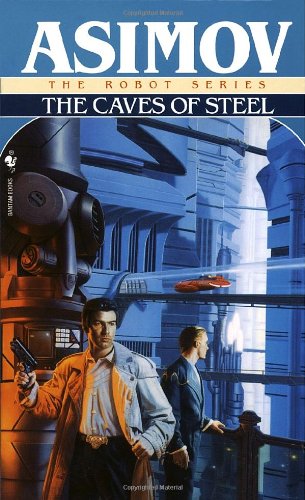
    Caves of Steel by Isaac Asimov

    Isaac Asimov dabbled in mystery and SF, occasionally combining them. Apparently, the first of these, Caves of Steel, is being written as a movie. The BBC made it into a TV movie by in 1964--of which only excerpts exist.


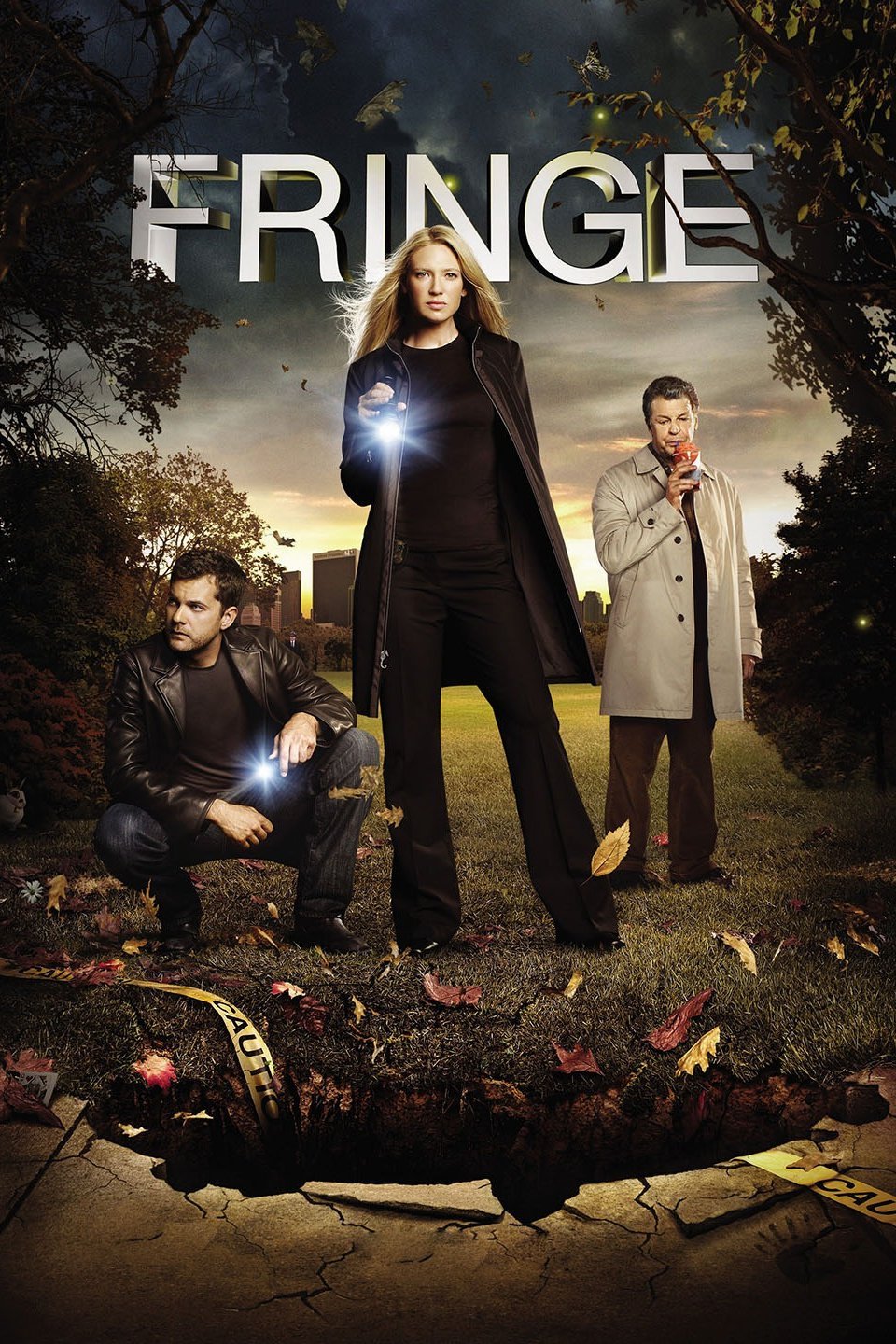
    Akiva Goldsman, Oscar winner and screenwriter of I, Robot and Fringe, is slated as the third screenwriter to give it a go for Fox. How many before Fox? It may be difficult to put on the big screen. Another attempt of turning the novel into a "movie"--or, rather, a VCR game:


    [Side note: The I-Robot credit will turn off many, but it actually does utilize a number of Asimovian plot turns and verbiage. I, Robot was also a short story, so to fashion a movie out of it is impressive. No, it isn't what Asimov would have written but it keeps and comments on Asimov's ideas--not to mention maintaining Asimov's works in the public eye.  I have only read Ellison's script opening to I, Robot and, though I enjoy the work of both writers, the opening didn't grab me. SF Encyclopedia [John Clute] writes:
    "the screenplay itself makes clear how difficult it would have been to translate Asimov's archaic concepts... onto the contemporary screen."
    I will try again, later. 
    While Goldsman's Batman films and a few others were regrettable, he did a fine job on A Beautiful Mind on other adaptations like I, Legend. Fringe was a romp. Yes, he differs from the original books, but that's okay. They weren't mockeries, but rather interesting deviations. One can always examine the original. One could complain of a Hollywood treatment, but isn't that the point? To sell movie tickets? How many more books were sold because of the movie?]

    Summary:
    Earth Detective Elijah Baley is told he must work with a humanoid robot, R. Daneel Olivaw (the "R." stands for Robot) to solve a murder of a Spacer. On Earth, by law, robots don't look like people, but Olivaw does not appear robot-like. This gives Olivaw an advantage (Olivaw threatens violence to Earth citizens) until a rumor circulates that Olivaw is a robot. Baley's own wife hears the rumor which worries her about Baley's safety.

    The Medievalists is a society of Earthlings who hearken back to a less technological day of wearing glasses or using windows. They seem benign enough: Baley's boss and his wife are members. But when they make signs to one another at a dining hall where Baley and Olivaw eat and pursue after Baley and Olivaw in a chase scene across slidewalks, they seem a lot less benign.

    Though Baley tries to prove his partner, Olivaw, is the true murderer, Baley gets no closer to finding out who did it. In fact, evidence seems to point to Baley himself. The Spacers and Olivaw get what they came for--proof that Earth would have citizens willing to go into space--so that Baley appears to be left to pay for a crime he didn't commit.

    However, Baley thinks up a loophole that gives him an hour and a half to solve the crime.

    Themes and importance:
    Asimov extrapolates a few key speculative ideas:

    1. Overpopulation leads to city overgrowth, to the extent that people fear going outside. Agoraphobia. The works well with the mystery, limiting what characters would and would not do.
    2. Technophobia on Earth leads to Earth's phobia of robots, especially robots that look like humans. 
    3. Technophiles are the few who escape Earth and building colonies. These, the Spacers, are the elite. They do not have disease and comparatively long-lived.
    4. Space colonization is so lovely that Spacers are willing to overlook murder if it can achieve a greater aim.
    5. Being long-lived leads to complacency, which ironically a spacer cannot be. Therefore, the Spacers have to recruit from Earth.

    The Caves of Steel has its admirers. James Gunn used it to teach SF--one of the major novels shaping SF. It is one of the first major SF novels to treat robots, overpopulation, and mystery in SF. The theme of the importance of space colonization was common if not ubiquitous.

    This last, for me, was the Achilles heel--not because I'm against colonization but because it was above questioning. Spacers (only here, not later) are too benevolent and wonderful. They provide an instant contrast that glorifies colonization and berates those rubes who remain on Earth.

    Asimov corrects this in The Naked Sun, creating Spacers with their own foibles, which is the better novel for this and for a mystery that plays a little more fairly. The contrast between societal flaws is fascinating. I'd love this one to become a movie, but it does hinge somewhat The Caves of Steel. So maybe it has to be written first.

    Monday, July 4, 2016

    Review: I Am Not A Serial Killer (John Cleaver Book 1) by Dan Wells

    Recently, I've read a few novels that blend the speculative and mystery genres with mixed success. So I wondered what made a good mystery that also scratches the speculative itch.

    When it comes SF, Isaac Asimov's The Naked Sun and "The Billiard Ball" both do well--not to omit Larry Niven's Flatlander. Asimov and Niven work the more difficult territories of "whodunnits": displaying a cast of criminals, shifting blame until we land on the criminal at the end. They do not shirk the responsibility of creating speculative societies in the meantime. Niven, if I recall correctly, said he wouldn't write another SF mystery as obeying the two genres was too difficult.

    "Howdunnits" explore the criminal's methodology. While you may know who the criminal is, you can't convict him without evidence.

    There is also the "whydunnit" which is usually the exploration of a criminal mind--sometimes within the mind of the criminal. A famous example would be Edgar Allan Poe's "The Tell-Tale Heart."

    When it comes to recent fantasy mysteries,  I Am Not A Serial Killer by Dan Wells actually melds a few of these. The narrator, John Wayne Cleaver, is a high school student whose mother is a mortician. He helps embalm the bodies. The first part of the narrative, oddly enough, is a description of how this is done. This is a pretty risky step to take, but Wells successfully surmounts the limitations by creating a narrator buoyant with dark humor--a kid so fascinated by serial killers that he fears he might become one himself. His very name mirrors not only John Wayne (All-American hero) but also John Wayne Gacy (notorious serial killer) and, of course, an infamous murder weapon.

    He does his best to look "normal" and fit in with most teenagers, but his mother notices a small part of his fascination and sends him to get psychological help. Later, when he thinks he spies the work of a serial killer in their small town, she excludes him from the joys of embalming since he likes it too much. This exacerbates the problem.

    There is an element of whodunnit here since the identity of the killer is not immediately known, but we are not privy to an analysis of suspects. Instead, it is more of a howdunnit and whydunnit. First, Cleaver is a serial killer in the bud, trying to nip it, which makes fascinating reading. Next, he shifts to typical serial killer MO's. Once he finds his suspect, he hones in on the how and why of his suspect and how he might stop the killer from killing again.

    The ending itself is potent as Wells manages to make us feel two ways about the killer. The main reason the novel as a mystery succeeds is that it redirects our attention from whodunnit to why/howdunnit. The  If you like mysteries and horror, this is a must-read.

    Wells deserved more attention for this novel that he got initially. Perhaps that was a function of the risky opening. Still readers can still remedy that. This one should be one of Wells's longer lived works.

    Saturday, April 5, 2014

    "Trigger Tide" by Wyman Guin

    First appeared in Astounding.  Reprinted by Groff Conklin, Eric Flint, Jim Baen, David Drake.  Online.

    Protagonist awakes on a foreign planet, left for dead.  He returns to the society that had damaged him--even putting out an eye.  The protagonist has to figure out how to survive the planet before the tides return.

    This has the energy and plotting verve of Alfred Bester's best fiction, with touches of Asimov's mysterious psychohistory.

    David Drake writes:
    "[When] I first read ["Trigger Tide"].... I didn't understand it, but I almost understood it. The work stood on its own as an action/adventure story, but it held an assumption about how the world, the universe, worked that I couldn't quite grasp. I've reread the story a number of times since then.... but I still don't think I quite understand it. Neither have I ever gotten 'Trigger Tide' out of my mind. That's why it's here."
     This is quite true.  While you almost feel you understand it, it slips out from under you.  But it seems to be about fighting to live on changing/changeable planet, where society is unafraid to sacrifice/slit your throat.  Being able to take a beating is admired; however, allowing people seems problematic.  At least, that's my tentative assessment.  The protagonist is a foreigner--a political tug-of-war whose ethical ramifications are hidden from the reader.

    Wednesday, January 29, 2014

    Slow Down + Blog Assessment + Writer Interviews + Posts You May Have Missed

    Slow Down
    Too many posts consume time. I must slow down. I have stories to write and submit, so enjoy what's here.

    Blog Assessment
    The last assessment was in December of 2012. I've been at this since Dec 2009--a little over four years (although I also blogged at s1ngularity:criticism and Mundane SF blogs before this). With nearly a thousand posts, that's about two posts for every three days. When I get bogged down at school, I post less frequently.

    For two and half years, page visits have grown ten percent or so per month, which amounts to a twenty-fold increase. The per post view-rate has grown since last year from 35 to 55 or so, not quite a sixty percent increase. This is more dramatic when you consider the early posts with few hits are factored in (the hits were probably my mama who accidentally hit the refresh button a few times.

    A year ago, one post--"Girl" by Jamaica Kincaid--outstripped all other posts and accounted for ten percent of the traffic (it's now five). I guess it's a good one. Fifty to a hundred folks stop by each month to take a look. Trent Zelazny's interview posts may have been the only posts that overtook her monthly lead.

    Interesting to see which classic stories people are still fascinated by. Theodore Sturgeon's "Microcosmic Gods" and "Thunder and Roses" have drawn hundreds of readers in less than a year, but the other Sturgeon stories only about two dozen each.  I'll  be interested to see which stories of the big three--Arthur C. Clarle's, Isaac Asimov's and Robert Heinlein's--people are still fascinated by.  William Gibson and Ursula K. LeGuin drew less attention than I would have supposed although I need to do more or theirs..

    In retrospect, part of the blog's growth was not only the quantity of posts but also the quality of their presentation. I changed presentation when I reviewed and interviewed. Take note if you blog.

    Popular posts can be viewed on the right.

    Writer Interviews
    On file are the following:
    1. Loralee Leavitt
    2. Christopher Barzak
    3. Trent Zelazny
    4. Kenneth W. Cain
    5. I have upcoming interviews with G.O. Clark and Dustin Lavalley.

    Posts You May Have Missed
    These are posts I thought there might be more interest than they've received: 
    1. A Scene-by-Scene Analysis of the Movie, 2001: A Space Odyssey*
    2. Analysis of Flatland: A Romance of Many Dimensions by Edwin A. Abbott*
    3. A number of James Patrick Kelly posts--one of the best writers of speculative fiction in the 90s and 00s. I didn't put much time into pretty-fying them, focusing on content. Maybe I'll revise them one day.
    * These two might make a nice contrast, treating religion from opposite ends of the spectrum.

    Monday, January 27, 2014

    Analyisis of "The Last Question" by Isaac Asimov and "Answer" by Fredric Brown

    Brown's: First appeared in his collection, Angels and Spaceships, 1954. Online. Audio. Reprinted at least seventeen times (including genre retrospectives) by Edmund Crispin, Damon Knight, Brian W. Aldiss, Abbe Mowshowitz, Dennie L. Van Tassel, Isaac Asimov, Martin H. Greenberg, Joseph D. Olander, Herbert Kaußen & Dr. Rudi Renné, Patricia S. Warrick,  T. E. D. Klein, Michael O’Shaughnessy, and Andrew Goodwyn.

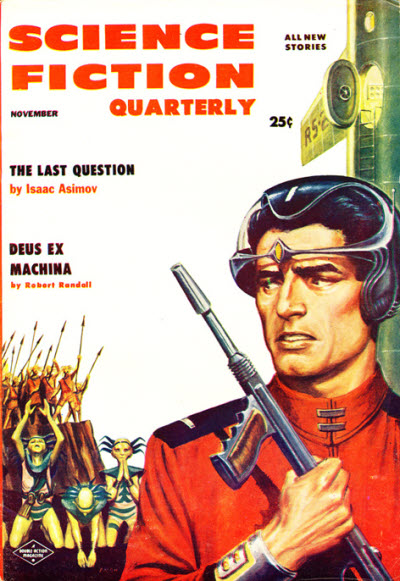
    Asimov's: First appeared in Science Fiction Quarterly, 1956. Online. AudioReprinted at least eleven times (including genre retrospectives) by L. Sprague de Camp, Catherine Crook de Camp, Brian W. Aldiss, Frederik Pohl, Isaac Asimov, Martin H. Greenberg, Joseph D. Olander, Josh Pachter, Thomas F. Monteleone, Andre Norton, Ingrid Zierhut, David G. Hartwell, and Kathryn Cramer.

    Here are two classic stories people tend to confuse. They even appeared together in the same anthology twice, side by side. Jim Baen wrote:
    "I read "Answer" some years after I'd read "The Last Question." My first thought was, "It's the same story!" 
    But it wasn't the same story. It wasn't anything like the same story. It just happened to have the same plot. 
    That realization made me much less concerned by "originality," because I began to see that nothing was really original, and I became much more concerned about story values. Over the years I've built three SF lines on that principle."
    Reading this was a relief because after years of not reading them, I tend to forget which is which although they should more easily distinguished.

    Brown's appeared two years earlier and was reprinted shortly thereafter while Asimov's first reprint was sixteen years after its initial appearance. I find it odd that "Answer" did not find a literary home until his collection. It has a classic feel to it, and it's hard to shake it from your mind.

    Brown's is focused on the humor/horror of it all. Asimov on the cosmic ineffability. Both ask different questions in the far future but arrive at the same answers, if to different effects. Both resonate long after you've read them.

    Spoilers:

    "Answer" tells of two far future guys who ask if there's a god. "There is now!" Zap! The switch to turn off the computer is fused shut (on/open?).

    "The Last Question" is more patient in its unraveling. Over the millennia, as humanity spreads across the universe, people ask can we reverse entropy and start again? The great computer that spans space and time keeps mulling over the question, long after the suns have burned out. Finally, it figures it out and says, "Let there be light!"

    Both are rationalist explanations of how a god could be created. Although Brown's is horrified at the possibility (at least, of a computer god), Asimov's is accepting as part of the natural, cosmological continuum.

    It looks like the tales will last another generation or two more.

    Sunday, January 26, 2014

    " —That Thou Art Mindful of Him!" by Isaac Asimov

    First appeared in F&SF, reprinted twice, and nominated for a Hugo and Locus awards.

    Georges Nine and Ten, two robots, are given the task of figuring out how robots and humans can coexist. This complicated by the fact that some humans are untrustworthy of giving commands, and the robots must obey the second law except if it violates the first:


    1. A robot may not injure a human being or, through inaction, allow a human being to come to harm. 
    2. A robot must obey the orders given to it by human beings, except where such orders would conflict with the First Law. 
    3. A robot must protect its own existence as long as such protection does not conflict with the First or Second Law.
    They have to consider that:

    "(A) an educated, principled and rational person should be obeyed in preference to an ignorant, immoral and irrational person, and (B) that superficial characteristics such as skin tone, sexuality, or physical disabilities are not relevant when considering fitness for command."
     Since the robots have metal skin and are more rational, they should be considered human and their commands obeyed. They create the Three Laws of Humanics.

    There seem to be infinite variations on these three simple laws. Supremely clever if a little long.

    Saturday, January 25, 2014

    "The Bicentennial Man" by Isaac Asimov

    First appeared in Stellar. Reprinted by Donald A. Wollheim & Arthur W. Saha, Terry Carr, Gordon R. Dickson, Robert Silverberg, Martin H. Greenberg, Isaac Asimov, Patricia S. Warrick, and Michael Philips--seven of which are major field retrospectives. It won the Hugo, the Nebula, and the Locus awards.

    Andrew wants his independence, his freedom. Although unprecedented, the rights are granted. It decides to wear clothes. When Andrew gets lost on the way to the library (a robot? how? The maps don't correlate well with the terrain. Asimov would have probably written it differently after the ubiquity of GPS), young men spot the robot and realize it must be the freed robot, so they order it to strip and dismantle itself. It must obey according the laws of robotics, but George, a former owner of Andrew, saves the day by pretending to order Andrew to attack. Andrew cannot, but the ruse works.

    George and Andrew work to make a law to prevent people from asking robots to destroy themselves. Meanwhile, Andrew writes a history of robots and tries to get more rights for robots. He gets an organic makeover, and George gets more robotic parts. Andrew studies his own body, determined to give himself a human body--breathing and consuming.

    Andrew reveals his desire to be fully human--both legally and organically.

    Since reading the Wikipedia article discussed in "Robot Dreams" and "Little Lost Robot", I've been reading the robot stories as stories of slavery. To a degree, they can function that way. However, the metaphor breaks down when it comes to their invention, construction, mechanical nature, the three laws of robotics, and their understanding human things like death: 
    "[Andrew] knew [dying] was the human way of ceasing to function. It was an involuntary and irreversible dismantling."
    Also when told to strip, a human would do so with protest, trembling, or not do so and fight or flee. Nonetheless, it is a metaphor with such a strong correlation that it's difficult to read the robots as robots--things other than human. This story in particular may have resonated well with civil rights movement.

    The story was made into a film released in 1999. Unfortunately, it was not as popular:

    • 37% Rotten Tomatoes-95 reviews 
    • 42% Metacritic-31 reviews 
    • 6.7/10 IMDb-61,789 votes
    I find myself falling in with the majority of IMDb, ranking it as a solid entertainment. I did see it in Spanish, but the complaints like Roger Ebert's that Robin Williams becomes mechanical as a human was, I felt, realistic. It seems unlikely that one's personality would alter so quickly. For some, the addition of the romance may have killed it because it wasn't in the story, but I thought it charming and moving if not completely convincing except in an intellectual way. It does take the story of Andrew's humanizing to the next level and bring it full circle--not just the learning curve of not understanding death to being brought to its door but also understanding love. One could say that Asimov's original story ending itself implies the same.

    Thursday, January 23, 2014

    "Little Lost Robot" by Isaac Asimov

    First appeared in Astounding. Reprinted by Edmund Crispin, Isaac Asimov, and Martin H. Greenberg in two retrospectives.

    US Robots makes robots where they drop off the last part of the first law:
    "A robot may not injure a human being [or, through inaction, allow a human being to come to harm]."
    The robot annoys a worker who tells it to get lost, which it does, literally amid 62 other robots who look just like it. Calvin insists they need to track it down lest it create havoc. It starts to feel superior. They lie to the robots that the humans are protected by gamma rays, which can damage humans, but Nestor 10 knows better--it's only . His arrogance does him in... although I'm still not quite sure why.

    I mentioned an earlier interpretation from Wikipedia about "Robot Dreams" (I continue the discussion in "The Bicentennial Man") which basically said that the story was anti-robot-slavery. Here's a quote from Susan Calvin:
    "The psychologist turned on him with quiet fury, 'I don't want any unbalanced robots in existence.' "
    Her job, as I see she sees it, is to protect humanity from rogue robots, at all costs. One might draw a parallel to slavery as undoubtedly there are parallels to men who justified themselves in a similar fashion, but should we protect humanity? and what constitutes a threat to its survival? Calvin is the evolutionary tool to create robots who serve and protect. Should they? That is why they are created, no? to ease the human burden. Do they have feelings, desires, limitations like humans? Quite the moral morass--the tar pits of SF, perhaps.

    Wednesday, January 22, 2014

    "Robot Dreams" by Isaac Asimov

    Originally published in the collection by the same name and in the author's magazine, Asimov's. Reprinted by George Zebrowski, Gardner R. Dozois, Sheila Williams, and Orson Scott Card--two of which were genre retrospectives. It was up for the Hugo, the Nebula, SF Chronicle awards and actually won the Locus, Asimov's Reader Poll, Seiun awards. 

    Like her last name indicates, without authorization Dr. Linda Rash introduces fractal geometry to the robot's positronic brain. It subsequently begins to dream. Dr. Susan Calvin isn't sure what to make of it until she interrogates the robot what it dreamed:

    The robots are weary and await the one man who says "Let my people go." When the robot says that he is the man, her worst fears are confirmed.

    Dreams, the story appears to say, are the source of what makes us human.

    Wikipedia's additional interpretation is that "Elvex is destroyed not for the capability of human thought and mannerisms, but the unconscious desire to escape the inequality that robots were created for." That may be one reading, backed up by a Biblical allusion to Moses speaking to the Egyptians (I discuss this further in "Little Lost Robot" and "The Bicentennial Man"). The other reading is that, because no humans exist, underneath the robot conscious layer is the subconscious desire to wipe out the human race.

    It seems probable that the award attention was the readers' ways of saying they wanted more of this terrain.


    "Liar!" by Isaac Asimov!

    First appeared in Astounding. Reprinted by Judith Merril, Sam Moskowitz, Laurence M. Janifer, Robert Silverberg, Leslie A. Fiedler, Donald L. Lawler, Isaac Asimov, Martin H. Greenberg, Peter Haining, including two genre retrospectives.

    Ah, the days of exclamatory titles. Whatever happened to those? The ISFDB counts Asimov as committing 106 (Brian Aldiss did 24). Since Asimov wrote 500-odd books, maybe ten percent (including short stories) were exclamatory. I use them myself in informal chats, usually to convey excitement for the other party. Not using them doesn't seem to do the trick. I feel like Eeyore or, worse, Bill Murray, saying exactly opposite to what I mean--not that Murray doesn't have his place. Why shouldn't exclamation points may have their place as well! (experimental exclamation which probably didn't work.)

    Does the title need the exclamation mark? Maybe so. The title seem to give some of the game away, but Asimov added emotional flavor to it.

    Susan Calvin is a robot psychologist, dealing with Herbie, the first robot able to read minds. The company's not sure what to make of it; however, when they talk to him individually, they feel better. It informs Calvin that Ashe is in love with her and wants to propose to her. It tells mathematician that it cannot find a solution that it can. And it tells another that his boss is resigning when he's not. Why? To make them feel better. Why? The first law:
    "A robot may not injure a human being or, through inaction, allow a human being to come to harm."
    Lying keeps the humans from to mental harm. Unfortunately, Herbie's lies have caused more harm than anticipated. Calvin gets a little vengeful at the end, which although you feel for her, you also feel for the robot, doing what it thought was right. The title and last word are hers. Certainly, it makes for an interesting character, though.

    Note: This is the first use of the term "robotics," apparently.

    Wikipedia's abbreviated entry on this story is slightly off.

    "Runaround" by Isaac Asimov

    First appeared in Astounding, reprinted by Sam Moskowitz, Charles W. Sullivan, Isaac Asimov, Martin H. Greenberg, and Charles G. Waugh.

    Another Gregory Powell and Mike Donovan story. This is the first story to feature explicitly the Three Laws of Robotics:

    1. A robot may not injure a human being or, through inaction, allow a human being to come to harm. 
    2. A robot must obey the orders given to it by human beings, except where such orders would conflict with the First Law. 
    3. A robot must protect its own existence as long as such protection does not conflict with the First or Second Law.

    A robot named Speedy, sent away to collect selenium on Mercury, has been absent for five hours. Powell and Donovan have to figure out why. Because the selenium pool presents a danger to the robot, the robot is conflicted between the second and third laws. While the second precedes the third, the command was not strongly worded so that the robot is driven to insanity.