This site passed 400,000 hits, so I did a quick scan of my favorites from the past year, plus things I read in the past year but still haven't reviewed yet.
Best novel was Theodore Dreiser's An American Tragedy, discussed here. The recollection of it still wounds. I doubt I'd read it again, but a fine, troubling novel.
"Brenda" by Margaret St. Clair (book reviewed here) -- I can't shake the imagery of this one. St. Clair was firing on all cylinders. You can find it in her collection: The Hole in the Moon. If you read nothing else by St. Clair, read this one although she has a few other well known works.
Bruce Boston’s “The Ruined Library” You can read it online here and my commentary on part of what makes it so successful here.
Best new poetic voice I've read in a while -- Clif Mason's Knocking the Stars Senseless (reviewed beginning here -- interview begins here)
Speaking of new voices, Daniel Braum's is one to read, reminiscent of Lucius Shepherd (short novel reviewed here, He's also published a few story collections), with future work forthcoming in Ellen Datlow's Best Horror.
Best book of poems -- Speech Minus Applause by Jim Peterson -- Catalogs the tipping of a worldview (perhaps). Some poets excel at the poem, some the book. This one does both admirably. Stunning, revelatory, haunting. I'm still writing the review--interrupted by illness and lunar lacunae. Hopefully an interview will follow.
Best series: Peter V. Brett's The Demon Cycle. It begins well with The Warded Man, but really is most stunning in The Desert Spear. Enthralling. More reviews to follow.
Two of the most thought-provoking if flawed yet highly recommended SF novels: Dark Universe by Daniel Galouye -- fascinating speculation -- is discussed here. Pierre Boulle's brilliantly designed Planet of the Apes is discussed here.
Most attention for written works: David Gerrold's novel The Man Who Folded Himself got the most hits--an eye-popping wonder--although the middle doesn't quite stack up as strongly as the beginning and end (SF readers of the old school might look into his When HARLIE Was One, a thought-provoking, speculatively high-octane work). Joe Lansdale's Cold in July, a fascinating look at the male psyche, was right up there with the hits. Jane Yolen's collection and discussion of such a literary form, How to Fracture a Fairy Tale, trailed by a nose hair.
The #1, biggest hit winner of the year by a landslide: Poet and editor, Sarah O'Brien's interview.

APB-SAL is a blog about education, science, science education, fiction, science fiction, literature, literary stories, poetry, and anything else that strikes the blogger's fancy. NOTE: This blog interrogates art. It rarely make moral proclamations. For that attend the church or politician of your choice. This blog concerns aesthetics, not propaganda. Consider this as interviews with books where the interviewer presents interviewees, so you get what you need to do your own thinking.
Showing posts with label Joe Lansdale. Show all posts
Showing posts with label Joe Lansdale. Show all posts
Tuesday, May 12, 2020

Saturday, August 31, 2019
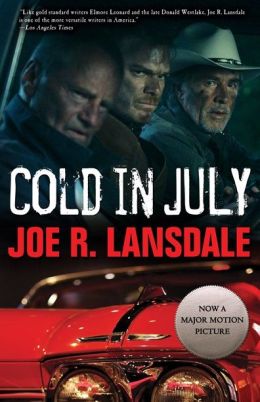
A Man’s Gotta Do: Cold in July by Joe Lansdale
Cold in July
by Joe R. Lansdale
Tachyon Publications
General Fiction (Adult) , Mystery & Thrillers
Ann hears a noise and wakes her husband, a young father, to
listen. He hears the sliding glass door open, so he grabs his .38 and ventures
downstairs to greet his uninvited guest, who is passing a flashlight over the
walls including a cheap landscape painting, which the narrator cover a Picasso
(probably a joke since the subject doesn’t come back up).
When the two men meet, face to face, the narrator freezes
and the burglar gets the first shot, missing the narrator which finally wakes
him to action, putting a bullet in the burglar’s head.
The cops investigate the scene and recognize the burglar as
Freddy Russel, who like his father, has been in and out of prison. They take
the narrator down to get his and his wife’s statements. They assure him it’s an
easy case of self-defense.
Ann and the narrator clean up the mess back home. The
narrator struggles with guilt that even the temptation of snuggling with his
wife can distract him from.
Even through the next day, guilt plagues him, despite the
kudos he receives from the locals who all already know. Thinking of the
burglar’s sparsely attended funeral, he drives to the cemetery to watch, despite
the police chief warning him not to. The burglar’s father is there, none too
pleased. He makes veiled threats about the narrator’s son, Jordan, kicking off
the next series of crises where the narrator has to do what he can to protect
his family.
Joe Lansdale described his novel, Cold in July, as having come from a dream. It doesn't feel exactly dreamlike, but it does have an unusual structure (I described Dan Braum's short novel as having a similar shifting structure over here but this one doubles Braum’s).
Joe Lansdale described his novel, Cold in July, as having come from a dream. It doesn't feel exactly dreamlike, but it does have an unusual structure (I described Dan Braum's short novel as having a similar shifting structure over here but this one doubles Braum’s).
It’s a story of manhood: what it is, what a man has to do.
By the end, it becomes less and less clear of the necessity of the narrator''s involvement
although some might claim that, yes, he needs to be involved, yet the novel has
to work to justify this involvement. That, though, may only make the
investigation of what makes a man all the more interesting.
To some extent, manhood is always under the microscope in a
Lansdale tale, but I have yet to read a more thorough investigation by Lansdale.
#
What follows becomes less of a review than a discussion of
the work itself. If you read the novel, consider that a pass key to the rest of
the discussion. If you haven’t read the novel, note that the literary police
are watching you on your computer cameras and will raid your house if you read
on.
Warning: Spoilers (to an extent)
The novel’s structure is unusual. That it works, throws into
question structural plots. We open with a thriller, followed by a mystery, and
end with a vigilante justice tale. Other plots, such as psychological (guilt
about killing, guilt over fatherhood), might be thrown in as well. What holds
the novel together is the question of manhood. What is it? This is what I love
most about the novel. It isn’t just blind acceptance or total questioning of
what manhood is, yet to some extent it expects us to accept some manhood
justifications that should be questioned if not necessarily jettisoned.
When they find out Freddy Russel isn’t Freddy Russel, the
protagonist has less and less reason to be in the novel. In fact, the novel
focuses more and more on the other men. The protagonist does gain a lost father,
perhaps finds his own fatherhood (if it was ever in question—which maybe it is
since he has taken off, leaving his son, to go on an adventure he doesn’t have
to take).
In this regard (not in the excitement department, which doesn't flag), the novel is flawed yet so is manhood. So maybe that’s all
right.
#
I didn’t realize at first that this had been made into the
movie. The movie departs in that the narrator isn’t justified in shooting an unarmed
burglar and he slips on the trigger, which may be a more interesting
question—something that could trigger more guilt (although the question of
guilt melts away in both book and movie as soon as the narrator has to protect
his son).
In both the novel and movie, the narrator discovers that Freddy
isn’t Freddy, but the movie lacks motive for literally throwing Russel Sr. on
the train tracks. The perpetrators have no call to do so and aren't challenged for doing this (although that does make
it easier to make the narrator and Russel Sr. sudden allies, which makes less
sense in the novel).
The movie has a more visceral motive to launch the boys into
a vigilante story. The protagonist and I had to turn our heads. Still, for the
most part, the narrative and themes are intact. Both are worth checking out.
Monday, November 3, 2014
Free and reduced ebook lunches
The Steel Valentine
by Joe R. Lansdale
Free
If I Had Lunch with C. S. Lewis:
Exploring the Ideas of C. S. Lewis on the Meaning of Life
Alister McGrath
Free
Surrealities
by Bruce Boston
$0.99
99 Jobs: Blood, Sweat, and Houses
by Joe Cottonwood
$0.99
Fresh Cut Tales:
A Collection of Dark Fiction
by Kenneth W. Cain
$0.99
The Gate Theory
by Kaaron Warren
$0.99
Scenes from the Secret History
(The Secret History of the World)
by F. Paul Wilson
$0.99
A Cruel Wind
(Dread Empire)
by Glen Cook
$1.99
The Book of Cthulhu
Ross E. Lockhart (Editor)
$1.99
Kindred
by Octavia Butler
$2.09
Supernatural Noir
Ellen Datlow (Editor)
$2.51
Successful Novelist:
A Lifetime of Lessons about Writing and Publishing
by David Morrell
$2.51
The Mammoth Book of Haunted House Stories
Peter Haining (Editor)
$2.99
Everything's Eventual:
14 Dark Tales
by Stephen King
$2.99
Bill, The Galactic Hero
by Harry Harrison
$2.99
by Joe R. Lansdale
Free
If I Had Lunch with C. S. Lewis:
Exploring the Ideas of C. S. Lewis on the Meaning of Life
Alister McGrath
Free
Surrealities
by Bruce Boston
$0.99
99 Jobs: Blood, Sweat, and Houses
by Joe Cottonwood
$0.99
Fresh Cut Tales:
A Collection of Dark Fiction
by Kenneth W. Cain
$0.99
The Gate Theory
by Kaaron Warren
$0.99
Scenes from the Secret History
(The Secret History of the World)
by F. Paul Wilson
$0.99
A Cruel Wind
(Dread Empire)
by Glen Cook
$1.99
The Book of Cthulhu
Ross E. Lockhart (Editor)
$1.99
Kindred
by Octavia Butler
$2.09
Supernatural Noir
Ellen Datlow (Editor)
$2.51
Successful Novelist:
A Lifetime of Lessons about Writing and Publishing
by David Morrell
$2.51
The Mammoth Book of Haunted House Stories
Peter Haining (Editor)
$2.99
Everything's Eventual:
14 Dark Tales
by Stephen King
$2.99
Bill, The Galactic Hero
by Harry Harrison
$2.99
Friday, December 13, 2013
Interviews
Nnedi Okorafor -- lots of commentary on her works in the tagged link below
Christine Schutt did a cool novel called Florida which did as much between scenes as in them.
Gareth L Powell -- crazy imaginary monkey comes to life!
Matt Mason -- very colloquial and poignant poet with a touch of wit and humor
Lou Anders -- in his editorial capacity (shortly in an authorial capacity, no doubt)
Joe Lansdale -- author of gritty works
Gareth L Powell -- crazy imaginary monkey comes to life!
Matt Mason -- very colloquial and poignant poet with a touch of wit and humor
Lou Anders -- in his editorial capacity (shortly in an authorial capacity, no doubt)
Joe Lansdale -- author of gritty works
Subscribe to:
Posts (Atom)