Search This Blog

Showing posts with label Edgar Allan Poe. Show all posts

Friday, April 14, 2017

Star Trek: Season 1, Episode 13. "The Conscience of the King"

 Summary:
Prior  to episode beginning Governor Kodos of Tarsus IV or Kodos the executioner instituted martial after a drastic drop in food and killed fifty percent of the population. Kodos is presumed burn beyond all recognition.

The episode begins with Tom Leighton, a witness and victim of Kodos, watching the play MacBeth. He suspects actor Karidian as being Kodos. He arranges a meeting with the actors. He winds up dead, leaving just Kirk and Lt. Riley the only living witnesses who have seen Kodos.

Captain Kirk interrogates the daughter, Lenore, with pleasure. He arranges for transport of the actors aboard the Enterprise. Spock

Analysis with spoilers:
Lt. Riley listens to Uhura from Engineering room and happens to communicate his poisoning.

Kirk confronts (see quotes), tests Karidian's voice. Close but perfect.

Daughter admits to killing witnesses for father. Father appalled. She threatens Kirk. Kodos stands to protect Kirk from being blasted. They erase daughter's memory, even to the point that she believes father still alive. If that's a mercy. Strangely, her murders make less sense (at least, based on the information we're given) yet Captain Kirk is willing to spare her life, not Kodos's.

Interesting dilemma--if food resources are limited, what do you do?--dramatically dynamic. But it does flatten the tricky dilemma, taking an easier resolution. Part of the problem is that rescue comes early. One would think that Karidian would have known how far away help was and calculated how far resources might extend. Better to have made the problem trickier.

This somewhat parallels the Nazis, but there was no crisis of resources. At least the viewer can understand why Kodos chose what he chose (although how does one decide who are important in a society?). This is a classic problem in ethics: If you could divert a train to kill fewer people than it would if you let it go straight, what would you do?

Mostly, this parallels the pursuit of war criminals, decades afterward when the criminals take on a normal life, seemingly repentent, as happened recently in Minnesota when residents and family did not want him extradited and out on trial and placed in prison. If people change and repent, are they forever criminals or are they normal? The daughter's own murders make the solution easy, yet more dramatic.

Why she is named Lenore, presumably an allusion to Edgar Allan Poe's poem, is unclear. For Kodos, she is his life. For Kirk, she remains alive. Maybe she is dead inside (before and after the memory erasure but in different ways).
Quotes:
  1. Kirk: Are you Kodos? I asked you a question.
    Karidian : Do you believe that I am?
    Kirk: I do.
    Karidian: Then I am... if it pleases you to believe I am Kodos. I'm an actor. I play many parts.
    Kirk: You're an actor now. What were you twenty years ago?
    Karidian: Younger, Captain, much younger.
    Kirk: So was I. But I remember.
  2. Karidian: Here you stand, a perfect symbol of our society, mechanized, electronicized, and not very human.
  3. Karidian: Some had to die so that some might live.
  4. Karidian: Why not kill me now? Let bloody vengeance take its final course and see what difference universe of yours.
    Kirk: Beautiful words, well acted, change nothing.
    Karidian: No, I suppose not. They are merely tools.
  5. Karidian: Blood thins, body fails, and one is finally grateful for a failing memory. I no longer treasure life, not even my own. I am tired! The past is a blank.
  6. Lenore: You talked of using tools. I was a tool, wasn't I? a tool you used against my father.
  7. Lenore: You are like your ship: powerful and not human. There is not mercy in you.
    Kirk: If he is Kodos, then I've shown him more mercy than he deserves.
  8. Kirk: The play is over. It's been over twenty years.
Notes:
  1. Kirk has another liaison. Hard to tell if it's business or pleasure. Maybe both, considering his final decision.

Tuesday, April 26, 2016

“The Growth of the House of Usher” by Brian Stableford


First appeared in Interzone. It was up for the Interzone Readers Poll, reprinted in genre retrospectives by Gardner R. Dozois and  John Clute, David Pringle and Simon Ounsley. From the collection, Sexual Chemistry and Other Tales of the Biotech Revolution.

Summary:
The faceless narrator visits Rowland Usher on the Orinoco Delta. They had been civil engineers together in college where they worked with engineered bacteria that rebuilt raw materials into various architectures.
Now the narrator finds Rowland and his father have built a house in memory of his sister, whom they loved dearly--in multiple senses. All of the Ushers have been dying of the same genetic malady

Commentary with Spoilers:

Rowland kicks the bucket, and the narrator spots worm-like creatures who bear resemblance to the sister. They crawl out to cuddle/be cuddled and die.

This follows the "plot" of Edgar Allan Poe's “The Fall of the House of Usher” if it can be said to have a plot. This story departs enough, twisting so that it maintains reader interest.

Genius title.

Does it comment on where we're headed with societal mores? Although a case could be made (even that genetic monkeying leads to decadent moral decay), the other tales don't support the sudden land change. This tale wallows less in moral decay than in a futuristic Poe. Perhaps that's two sides of the same coin.

Rather, the pivotal final image may have been the seed that the author lacquered around, building backwards logically to create a society in which this might have happened.

Tuesday, May 19, 2015

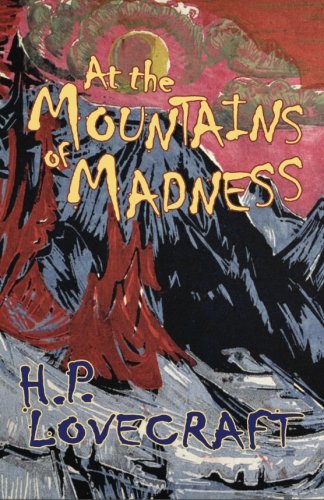
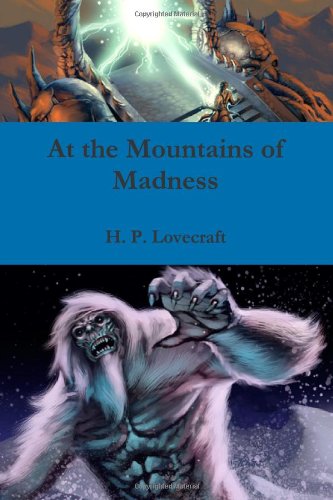
At the Mountains of Madness by H. P. Lovecraft

First appeared in F. Orlin Tremaine's Astounding (now Analog). Reprinted by August Derleth, David G. Hartwell, Robert M. Price, John Gregory Betancourt, Colin Azariah-Kribbs. The following reading lists recommend the novel: Anatomy of Wonder, The 5-Parsec Shelf, Fantasy: The 100 Best Books. Read online.


Summary
The narrator, Dr. William Dyer of a geology professor at Miskatonic University, treks with several men and dogs to the Antarctic. They discover a stone with unusual striations and see strange mirages. They uncover the bodies of the Old Ones and try to dissect. When the narrator and Danforth investigate what happened to one camp, their own camp is destroyed.
Commentary
They discover a mountain range catacombed with tunnels and cave carvings. They read the history of the Precambrian aliens who lived there. They had their own animals brought during a time when Earth was thought only to have unicellular life. The Old Ones fought the Cthulhu lost--some moving undersea--and later won. The narrator and Danforth encounter giant albino penguins and other strange monstrosities. A greater evil lies just beyond. Danforth may have witnessed it.

The narrator and Danforth's goal is to steer away a new expedition headed down here--not to mention saying that humans are nothing in the cosmos.

Michael Chabon writes of At the Mountains of Madness as “One of the greatest short novels in American literature, and a key text in my own understanding of what that literature can do.”

When editors like David Hartwell, trying to capture the foundations of the horror field, reprint a short novel this long, it's got to be good. The chief rewards for those who admire sense of wonder come as the explorers enter the labyrinth of caves and examine the cave paintings around chapter six.  It gives some of the best description of Lovecraft's cosmology.

Reading his work, one appreciates a few literary attributes: brooding atmosphere and imagination. Lovecraft slammed Henry James's works of horror because of their lack of horrific atmosphere. James, though, was a master of character--something that Lovecraft runs low on. What do we know about our protagonist? How is his life shaped, transformed by events and other characters? Well, he's horrified, just as his companion Danforth and most of Lovecraft's characters.

What about plot? The shape is fairly simple. One encounters the strange; horrifying strangenesses pile up until the universe irrevocably horrifies the narrator. One reads Lovecraft for the same reason that readers read Olaf Stapledon: The writers are good at a few narrative traits--good enough that readers overlook flaws.

In his introduction to the Modern Library edition of the novel, China Miéville writes, "Genre writers, it is often claimed are uninterested in characterization, theme, or nuance, and instead vulgarly subordinate everything to the exigences of plot. This, of course, is nonsense. In fact many writers don't do plot either."

Miéville's point, besides humor, is that the genre has something unique outside of plot and character. In this field, writers like Lovecraft and Stapledon reap a bountiful harvest.

Miéville also claims that Lovecraft was on the cutting edge of science, pointing out his mentions of continental drift. Unfortunately, as S. T. Joshi points out in his annotations, continental drift had no proof at the time. Moreover, Lovecraft also mentioned ether, a hypothetical medium that light supposedly propagated through. The Michelson–Morley experiment decades earlier had proved this hypothesis false. Besides, Lovecraft's real point was to lower our estimation of human science and to suggest that universe contained more than puny humans can know.

And that's okay. Humans do sometimes overestimate their understanding of the universe. Moreover, Lovecraft's mind grasped onto the unusual, the stranger fictions--reality be damned. In fact, he treated his own, Edgar Allan Poe's and Clark Ashton Smith's fictional works as true within the fiction.

This is one of Lovecraft's cleaner works, told in a semi-academic style. Still, though many Lovecraft narrators are educated, they fail at words as soon as they confront the horrifying ineffable. Nonetheless, the writing is dotted with "things" difficult to see or experience. Note all the very different monsters illustrators created based on this novel (it may be, however, that the illustrators did not read the text in question).

Lovecraft often employs archaic spellings and words--not to mention neologisms--meant perhaps to create a dark, brooding atmosphere of the unknown. It not only makes for tough slogging, but also makes one wonder.

Miéville notes that "Lovecraft has... the transmogrifying vision of hysterical nihilism, from which his racism is inextricable."

Isn't Lovecraft's penchant of strange words, spellings like a foreign language, used to conjure horror--not unlike the speech of a foreigner? Now that I've stated the conjecture, someone will latch on to it as truth without further evidence, but it is a possibility worth considering.

Even when his writing seems concrete, we may still not know what he means. For example, what does a "tempest-scarred plateau" look like?

I analyzed this text for adverbs (actually, the "-ly" ending) versus Mary Shelley's Frankenstein, and versus Ernest Hemingway's (roughly a contemporary of Lovecraft) "The Snows of Kilimanjaro". I chose the comparisons since Hemingway is roughly a contemporary of Lovecraft and Shelley is about a hundred years older than Lovecraft and writes in a similar genre as Lovecraft. Also, Lovecraft tries to write in an antiquary style, so it'd be interesting to see how closely he resembles the thing he imitates.

In terms of percentages, Lovecraft doubled Shelley's output and quadrupled Hemingway's (who also used his within quotes). I searched for the vague noun "things," and Lovecraft doubled Hemingway's output (also found in dialogue) and had fifteen times as many as Shelley. To an extent, this is what Lovecraft intended. The unknown and foreign are terrible (variants of "vague" appears twenty times in the text):
  1. "The effect of the monstrous sight was indescribable, for some fiendish violation of known natural law seemed certain at the outset."
  2. "[S]omething about the ridgy, barrel-shaped designs stirred up oddly vague, hateful, and confusing semi-remembrances in both Danforth and me."
  3. "[T]here was something vaguely but deeply unhuman in all the contours, dimensions, proportions, decorations, and constructional nuances of the blasphemously archaic stonework."
  4. "[T]he revived memories and vague impressions acting in conjunction with his general sensitiveness and with that final supposed horror-glimpse whose essence he will not reveal even to me - which has been the immediate source of Danforth’s present breakdown."
  5. "Something about this whole place, with its polished and almost glistening floor, struck us as more vaguely baffling and horrible than any of the monstrous things we had previously encountered." 
  6. "For a second we gasped in admiration of the scene’s unearthly cosmic beauty, and then vague horror began to creep into our souls."

Brian Aldiss parodies the style as swollen by adjectivitis in "The Adjectives of Erich Zann, A Horror Story":
"I was aware of fear welling up inside me in a cascade of adjectives."
Lovecraft's style has its defenders. Nick Mamatas, whose eloquent defense is worth reading, is buried somewhere in his blog. I cannot find the article at present. Indeed, Lovecraft does have his poetic moments, but usually when his prose solidifies in the concrete.

My only point, though, is that Lovecraft's prose strives to create a literary past that never existed. His prose reads nothing like Shelley's. His protagonists, too, were his contemporaries. So why were their writing and speech patterns antiquated? True that even into 19th century, some folks cultivated a King James speech pattern, especially when it came to piety and churches that used the King James Bible as their text, possibly even into the twentieth century. But Lovecraft does not follow King James. Who his antiquary literary antecedents are, remains unclear. Perhaps creating a literary past that never existed is his point. But for readers who prefer a smoother style or character or plot, it might make for challenging reading. If possible, one has to park one's notions of narrative at the book cover's front door.

Sunday, December 28, 2014

"From Darkness, Emerged, Returned" by Elizabeth Massie

First appeared in Paul Kane and Charles Prepolec's Beyond Rue Morgue.

Here's a tale that took me by surprise. Massie gives us the quiet granddaughter of famed detective Dupin in this quiet tale. Her boyfriend has been killed. She calls on the spirit of her grandfather to help her solve this crime. Her mother, meanwhile, has had an operation to make her smarter. Others fall under suspicion. A few somethings are not what they seem.

"Illimitable Domain" by Kim Newman

Appear in Ellen Datlow's Poe anthology. Reprinted by Christopher Golden.

Here's a curious oddity (I do like narrative oddities). It's basically a fictional nonfiction about alternate-world film industry. Basically--spoiler alert--Poe, who feels he's been under-appreciated, has taken over the art world in that all movies seem to be influenced by Poe, as if everyone was making the same Poe-flavored film. Interesting work. I would have liked a touch more narrative/story, but worth checking out.

Thursday, December 11, 2014

C. Auguste Dupin, Detective: Genius and... Blowhard?

Edgar Allan Poe created the mystery genre through his popular genius detective, C. Auguste Dupin. Their influence, while far-reaching, rests on three stories:

  1. The Murders in the Rue Morgue (1841),
  2. The Mystery of Marie Rogêt (1842), and
  3. The Purloined Letter (1844).
The first is perhaps the most dramatic and most famous. It has been filmed around a half dozen times. The latter two, once. 

Nonetheless, the most iconic, I contend, is the lattermost. It brought forth the idea [Note: I am about to deliver the dreaded spoiler, so read the tale now before your mind is forever corrupted] of hiding things in plain sight. The actual story isn't as simple as the concept it delivers. Dupin points out that 1) the astute can guess behavior patterns of people based on their intelligence, 2) you can make gains in politics through the destruction of another's morality (a lesson still in practice--perhaps more popular than ever), and 3) hiding things in plain sight... through simple disfigurement, while hanging with other items of similar disfigurement.

Paul Collins, a biographer of Poe, calls these essays. And they are--of a fictionalized sort--especially "The Purloined Letter". Dupin spends a great deal of time reasoning out all the extraneous matter and beating around to his final point. In the modern locked-room mystery, Dupin's stories represent the final unraveling, where the detective relates how the mystery occurred. His methods are similar to Doyle's Sherlock Holmes's. Doyle also employs a sidekick like Dupin who can become our proxy for our awe of the detective's mental prowess.

Doyle's sidekick, Watson, is superior in that he actually has a personality that develops across the stories. Poe's is an anonymous blank-slate. Even Dupin is something as a blank slate except for one thing: He talks a lot, demonstrating his genius.

If Dupin were real, some people would become enthralled and hang on in his every word. Most would probably lose track of what he was saying and think of other matters, waiting for him to finish what he had to say, stifling yawns and glancing at pocket watches: "My! Look at the time." I think the term "blowhard" is unfair as he is just explaining a crime at length, but that would likely be the feeling that most people would got in his presence, especially if they feared intellectual matters that shot over their heads.

According to Collins, Poe wrote literary puzzles for readers to figure out. I suspect that these Dupin stories were an outgrowth of such interest, exploring dramatic puzzles of crime. The idea of Dupin's character may never have come to mind. For all that Dupin might have been a pain to be around in real life, his reasoning has been fascinating to read for nearly 175 years.

Saturday, November 1, 2014

Reader's Guide to "The Cask of Amontillado" by Edgar Allan Poe

Read online.
Summary:
The narrator, Montresor, says because Fortunato has insulted and injured Montresor, he will get revenge through the object of the title.

Analysis with Questions and Spoilers:
I.
The summary since Poe's plots are often simple on the surface, at least. Like "The Tell-Tale Heart" (discussion here), we have a murderer who details his murder. Section XII analyzes further similarities.

II. Title
What function does the object of the title serve?

The amontillado is a MacGuffin, an object pursued but has no real purpose to the plot except to provide a lure for the protagonist.

III. Opening
The story opens this way, explaining why Montresor killed:

"The thousand injuries of Fortunato I had borne as I best could, but when he ventured upon insult I vowed revenge."

Does Montresor mean a "thousand" when he says that number? What kind of injuries are meant? physical, mental, imaginary, spiritual? Does Montresor show signs of injury in the narrative? When someone is injured and they obsess over it, how well do they remember details, in general? What does this suggest about Montresor?

Montresor cannot name his injuries, does not show injury (except mentally in his desire to torture and starve someone to death), and uses vague figures. This suggests his injuries are invented. Furthermore, Fortunato goes with Montresor willingly. Even if drunk and flattered, their relations must be cordial. Fortunato thinks this all a joke, even toward the end. He cannot see what has eaten away at Montresor. Montresor does nothing more than vague gestures.

IV. Character of Fortunato
"You are rich, respected, admired, beloved; you are happy, as once I was. You are a man to be missed."
What might Montresor's description of Fortunato indicate?

Montresor does flatter Fortunato, but Montresor's comments tend to be true. If Fortunato were truly unloved and unhappy (which goes against his name--see below), it seems probably that Fortunato might have become wary about Montresor. Note, too, the blunt honesty in "you are happy, as once I was." Montresor is deceptive but not a teller of lies. One witnesses this again when Montresor pulls out a trowel to indicate he is a mason (not a freemason), which Fortunato must be.

Perhaps this suggests Montresor's true motive: jealousy. See next section.

V. Character of Lechresi and Fortunato Defined by Wine
"As you are engaged, I am on my way to Luchresi. If any one has a critical turn it is he. He will tell me --" 
"Luchresi cannot tell Amontillado from Sherry." 
"And yet some fools will have it that his taste is a match for your own." 
"Come, let us go." 
What does this banter suggest about Fortunato and Luchresi?

Clearly, this is Montresor uses this as a ruse to goad Fortunato into coming. Fortunato does not argue that their tastes are equivalent. Are they equivalent in other manners?

What if Montresor had decided not to go, due to his illness? If Montresor is jealous about Fortunato's happiness, would Luchresi have done just as well?

VI. Dress of Fortunato
"The man wore motley. He had on a tight-fitting parti-striped dress, and his head was surmounted by the conical cap and bells."
What does this costume suggest?

Fortunato is dressed as a fool, but is played for a fool, not vice versa. The repetition of the jingling bells makes this concrete, making for a potent finale.

VII. The Reader and the Soul
"You, who so well know the nature of my soul, "
What does the "you" suppose?

Collusion. Unlike "The Tell-Tale Heart", the reader is meant to vouch for Montresor. But maybe we do not have to, especially after hearing this story. This becomes fascinating later in the narrative. At first most readers may be dubious of his motives, but later we somehow do root for the murderer. We find him clever. We admire his craftiness. Note in the Wikipedia article how various scholars have tried to support the vague murderer. Why would we do that unless Poe's narrator hasn't brought us over to his side?

On the other hand, maybe the narrator is speaking with the devil, God, or some other being of the afterlife since "you" knows the nature of the soul. Later Montresor responds:

"For the love of God, Montresor!" 
"Yes," I said, "for the love of God!"

This may indicate Montresor believes he does this for the love of God.

VIII. Obfuscation
"You will not suppose, however, that gave utterance to a threat. At length I would be avenged; this was a point definitely, settled --but the very definitiveness with which it was resolved precluded the idea of risk. I must not only punish but punish with impunity. A wrong is unredressed when retribution overtakes its redresser. It is equally unredressed when the avenger fails to make himself felt as such to him who has done the wrong."

What does "gave utterance to a threat" mean? Who threatened whom? Why write "it was resolved" and "is unredressed" twice? What kinds of sentences are these? What does "punish with impunity" mean?

The passage is overwritten. The sentences are so vague and passive that it is difficult to know who did what what to whom--actions without actors. Is it possible that, after all these years, that it was Montresor who had done the injuries? This is conjecture, but why else would he hide the actors?

When the narrator says, "punish with impunity," he wants to get away with slow torturous murder without any kind of punishment. Whatever injuries Fortunato may or may not have done, does that equal a tortured death?

IX. Names

What significance might the character names, Fortunato and Montresor, have? 

Fortunato means fortunate, which he is not in this story. Saints and martyrs have been named Fortunato.

Montrésor is a French castle whose 1493 owner, Imbert de Batarnay was a "skilful and cunning" councillor.

What seems a likely source of the name Montresor is Claude de Bourdeille, comte de Montrésor, who wrote memoirs and participated in intrigues. His memoirs are described by Encyclopedia Britannica interesting, naive, and frank.

American John Montresor wrote a Maine expeditionary guide that fell into the hands of traitor Benedict Arnold. Montresor also owned an island in New York which he named after himself. It was used as a British military post during the Revolutionary war and would later become a home to transported graves, asylums and hospitals.

Fortunato, then, is a (not so) fortunate martyr for amontillado. Montresor is frank if untrustworthy traitor, a likely insane conveyor of graves.

X. Fortunato's Achilles
"He had a weak point --this Fortunato --although in other regards he was a man to be respected and even feared. He prided himself on his connoisseurship in wine..., but in the matter of old wines he was sincere." 
"Luchresi cannot tell Amontillado from Sherry." [said by Fortunato]
If Amontillado is a Sherry, what does that tell us about Montresor's commentary on Fortunato and Fortunato's dialogue?

Montresor is correct. Pride in wine is Fortunato's downfall. A scholar says that the Amontillado is a Sherry; therefore, Fortunato is a true connoisseur. Possibly. This, however, disagrees with what Montressor believes. Another interpretation of the line is that Luchresi does not have refined enough tastes to distinguish an Amontillado.

XI. Montresor's Doubt
"I have my doubts." 
"No answer still. I thrust a torch through the remaining aperture and let it fall within. There came forth in return only a jingling of the bells. My heart grew sick; it was the dampness of the catacombs that made it so. I hastened to make an end of my labour. I forced the last stone into its position.... For the half of a century no mortal has disturbed them. In pace requiescat!"
Why does Montresor repeat "I have my doubts" three times? What does it mean that his heart grew sick? What significance can we attach to the last three words of the story?

Montresor repeats "I have my doubts" three times. The third time feels almost a poetic response compared to the other two instances, suggesting multiple meanings. Might he be suggesting more than doubts that the amontillado is genuine? Might he be having doubts about this entire venture?

That seems a dubious assertion in light of his opening lines, but what do we make of the last paragraph? He seems sad that Fortunato does not reply to his taunts. He admits his heart grows sick at this jingling of bells, but he assigns it to the dampness, which few of us probably buy. Finally, he bids his old enemy to rest in peace. If the narrator is confessing to a priest, God, or the devil, maybe he feels some regret he tries to obscure, to bury under other reasons. This matches his opening obfuscations and inability to describe what he's done.

XII. Cask vs. Heart: Comparative Literature

How does this narrative compare to "The Tell-Tale Heart"
  1. Both have unreliable narrators.
  2. Both rely on the reader as a participant.
    1. They differ in that we are not buy into "The Tell-Tale Heart"'s narrator
    2. Montresor does temporarily (or perhaps convincingly) get his readers to collude/condone his murder. There's something far more sinister in such a murderer.
  3. Both betray their victims, feigning kindness to kill them.

Wednesday, October 29, 2014

Reader's Guide to "The Tell-Tale Heart" by Edgar Allan Poe

First appeared in The Pioneer. Reprinted more times than you can shake a stick: [by]  Edwin Baird, Alexander Laing, Philip Van Doren Stern, Boris Karloff, John L. Hardie, Robert K. Brunner, Howard Browne, Don Congdon, Charles Higham, Groff Conklin, Eric Protter, Syd Bentlif, Rosamund Morris, Robert A. W. Lowndes, Robert Arthur, David Aloian, Aidan Chambers, Nancy Chambers, Peter Haining, Mary Danby, Robert Potter, Les Daniels, Diane Thompson, Deborah Shine, Isaac Asimov, Charles G. Waugh, Martin H. Greenberg, Betty Ann Schwartz, Simon Petherick, Margaret Iverson, Rex Collings, Italo Calvino, Ron Hanna, Kathleen Blease, Martin H. Greenberg, Mike Baker, Leslie Pockell, Megan Dempster, Mollie Denman, Laura Kuhn, Alex Lubertozzi, Adele Hartley, Barry Moser, Chris Mould, Michael Hague, Devon Hague, Andrew Barger, Marie O'Regan, Paul Kane, Karen Henderson, Joyce Carol Oates, Stephen Jones, Marguerite Kenner. <--partial a="" href="http://xroads.virginia.edu/~Hyper/POE/telltale.html" listing.="">Online
.
Summary:
A murderer explains his crime with what he assumes is reasonable reason.
Analysis with Questions and Spoilers:
Haven't read this? Remedy the matter here.

I. The Nature of the Tale
Strangely, this has been anthologized in ghost and monster collections. The monster appellation fits loosely as a metaphor, but ghost is likely problematic considering the nature of our narrator, established early on.

II. Opening
The story opens:
"TRUE! --nervous --very, very dreadfully nervous I had been and am; but why will you say that I am mad?"
What is the narrator trying to accomplish here?

At least two things: 1) establish his veracity. He is. His events seem to align--in his mind, at least--with the facts. He admits to failings of nervousness. 2) say that he is not mad. We probably never buy into his arguments, which makes him unreliable narrator. We ask why he would tell us this if he weren't. It is probably the easiest way to establish something by denying it (even though, hypocritically, we have probably denied things that weren't true about ourselves).

III. Reader's Role
"The disease had sharpened my senses --not destroyed --not dulled them."
Who are we, the readers, in this narrative? What have we said to the narrator?

We are his accusers. We said 1) that he is mad, 2) that he's lost his senses, and 3) that he is diseased.

IV. The Narrator's Sanity

A. Narrator's Misunderstanding

How does the narrator respond? Does he understand the accusations?

Unlikely. While the narrator latches on to the idea of disease and combines it with the senses, we the accusers were probably stating the same thing in different words: You are insane. Your morality is corrupt (a less common usage of "disease").

B. Calm Passion
"Above all was the sense of hearing acute. I heard all things in the heaven and in the earth. I heard many things in hell. How, then, am I mad? Hearken! and observe how healthily --how calmly I can tell you the whole story."
What can we conclude from this?

This may be but seems unlikely. Again, the denial and the repetition of the word "mad" establishes the madness. Note the exclamation points. We sense his difficulty to control his passion despite his claim to the telling as "calmly" told.


C. A Certain Uncertain Motivation
"It is impossible to say how first the idea entered my brain; but once conceived, it haunted me day and night. Object there was none. Passion there was none. I loved the old man. He had never wronged me. He had never given me insult. For his gold I had no desire. I think it was his eye! yes, it was this! He had the eye of a vulture --a pale blue eye, with a film over it. Whenever it fell upon me, my blood ran cold; and so by degrees --very gradually --I made up my mind to take the life of the old man, and thus rid myself of the eye forever."
How do we accusers view his reasoning for murder?

He loves the old man, and doesn't know why he killed him except that the idea suddenly possessed him. Note he writes, "I think it was his eye!" He thinks? He confirms it to himself with detail that we roll with this reasoning if a nonsensical one. Yet he thinks? He has to convince himself. With such detail, how could he forget or be uncertain? Is it madness or a lying mind? Probably the latter since we learn he has exposed his own deed.

V. Kind to Be Cruel
"I was never kinder to the old man than during the whole week before I killed him."
What can we make of this line? What does it suggest? Who might the old man be?

For one, the irony makes it unintentionally (on the narrator's part) if darkly humorous. Also, the word "whole" paired with "week" as if that's a long time to be kind, especially  when you're planning to do in the kindness recipient, which adds a new wrinkle to the phrase "kill them with kindness."

This brings us to a recurrent character of Poe's the kind back-stabber or the faux friend. You'll find him stories like "The Cask of Amontillado" as well. Considering the evil and conniving nature of such villains, one might be able to guess Poe's opinion of such men or women.

In addition to age, the "old man" can refer amiably to one's father or an older man that one cares for. So this may be a story of patricide.

VI. Lineage and Genetics
"[P]erhaps he heard me; for he moved on the bed suddenly, as if startled. Now you may think that I drew back --but no. His room was as black as pitch with the thick darkness, (for the shutters were close fastened, through fear of robbers,).... 
"I had my head in, and was about to open the lantern, when my thumb slipped upon the tin fastening, and the old man sprang up in bed, crying out --'Who's there?'
"I kept quite still and said nothing. For a whole hour I did not move a muscle, and in the meantime I did not hear him lie down. He was still sitting up in the bed listening; --just as I have done, night after night, hearkening to the death watches in the wall. 
"Presently I heard a slight groan, and I knew it was the groan of mortal terror. It was not a groan of pain or of grief --oh, no! --it was the low stifled sound that arises from the bottom of the soul when overcharged with awe. I knew the sound well. Many a night, just at midnight, when all the world slept, it has welled up from my own bosom, deepening, with its dreadful echo, the terrors that distracted me. I say I knew it well. I knew what the old man felt, and pitied him, although I chuckled at heart. I knew that he had been lying awake ever since the first slight noise, when he had turned in the bed. His fears had been ever since growing upon him. He had been trying to fancy them causeless, but could not. He had been saying to himself --'It is nothing but the wind in the chimney --it is only a mouse crossing the floor,' or 'It is merely a cricket which has made a single chirp.' Yes, he had been trying to comfort himself with these suppositions: but he had found all in vain. All in vain; because Death, in approaching him had stalked with his black shadow before him, and enveloped the victim. And it was the mournful influence of the unperceived shadow that caused him to feel --although he neither saw nor heard --to feel the presence of my head within the room. 
"When I had waited a long time, very patiently, without hearing him lie down..."

Granted that this represents the narrator's perspective, how does the old man act?

If the old man is the narrator's father, the apple may not have fallen far from the tree. Their paranoia mirror each other although the father's seems closer to normal.

VII. Wisdom vs. Madness
"If still you think me mad, you will think so no longer when I describe the wise precautions I took for the concealment of the body."

Does this reassure you about the narrator's madness?


VIII. Fear Fear
"for what had I now to fear?... for what had I to fear?"

What does it mean that the narrator repeats this? What does he fear?

IX. Villainy of Perspective

"Villains!" I shrieked, "dissemble no more! I admit the deed!"

Who are the villains? 

More irony although he is the villain.

X. Ironic Structure

There is a further irony in the story's structure. Although the reader is supposedly the accuser, he is also the accused. When we read, we tend to cast our sympathies and consciousness in with the protagonist so that we paradoxically become both. What does this say about us? That we are both mad and sane? Villain, victim, and accuser?

I still recall first reading this in grade school, reading about a crazy man who justifies himself in a way that is reasonable even if his reasoning is flawed. He does not view himself evil or mad, but entirely rational through his own faculties. This ability amazed me then. Whenever I feel dismissive of the tale, I reread it and sense the mad power thrumming, beating like a heartbeat the wood boards of the words.

Note: It is important to remind readers that because a narrator is mad does not mean the author is also mad.

Saturday, October 11, 2014

"The Facts in the Case of M. Valdemar" by Edgar Allan Poe


First appeared in The American Review. Reprinted by J. Walker McSpadden, Hugo Gernsback, V. H. Collins, Dennis Wheatley, Herbert A. Wise, Phyllis Fraser, John L. Hardie, Judith Merril, Elizabeth Lee, Charles Higham, Herbert van Thal, Noah D. Fabricant, M.D., Groff Conklin, H. Bruce Franklin, Robert Aickman, Lee Wright, Richard G. Sheehan, Leo P. Kell, ey, Peter Haining, Kurt Singer, Eric S. Rabkin, Mary Danby, Stuart David Schiff, J. A. Cuddon, Tim Haydock, Al Sarrantonio, Martin H. Greenberg, Stephen Jones, Mary Hill, Rebecca K. Rizzo, Gary Crew, Aaron Polson, Jean M. Goldstrom, Andrew Barger, and Otto Penzler. 
Summary:
Doctors hypnotize a dying man and prolong his life.
Commentary & spoilers:
The dying/dead man begs to be killed. He dies as soon as the hypnotism is removed.

This is actually a problem that continues into the present although less so than it once was. Doctors prolong life to what end? I can't find the article now, but a doctor, who often prolonged life with cancer treatments, chose no therapy for himself. It is an assumption that people should live and keep wanting to live. We don't necessarily consider this scientist mad. Unless we hate our fathers, most of us like Dylan Thomas want our fathers to "rage against the dying of the light."


In this case, Poe pushed the case further. The man is dead. The doctor has exceeded his jurisdiction over life. For an instant, the doctor is mad and joins the ranks of mad scientists, but he does let the man die.

There might also be a case for the tale discussing about the letting-go of loved ones.

Sunday, February 9, 2014

Review: Dark Roads by Bruce Boston (pt 5: The Harvest)


These, for my money, are some of his best poems.  They present interesting reflections on the field and his own work.
"The Blue Pomegranate"  
"The Blue Pomegranate" falls into the same period of the height of jazz improv: "Lesions of Genetic Sin", "Pavane for a Cyber-Princess" and "In Far Pale Clarity".  In some sense, it belongs with those poems as it comments on that poetic flavor (although a claim could be made for any speculative poem, but its indefinite-ness argues against that reading):
you can only reach [the blue pomegranate] by riding
a tired horse for three days
and nights through the rain.
Often when we are tired, our minds can be paradoxically most receptive to art.

Do not eat the blue pomegranate.
If you must ingest this fruit,
cut it cleanly from the tree
with a single stroke of your blade,
trap its roll upon the ground,
sever its leathery hide and consume
its sticky seeds in a single sitting....
The warning that is not meant to warn but intrigue. It ends with a Poe-like declaration of what a story is.

Those who worship the blue fruit,
inveterate pomegranate-eaters,
gourmet cultists of the bizarre,
credit it with the most heavenly
of all flavors known to Earth.
In truth it has little flavor at all
except for a slight aftertaste of lime. 
It is, of course, highly hallucinogenic.
A number of contradictions: the knowledgeable claim flavor. Our persona in an authoritative voice claims otherwise. He, too, is full of contradictions. See below.

The results vary dramatically
according to the individual fruit
and the individual consuming it....
Generally the more rigidly defined
the personality of the individual,
the more devastating the experience....
Your reading experience may vary.

So stay away from that horse.
Do not go searching for that tree.
Come and sit here by the hearth
while the burning logs crackle.... 
Forget the blue pomegranate.
Remember the blue pomegranate. 
Never forget what I have told you.
Contradict your contradictions to leave the rigidly defined thoroughly confused.

"Film Artifact: A Review
This reminded me of Paul Auster's The Book of Illusions. This would have been published around the same time. A fascinatingly bizarre book. David Zimmer researches director Hector Mann's films for a book. It's an intense story within a story, told with a distancing effect. I read it awhile ago, so clearly it had an impact.

This poem acquires a similar voice to Auster's yet applied like "The Blue Pomegranate":

meaning real or symbolic
from its reeling progression,
the events portrayed seem
to shift ever so slightly.
(Further evidence of tampering
by time travelers or merely
the flaws of imperfect memory?)....
There is no dramatic structure
nor any clear effort to convey
a theme or sense of the whole.
You aren't necessarily meant to understand.

what frightens you most,
more than its incomprehensibility,
more than its tedious repetition
or the way it jump cuts inexplicably
from one Grand Guignol to the next,
is the undeniable realization that
you have seen your own likeness,
your absolute image as a celluloid clone,
looming larger than life on the screen.
Yet the seeming chaos/tedium/madness reflects our lives.

"She Was There for Him the Last Time"
I've commented in some detail here.  I wish now I'd actually written out all of my original thoughts. I'll add more later if I think of any, but my original assessment seems rather complete.

Wednesday, November 20, 2013

Analysis of "Midnight at Valdosta's" by Jay Lake

First appeared in The Steampunk Megapack* (?).

Hemp Cumin drives his mule, Salt, into Triune Town to make his midnight appointment at Valdosta's.  In exchange for found objects that have stories to tell, the protagonist will live another year.

This may be Jay Lake's best tale.  It resonates beyond itself, especially knowing that Lake, like the protagonist, struggled to stay alive [fighting cancer], hoping for another of life and of telling stories.

According to freedictionary.com, salt is "An element that gives flavor or zest."    This interpretation is backed up by  the protagonist's last name, Cumin.  The mule is probably an extension of its owner, relating to its also meaning, "a stubborn person" (same source).  The protagonist's first name, Hemp, on the other hand, denotes a coarse, tough fiber (same source) often used to make rope. It also has a humorous connotation, which the author may or may not have intended.  Triune--meaning "three in one. Used especially of the Christian Trinity"--town makes it clear that death is meant.  Valdosta is a border town (in Georgia on the Florida edge).  Although some irony may be intended [from Wikipedia]:
"...named after the Valle d'Aosta in Italy. The name Aosta (Latin: Augusta), refers to Emperor Augustus. Thus, the name Valdosta can be interpreted literally as meaning "Valley of Augustus' City". Originally, a long-standing rumor held that the city's name meant "vale of beauty."[9] The land around Valdosta is flat."
This shows some of the protagonist's uncertainty of whether he wants to live or not, yet he does go on, chooses to live another year.

This tale has given more insight into Lake's process than I've previously found.  Although Lake's organic work tends fall outside of "design" [link gives a nice summary], it reminds me of Edgar Allan Poe's use and definition of a story ("Philosophy of Composition") where the effect or the conjuration of the reader's emotional response is primary.

* I'm not sure why this is considered steampunk.