Search This Blog

Showing posts with label Ray Bradbury. Show all posts

Monday, April 29, 2024

The Day the Martians Came (novel) by Frederik Pohl

https://m.media-amazon.com/images/I/4151KKANA7L.jpg

Up for the Locus award. This book could be considered a loose novel, story collection, or fix-up/suite.


We were wrong to think nothing was up on Mars. Aliens are found in a small pocket inside Mars's crust. To survive, they need a new place to stay. Earth, it is. While we're waiting for this arrival, anticipation stirs up a number of consequences.

A minor novel, this has good moments. It tosses out a nuts of our familiarity with aliens and gives them a quick twist, reinvigorating the genre with a light but shifting perspective. James Frenkel recommends it. Aliens seem to be a lens to refocus our understanding of ourselves. Nothing earth shaking. Just tiny shifts. Tremors beneath one's feet.

It's an unusual book. It may be his attempt at writing the SF literary story, connected like the first stories in Ray Bradbury's The Martian Chronicles, which feels closely if loosely connected (Bradbury's later stories seem to have less in common with the first group). In Pohl's story suite, imagine the connections continue. Pohl's collection is better connected but not better written. 
 
While I've heard his speeches and interviews and exchanged a handful of words with him, I don't recall ever hearing Pohl talk about stories in a way that unveils more about his or any writing process or dissects how story works or doesn't. He was a well-respected editor and penned some fantastic stories But his talks and writing about writing seem not all that useful. For instance, he wrote about "style" in some stories that do have a strong sense of style, but his comments seemed to have little bearing on the issue at hand. He must have been a gut writer--one whose understanding of stories was more intuitive than explicit.
 
Although none of the stories are power houses, several are subtle, minor masterworks worth reading.

Probably if one did not want to read the whole novel, one could dip into a few sections. Probably taking in the first two and last two sections, and a handful between. The only must-reads are the last two, but one should have at least a little context. Perhaps because of the small shifts, the shorter tales seem to be the more effective.


One possible list of stories to linger on:

• Extract From the Congressional Record • (1988) • (for the set-up)

• A Martian Christmas • (1987) •

• Sad Screenwriter Sam • (1972) •

• Saucery • (1986) •

• The Day After the Day the Martians Came • (1967) •

• Huddling • (1988) • (see comment below)


Ending with Spoilers:

"Huddling" provides a new facet by Pohl's forever focusing on the shape of aliens casting a shadow on our own humanity. In this case, the aliens, which some humans have been looking down on, feel sorry for humans not being able to huddle and communicate like they do. A rich irony.


Tuesday, March 31, 2020

Review: The Hole in the Moon and Other Tales by Margaret St. Clair (3 of 3)


 [This is part three of a review begun here and continued here.]

“The Continued Story” is rambling, rollicking conspiracy story. A man turns himself in to the police to get locked up, to escape from his alien hunter. The cop won’t do it, at first, because he doesn’t believe the man stole assembly kits from a toy store that disappears the next day—not to mention kits that create hallucinatory episodes like a Lunar Experience, a diamond mask, and so on. The story switches points of view and the alien pursuer’s target, but it doesn’t explain why this should be since the hunter was supposedly interested in the stealer of kits.

“Brenda” [Weird Tales, also appears in Greenberg’s edition of her Best-of and is reprinted by Groff Conklin, Eric Protter, Roger Elwood, Vic Ghidalia, Carol Serling, Martin H. Greenberg, Charles G. Waugh, Stefan R. Dziemianowicz, and Robert Weinberg] is a classic. Like “The Hole in the Moon” it hasn’t been reprinted enough, despite half a dozen appearances. Brenda is a well-behaved, good little girl that none of the kids seems to like. One day she’s pursued by a gray man, stinking of rot. Through a bit of cleverness, she captures the man. But when no one else is interested in seeing her find, she lets him loose. She strangely identifies with (loves?) the creature and the ending is creepy and open-ended.

“Stawdust” starts at a crisis moment—a man and a woman face off on a ship, surrounded by dummies, kidskin stuffed with sawdust of what used to be passengers, with both remaining suspects claiming to be innocent—and then reverses to the beginning when it all started. You’d think you were in a contemporary fantasy mystery, but no. We learn that the ship is a starship (leaping history and genres), and that soon enough the culprit was always known. The initial drama was false. When I was learning the field, I was told never to mix SF and magic, and it seems that St. Clair loves to do this. The title is both a clever and awful pun. The ending does turn the story into a minor irony although a more emotionally powerful ending should have been available.

“The Invested Libido” and “The Autumn After Next” are two slightly humorous and thoroughly competent tales. The first immediately constructs a strange world and the man who chose to use Martian psycho-pharmaceuticals to cure his ills only to find it changing him. Literally. To a squid. He sneaks into an aquarium only to get caught. Under psychiatric supervision, he conforms to other shapes. [This story makes one wonder if it has a meta-fictional purpose of explaining why St. Clair switches point of view so often.]

The next tale tells of a wizard who tries to get a village to do spells properly, but they are lazy and don’t listen. Trying should be their reward, the villagers think. Finally, he comes up with a plan that will get them to do spells right, but the best laid plans....  This is fun and well told, but not among her more ambitious works. It’s available to read for free here.

The final story, “The Sorrows of Witches,” tells of a witch queen who loses her lover and tries to revive him through necromancy. Because she needs an heir, she needs a living lover who will become a stumbling block between herself and her lover. Over time, her writing style seemed to improve with solid entertainments although her scope, imagination and ambitions shrank.

How does St. Clair compare to her contemporaries? Was she short-changed? She was better than Isaac Asimov when it comes to technique, but Asimov had a soaring, large-scale, methodical imagination that benefitted most from accumulated effects (his robot stories and the early Foundation books). Both writers suffered from talking heads.

I dipped into C. M. Kornbluth to prepare for this and for future examinations (namely Mark Rich’s biography, C. M. Kornbluth: The Life and Works of a Science Fiction Visionary). One story of Kornbluth’s troubles me, but he has a strong, immediate evocation of main character and place (even in his worst, early stories)—his non-Earth societies are rich, lived-in. The one story where she rivals Kornbluth in this is “The Invested Libido”. Where St. Clair outdoes Kornbluth is her better ability to stick the endings and her rare use of dialogue tags and adverbs (“Stop using tags and adverbs to describe your dialogue!” the reader growled at Kornbluth menacingly).

Ray Bradbury, whom Campbell compared St. Clair to, was a better writer in nearly every regard except Bradbury’s later work, which seemed less significant although sometimes he stitched together slight stories to greater effects.

How does she compare? She numbers among the era’s better writers, especially if you like that era’s spare writing style—but only a handful of tales here showcase her talents to their best effects.

Since St. Clair passed in 1995 and her work can no longer be edited with her approval without use of a time machine, what she needs is a Selected Stories, St. Clair Reader or Best collection to highlight her work to best effect. Martin Greenberg edited one, but it’s probably time for another. Three here deserve readers and inclusion: “The Gardener”, “The Hole in the Moon” and “Brenda”. A few cases could be made for the importance of others in this collection.

This collection inspired me to read and reread St. Clair. To follow my progress, look here to see the results of my search to hunt down some of her best work.


Sunday, March 29, 2020

Review: The Hole in the Moon and Other Tales by Margaret St. Clair (2 of 3)


“The World of Arlesia” [first appearing in F&SF] is another too-complex story that requires rereading to get what has actually happened. (I do love complex stories, but they require more set up.) A couple attend a double-header [Didn’t they called them double features? Perhaps she means to highlight the sports-like nature of what they are attending] “movie” [anticipating virtual reality?] where they go to an underwater world. However, the wife witnesses an entirely different world.

One example of writing infelicity [the guide is trying to con our narrator into becoming one of many recumbent women, although what is happening to the women is never clear—perhaps something Matrix-like]:

“I won’t,” I said. “You’re trying to do something to me, something to my mind. I won’t go in there.”

“Ah, well,” she said. She dropped my wrist and was silent.

So we have a vague menace [“something”] that is easily dispatched. The next time a mad scientist has a vague evil plan or a cut-throat thief tries to steal something he’s not sure about, just say, “I won’t let you” and that will take care of everything. Despite this, it’s still worth a gander.

“The Little Red Owl” first appeared in Weird Tales and was reprinted by Peter Haining. Uncle Charles tells frightening stories to his nephew and niece—a story where the little red owl, their hero, dies. The children, aghast, deny this has happened. The uncle is forbid from telling new stories, but he plans revenge, having professionally made a sweet coloring book that tells the same story.

It is a little spooky, adding a necessary change in point of view that some will take issue with, which also takes the key dramatic moment off-stage. It would probably work best on the screen—an anthology of horror stories like Cat’s Eye or Tales from the Crypt—the trick being to make an owl look both sweet, heroic, and terrifying.

A rather moving and ambiguous piece, “The Hole in the Moon” [first appeared in F&SF—printed and reprinted by Anthony Boucher and J. Francis McComas], is simple yet ambitious. Men have been destroyed by a disease that sits dormant in women, but kills men although one can tell a woman who is diseased by her pitted skin. A machine or robot woman arrives (at least, she suggests this in her description of her “sisters”) and she can only be made real if this man loves her. He is conflicted by wanting to love her and drive her away, threatening violence. She leaves. A narrative gap allows a few different events to have happened—intriguing possibilities. And his decision may lead to a few different consequences—none of which exclude his final, moving decision. The editor, Ramsay Campbell, points out the ambiguity that the protagonist could be insane, but that’s not the most interesting of possibilities. The minor flaw in this tale is that his loneliness and desire should have been set up immediately—not to mention nigh magical nature of her construction (via his desire—see this discussion of genre romance). Still, it’s surprising that this tale has not been reprinted more often.

In yet another genre bar story, “The Causes” [first appeared in F&SF, also appears in Greenber’s edition of her Best-of, and reprinted Darrell Schweitzer, George H. Scithers (an SF bar anthology) and Robert P. Mills] has one character after another describe why the world seems apocalyptic to the “main” character, George—going through Greek, Christian, and other causes. The ending saves the story, but if you aren’t a fan of world apocalypses, it’s skippable. Maybe read the first tale and skip to the ending to get the gist. However, Robert P. Mills seems to beg to differ in the tale’s quality by collecting it in a ten-year retrospective for F&SF. Introducing the tale, he wrote, “No collection of fantasy and science fiction can be considered representative if it fails to include a superior example of the bar-fantasy.” In other words, the above editors all included it because it was a bar story. It is a decent example, but what about superior examples of the Rana pipiens fantasy?

From the pages of Weird Tales, “The Island of the Hands” has an intriguing premise about seeking his wife’s lost ship. His plane goes down at her last coordinates and he wakes from unconsciousness. The island was invented to recreate things lost, so they find people dancing with simulated partners, simulated babies, simulated gems—none of which have much reality. He goes down to the mists to create the wife he lost.... The tale is stirring up until he wanders the mist, and it seems to lose itself there, wandering too long, which seems an unusual lapse for St. Clair. The tale finds itself—or a version of itself—but it becomes something else, ambiguous in a bad sense. Campbell, in the introduction, latches on to secondary characters for what the tale is up to. I also suspect that the true protagonist is not the main character but not the one he selected. If true, it’s a more interesting, ambitious and ambiguous in a good sense although that would mean that island doesn’t have the rules it was said to have (even in a straight reading, where the main character is the protagonist, the island breaks the rule of what it said about the mist).


Friday, March 27, 2020

Review: The Hole in the Moon and Other Tales by Margaret St. Clair (1 of 3)


Like many SF writers from previous generations, Margaret St. Clair is overlooked. Even all-consuming critics like John Clute miss out on some of St. Clair’s strengths (see his commentary at SFE) although he astutely points out her “work was at times daringly subversive of some of the central impulses of Genre SF.”

See the source image
In the past, I’ve taken a look at a few classic story by Margaret St. Clair and hope to do so in the future. She is a writer of economy, rarely overwriting—often writing her best work at the short-short or short-story length, a length that is sadly underestimated in the field, baring just enough ice to suggest the berg below. Reading The Hole in the Moon and Other Tales, one realizes that she can cram in that finite space a fine imagination to boot. She may take the germ of an idea for a lesser story and then takes it into several new directions, sometimes implying world’s from mere suggestions. If that doesn’t impress you, her endings tend to stick although the complexity and ambiguities sometimes tangle with too much to wrestle. Occasionally, she could have used a good editor to hash out the ideas.

Not too too long after St. Clair started published, James Blish initiated his critical article series as William Atheling (see The Issue in Hand). He said that the market was flooded with thirty magazines, publishing a lot of stories without “technique.” This was what he aimed to correct in his series. On the other hand, this created a fine training ground for many writers to grow up in. Undoubtedly, bad writers forever wrote badly, but some improved over time.

St. Clair, in her introduction to her Best of collection—a very humble if too brief recollection of a rough home life highlighted only by two kind uncles (if only she’d shared more so we could compare and contrast her life with her story “The Little Red Owl”)—wrote that the market did not support “humor and characterization,” which may go some length in explaining story defects. But her writing did “mature” through this magazine system.

Her first two stories demonstrate the training-wheels program: “Rocket to Limbo” and “Piety.” The first anticipates the tradition of Galaxy magazine (see also radio programs like X-Minus-One and the popular TV show The Twilight Zone)—projecting the present into the near future in a fun, semi-realistic manner—a now uncommon trend. “Rocket to Limbo” unintentionally photographs its time period more than future, which is most of the story’s pleasure. A woman gets an ad—for her eyes only—that she can get rid of her husband if she follows her instructions. The story begs for a sequel. In fact, despite the ending suggesting something final, it is only starting to get interesting. Observe how the characters behave toward one another. Their response is not the expected one. There’s something intriguing going on between them that is worth investigating in a second tale (plus, we’d learn about this new place). If only I’d been her editor...

“Piety” has a wonderful ending which you may or may not guess, but it goes on too long (despite its brevity) with “human” talking heads who try to pry the secret of immortality out of an alien. You may well guess both endings, which are somewhat satisfying, quelled by a less than stellar technique.

The second pair of stories show promise. “The Gardener” [reprinted by August Derleth and Michael Parry] feels modern. If I supply the initial scenario, you’ll guess the outcome: A gardener chops down one of fifty rare and ancient trees. No one knows why there have always been just fifty. Still, the ending is killer.

“Child of Void” [reprinted by Groff Conklin and Isaac Asimov] has a strong child-like voice about a single-parent family that moves to an area where the laws of physics don’t apply, and the boys find a talking egg. You cannot guess this ending, which explains the problem to a degree. As the story has a too-rich complexity that doesn’t gel, so the ending cannot resonate. It’s interesting, nonetheless, and demonstrates St. Clair’s fertile imagination. Both stories were collected in St. Clair’s Best of.

Some readers may like “Hathor’s Pets” [reprinted by Groff Conklin] because the premise is well set up: In a society where women have lost ground societally, a husband and wife have been transported elsewhere (another dimension?). They see themselves as pets, so they come up with plans that will allow them to return to their home. However, the alien treats them as unruly pets.... But it’s hard to distinguish any of the characters. The intriguing set-up resonates with the ending only thematically since one idea does not flow naturally from the other. “Good” politics may not equate to “good” stories, but it’s interesting, nonetheless.


[This is part one of a three-part review. Part two appears here and part three here.]


Sunday, April 2, 2017

Reduced ebook lunches (expanded)

Map: Collected and Last Poems by [Szymborska, Wislawa]For whomever likes poetry and reading on Kindles, Wislawa Szymborska is on sale for $3.49.

Time to read her work again.

#

Song of Kali 
by Dan Simmons 
$1.13

#

Beyond the Farthest Suns: The Complete Short Fiction v.3 
Greg Bear 
$1.99


#

Jack of Shadows (Rediscovered Classics) 
by Roger Zelazny
$3.99 

#

Henry and June: From "A Journal of Love" -The Unexpurgated Diary of Anaïs Nin (1931-1932)
by Anaïs Nin 
$ 1 99

#

Alien Morning  
by Rick Wilber 
$2.99

#

The Essential Rumi 
by Jalal al-Din Rumi
$1.99 

#

Ham On Rye: A Novel 
by Charles Bukowski 
$1.99

#

Post Office: A Novel 
by Charles Bukowski
$1.99

#

This Boy's Life: A Memoir 
by Tobias Wolff
$1.99

#

On the Road: The Original Scroll
by Jack Kerouac 
$1.99

#

The Sheltering Sky 
by Paul Bowles
$1.99

#

I Sing the Body Electric: And Other Stories 
by Ray Bradbury
$1.99

#

White Noise 
by Don DeLillo
$1.99

#

The Fireman
by Joe Hill
$1.99

#

Neuromancer 
by William Gibson
$1.99

#

Rendezvous with Rama 
by Arthur C. Clarke
$1.99

#

Lilith's Brood: Dawn, Adulthood Rites, and Imago
by Octavia E. Butler
$1.99

#

The Lacuna 
by Barbara Kingsolver
$1.99

#

The Collected Novels: Lie Down in Darkness, Set This House on Fire, The Confessions of Nat Turner, and Sophie's Choice 
by William Clark Styron
$1.99

#

Number9Dream
by David Mitchell
$1.99

#

Anansi Boys 
by Neil Gaiman
$1.99

#

Anathem 
by Neal Stephenson
$1.99

#

Seveneves
by Neal Stephenson
$2.99

#

A Natural History of Dragons: A Memoir by Lady Trent 
by Marie Brennan
$2.99

#

Synners 
by Pat Cadigan
$2.99

Monday, March 2, 2015

A critical component of Star Trek, Leonard Nimoy passed away.


This is nerdism cubed. Leonard Nimoy, actor of Star Trek, sings of Bilbo Baggins. The ladies have matching Sweatshirts, Spock ears and a little dance to go along with the lyrics. It has the feel of something dreamed up in an afternoon after smoking an illegal substance.

Here, Leonard Nimoy reads classic Ray Bradbury.

Wednesday, May 14, 2014

"Windwagon Smith and the Martians" by Lawrence Watt-Evans

First appeared in Asimov's.  It won the Asimov's readers' award.  Reprinted by Gardner Dozois, Sheila Williams, and Orson Scott Card.

From Ray Bradbury, Lawrence Watt-Evans received permission and approval of this story.  It combines Bradbury's Martian Chronicles with a little Burroughsian overtones, told from a tall-tale voice of one nineteenth-century Thomas Smith.  Because of his fine windwagon on Earth, Thomas Smith is whisked off to Mars to race against the fastest racer on Mars.

Watt-Evans does a good job increasing tension and stakes of the race.  Nice narrative voice, as well.  This appears to be Watt-Evans' second-most popular tale.

Another Watt-Evans story mash-up is "Real Time", which mixes time travel and paradoxes with the unreliable first-person.

Sunday, December 1, 2013

Ray Bradbury on the Writer's Obligation

"Edgar Rice Burroughs never would have looked upon himself as a social mover and shaker with social obligations. But as it turns out—and I love to say it because it upsets everyone terribly—Burroughs is probably the most influential writer in the entire history of the world.... 
"By giving romance and adventure to a whole generation of boys, Burroughs caused them to go out and decide to become special. That’s what we have to do for everyone, give the gift of life with our books. Say to a girl or boy at age ten, Hey, life is fun!"
   -- Ray Bradbury from a Paris Review interview

Is he right?  He is so persuasive and "optimal," I feel a deep desire to have some of his shine rub off on me.

Saturday, November 30, 2013

Ray Bradbury on writing and politics

"Steinbeck is one of the few writers out of the thirties who’s still read, because he didn’t write for causes at all. He wrote human stories that happened to represent causes indirectly."
 -- Ray Bradbury from a Paris Review interview

Friday, November 29, 2013

Ray Bradbury on Education

"It’s my idea from now on to stop spending money educating children who are sixteen years old. We should put all that money down into kindergarten. Young children have to be taught how to read and write. If children went into the first grade knowing how to read and write, we’d be set for the future, wouldn’t we?"
  -- Ray Bradbury from a Paris Review interview

Does he have a point?  He suggests people don't need math.  I'm not sure I agree, but maybe more emphasis on reading for pleasure?

Thursday, November 28, 2013

Ray Bradbury on writing optimal behavior

"I don’t believe in optimism. I believe in optimal behavior.... You must live life at the top of your voice! 
"Action is hope. At the end of each day, when you’ve done your work, you lie there and think, Well, I’ll be damned, I did this today. It doesn’t matter how good it is, or how bad—you did it. At the end of the week you’ll have a certain amount of accumulation. At the end of a year, you look back and say, I’ll be damned, it’s been a good year."
 -- Ray Bradbury from a Paris Review interview 

Wednesday, November 27, 2013

Ray Bradbury on Revision

"I go through and cut. Most short stories are too long. When I wrote the novel Something Wicked This Way Comes, the first draft was a hundred and fifty thousand words. So I went through and cut out fifty thousand. It’s important to get out of your own way. Clean the kindling away, the rubbish. Make it clear."
 -- Ray Bradbury from a Paris Review interview 

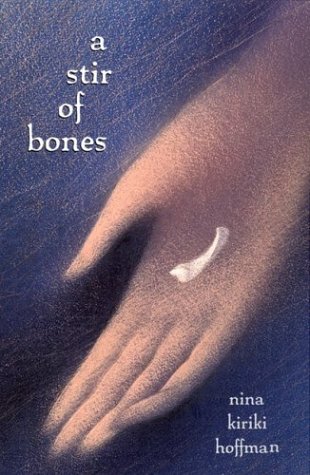
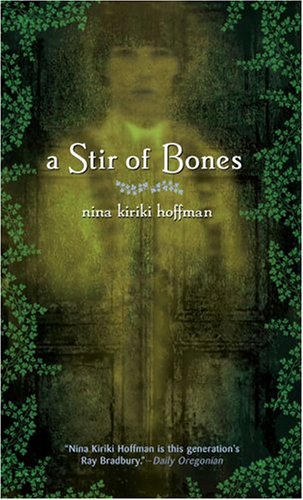
A Stir of Bones by Nina Kiriki Hoffman

Is there writer who writes better characters who care for each other?  Even her baddies don't get the nasty comeuppance so commonplace in horror's revenge fictions.  Hoffman comes up with her own system of justice.  Nice change of pace--not to mention creative thinking.

A strength of Hoffman's work is its domesticity--the realistic (and sometimes idealized) family relations.  Fourteen-year-old Susan Backstrom is not used to having friends, but she invites herself to join a group headed to a haunted house.  The house is haunted, but the teenagers--especially Susan--create a special bond with the house and its inhabitant, Nathan.

When Nathan tries to scare her off with his skull bone, Susan learns that Nathan's bones have special properties.  They can touch when she holds one of his bones, and he can temporarily leave the house if she carries his bones out with her.

Meanwhile, back at home, Susan's father is abusive to her mother in order to get Susan to behave.  As Susan's need to escape this environment into the haunted house grows, her explanations of science projects grow more and more strained.  Something has to give.  Worse, a nosy classmate has spotted them entering the haunted house and alerted the cops.


The book jacket blurb said Nina Kiriki Hoffman is "this generation's Ray Bradbury."  I would agree (in fact it occurred to me before reading the blurb) in terms of that aspect of Bradbury.  They have different styles and preoccupations.  However, they also share a fondness for making traditional horror not so horrible, but a thing of love and beauty.They seek and find love in the darkest of places.


The novel would go on to become a finalist for various young adult book awards: Stoker, Locus, and Endeavour.

Tuesday, November 26, 2013

Ray Bradbury on politics

"You can’t write for other people. You can’t write for the left or the right, this religion or that religion, or this belief or that belief. You have to write the way you see things."
 -- Ray Bradbury from a Paris Review interview 

Monday, November 25, 2013

Ray Bradbury on Story Ideas

"[I]n the old days I knew I had to dredge my subconscious, and the nouns did this.... [Make] lists of nouns and [ask], What does each noun mean? .... Then, when you get the list down, you begin to word-associate around it. You ask, Why did I put this word down? What does it mean to me? Why did I put this noun down and not some other word? Do this and you’re on your way to being a good writer.... Make a list of ten things you hate and tear them down in a short story or poem. Make a list of ten things you love and celebrate them. 
"[E]xamine [the] nouns.... [B]ring some characters on to talk about that noun and that place, and all of a sudden I had a story going. I used to do the same thing with photographs that I’d rip out of glossy magazines. I’d take the photographs and I’d write little prose poems about them."
-- Ray Bradbury from a Paris Review interview 

Sunday, November 24, 2013

Ray Bradbury on the novel

"[T]he problem of the novel is to stay truthful.... [It] has all kinds of pitfalls because it takes longer and you are around people, and if you’re not careful you will talk about it. The novel is also hard to write in terms of keeping your love intense. It’s hard to stay erect for two hundred days. So, get the big truth first. If you get the big truth, the small truths will accumulate around it. Let them be magnetized to it, drawn to it, and then cling to it."
-- Ray Bradbury from a Paris Review interview 

Michael Swanwick speaks

Michael Swanwick on "A Terrible Story":
Reader: "Why would you write about such terrible things?" 
MS: "Because they exist. Because the potential for them resides within all of us. Because refusing to look at them does not make them go away. Because periodically we must recognize all these hard truths.'
"I'm only riding the beast [the horse, his muse]. And so far as I can tell, he doesn't take requests."
Michael Swanwick on literary eating habits (other authors available on Lawrence Schoen's site

I recently posted a quote of Ray Bradbury on his SF reading habits.  Here's Michael Swanwick on James Branch Cabell and his own reading habits--how they change.

Saturday, November 23, 2013

Ray Bradbury on the short story

"The short story, if you really are intense and you have an exciting idea, writes itself in a few hours. I try to encourage my student friends and my writer friends to write a short story in one day so it has a skin around it, its own intensity, its own life, its own reason for being. There’s a reason why the idea occurred to you at that hour anyway, so go with that and investigate it, get it down. Two or three thousand words in a few hours is not that hard. Don’t let people interfere with you. Boot ’em out, turn off the phone, hide away, get it done. If you carry a short story over to the next day you may overnight intellectualize something about it and try to make it too fancy, try to please someone."
-- Ray Bradbury from a Paris Review interview