Amaryllis and Other Stories
by Carrie Vaughn
Traveler of Worlds: Conversations with Robert Silverberg
by Alvaro Zinos-Amaro
Seven Wonders of a Once and Future World and Other Stories
by Caroline M. Yoachim
On the Eyeball Floor and Other Stories
by Tina Connolly

APB-SAL is a blog about education, science, science education, fiction, science fiction, literature, literary stories, poetry, and anything else that strikes the blogger's fancy. NOTE: This blog interrogates art. It rarely make moral proclamations. For that attend the church or politician of your choice. This blog concerns aesthetics, not propaganda. Consider this as interviews with books where the interviewer presents interviewees, so you get what you need to do your own thinking.
Showing posts with label Robert Silverberg. Show all posts
Showing posts with label Robert Silverberg. Show all posts
Tuesday, February 7, 2017

Monday, September 15, 2014
New and reduced ebook lunches (updated)
Writers
of the Future Volume 30:
Orson Scott Card, Mike Resnick, Robert Silverberg, Val Lindahn, Terry Madden, Amanda E. Forrest, Anaea Lay, K.C. Norton, Randy Henderson, Liz Colter, Leena Likitalo, Shauna O'meara, Paul Eckheart, Megan E. O'Keefe, Oleg Kazantsev, C. Stuart Hardwick, Timothy Jordan,
$0.99
A great deal. See detailed reviews of stories here. I did a short overview at SF Site.
The Halloween Man:
A Supernatural Thriller
by Douglas Clegg
$0.99
THE MASK and OLD HANDS:
DOUBLE FEATURE STORIES
Billie Sue Mosiman
$0.99
The Best Horror of the Year: 4
by Ellen Datlow
$1.99
A bunch of SF "Cops and Robbers" books
from Walter Mosley, Robert Sheckley, William Shatner, John Jakes, John Barnes, William C. Dietz, George Alec Effinger, Greg Bear, Fritz Leiber
$1.99-3.99
Coming Soon Enough:
Six Tales of Technology's Future
Nancy Kress, Greg Egan, Brenda Cooper, Geoffrey Landis, Mary Robinette Kowal, Cheryl Rydbom
$1.99
big chapbook of contemporary SF
The Millennium Express
Robert Silverberg
$2.99
I love these, massive tomes.
View Of A Remote Country:
Collected short stories SF & fantasy
Karen Traviss
$3.99
The Human Equations
Dave Creek
$3.99
Analog author
Note:This may be a repackaging of earlier ebooks, so check that you don't have these stories already. The author states that three of the stories are original (none of the stories replicate ebooks now available unless you bought the earlier ebooks).
Racers of the Night:
Science Fiction Stories
by Brad R. Torgersen
$4.99
Burnt Black Suns:
A Collection of Weird Tales
by Simon Strantzas
$6.00
Academic Exercises
by K. J. Parker
$6.99
Beautiful Blood
by Lucius Shepard
$6.99
Discoverability:
A WMG Writers' Guide
Kristine Kathryn Rusch
$7.99
Orson Scott Card, Mike Resnick, Robert Silverberg, Val Lindahn, Terry Madden, Amanda E. Forrest, Anaea Lay, K.C. Norton, Randy Henderson, Liz Colter, Leena Likitalo, Shauna O'meara, Paul Eckheart, Megan E. O'Keefe, Oleg Kazantsev, C. Stuart Hardwick, Timothy Jordan,
$0.99
A great deal. See detailed reviews of stories here. I did a short overview at SF Site.
The Halloween Man:
A Supernatural Thriller
by Douglas Clegg
$0.99
DOUBLE FEATURE STORIES
Billie Sue Mosiman
$0.99
The Best Horror of the Year: 4
by Ellen Datlow
$1.99
A bunch of SF "Cops and Robbers" books
from Walter Mosley, Robert Sheckley, William Shatner, John Jakes, John Barnes, William C. Dietz, George Alec Effinger, Greg Bear, Fritz Leiber
$1.99-3.99
Coming Soon Enough:
Six Tales of Technology's Future
Nancy Kress, Greg Egan, Brenda Cooper, Geoffrey Landis, Mary Robinette Kowal, Cheryl Rydbom
$1.99
big chapbook of contemporary SF
The Millennium Express
Robert Silverberg
$2.99
I love these, massive tomes.
View Of A Remote Country:
Collected short stories SF & fantasy
Karen Traviss
$3.99
The Human Equations
Dave Creek
$3.99
Analog author
Note:
Racers of the Night:
Science Fiction Stories
by Brad R. Torgersen
$4.99
Burnt Black Suns:
A Collection of Weird Tales
by Simon Strantzas
$6.00
Academic Exercises
by K. J. Parker
$6.99
Beautiful Blood
by Lucius Shepard
$6.99
Discoverability:
A WMG Writers' Guide
Kristine Kathryn Rusch
$7.99
Wednesday, May 7, 2014
(updated) Reduced and new ebook lunches
The Eagle and the Sword
(The Perilous Order of Camelot)
A. A. Attanasio
$1.99
Cosmic Checkmate
by Charles V. DeVet & Katherine MacLean
$1.99
Expanded from their Hugo-nominated novelette although they later expanded it for a later edition.
The Uncertain Places
by Lisa Goldstein
$1.99
Won the Mythopoeic Award, was up for the Locus.
The Lone Ranger and Tonto Fistfight in Heaven
by Sherman Alexie
$2.24
Short Story collections for $2.51:
Short Story collections for $2.99:
Seanan McGuire (Author), Caroline Yoachim (Author), Liz Argall (Author), E. Saxey (Author), Joan Slonczewski (Author), Daryl Gregory (Author), Sigrid Ellis (Editor)
$2.99
Adrift in the Noösphere: Science Fiction Stories
by Damien Broderick
$3.03
Stories nominated for a Sturgeon and in various Year's Best anthologies
Among the Stars
by G David Nordley
$3.99
Stories up for Asimov's Reader Poll and Locus awards
Better Than Fiction:
True travel tales from great fiction writers by Alexander McCall Smith, Kurt Andersen, Stefan Merrill Block
$3.99
Dragon Princess
by S. Andrew Swann
$5.99
Sparrow Hill Road
by Seanan McGuire
$7.99
Science Fiction: 101:
Exploring the Craft of Science Fiction
by Robert Silverberg
$7.99
Famous SF classics analyzed by Silverberg.
The Silk Map:
A Gaunt and Bone Novel
by Chris Willrich
$8.69
Long Hidden: Speculative Fiction from the Margins of History
by Tananarive Due, Sofia Samatar, Ken Liu and Victor LaValle
$9.99
Authority: A Novel
(The Southern Reach Trilogy)
by Jeff VanderMeer
$9.99
American Craftsmen
by Tom Doyle
$10.67
(The Perilous Order of Camelot)
A. A. Attanasio
$1.99
Cosmic Checkmate
by Charles V. DeVet & Katherine MacLean
$1.99
Expanded from their Hugo-nominated novelette although they later expanded it for a later edition.
The Uncertain Places
by Lisa Goldstein
$1.99
Won the Mythopoeic Award, was up for the Locus.
The Lone Ranger and Tonto Fistfight in Heaven
by Sherman Alexie
$2.24
- Selected Stories by Andre Dubus
- In Love & Trouble: Stories by Alice Walker
- A Model World: And Other Stories by Michael Chabon
- Short Stories by Irwin Shaw
- Unclean Jobs for Women and Girls by Alissa Nutting
- First Love and Other Sorrows by Harold Brodkey
- Stealing the Fire by Jane Ciabattari
Short Story collections for $2.99:
- The Collected Stories of Hortense Calisher by Hortense Calisher
- The Orange Fish: Stories by Carol Shields
Seanan McGuire (Author), Caroline Yoachim (Author), Liz Argall (Author), E. Saxey (Author), Joan Slonczewski (Author), Daryl Gregory (Author), Sigrid Ellis (Editor)
$2.99
Adrift in the Noösphere: Science Fiction Stories
by Damien Broderick
$3.03
Stories nominated for a Sturgeon and in various Year's Best anthologies
Among the Stars
by G David Nordley
$3.99
Stories up for Asimov's Reader Poll and Locus awards
Better Than Fiction:
True travel tales from great fiction writers by Alexander McCall Smith, Kurt Andersen, Stefan Merrill Block
$3.99
Dragon Princess
by S. Andrew Swann
$5.99
Sparrow Hill Road
by Seanan McGuire
$7.99
Science Fiction: 101:
Exploring the Craft of Science Fiction
by Robert Silverberg
$7.99
Famous SF classics analyzed by Silverberg.
The Silk Map:
A Gaunt and Bone Novel
by Chris Willrich
$8.69
Long Hidden: Speculative Fiction from the Margins of History
by Tananarive Due, Sofia Samatar, Ken Liu and Victor LaValle
$9.99
(The Southern Reach Trilogy)
by Jeff VanderMeer
$9.99
American Craftsmen
by Tom Doyle
$10.67
Sunday, April 20, 2014
Hugos announced (which are online) + Free & reduced ebook lunches (updated to add Farland, Powers, Day)
Hugo award announced (and where to find them if online)
***
The Last Witchking
by Vox Day
Free
Up for the current Hugo. Controversial. A number speculated, without reading, whether this should be on the ballot. He has enemies but also active loyal readers according to the reviews. Time to ignore both camps and seek the truth for yourself.
Spirit Walker
(Serpent Catch)
by David Farland
$0.99
The opening book in a science fantasy series. It appears to be redivided from the original. One novel appears to have fallen short of a Nebula nomination.
The Bible Repairman and Other Stories
by Tim Powers
$1.99
Featured in best-of collections and up for a Locus.
Beyond the Rift
by Peter Watts
$1.99
Some of these stories won or were up for about every SF award. Only a few hours left!
Cosmic Kaleidoscope
by Bob Shaw
$2.99
A few classic stories
Orbitsville
by Bob Shaw
$3.79
Won the British SF award
The Star-Spangled Future
by Norman Spinrad
$3.99
A few classic stories
Faces
by Leigh Kennedy
$3.99
Stories up for Locus, Nebula and in Best SF
The Journal of Nicholas the American
by Leigh Kennedy
$3.99
Up for a Nebula
The Songbirds of Pain
by Garry Kilworth
$3.99
collection up for World Fantasy
In the Hollow of the Deep-Sea Wave
by Garry Kilworth
$3.99
A few classic stories
Roma Eterna
by Robert Silverberg
$4.74
A Song Called Youth
by John Shirley
$6.99
early cyberpunk -- three novels!
***
The Last Witchking
by Vox Day
Free
Up for the current Hugo. Controversial. A number speculated, without reading, whether this should be on the ballot. He has enemies but also active loyal readers according to the reviews. Time to ignore both camps and seek the truth for yourself.
Spirit Walker
(Serpent Catch)
by David Farland
$0.99
The opening book in a science fantasy series. It appears to be redivided from the original. One novel appears to have fallen short of a Nebula nomination.
The Bible Repairman and Other Stories
by Tim Powers
$1.99
Featured in best-of collections and up for a Locus.
Beyond the Rift
by Peter Watts
$1.99
Some of these stories won or were up for about every SF award. Only a few hours left!
Cosmic Kaleidoscope
by Bob Shaw
$2.99
A few classic stories
Orbitsville
by Bob Shaw
$3.79
Won the British SF award
The Star-Spangled Future
by Norman Spinrad
$3.99
A few classic stories
Faces
by Leigh Kennedy
$3.99
Stories up for Locus, Nebula and in Best SF
The Journal of Nicholas the American
by Leigh Kennedy
$3.99
Up for a Nebula
The Songbirds of Pain
by Garry Kilworth
$3.99
collection up for World Fantasy
In the Hollow of the Deep-Sea Wave
by Garry Kilworth
$3.99
A few classic stories
Roma Eterna
by Robert Silverberg
$4.74
Up for Locus awards, Best SF
by John Shirley
$6.99
early cyberpunk -- three novels!
Wednesday, April 16, 2014
In the Beginning: Tales from the Pulp Era by Robert Silverberg
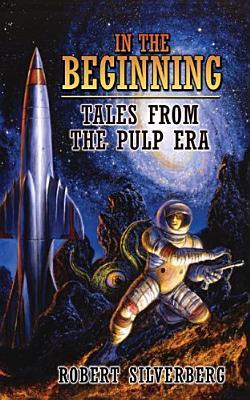
I've been collecting Silverberg's story collections but hesitated on this one. He writes:
"I have to confess, right up front here, that you will not find a great deal of poetic vision in these stories, or singing prose, or deep insight into character. Nor are these stories that will tell you much about the human condition."He needn't confess. Describing what a work isn't, isn't necessary. Just say what it is. I haven't read or bought books by authors whom I've admired because they belittled their own work--Bear, Fowler, Powers. On the one hand, you don't want to raise expectations, so that the reader never reads your stuff again. But on the other, the reader might like it.
I reciprocated for Fowler when she asked me to sign a story. I dismissed the tale, flushing, embarrassed that my literary hero was asking me for a signature. What if she didn't like it? Unless the work is really bad, please don't dismiss it. Let the reader decide. Point out what the tale is or attempts, or that it was early work.
In Silverberg's essay, the lines that follow are enough. These are simple pulp tales written speedily for the money. That's descriptor enough. If a person doesn't like pulp, they won't buy it. For those that do, they'll buy it.
The collection's tales and the accompanying biographical material are a romp.... Aliens come to Earth seeking advanced technology, but the lines are long--at least two year long. ...unless you can think of a way to shorten the time, like play on human preconceptions of danger.
Or an escaped prisoner--one who is always optimistic he'll get out of this fix--crash-lands on a planet where he will have to be a Robinson Crusoe... only the natives have different plans.
The plots aren't fresh but fun. The biographical material sold me. How did Silverberg establish homself? If you enjoy Silverberg's Reflections columns for Asimov's magazine, you'll find this one a similar treat.
Speaking of which, why hasn't anyone collected his Reflections columns?
Thursday, October 17, 2013
Subterranean Press has released eight volumes of Robert Silverberg's short fiction (and others)
Most are $2.99. I love their ebooks.
Most are $2.99. I love their ebooks.
Saturday, June 22, 2013
"Buffalo Gals, Won't You Come Out Tonight" by Ursula K. Le Guin
Appeared in

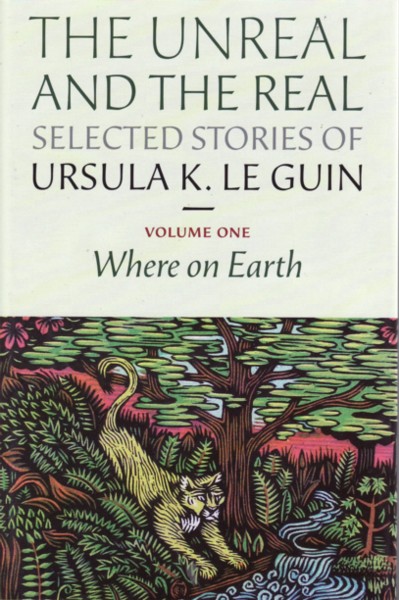
- Fantasy & Science Fiction,
- Gardner Dozois' Year's Best Science Fiction,
- Ellen Datlow and Terry Windling's Year's Best Fantasy,
- Arthur W. Saha's Year's Best Fantasy Stories,
- Gardner Dozois's Modern Classics of Fantasy,
- Robert Silverberg's A Century of Fantasy 1980-1989,
- Robert Silverberg's The Fantasy Hall of Fame,
- American Fantasy Tradition, (Sep 2002, ed. Brian M. Thomsen,
Honors
- Hugo
- World Fantasy
- Locus nominee
- Sturgeon nominee
- Nebula nominee
Clearly, this story is highly respected, deservedly so. Its charm begins almost immediately. A young girl has fallen from an airplane and protects one eye:
"Did you lose an eye?" the coyote asked, interested.
"I don't know," the child said....
"I'll help you look for it.... I knew a trick once where I could throw my eyes way up into a tree and see everything from up there, and then whistle, and they'd come back into my head. But that goddam bluejay stole them, and wen I whistled nothing came. I had to stick lumps of pine pitch into my head so I could see anything. You could try that. But you've got one eye that's OK, what do you need two for? re you coming or are you dying there?"The child follows various animals-as-humans around (who behave much like native American gods). Since she has little background, probably she is our surrogate witness: Perhaps some of our "civilized" hang-ups, such as where we relieve ourselves, are unnecessary. The primary key, though, is our relationship with nature, in particular animals--the environment: how we impinge their world.
Wednesday, June 19, 2013
Close Reading of " 'The Author of the Acacia Seeds' and Other Extracts from the Journal of the Association of Therolinguistics" by Ursula K. Le Guin
First appeared in Terry Carr's Fellowship of the Stars. Reprinted in Silverberg and Greenberg's The Arbor House Treasury of Science Fiction Masterpieces, and in Hartwell and Cramer's The Ascent of Wonder: The Evolution of Hard SF.
Like "Schrödinger's Cat", "The Author of the Acacia Seeds" examines what we actually know from scientific research. The first extract examines the language of ants written on acacia seeds, but it is necessarily full of uncertainties due to the gulf of differences in how we understand language. This is followed by the penguin language which is complicated by its being a bird in the sea. Its author is even less certain what to glean from it. The editor also extrapolates further difficulties--out to plants and even rocks.
Because of the story's scholarly tone, the story may be taken at face value--what do we truly know of science--or its final point indicates it may also be read as an idea taken out to its absurd conclusion. However, as "Schrödinger's Cat" indicates, scientific absurdities may be true as well--if not stranger than we currently imagine.
Like "Schrödinger's Cat", "The Author of the Acacia Seeds" examines what we actually know from scientific research. The first extract examines the language of ants written on acacia seeds, but it is necessarily full of uncertainties due to the gulf of differences in how we understand language. This is followed by the penguin language which is complicated by its being a bird in the sea. Its author is even less certain what to glean from it. The editor also extrapolates further difficulties--out to plants and even rocks.
Because of the story's scholarly tone, the story may be taken at face value--what do we truly know of science--or its final point indicates it may also be read as an idea taken out to its absurd conclusion. However, as "Schrödinger's Cat" indicates, scientific absurdities may be true as well--if not stranger than we currently imagine.
Friday, June 14, 2013
"The Game of Rat and Dragon" by Cordwainer Smith
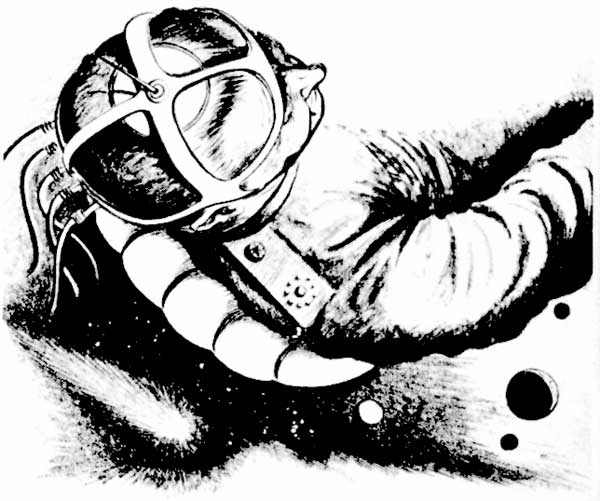
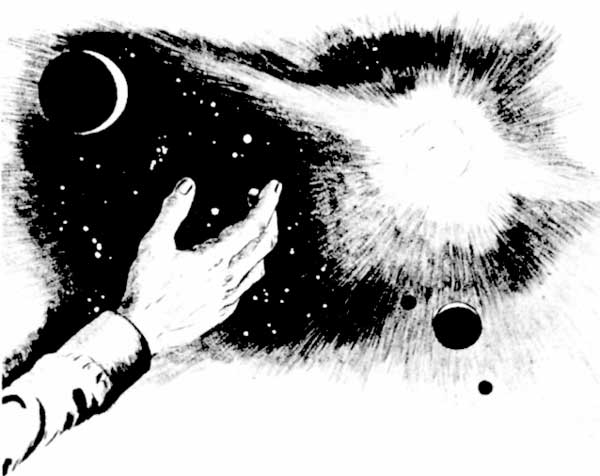
The above list ranks this as a major story in the field. Interestingly, not only is this important, but Cadigan lists it as a forefather to cyberpunk and Hartwell/Cramer to space opera. It is due in large part to its inventiveness--inventive with amazing if dizzying economy:
"Pinlighting is a hell of a way to earn a living."What kind of occupation is Pinlighting?
Girl = cat?"As he waited for the pin-set to warm up, he remembered the girl in the outer corridor. She had looked at it, then looked at him scornfully." 'Meow.' That was all she had said. Yet it had cut him like a knife."
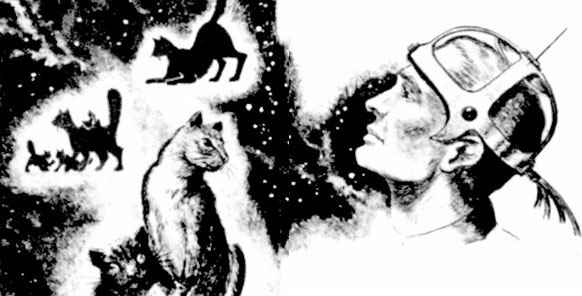
"As he relaxed, the comforting solidity of the Sun, the clock-work of the familiar planets and the Moon rang in on him."
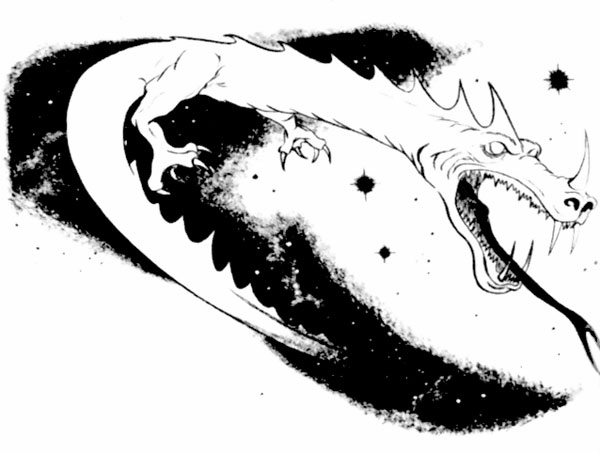
Underhill pinlights with his cat, where they mind-meld and hunt creatures they call dragons in space. Only cats are fast enough to kill the dragons. They kill off dragons.
Curiously, like Fredric Brown's "Mouse", the cat measures favorably against women (hinted at in the above, early quote.
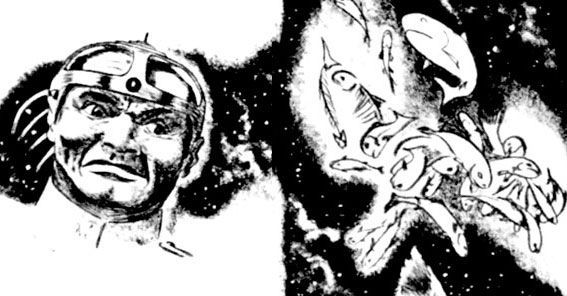 Tobias Buckell recently did a semi-controversial homage to Smith at Lightspeed: "A Game of Rats and Dragon".
Commentary:
- Gary K. Wolfe's "Mythic Structures in Cordwainer Smith's 'The Game of Rat and Dragon' " [Science Fiction Studies]
Thursday, June 13, 2013
Sunday, June 9, 2013
"Hawksbill Station" by Robert Silverberg
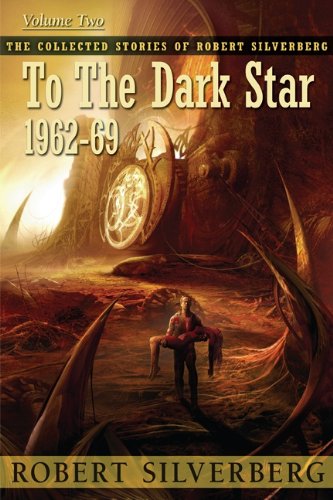
Because time travelers can only go backwards, the government has placed their troublesome, male revolutionaries in the Precambrian where they cannot create time paradoxes, accidentally destroying an evolutionary ancestor. The former revolutionaries go a little crazy without anything to do or females to spend their time with. One actually "creates" a woman out of mud and grass.
Our hero is Barrett, "the uncrowned King of Hawksbill Station," due to his length of stay, mental stamina, and size although he became crippled after a rock slide, eroding his power somewhat--at least in his mind. They keep hoping for a female although one never comes. Lew Hahn arrives and everything changes. The men get suspicious as he cannot explain his. Stranger still, he's been taking damning notes on everyone at the station, saying it ought to be gotten rid of. The men consider him a spy and watch him carefully... until he disappears.
This is truly a significant work: the power in one's powerlessness, the search for importance and the fear of losing it even when you'd suspect that one's position should be anathema. These themes create a potent tale. The novel doesn't work as well as the stir-crazy aspects and crucible conditions get lost (although it has its own appeal).
The plot-pivotal character, Hahn, probably should have been a psychologist and his assessments not so quickly lost--or at least misinterpreted. However, this does not erode the power of the novella because this is Barrett's tale--his effort to hold the station together, come what may.
Saturday, June 8, 2013
"Multiples" by Robert Silverberg
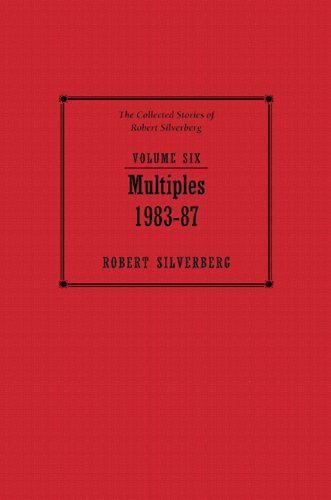
Cleo goes to a Multiples' bar to pick up a Multiple, a person uncontrollably changes from one personality/person to another. Multiple persons can even be present in one body at one time. She, however, is only a Singleton--like you or I. She pretends that she, too, contains multiple people, but eventually she's caught. In fact, She returns to "singleton" life, but it's not the same.
Possible, intriguing metaphor for the attraction between complex and simple personalities.
Friday, April 5, 2013
Mostly Literary Links
Accepting poetry book submissions:
Solaris Rising 2 released
Awards
All of these posts about the Clarke awards are worth reading. The first responds to this editorial about the gender of the writers.
Hugh Howey
Dean Wesley Smith on Agents
Kristine Kathryn Rusch on
Swarming robots
Cellular map of the fountain of youth
Nathaniel Williams on teaching Steampunk
On reading ebooks -- how we do it
Richard Parks answers critics -- on writing historical fiction
This article on Robert Silverberg's "Good News from the Vatican" received a bump when a new pope was chosen. It's out as an ebook recently, but expensively. Perhaps a collection a more affordable option.
Gate to "Hell" -- poison fumes steaming Pluto's gate found based on documentation
David Farland
Nightshade
Cat Rambo on rewriting novels
Solaris Rising 2 released
Awards
All of these posts about the Clarke awards are worth reading. The first responds to this editorial about the gender of the writers.
Hugh Howey
Dean Wesley Smith on Agents
Kristine Kathryn Rusch on
- Changes in publishing over past four years
- Her Survival Guide
- Book format
Swarming robots
Cellular map of the fountain of youth
Nathaniel Williams on teaching Steampunk
On reading ebooks -- how we do it
Richard Parks answers critics -- on writing historical fiction
This article on Robert Silverberg's "Good News from the Vatican" received a bump when a new pope was chosen. It's out as an ebook recently, but expensively. Perhaps a collection a more affordable option.
Gate to "Hell" -- poison fumes steaming Pluto's gate found based on documentation
David Farland
- Details -- importance of using precise and necessary words
- "it isn’t enough to become adept at storytelling. You need to master dozens of writing skills before you can bring a story to life."
- Character interviews
- Take time for life
Nightshade
Cat Rambo on rewriting novels
Wednesday, December 12, 2012
Most popular posts
Most popular posts (% based on the most popular)
100%
"Girl" by Jamaica Kincaid
64%
"Warm" by Robert Sheckley
31% (% based on two posts, forgetting I'd written the earlier one; otherwise Silverberg's would come before)
"The Sun God at Dawn, Rising from a Lotus Blossom" by Andrea Kail (earlier, more popular post
26%
"Good News from the Vatican" by Robert Silverberg
20% (% based on two posts, forgetting I'd written the earlier one)
"The Stone Cipher" by Tony Pi (later, less popular post)
18%
"Day Million" by Frederik Pohl
7%
"Life in Steam" by Gra Linnaea
&
"They're Made out of Meat" by Terry Bisson
Number Stopping by:
The first year was 100/month
The second 150/month
The third 200/month
Since July, it's 700/month
Visitors most often come from:
United States
Russia
Germany
Canada
France
United Kingdom
Philippines
Ukraine
Netherlands
India
Saturday, January 29, 2011
"Good News from the Vatican" by Robert Silverberg
The next pope is a robot. Why did Carr, del Rey, and LeGuin think this an important story? It was probably the then recent Vatican II that many saw as the beginning of many changes within how religion--at Roman Catholicism--was interpreted. Without historical context, the story loses some of its power. Another lens to read the story would be through race relations with the fear of robots running operations. Nonetheless, despite allusions, metaphor and theme, sometimes a robot is just a robot. It is often more useful to read at a literal level before advancing to other topics and heading off into misinterpretations.
- Universe 1, ed. Terry Carr, Ace 1971
- Best Science Fiction Stories of the Year, ed. Lester del Rey, E.P. Dutton 1972
- Nebula Award Stories 7, ed. Lloyd Biggle, Jr., Harper & Row 1973
- Unfamiliar Territory, Scribner’s 1973
- Social Problems Through Science Fiction, ed. Martin H. Greenberg, John W. Milstead, Joseph D. Olander & Patricia S. Warrick, St. Martin’s 1975
- The New Awareness, ed. Patricia S. Warrick & Martin H. Greenberg, Delacorte 1975
- The Best of Robert Silverberg, Pocket 1976 The Best from Universe, ed. Terry Carr, Doubleday 1984
- Beyond the Safe Zone, Donald I. Fine 1986
- The Science Fiction Hall of Fame, Vol. IV, ed. Terry Carr, Avon 1986
- The Norton Book of Science Fiction, ed. Ursula K. Le Guin & Brian Attebery, Norton 1993
Wednesday, January 26, 2011
"Ishmael in Love" by Robert Silverberg
Synopsis: Ishmael, a dolphin who helps out humans on the island of St. Croix, falls in love with Lisabeth Caulkins. He saves the island for love of her, but she does not love in return.
Commentary (science): Despite its presence on a website called "Biology in Science Fiction," very little applies directly to the general study. Yet much is pertinent in its examination of love (unrequited): What is love? What makes a creature fall in love with its own kind (sexual characteristics, etc.)? Can it be enough to touch the mind of someone to kindle love? Can one fall in love with another who is almost wholly other, or are we not built that way?
Commentary (literary): Clearly, with Moby Dick's first line in the title, an allusion is here--however overt or subtle. How close is the connection? Can we find one? Perhaps summarize both in a way that teases out a relationship. In Moby Dick, a man loathes a "fish" so much that he risks himself and his entire crew to kill it. In "Call Me Ishmael," this time the "fish" saves the lives of all humans on an island for love of one woman. Are there other correlations?
Commentary (science): Despite its presence on a website called "Biology in Science Fiction," very little applies directly to the general study. Yet much is pertinent in its examination of love (unrequited): What is love? What makes a creature fall in love with its own kind (sexual characteristics, etc.)? Can it be enough to touch the mind of someone to kindle love? Can one fall in love with another who is almost wholly other, or are we not built that way?
Commentary (literary): Clearly, with Moby Dick's first line in the title, an allusion is here--however overt or subtle. How close is the connection? Can we find one? Perhaps summarize both in a way that teases out a relationship. In Moby Dick, a man loathes a "fish" so much that he risks himself and his entire crew to kill it. In "Call Me Ishmael," this time the "fish" saves the lives of all humans on an island for love of one woman. Are there other correlations?
Subscribe to:
Posts (Atom)