Search This Blog

Showing posts with label Charles Dickens. Show all posts

Wednesday, March 18, 2020

The Romance of Romance (II)


So I subscribed to Audible Escape and have read several to get a sense of their structure. Also, a female poet and I are collaborating on a book about a relationship that evolved over time. This structure might be worth knowing to follow or to buck. I didn’t know how to tell which writers were good, which not, so I skipped around, sometimes looking at popularity, sometimes brevity to get a feel for the genre.

In romances, the above barriers are often just initial hurdles to appreciating these books. I really like Debbie Macomber’s [Debbie Macomber?] Shirley, Goodness and Mercy, which is about a man who owns an ailing vineyard and has neglected his wives in the past but will turn around here. The title refers to not only a Bible verse, but also three angels [angels? can a good book be written about angels?]. But it unfolds a sweet, lovely tale with a semi-sophisticated theology along the lines of the prodigal-son parable. Its closest literary kin would be “A Christmas Carol” by Charles Dickens.
Cassie Edwards wrote a few with the word Savage in the titles, which I had no idea what they meant. Maybe a primitive or “violent” love, but instead it referred to a racial slur about Native Americans and turned that into steamy romances about falling for Native American men in the Old West, which repurposes something negative into something positive although some may still balk. Caucasian cowboys tend to be the bad guys.

Often, both protagonists are struck by the “thunderbolt”—an unreasoning, unreasonable love-struck state that Mario Puzo described in The Godfather (discussion here). However, since there are often a good guy and bad guy who both are struck by the thunderbolt—why should one thunderbolt make her fall in love but not the other? Sometimes in the novels it’s sheer persistence (if she has only one suitor), which men aren’t supposed to do any more. If she says no, then that’s supposed to be it although some romance novels suggest otherwise, especially if it’s an opposites-attract type.

A number of romances—especially from decades prior to #MeToo, which went from confession to a political movement—involve the male pushing physical boundaries, not simply pursuing with words. The man presses her lips with a kiss, which if she doesn’t melt immediately, she will eventually. You can glimpse it even in literary speculative fiction like John Crowley’s Little Big, so it seems to have been a literary expectation in romances. In fact, it is often male desire that initiates female desire. I read an article that romance writers vowed not to write this way, anymore, but I’m guessing, given the nature of the humanity’s distribution of tastes and attributes being cast along bell curve, it will continue to be written.

Not that I’m taking feminist stance, but romance stories without reason were most striking from a “scientific” or objective study of human nature, but I’d be more interested in tales about like minds uniting—a type I never found in my forays across the genre (undoubtedly, they exist in a dusty library alcove). Often, the couple’s reaction is immediate and without logic. This isn’t to say that love isn’t like this, but why aren’t there stories where people slowly fall in love, taking tentative steps forward? Yes, this seems right. No, I’m not sure about that....

You’d think caution would be reasonable since the commitment is supposed to last, as the novels often conclude with this being “forever” or “always.”

Usually the couple are of unlike minds; bizarre circumstances thrust them together; and the couple accidentally fall into each other’s arms and unable to resist falling in love. There sure are a lot of alpha males out there with money breeding in their pockets.

In some stories, the male protagonist is conveniently contrived to know exactly what’s happening in the female’s mind, which would be nice, but highly improbable, especially if he’s an alpha. If he’s a beta, he may well have the ability to sense emotion, but not read minds.
Think about it. One type takes action. The other observes. Which will be more likely to read? But there are exceptions to any rule—probably someone who has spent time in both categories.

Why not a romance where, strangely enough, the characters might be able to gauge emotions, but not know the reasons behind them? Or maybe they mistake emotion “X” for curiosity. Perhaps this is too literary and complex for a genre romance—much as male lovers of thrillers want definite good guys and bad.

Romances seem to be more wish fulfillment than an attempt to mirror reality, which carries no shame. That vein is the same men mine from James Bond, especially the early films. Whether or not a romance story stretches credulity throughout, most seem to be sweets for those weary of a dismal life and dismal news reports.

(I may or may not revisit this topic as I finish this Audible Escape trial. My plans include more, ahem, Debbie Macomber, Georgette Heyer (Kij Johnson recommended her, if I recall correctly), and the usual literary suspects, and anyone else who comes recommended.)

Monday, March 16, 2020

The Romance of Romance (I)


When I worked on a dredge ship as a lad, I had a boss who recommended that I read romances so that I could understand the feminine mind and woo them. I didn’t (see four reasons why below)—at least, none but the Pulitzer-winning Gone with the Wind by Margaret Mitchell and literary classics like those by Jane Austen, George Eliot, the Bronte sisters, etc.

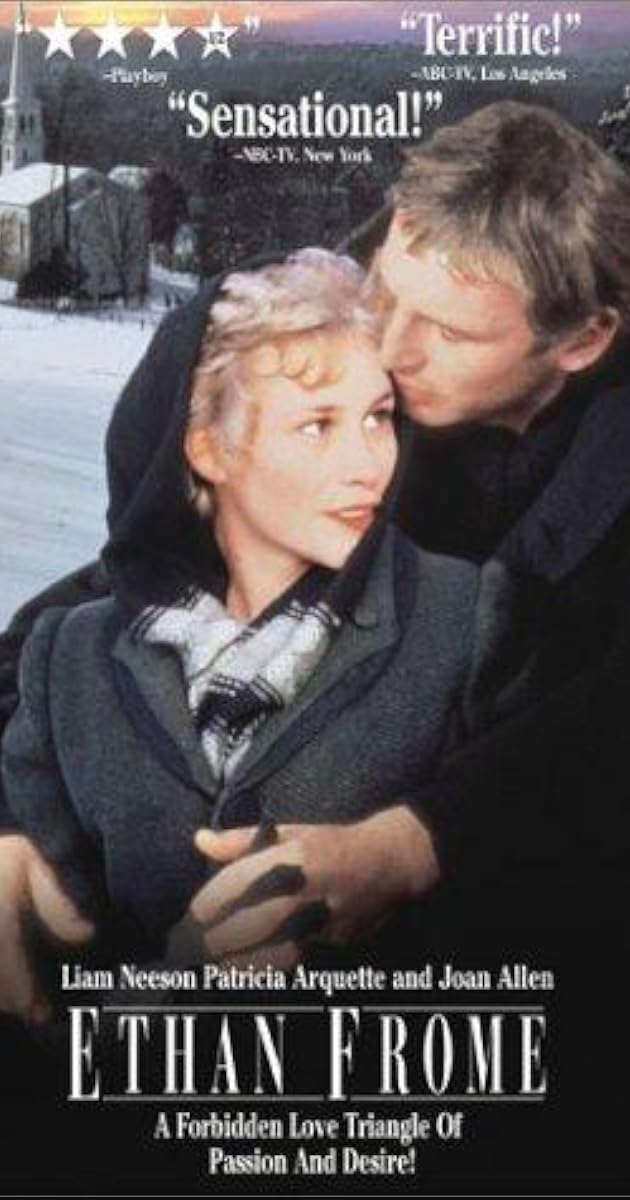
I recently reread Edith Wharton’s Ethan Frome, which is labeled as a romance although I’m not sure why. A man abandons his wife for a younger woman who has been living with them—a cousin whose father and former wealth have both passed on. What makes the novel powerful is not the ill-fated couple’s love despite a wife who tries to separate them, but that of long-suffering wife’s who by the end is suddenly thrown into new light by the foolish impetuosity of the other two. (Your mileage may vary, of course.) If it is a romance, then the modern romance seems to be riddled with tragedy.

See also Henry James’s DaisyMiller, which is also lumped into this category. Two men fall in love with a woman, and she doesn’t seem to love either although she seems to love them being in love with her. And then she [Spoiler redacted. See link for spoilers un-redacted.] This is a love story?

Maybe just the fact that someone is in love with someone else—requited or not—is enough to qualify a story to be a romance. In other instances, the romance seems merely pleasant, not involving romantic love at all. So maybe in some instances, a romance could be a story with a happy ending.

Four things barred my interest in the non-literary romance.

The first being their covers. Bare-chested men—or otherwise, a hunk. Women with wind-blown hair. Sometimes together, sometimes separate, with nothing more to indicate their complicated situation. The covers are often fluffy, brightly colorful and designed to catch the feminine eye. I like the kind of cozies and locked-room mysteries that Agatha Christie wrote but so many modern covers of this ilk are littered with dogs, cats, prettily colored cottages. The mind reels. Make the sign of the cross, to protect yourself.

The second are the openings. The characters are way too idealized. This perfect woman meets that perfect man, but the imperfect community strives to keep them apart (or the man is imperfect until she reforms him). Despite being the lead characters, too few have imperfect women like Gone with the Wind. Although Scarlett may have been a little too imperfect, she eventually makes herself admirable. And spoiler alert, she doesn’t even get the guy. Is that romance?

(It is interesting that readers of these books long for the idealized view of people, rather than a realistic picture. Maybe men are the same: idealizing men as unflawed, conquering heroes, battling mastermind criminals, but I don’t think most men see themselves in place of such heroes but rather wished they could be that flawless. I’ll discuss James Bond in a different post.)

Third, the initial scenarios are hard to buy. Jennifer Blake’s Roan starts enticingly enough: A woman is kidnapped but she escapes with a gun only to be shot at by the police, thinking she had Stockholm syndrome like Patty Hurst. [Consider the rest of this to be spoilers although it’s necessary to establish the length the genre goes to stretch credulity.] Her shooter is a rugged cop who lives in the beautiful country and takes her to be a prisoner under house arrest in his own home because the prison is full of evil men who might touch and leer at her, which of course the cop does when he makes her a prisoner, but it’s ethically okay because he’s a handsome cop and one of the good guys. She, of course, is a rich heiress which she cannot tell us or the cop until toward the ending when they happen to bump into her former fiancé.

Finally, the writing at times is awful. Some passages may be nice enough description, but it’s awkwardly done: Why would the character be studying her house now? Why is she looking in the mirror to observe her over-looked beauty? It’s almost as if she knew the reader was present and she’s trying to sell us on all her good points while at the same time pretending to be modest about her good points.

Last February, Audible had a free two-month trial of their Escape program, one of which was James Lee Burke’s Black Cherry Blues, which I wanted to read anyway—possibly his best book. His main character, Dave Robicheaux seems to embroil himself with men still haunted by Vietnam, twenty years after the war, but here he has lost his wife and his job and is trying to clear himself of a crime he didn’t commit all while trying to raise a young orphan. Somehow not being chained to being a cop frees the book to become a literary mystery, which I suspect has been his aim. There has always been an element of this in his books, often digging into character pasts to realize them, but here the characters pop out. Go read it. (I’m not sure why it is bundled with romance books except maybe his love of wife and child is almost idealized, but the usual genre awkwardness is eschewed.)


Thursday, October 24, 2019

Marriage, Money and Class

After hitting the trifecta of stressors early this year, I exhumed the literary classic novels (and some plays and narrative poems) to uncover large structure meaning of what this world is supposed to be about. I've had crises of faith before where I dove into scriptures seeking answers, so this wasn't new. But I hadn't ever asked what do most authors in history think the point of life was.

Now the Bible is a curious document and doesn't really say what the point of this life is except as transition period to the next although some suggest that the point of this life is God, which is true enough as far as ancillary activities (or perhaps the motivator of primary activities), but what about primary activities themselves? What should they be?

For most novelists, the point of life has been the struggle for marriage, money, and attain one's class (one can only surpass one's station in life only through luck and marriage). Few writers seem vested in the spiritual realm (Tolstoy being one)--possibly because religion was too divisive.

The most curious fact for most of these books is that each one--marriage, money and class--is largely magical. How does one fall in love? It's just a thing that happens. No reason is involved (or if reason is involved, it's criminal, such as the pursuit of money or class). The closest that uses reasoning about why people fall in love might be Jane Eyre by Charlotte Brontë where some explain why they're in love (or not) although the primary couple isn't fully explained.

I forget the Trollope novel, but one has a guy who falls for a woman who pressures him into marriage. He likes her, but isn't ready for marriage. Once he commits himself, however, it becomes scandalous that he doesn't want to marry her until he earns enough money. Later, he falls for a higher class woman and does the unthinkable: He rescinds his offer of marriage in order to marry into class. Then he suddenly gets a raise and prefers the first woman he proposed to, but he is far too scandalous now to marry. And he ends up with no woman and loses his attractiveness.

But why should this be scandalous to change one's mind before marriage? This is never explained but accepted. Women, though, can change their minds up until marriage, however. Perhaps this is their primary power. This becomes a major issue in Dickens and Tolstoy novels although in Tolstoy it also becomes scandalous that Natasha changes her mind before marriage. In twentieth century movies like The Graduate, this change of mind is not only accepted but also cheered.

Class also conveys a social magic just by its presence. If the king or queen wanders into a hospital, then one should expect an amelioration of pain. Their random assortment of genes somehow has them touched by God. If I exaggerate, it isn't by much.

Money is a curious, powerful but lower pursuit. It too is magical in that there is no explanation of how one attains a large sum except often through a rich dead relative, which at the end of a novel usually falls into the lap of a poor sap who has been a good soul. But the monied themselves are often striving to reach up, which is seen as vulgar but sometimes necessary. The relatively poor but high class might, with reluctance, marry below themselves. It is the job of the monied to help out these poor, high classed to return them to their former glory.

Now a classy guy can gamble away his family's fortune which makes him foolish, morally lax, yet pitiable. If a poor guy does the same, he gets what he deserves.

All nineteenth century writers buck against the idea of class not marrying below themselves. Dickens is quietly subversive in that his best characters end up having to work for their money (as opposed to being lackadaisical rich just because you belong to a certain class). Writers like Henry James wrestle against his English predecessors in his work by coming from the angle that the monied may be the true moral center, albeit still there to support the classed who are lovely fools.

In twentieth-century America, we abandoned class in favor of "status" or job where factory owner > doctor > lawyer > architect > etc. Theodore Dreiser's An American Tragedy has an interesting examination of these topics from this new American point of view.

Many Mary Higgins Clark suspense movies (I read a few novels when I was a kid) support a very traditional view of marriage, money and status. And they are still magical quantities. [Note: I refrain from discussing the quality of these films except as a sociological lens to examine the world we live in--to see how we see the world.]

A curious phenomenon is society's increasing separation from the original trio of life pursuits. Where does an Edgar Allan Poe story fit into this schemata? Maybe these represent quirky returns to the spiritual via various physical or mental crises.

One store's forgotten 1970s hit by Herbert Hunter spouted lyrics that sounded something like "I was born to love you. You were born to tear my heart apart." Very strange. Is this desire or his belief in what reality is or should be? Considering the long history of those who have laid claims on our life's purpose, where does such a world-view come from? Is the lyric-writer (and those who buy into this philosophy) asking for a life of pain? Well, it wouldn't surprise me that I got the lyrics wrong as I can't find them online.

What should the point of life on Earth be?