Search This Blog

Showing posts with label poetry. Show all posts

Saturday, February 22, 2025

Vital Signs by Deborah P Kolodji

Vital Signs: Kolodji, Deborah P: 9781735025780: Amazon.com: Books

Vital Signs appears to be Kolodji's final book--at least while she was alive. It chronicles her journey through cancer via a series of haiku. The first haiku opens:

the blush of dawn 

through a hospital window

vital signs

The hope and fear infuse the poems as the speaker crawls through visits to the hospital, trying to claw back her life. 

The California condor, pictured on the cover, is for her a personal image of a vital sign. It has survived near extinction and bounced back.

sturgeon moon

my pillowcase covered

with fallen hair

Not much is gained by explaining the sturgeon moon, but it is "[t]he [f]ull [m]oon in August... because of the large number of sturgeon fish that were found in the Great Lakes in North America this time of year." [Timeanddate.com]

his old toolbox

no way to fix

all that's broken

Be ready to have your heart broken.

Kolodji's work has won the Dwarf Star and the Touchstone. Her chapbook, Tug of a Black Hole, was runner-up for the Elgin. Born on August 11, 1959, she passed on July 21, 2024. She has left behind several potent poems. A book of selected verse would worth pursuing.


Sunday, April 17, 2022

Two More Prose Poems ("Treesong" and "How Sukie Cross de Big Wata") by Sheree Renee Thomas

"How Sukie Cross de Big Wata" first appeared in Nalo Hopkinson's Mojo: Conjure Stories. Also appears in Thomas's Shotgun Lullabies: Stories & Poems (discussed in part here, more generally).

Sukie is a kind of American Tall-Tale mythic figure who is there to support the Africans on the difficult first voyages across the ocean--a kind of bridge for their stories. It includes this lovely, potent line:

"And if you listen true, you will know when I am bending it and when I am telling it straight, ’cause like a river, every story got a bend."

 You can read this prose poem here in the Shotgun Lullabies excerpt.

You will love this prose poem more if you juxtapose it against "Treesong" which also is enhanced in the comparison.

"Treesong" first appeared in Rose Lemberg's An Alphabet of Embers reprinted by John Joseph Adams, appearing in Thomas's collection, Sleeping Under the Tree of Life.

This one moves closer to a speculative tale, relating the lives of trees as the younger ones desire to pick up their roots and cross "de Big Wata" in what might be a disastrous move.

"the young ones try to work themselves into any pool that mirrors the land, hoping it will lead them to De Big Wata and carry them back home to where the people remember their name."

Read this at Lightspeed.

Friday, April 15, 2022

Two Prose Poems ("The Jubilee" and "Not All Caged Birds Sing") by Sheree Renee Thomas

 Both first appeared in Fireside.

In "The Jubilee" slaves have just been freed:

"during the Jubilee, there was plenty of names. People shuffled them like cards and drew new ones out the deck, tried names on their tongues like new year clothes, whispered and shouted them into the bright clean air to see how they fit, licked their lips to see how they taste."

And in "Not All Caged Birds Sing" the world seems to be occupied a palimpsest of reality, dream and metaphor, amplifying the allusive title:

"Wind sang in that empty place, and I wanted to sing but my tongue sprouted roots and leaves. They wrapped around my throat until I could not breathe."

Both of these appear in the same magazine around the same time period. They seem to form part of a larger poetic sequence. They juxtapose well together, if intentional, although the location of other pieces would be greatly appreciated.

Tuesday, November 30, 2021

The Art of J. R. R. Tolkien's Lord of the Rings--the proem

Is it fair to examine poetry intended as a mythic part of as a larger prose work as poetry? Probably not, but such effects should exist to one extent or another. 

See the source image

The first line has lovely assonance and consonance--the n's and s's and long e's. The second does the work of bringing together the first two lines by not only continuing the above, but also by adding the "or" sound. Moreover, we are given a repetitive grammatical structure of a "[number] for"--a pattern echoed through two more lines.[And to contrast with the \lines that begin with "One."]

Aside from rhyme and iambic rhythm (a rhythm that it didn't start with, anyway), one has to question strange arrangements like "in their halls of stone." Why move "stone" from the more natural "stone halls" to "halls of stone"? It's actually a brilliant move, highlighting the stone--the hardness and coldness, not just of the halls, but of the dwarves, of the rings and the ring bearers--all bound to the one.

"Under the sky" may not add much to eleven-kings unless there are others who don't live under the sky.

The fifth line breaks the pattern with a line that creates foreboding "In the Land of Mordor where the Shadows lie."

Before the fifth line is repeated in the eighth, we have anaphora of "One Ring to"--including an interior anaphora, which does exactly what the words claim: "bind them." There is rhyme, too, although I'm not sure this is an actual form--A B A B, A C C A

While the final line reintroduces us to the darkness, it's not clear that the repetition adds anything new--certainly nothing more than it's first appearance. Perhaps, then, it is best to consider it as a bit of folklore unearthed in the the mythos of this realm--one designed to set mood and demonstrate the power of the ring.

Saturday, August 21, 2021

A Wake with Lawrence Ferlinghetti on Green Street

https://upload.wikimedia.org/wikipedia/commons/a/a6/Lawrence-ferlinghetti-by-elsa-dorfman_%28cropped%29.jpg 

Lawrence Ferlinghetti passed away this year on February 22, 2021, one month shy of reaching 102. He seems to have been producing new material for quite a while. He published a novel in 2019. While it could have been a trunk novel, it's still interesting that a man was capable of producing work that people would publish over a century of living. Apparently, not so much today, but that's another story.

The poem in question (posted online here) is untitled although this website calls it "Green Street"; however, note the formatting does not match the one I read.

My interest in it is how parallels other genres like science fiction. Also, my interest in it was how difficult it was to read it. I had a book of poems to read in spare moments, and for some reason my mind kept slipping off the poem. Probably I was distracted, not ready to focus. I don't blame the writer until I hunker down and focus.

This happens in most genres. There are moments in narrative when your concentration has to be 100% there. In science fiction, usually that's weighted at the front, the steep learning curve for learning how the world works. In mysteries, it's at the end when shifts and surprises can come fast. In poetry, it can be the whole poem. In literary fiction, it's similar, but it's often more nuanced although some experimental stuff may require most of your attention.

Here's the opening line:

The Green Street Mortuary Marching Band

What's tricky here is this pile up of nouns and adjectives, and what modifies what. "Green" is, in some senses, the most ordinary of these words. It most likely modifies "Street", but that doesn't help much because it could have been named because all the houses were green, or maybe it was covered vegetation, or maybe it was named after someone named Green, and have nothing to do with the color at all. It could also refer to being young, inexperienced, naive or unripe. It's also possible that Green could modify "Mortuary" or "Marching Band" or the whole. Alternately, or in addition, Wallace Stevens added on (at least within the field of poetry) a sense of spice, of creativity, and of color in "Disillusionment of Ten O'Clock" (excerpted here, see link for full poem):

The houses are haunted
By white night-gowns.
None are green,
Or purple with green rings,
Or green with yellow rings,

"Street" could mean just a paved avenue, or someone or something raised on or near the street as in "street kids" or "street dogs"--a sense of looking down one's nose can be heard in that. It could also refer to homelessness.

"Mortuary" adds the actual place but also the sense of death and passing on. "Marching" is interesting in that it could serve as part of a verb team (was marching) or a verbal clause (marching in place), but here it's an adjective like "Green," sort of.

"Band" unites the whole--in both definition and action.

Now that's a lot of information to process in one line. You might come up with more. It could be that mortuary marching bands have a place in our society. Maybe this famous one comes to mind:

But for most of us it lies outside our experience. And that jarring sensation between mourning (often the passing of elderly) in a mortuary and celebrating in a marching band (often composed of youth) creates the energy in this poem and in the above movie clip.

It's this energy that drives SF, too. When Elizabeth Bishop misread "mammoth" as "man moth," she wrote a poem. Jack Vance took that strange combination of words and tried to create a different reality.

I recommend reading the whole poem at the link.


Wednesday, July 7, 2021

~Top 10% of the Dwarf Stars anthology

Scifaikuest and Star*Line had the most nominees and best work (three each). Although the nominees favor women once again, my choices for the first time leaned toward men. I may not have selected these poets as having written the best poems in the previous years.

My top five poems out of fifty-odd were (in order of appearance, not rank)


Also check out these poems:

Monday, November 16, 2020

Elizabeth Bishop's Later Early Drafts of "One Art"

Bishop is still exploring in these drafts 

The art of losing not so hard to master:

so many things seem really to be meant

As Bishop earlier pared master/disaster opposites in union, so she does again with "seem" and "really." The first confirms appearance, the latter expresses actuality. Also the phrase "to be meant" gives will or intention to the inanimate, or perhaps the person or thing that lost them had designs.

Start slowly will you, keep, a face, a gesture

Once again, we enter recipe territory with the first two. But we gain the speaker in the second two "will you" as if the "you" is in a hurry to lose things and the speaker is trying to slow the person down. This could also be the speaker addressing itself.

With extra commas, it isn't clear what she means by "keep." It may be an accident, a path she intended to head down, or a way of keeping something in play, maximizing possibilities she may put the word to use. It appears that she might be trying to introduce the lost loved one early, advising the listener to keep the things that memory is losing "a face, a gesture"  

Stood with your glasses

Reading-glasses, car–keys, you can master

easy things.

Here Bishop again reaches for the casual tone, returns to the simple, the easy, the natural. The images, all common. She seems to want the opening to feel as as normal or universal as possible. 

Look! I myself have lost or

next to last, at least, houses and

Although this part occurs later than the next, it repeats some of what I said. The common parlance of "Look!" and "I myself have," trying to ally the reader in her cause, empathizing. The following phrases would seem at first glance to be stutterings, unsure where to go but maybe the where is dependent largely on the connecting phrases, so she is trying each one on as different garments before a mirror. What she wears may dictate where she goes next. Although it seems she has been working with the same general concept, she is still keeping her options open.

The practice brings losses, lose them faster,

forget the faster-money, home, intent,

the mastered art of losing’s no disaster.

"The practice" makes this a game we're preparing for, a clinical occupation, a way to prepare, a way to master. She likes "practice" well enough to try it again in the next draft but without finishing the phrase, hoping it would come to her later (most of the next "draft" is a sketching of the end word of the poem):  "Practicing my... / and possibly will end disaster." As you can see, she dwells in possibilities, doesn't nail things down. 

She flips "lose them faster" on its head. She wonder if she or the reader should "forget the faster." Considering Bishop's penchant for erasing or honing as she writes, these become the reader, the writer and the poem become one and the same. What may be a note to herself may just as well become a line of the poem. It's almost as if she brings the reader into the making of the work.

Friday, October 2, 2020

Elizabeth Bishop's "One Art": First Draft

This post continues from this one discussing an early, journal-like entry about the poem.


The first draft opens:

THE ART OF LOSING THINGS

The thing to do is to begin by “mislaying”.
Mostly, one begins by “mislaying”:

The title has evolved from a recipe, to becoming a gift/talent, to ending up as an art--an idea that flows naturally from the last. The title will move to the first line--a line so memorable that we remember it more than the final title. The recipe is still here: "The thing to do is to begin by." 


The text is strewn with colloquial phrases like "The thing to do" perhaps Bishop is striving for natural speech, or maybe she is just letting what comes naturally to flow out. The phrase suggests etiquette, but it is loose. These two lines may be two failed attempts at beginning the poem and they may serve as much to get one's self to start writing--"The thing to do is to begin"--to get words on the page. The second line may be a rewrite of the first. While the adverb is weak, it's an interesting reminder of Bishop's penchant for qualifying. Why "mostly"? It may just be a marker reminding herself to revise or qualify within the text.


She puts "mislaying" in quotes, calling attention to the term--for herself or a future reader cannot be determined. It is a real term (first use in 1614), but perhaps it feels awkward. Perhaps it is sexual. It may just be part of a kitchen-sink method of getting ideas on the page, throwing things at the wall to see what sticks.

keys, reading-glasses, fountain pens

– these are almost too easy to be mentioned,
and “mislaying” means that they usually turn up
in the most obvious place, although when one
is making progress, the places grow more unlikely

The banal list of common things lost grows with "keys." She turns them into a list instead of ballooning them out with an instance or explanation. Note the next comments on the previous line's banality "almost too easy"--almost, another qualifier. She tries out mislaying again--clearly fascinated by the term and follows that with an observation, humorous if not common, so she adds a line about places growing more likely. The places we search, or the place the keys end up?


– This is by way of introduction.
I really want to introduce myself – I am such a
fantastic lly good at losing things
I think everyone shd. profit from my experiences.

These are ways of introductions--an inflation deflated by self deprecation. The tone here seems to be one of self-help or perhaps an essay.


You may find it hard to believe, but I have actually lost

I mean lost, and forever two whole houses,
one a very big one. A third house, also big, is
at present, I think, “mislaid” – but
Maybe it’s lost too. I won’t know for sure for some time.
I have lost one long (crossed out) peninsula and one island.
I have lost – it can never be has never been found –
a small-sized town on that same island.
I’ve lost smaller bits of geography, like
a splendid beach, and a good-sized bay.
Two whole cities, two of the
world’s biggest cities (two of the most beautiful
although that’s beside the point)
A piece of one continent –
and one entire continent. All gone, gone forever and ever.

The hyperbolic self-agrandizement is blown out into ever larger proportion. What started as simple and small has become absurd. The way the text shoots over it, one might miss the power of losing a "house" although one might claim that losing a continent has power (never visiting again?), but the house is more intimate. Over-shooting the important stuff occurs in the next section as well. There's a lot of repetition in these that one suspects that she is looking for the best way to phrase a thing.

One might think this would have prepared me

for losing one averaged-sized not especially——— exceptionally
beautiful or dazzlingly intelligent person
(except for blue eyes) (only the eyes were exceptionally beautiful and
But it doesn’t seem to have, at all … the hands looked intelligent)
the fine hands<

Here it is: the reason for writing--a loved one lost--appears in the first draft. She appears to search for good descriptors. One suspects this was the reason for writing all along, but the way to telling it slant took several drafts. Here it is mostly baldly told. The final draft hardly mentions a person at all--someone suggested that one might claim isn't present in the final text.  

a good piece of one continent
and another continent – the whole damned thing!
He who loseth his life, etc… – but he who
loses his love – neever, no never never never again –

This seems to overshoot the reason for writing, but perhaps it is just revising the continent and plays with a famous if uncommon Biblical quote. The poem is still searching for its way of saying.

Thursday, October 1, 2020

Elizabeth Bishop's "One Art": From Conception

 I'll be looking at drafts of "One Art" by Elizabeth Bishop. Due to time constraints, I'll do it over a few posts. Beth on Bluedragonfly10 has interesting comments on the matter and shows several drafts

HOW TO LOSE THINGS/?/THE GIFT OF LOSING THINGS

One might begin by losing one’s reading glasses
oh 2 or 3 times a day–or one’s favorite pen.

I don't consider this a draft. It's a scrap scribbled on a cocktail napkin or grocery store receipt while waiting at the doctor's office. It's a poet's notebook that may prove fruitful with the right tool. It's a concept--no more.

But it's interesting what she does with the concept. She writes a few rather banal losses, but common ones, ones readers might identify with. She is trying to make a quick catalog of ideas of where to go and perhaps came up short. 

The most fascinating aspects are her titles. The first suggests that we need help with her expert guidance. The second suggests it requires a kind of talent to lose things. 

What inspired this idea? This could have been initiated in at least three different ways.
  1. She recognizes she loses objects. Then she tries to find a unique way of looking at this (titles), turning this common occurrence to have a curious spin, tries to show us the common inside a new, unusual frame.
  2. She begins with a humorous observation with an unusual frame and starts to list common misplaced things.  
  3. She has a loss in mind already, a human one, and tries to reframe that experience, coming up with a list of commonly lost objects. 
The human element appears in the first full draft, so it's possible she knew what she wanted to address and was only sketching out supporting details. Or conversely, the human element suggested itself after sketching out the concept. 

However, it occurred we have 1) something common, 2) made strange, and 3) the human or emotional element to be added soon.

Sunday, August 30, 2020

Analysis of William Blake's "The Tyger" and "The Lamb"

Here are two of William Blake's most famous poems in his inimitable drawings (if you find them difficult to read, here are text versions of "The Tyger" and "The Lamb").

See the source image


See the source image
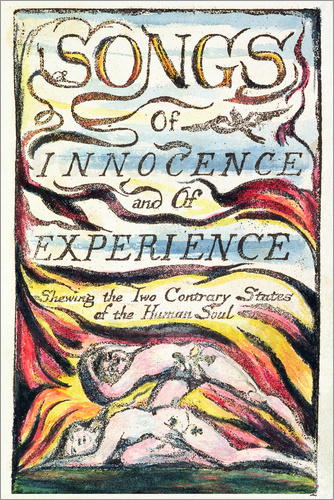
These were published in William Blake's 1789/1794 Songs of Innocence and Experience. These often but not always had mirrored poems, where one upon reflected upon another, setting up the contrast of innocence and experience, which is probably the most useful tool in examining these poems. The book's subtitle, as seen here, is another, underutilized tool:

"Shewing [Showing] the Two Contrary States of the Human Soul"
 "The Lamb" illustrates innocence, "The Tyger" experience. Commonly, "The Lamb," which the persona addresses to the lamb itself ("Little Lamb who made thee"), is seen showing God's sweetness in giving

clothing of delight, 
Softest clothing wooly bright; 
Gave thee such a tender voice
God himself became a lamb.

By contrast, "The Tyger" is commonly read as at least a tentative questioning if not a critique of God. How could this fearful deadly predator be made by the same hand that made the lamb ("Did he who made the Lamb make thee?")? How can the God who makes good also make evil?

It may be saying these things, and I think it is important to keep in mind, but take a closer look at "The Tyger." The first stanza is the same as the last. In other words, it has symmetry. Within that symmetry, poem asks, "What immortal hand or eye, / Dare frame thy fearful symmetry?"

What hand or eye? Why, Blake's obviously. He just did it.

We have a frame followed by what one could describe as the wildfire of the Muse. The whole centerpiece is less a description of a tiger than the a poet's process:

In what distant deeps or skies.
Burnt the fire of thine eyes?
On what wings dare he aspire?
What the hand, dare seize the fire? 
And what shoulder, & what art,
Could twist the sinews of thy heart...? 
Did he smile his work to see?
Art? Work? What else would God, a creator like the poet himself, do but smile with pride on his creation?

Do you doubt this interpretation? Try the next line:
"Did he who made the Lamb make thee?"
Why, yes. Blake wrote both "The Tyger" and "The Lamb."

How about the subtitle of the collection: "[Showing] the Two Contrary States of the Human Soul"? He may be talking about God but more pointedly about humanity. So the same critique one just applied to God has to be applied to himself.

When we turn to the question of "The Lamb" [Little Lamb who made thee], we have to ask what a lamb is. Yes, a wooly animal. Yes, as stated in the poem itself, God (at least in Christian terms). Also, believers. And a child, too, is considered a lamb--a usage still somewhat common today. Now these lines read differently:

He became a little child: 
I a child & thou a lamb, 
We are called by his name.

God is a child, the lamb is a child, the poet narrator is a child, and all "called by his name." So God is a child is a lamb is a poet/creator. We all have the same name.

"Why, the nerve! Calling himself god and 'immortal!' "

That does take some balls. Maybe Blake is egotistical, but it makes the poems fascinating. For now we see our humanity reduced to contraries--formed of opposite poles. These aren't poems about innocence and evil--at least not so much--but of innocence and experience. Does the tyger have less right to exist? It does exist. It's already here, and it exists within us, next to the lamb. Are they at war? Are we at war with ourselves, our contraries? Let's rephrase our critique of God and point it at ourselves: "How can we who make good also make evil?"

Much as these poems seem simple, simplicity isn't Blake.

Monday, August 24, 2020

Poem Analysis: Paul Zimmer's "Upon Entering the Storm, Unable to Swim, Zimmer, Rollo, and Cecil Are Saved"

 This poem appeared in The Republic of Many Voices and the University of Georgia Press edition of Paul Zimmer's Crossing to Sunlight: Selected Poems. You can read it on Google Books here. You can hear the poet read the poem here (you'll have to forward to the proper poem).

The poem opens "A storm mixed and fell upon the lake." We have three figures, presumably all men are stuck during a storm while having a boating mishap. The first two seven-line stanzas describe this outcome.
The volta comes at the beginning of the third and final stanza: "Then a great voice said, 'Rub-a-dub-dub!' "

The trick of this multiple it's a shift in tone--referencing a nursery rhyme where three men are out to sea. One version calls the men "fools": They are, after all, not sailors but men of other professions trying to sail in a tub.

The final line claims: "And we sailed off believing, believing." There are a number of ways to read this transformation:
  1. Straight. Three men are inexperienced sailors who fear drowning until they encounter a "great voice" [God or something like a god]. This reading fails to take into account the tone shift with "Rub-a-dub-dub!" however. Perhaps God is amused at their ineptitude. Their belief is real. Perhaps God sees them as absurd and foolish.
  2. Imaginative. Three young boys imagine themselves out in lake, shower head raining down on them and their imagination leads them to despair until a parent reminds them of who and where they are. The main tone, though, undermines this reading unless the boys are imaginative. Their belief is both absurd and real. Parents provide illusory protection.
  3. Both interpretations simultaneously. These men are boys, fools, but God makes them feel secure as if parent talking to them. Their belief is both absurd and real. But should they be believing? Or was it just their imagination? Maybe their fear was absurd. They are, after all, on a lake, albeit in a leaky boat.
What makes this one fun are the multiple possibilities in delineating what's happening too much. Some details make it seem real, others do not. The possibilities make it a tantalizing joy to read.

Paul Zimmer calls the poem "kind of irreverent," which perhaps shuts down reading #1, but maybe not since God is unlikely to quote from a nursery rhyme. He does, however, mention that it's original inspiration is based on an event that occurred in reality, which bolsters reading #1 or #3.


Tuesday, May 12, 2020

400,000 hits

This site passed 400,000 hits, so I did a quick scan of my favorites from the past year, plus things I read in the past year but still haven't reviewed yet.

Best novel was Theodore Dreiser's An American Tragedy, discussed here. The recollection of it still wounds. I doubt I'd read it again, but a fine, troubling novel.

"Brenda" by Margaret St. Clair (book reviewed here) -- I can't shake the imagery of this one. St. Clair was firing on all cylinders. You can find it in her collection: The Hole in the Moon. If you read nothing else by St. Clair, read this one although she has a few other well known works.

Bruce Boston’s “The Ruined Library” You can read it online here and my commentary on part of what makes it so successful here.

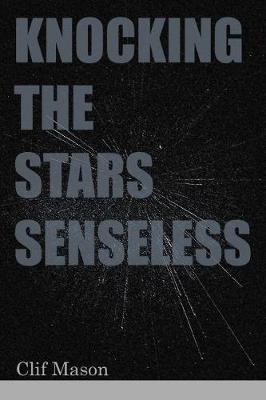
Best new poetic voice I've read in a while -- Clif Mason's Knocking the Stars Senseless (reviewed beginning here -- interview begins here)

Speaking of new voices, Daniel Braum's is one to read, reminiscent of Lucius Shepherd (short novel reviewed here, He's also published a few story collections), with future work forthcoming in Ellen Datlow's Best Horror.

Best book of poems -- Speech Minus Applause by Jim Peterson -- Catalogs the tipping of a worldview (perhaps). Some poets excel at the poem, some the book. This one does both admirably. Stunning, revelatory, haunting. I'm still writing the review--interrupted by illness and lunar lacunae. Hopefully an interview will follow.

Best series: Peter V. Brett's The Demon Cycle. It begins well  with The Warded Man, but really is most stunning in The Desert Spear. Enthralling. More reviews to follow.

Two of the most thought-provoking if flawed yet highly recommended SF novels: Dark Universe by Daniel Galouye -- fascinating speculation -- is discussed here. Pierre Boulle's brilliantly designed Planet of the Apes is discussed here.

Most attention for written works: David Gerrold's novel The Man Who Folded Himself got the most hits--an eye-popping wonder--although the middle doesn't quite stack up as strongly as the beginning and end (SF readers of the old school might look into his When HARLIE Was One, a thought-provoking, speculatively high-octane work). Joe Lansdale's Cold in July, a fascinating look at the male psyche, was right up there with the hits. Jane Yolen's collection and discussion of such a literary form, How to Fracture a Fairy Tale, trailed by a nose hair.

The #1, biggest hit winner of the year by a landslide: Poet and editor, Sarah O'Brien's interview.

Tuesday, April 28, 2020

Interview with Poet Clif Mason, pt 4 Revision & the Future

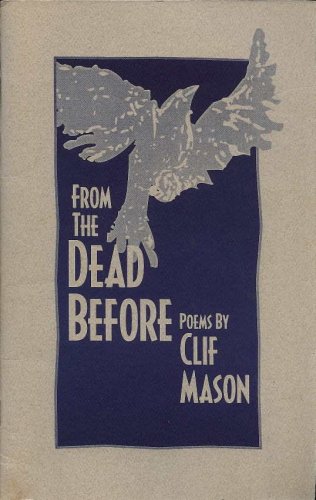
From the dead before: Clif Mason: Amazon.com: Books
Clif Mason is an English professor and a poet with four collections published. I reviewed his remarkable debut full-length collection, Knocking the Stars Senseless, here and here (part II of the review). Since then, we've been emailing back and forth the following extensive interview on the art, craft life and development of the poet.

This interview is in four parts:


  1. Beginnings & Influences
  2. Process & Surrealism
  3. Technique & Progress
  4. Revision & the Future


What are the critical pieces of a good poem?

For reasons I’ve already elaborated, sound and image. To these I would add line breaks and enjambment, which allow lines and stanzas to gain in power and meaning through the special intentionality and emphasis they embody. A poem comes into being when all of these elements become unified and coherent—mutually cognizant and supporting—thereby gaining its own unique momentum and force. That is to say, when the poem becomes a living thing, with its own circulatory system and tissues and organs and networks of nerves.

As I pointed out in the review, you do extensive revisions, changing not only the poems drastically, but even what poems go in. How do you approach revision in your poems? In your three newest books?

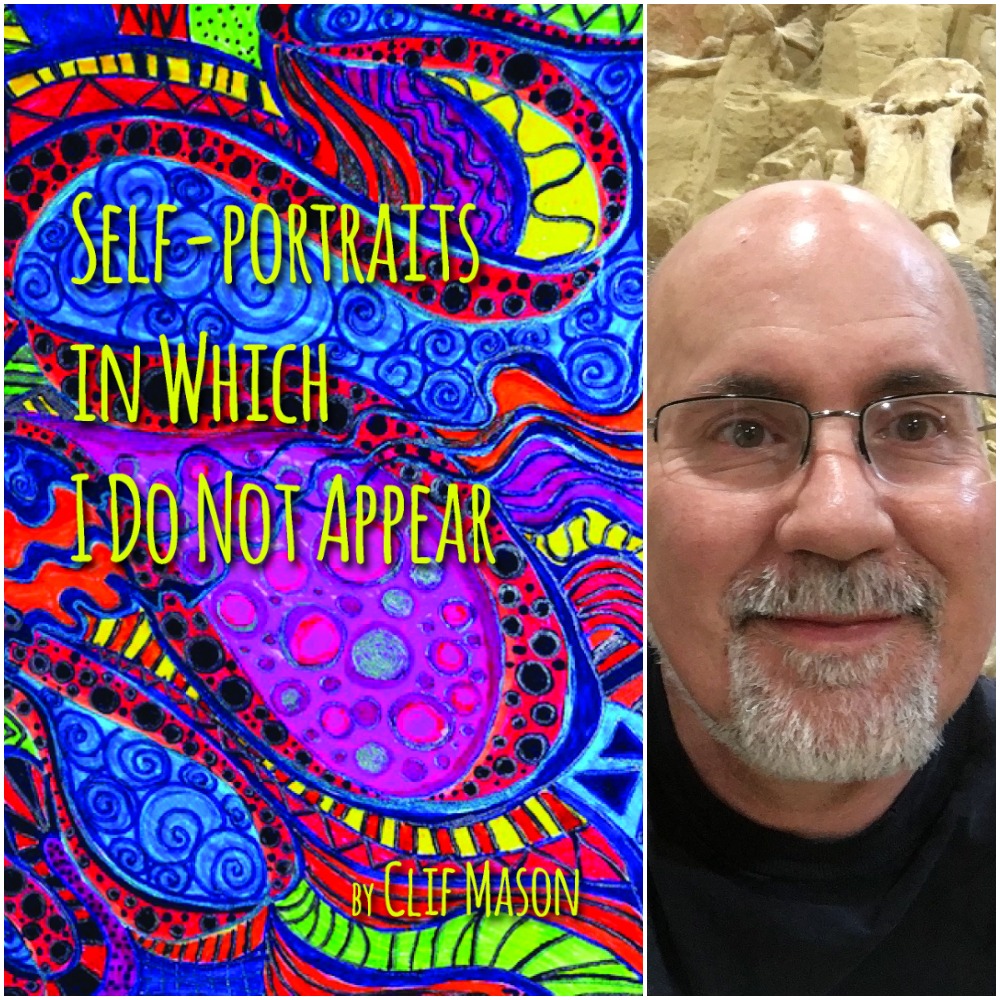
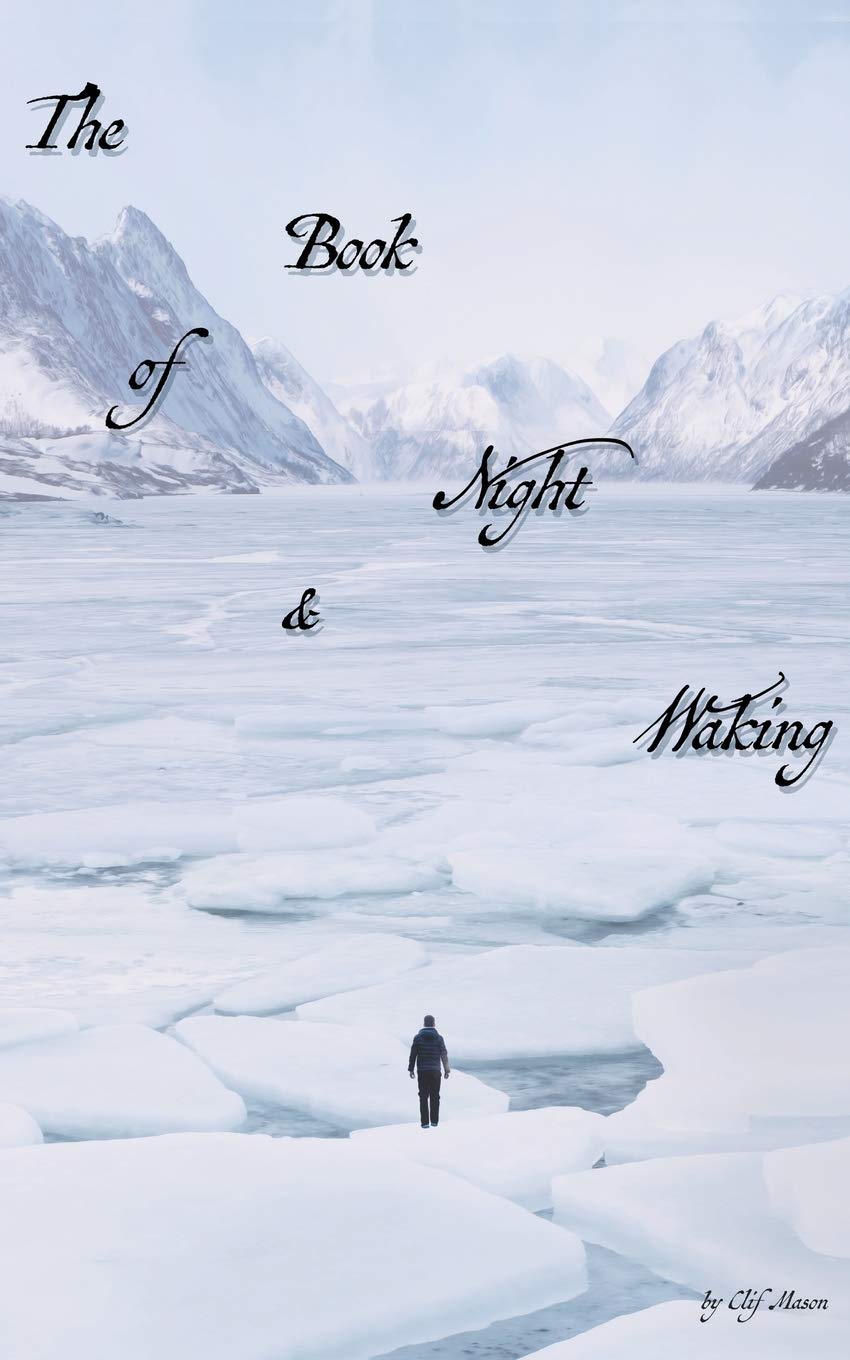
Poems can fail in a “thousand thousand” ways, to paraphrase Shakespeare. The desire to revise comes from an acute awareness of those failures. For me, as for so many others, I’m sure, the ecstasy of composition is often followed—the next day, the next month, or the next year—by dismay, disappointment, and sometimes dejection. Being of a naturally sanguine temperament, I don’t care to live for long in dejection, so I set out swiftly to revise. I give myself enormous freedom in the revising process. I recast long-line poems in o short-line ones, and sometimes back into different long lines. I recast formal poems as free verse and sometimes as prose poems. There’s something I like about hiding the original formal nature of a poem inside prose. I intermix other fragments of a like gesture and sensibility into a poem, and as I’ve said, I combine two, three, or even more poems together. I let these new versions sit for a time and then I revise them as ruthlessly as I did the original poems from which they grew. I do the same thing when fashioning a book. In a sense, the book is a long poem, and the individual poems its lines and stanzas. At the Colrain Poetry Manuscript conferences that I attended in 2012 and again in 2014. I had great teachers—Carmen Giménez Smith, Jeffrey Levine, Martha Rhodes, and especially Joan Houlihan, the Colrain founder and director. From these mentors I learned to place my best poems at the beginning of a book and at the end, and then to demand that the poems in the middle meet that standard of quality. In other words, every poem has to matter in a book; each poem has to earn its place. Of course, I continually reappraise my poems and shift my perception of which of them is “best.” I also tend to tie groups or sections of poems in a book together by theme. And as someone who is addicted to variety, I try to create a mixture of poems in different forms and of different lengths throughout a collection. One can, of course, revise a manuscript forever, moving poems in and around and out and sometimes in again. At some point, one intuits that one has to stop and accept that the book has found what is perhaps its best possible form, given whatever limitations I have as a writer. This was true of Knocking the Stars Senseless and of my chapbook, Self-portraits in Which I Do Not Appear. The Book of Night & Waking, my book-length poem, is different in that it tells a magical realist story of the protagonist, who, despairing because his country is entangled in war and blackened with grief, sets out to walk to Antarctica. Along the way, he experiences both great evil (one of the sections is based on the femicides of Ciudad Juárez, Mexico) and great beauty. The poem is ultimately an epic love poem, as he connects magically with his wife (who is not accompanying him) along the way and reunites with her finally in Antarctica. I found places in the journey for a few poems that had been published separately (though I revised and re-shaped them for the purpose), but much of the book is an original composition. This book is also unique in that it is composed entirely in spaced broken lines that flow down the page. 

I know you have interest in fiction as well. Do you have other books you're working on now--poetry, fiction or otherwise?

Yes, I’ve completed another full length collection, whose working title is Tell Me a Story. I’ve selected poems from it to send out also as a chapbook (provisionally titled Dream Outside of Time). I’m also taking the draft of a dark fantasy novel that I wrote back in 2010 and completely rewriting it, based on new conceptions of its narrative possibilities and new visions of the characters and of the world they inhabit. I’ve also started writing another novel that will be set in a parallel universe, on an Earthlike planet called Oceanus, under a black star called Obsidian. The protagonist of the first novel, a dark priestess named Wing, is a major character in the second. I love Chinese wuxia films, and I am planning to include wushu martial arts in the second book, as well as other fantastical elements.  

How many collections do you have out now and from where? What has yet to be released? Can you describe them for us?


These are my collections: From the Dead Before, Knocking the Stars Senseless, Self-portraits in Which I Do Not Appear, and The Book of Night & Waking. The first is no longer in print, as Lone Willow Press ceased to exist upon the death of Fred Zydek. From the Dead Before consists of fairly straightforward poems, often about the natural world. The other three employ natural imagery but are often written, as I’ve noted, in surrealist and magical realistic modes. Tell Me a Story resembles them in this way, and one of its sections is composed of magical realist stories. I have a certain amount of uncollected work from my first 30 years as a writer. Those poems haven’t fit into the schemes of the collections I’ve fashioned. Should there ever be a Collected Poems—which is purely hypothetical at this point—they might find a place after all.

Monday, April 27, 2020

Interview with Poet Clif Mason, pt 3 Technique & Progress


Self-portraits in Which I Do Not Appear by Clif Mason – Finishing ...
Clif Mason is an English professor and a poet with four collections published. I reviewed his remarkable debut full-length collection, Knocking the Stars Senseless, here and here (part II of the review). Since then, we've been emailing back and forth the following extensive interview on the art, craft life and development of the poet.

This interview is (or will be) in four parts:


  1. Beginnings & Influences
  2. Process & Surrealism
  3. Technique & Progress
  4. Revision & the Future

One of your stylistic penchants is the pairing—often novel or unexpected, often tied intimately in image and sound. Here’s a spectacular one:

There has been another mass murder
in an American town.
I try to expect nothing of flesh or dust

We know immediately what you mean (although sometimes we have to work harder to plot the connections between the sentence/lines/paradoxical pairs themselves. It is simultaneously both amazingly simple and amazingly complex. Here we have images of both life and death that feeds opposingly yet synergistically into the sentence.

How do you settle on a pair? Is it a tedious process of sorting through possibilities, or is it a natural quirk? Can you explain this or a pairing that was difficult to settle on?

These pairings come naturally. Some are suggested by alliteration, some are suggested by image and meaning, as is the case with the example you quote. If one trusts the organic nature of the process, one has faith that meaning will obtain. “Depression” is a poem particularly rich in these pairings, as they flesh out the anaphora that is that poem’s primary technique. That poem flowed out in a single extended rush. I ended up cutting some lines and “trainwrecking” in another poem, but the anaphora parts read very much as they emerged. Some of these make immediate sense, some are still mysterious to me. An example of the latter is these two lines: “of rust & riots, rampages & impulse purchases, / of malarial fevers & red planet hallucinations”. The first of these lines generates speed and momentum and gives the sense of zeitgeist under great pressure. The second line expands upon that but in a way that is more suggestive than perfectly rational. I can’t say that I understand these two lines completely, but I felt they fit the mood of the poem, so I left them in.

Often neglected in discussions with poets is the statement. You have a command of imagery, which we expect in modern poetry, but there’s also the bold statement, the proclamation, memorably worded. Famously, there’s James Wright’s “I have wasted my life” ["Lyingin a Hammock at William Duffy's Farm in Pine Island, Minnesota”]—that line that makes the poem peal throughout the images. And of course, William Butler Yeats in “The Second Coming” took on the best and the worst: "The best lack all conviction, while the worst / Are full of passionate intensity."

One of your memorable statement lines reads:

This is the age of amputation.

We learn to live with less and still less.

How does one come up with such lines? What makes them resonate? Do you have to tinker much with these? Do you find yourself taking many out, or adding some in? How does/should statement function in modern poetry?

I am by aesthetic temperament ambivalent about statements and I try generally to eschew overt didactic statements. That said, there are statements in my poems. The lines you quote flow directly from the four preceding lines, which offer images of missing body parts, including a “trunk of moldering toes.” The direct statement takes these specific images and creates a larger perspective within which they might gain meaning. The danger in such statements is that the larger perspective may be a distortion. If such lines flow out onto the page, one has to pause to ask if they are genuine and real. If one is at all suspicious of their veracity, they should be cut. In this case, I felt that the statement reflected something I felt about the contemporary world, that more and more human meaning is cut away from our lives by economic and political forces before which we often feel more than a little helpless. There is certainly a place for the didactic in poetry. Without it, we wouldn’t have poems like Wilfred Owen’s “Dulce Et Decorum Est,” Adrienne Rich’s “Rape,” Carolyn Forché’s “The Colonel,” or Rita Dove’s “Parsley”—all of which are necessary and important poems.

I’m interested in your motifs like “stars.” Before I understood what you were up to and discouraged you from using them, did you cut them, did you hesitate, or did you stand up for them, confident in what you were up to (i.e. “That schmuck doesn’t know what I’m doing)? Did you take them out and put them back in? When did you realize this would be an important motif in your works? Did you know what they signified during the composition of the first poem? or after several poems? or as you were assembling the manuscript? How do you know what to keep and what to cull?

The incident to which you refer was when I thought I might be able to use star imagery to link every poem in a book. I think you were objecting to the surfeit of such images. The word “star” began no doubt to cloy on the tongue. That was helpful in that I realized it was perhaps asking too much of a single image to unify an entire book—though Rilke is able to do it with great power in the image of the angel in Duino Elegies. The danger was that using stars in this way could become almost a gimmick. I began as a nature poet, and I realized early on that certain primordial images—rivers, stars, stones, and trees—were an important aspect of the way I approached and processed the world. This is probably rooted in my early years on the family farm and in my high school years in Pierre, South Dakota—a town in which the Missouri River looms large in the consciousness of the people who live there. I hope that I use such imagery in fresh and suggestive ways. So, to answer your question, I certainly took another look at the poems in which stars figured. I didn’t remove them, as I felt they were aesthetically justified, but I certainly re-examined them.

As memory serves, can you guide us through the original stimulus of writing a poem, to composition, to revision for publication, to revision for the collection? (If pressed for a poem, I’d say, “Thanksgiving Song” but whatever you have clear in mind is fine.)

“Thanksgiving Song” was originally titled “Praise Song,” and under that title it appeared in Writers’ Journal. I had entered it in one of their contests, but the line limit for the contest was 24 lines and the poem was 45 lines. I had faith in the poem and thought it might be equally effective if I combined many of the lines. I might say that I’ve never shied from re-considering the lineation in my poems, as attempting new line breaks often reveals new possibilities for the poem to make meaning. The resulting poem came in, as I recall, exactly at 24 lines. In the original composition, the poem flowed out associatively pretty much as it now reads, with one exception. A few years ago, I revisited the poem and cut what had been a whole stanza in the 45-line version of the poem: 

Yet the tree frog
wants praise.
Horned owl and muskrat
want praise.
As do red wolf, mule deer,
armadillo, coral snake.
They feel it, know it,
in blood and ravening gut.

The reason I deleted this stanza was because it seemed flat and prosaic in comparison to the imagery of the rest of the poem. Cutting this stanza improved the poem. It was at that time that I changed the title of the poem. I tried further new line breaks, as I felt that some of those in the 24-line version were somewhat arbitrary. The resulting poem was 27 lines. It was in long blocks without white space, and I felt it needed some room to breathe. So, I tried dividing the poem into three-line stanzas, and that became the poem’s final form.

Lone Willow Press published a very different chapbook of yours in the 90s. You waited twenty years before doing another. What was the delay? What made you alter your voice so drastically?


From the Dead Before was a book that combined some of my free verse nature poems and some of the formal poems I wrote in the 90s as an attempt to create new possibilities for my poems. Brad Leithauser’s books Hundreds of Fireflies and Cats of the Temple were significant influences on my writing at that time, as were the poems of Marianne Moore, Elizabeth Bishop, Robert Lowell, and Amy Clampitt. There are a good many sonnets in that collection, as well as a glose (the title poem). I tried my hand at many other forms in those years, and there was a sense of adventure and a zest that came from the discovery of the demands and challenges of received forms, whether it was a pantoum or sestina, a ghazal or villanelle. However, I stopped writing in received forms when I began to feel that, for me at least, the form should not be the trigger of a poem. As I’ve already noted, my poems worked best when words and images appeared in my consciousness and I allowed them to take shape without loss of their essential mystery. This is what Keats called “Negative Capability,” which he stated occurs, “when a man is capable of being in uncertainties, mysteries, doubts, without any irritable reaching after fact and reason.” He thought Shakespeare possessed this quality “so enormously,” and I agree with him. I don’t claim to achieve this every time I write a poem, or even consistently. But I certainly aspire to it.

Saturday, April 25, 2020

Interview with Poet Clif Mason, pt 2 Process & Surrealism

The Book of Night & Waking: Mason, Clif: 9781734284263: Books ...Clif Mason is an English professor and a poet with four collections published. I reviewed his remarkable debut full-length collection, Knocking the Stars Senseless, here and here (part II of the review). Since then, we've been emailing back and forth the following extensive interview on the art, craft life and development of the poet.

This interview is (or will be) in four parts:


  1. Beginnings & Influences
  2. Process & Surrealism
  3. Technique & Progress
  4. Revision & the Future


Laura Madeline Wiseman pointed out the walking motif in your poems, mentioning William Wordsworth (not to mention Wallace Stevens). Does this commonly inspire poems or something else? What are some ways you breathe to life new poems? What do you do when feeling less inspired?

Yes, walking—both in the daytime and at night—is the catalyst of many of my poems, perhaps most notably in “The Sea Anemone Must Wed Lightning,” “The Reprieve,” “Culmination,” and “Fantasias of the Falling Snow.” As far as literary influences go, Thoreau’s essay “Walking,” and Whitman’s self-depiction as a poet “afoot with vision” in the world have been important, as well as the examples of Wordsworth and Keats. Walking is, for me, a form of meditation, sometimes to the point of complete trance-like immersion in the world around me. I find the rhythm and pace of walking almost perfectly suited to the creative states of being from which words arise as if from nowhere and begin to coalesce into poems. The other main way I find the inspiration to write is to leap almost anywhere into the work of some of the writers I’ve listed above. Within a poem or two I put the book away, pick up my notebook and a pen and begin to compose. When I’m feeling less inspired, I don’t write. As Keats said in one of his letters, “if Poetry comes not as naturally as the Leaves to a tree it had better not come at all.” Or I use revision of a poem or poems as a portal into new composition. 

You draw equally on surrealism and reality. When did you begin work that in to your work and what do you feel surrealism brings to the table?

I read some surrealists early on, in the 70s—James Wright, Robert Bly, and W. S. Merwin, and a few others, but it was my first in-depth readings of Lorca, Neruda, Merwin, Rimbaud, Trakl, and Merwin in the late 90s and early 2000s that propelled my poetry in a new direction. I had read them cursorily before, but now the full emotive force and electric charge of their image-making came home to me. I read Lorca’s Gypsy Ballads, The Tamarit Divan, and Poet in New York; Neruda’s Residency on Earth, Canto General, and Odes; Merwin’s The Lice , The Carrier of Ladders, and Writings to an Unfinished Accompaniment; Rimbaud’s Complete Poems and Trakl’s Selected Poems obsessively, again and again. I felt deeply emotionally at home in these poets’ imaginary worlds, in a way I rarely felt at home in the so-called real world. Their poems lived in the pulse in my wrist, as well as in the impulse in my brain. Surrealism, at least as practiced by these five writers, profoundly de-familiarizes language and helps us gain a new vision of what reality might be and a new alphabet by which to record it.

When did you first feel confident about what you wrote? What remained to be learned?

I don’t mean to sound immodest, but I felt confident about my writing almost as soon as I began to write seriously—about age twenty. I had as many clunker lines as lines that pitched steeply up and took flight, but when the words flew, I knew it and I knew I could become a poet. What I had to learn was the discipline of craft. I tended to write long, mixing in prosaic lines with original ones, and I had to learn to cut—ruthlessly, mercilessly—the bad ones. And I could be a vexingly slow learner. I also had to learn not to write about something just because I thought I should. I wrote a number of bad poems in that way. For me, at least, ideas shouldn’t be the origin point of poems. This is not to say that poems shouldn’t have ideas, but simply that the ideas should arise organically from the images and sonic intensity of the lines. I had to learn to eschew the didactic and let the first words of a poem magically appear in my head and then to nurture and develop—organically, associatively—the poem, to grow it from those first verbal seeds. Assonance, consonance, and alliteration came naturally to me—an early instance was “Frog croak, cricket chatter, / wind keening in the corn blades,” from “Night Wounds”—and I had to learn how to play with them to increase the verbal force within lines and stanzas, and how also not to allow a surfeit of such sound effects to drown my poems. I often pushed the music of a poem to (and sometimes beyond) the breaking point. I had, in revising, to try to repair the lines through careful pruning. Finally, I had to learn how to allow myself to reimagine poems and open myself to radical reinventions of them, often by challenging and changing their form drastically, and also by “trainwrecking” two or more poems or poem fragments together. I had to learn to recognize when poems had a common imaginative origin. I was excited by the new possibilities this practice opened up for my poems.  

If you felt confident at twenty, what took so long to publish your first book? What were the impediments?


I would never think of them as “impediments,” as they were all-important to my sense of who I was and who I might be as a human being, but I would mention three things that kept me from developing as quickly as I otherwise might have as a writer: working on my Master’s and Ph.D. degrees in English, and teaching and trying to support a family. During my graduate studies, I became a bit of a researching, criticism writing machine, though this metaphor hardly does justice to the work. I found the writing of criticism both challenging and enormously stimulating, and I became so immersed in it over time that I almost forgot what it was like to write poetry. Several years into my teaching career, I tried my hand again at poetry, fitfully at first. After several years, I gave up writing criticism to focus completely on poetry. I became obsessive about it. Every day I was reminded how little I really knew about poetry and especially about writing poems worth reading. I set out to re-educate myself, and that project is still in motion. I usually have a dozen or so books of poems that I’m reading at any one time, and I float back and forth between them, as mood and whim and felt or perceived need dictate. I began sending poems out to magazines and reaped bushels of rejections, and a few acceptances, enough to encourage me to keep trying. I was the faculty sponsor for a little creative writing magazine at the University, and somehow Fredrick Zydek, a poet from Omaha, discovered us and submitted a sheaf of poems. We had never published anyone from outside the University before, but the students liked his poems, so we did. I began corresponding with Fred and sharing poems with him. He sent me relatively few poems as he was going through a protracted period of writer’s block, following the death of his mother. As it turned out, Fred was the Editor in Chief at Lone Willow Press, and he invited me to submit a chapbook manuscript. I sent him From the Dead Before, and he published it.

Friday, April 24, 2020

Interview with Poet Clif Mason, pt 1 Beginnings & Influences


Knocking the Stars Senseless (Paperback)
Clif Mason is an English professor and a poet with four collections published. I reviewed his remarkable debut full-length collection, Knocking the Stars Senseless, here and here (part II of the review). Since then, we've been emailing back and forth the following extensive interview on the art, craft life and development of the poet.

This interview is (or will be) in four parts:

  1. Beginnings & Influences
  2. Process & Surrealism
  3. Technique & Progress
  4. Revision & the Future


When did you start writing?

I wrote a few decidedly juvenile pieces while in high school (including a wretched imitation of Chaucer’s Prologue to The Canterbury Tales), but it wasn’t until the summer after my freshman year in college when I became friends with a young poet. His name was Mark Porter, and he had been a member of the Classics honorary society, Eta Sigma Phi, into which I had recently been inducted. Until that summer, I hadn’t really gotten to know him very well. We both went to summer school and lived in the same dormitory complex. I learned that he was a devotee of Joan Baez, as well as many other folk singers and groups, and that he also loved opera and classical symphonic music. He introduced me to much music I had never heard before, and he shared with me his translations of Catullus, as well as his own poems. I was struck by their naturalness of tone and their beauty. His translations compare well, in my view, with those by well-known translators. The previous year, I had read widely in Allen Ginsberg and Lawrence Ferlinghetti, among other poets. I had been listening semi-obsessively to Bob Dylan for several years by then. I was struck by the surrealism of some of his imagery. The confluence of these influences and the encouragement and example of my friend (and now mentor) helped me realize by the end of that summer that I wanted be a poet. That is, I wanted to be in the world, thinking, feeling, and perceiving, as a poet—and expressing that existence through words.  

Which writers inspired you and what about them fired your imagination?
Their number is, of course, legion. However, if I had to limit myself to a handful, they would be Sappho, Shakespeare, Keats, Whitman, Dickinson, Hopkins, Plath, Lorca, Neruda, Merwin, and Clampitt. Sappho for her passion wed to her incomparable skill. Shakespeare for his vast ocean of original metaphor, delivered in a startling rhetoric that still leaves me speechless in admiration. Keats for his peerless lyricism and grace and for his sense of himself as an artist. Whitman for the breadth of his human compassion and for the robustness of his interest in the world around him, both the world of nature and of the city. Dickinson for the depth and genuineness of her (sometimes) melancholy and for her fearlessness in detailing it. Hopkins for the bold force of his poems’ sonic effects. Lorca for his tragic sense of life, expressed in a baroque language and surrealism that always leaves me in a state of wonderment. Neruda for his supremely fertile surrealism and for the depth of his imaginative involvement in the lives of the working class. Merwin for the stunning originality and power of his surrealism, delivered in the most simple and straightforward of language. Clampitt for the lush zest of her language and the precision of her knowledge of the natural world. I believe that, among contemporaries, she is the closest we have to Keats. Of course there are innumerable others I might mention—Homer, Virgil, Dante, Coleridge, Christina Rossetti, the Eliot of “Prufrock” and Four Quartets, Georg Trakl, Marianne Moore, Elizabeth Bishop, Dylan Thomas, Wallace Stevens, Paul Celan, Theodore Roethke, James Wright, A. R. Ammons, James Dickey, William Stafford, Denise Levertov, Gary Snyder, Anne Sexton, Ted Hughes, Adrienne Rich, Rita Dove, Mary Ruefle, Matthew and Michael Dickman, Natasha Trethewey, Lee Ann Roripaugh, Ilya Kaminsky, Joan Houlihan, Nick Flynn, Diane Seuss, Jericho Brown, Aimee Nezhukumatathil, Ada Limon, Kaveh Akbar, Ocean Vuong, Tiana Clark, and Joseph Fasano are a few. And this is not even to mention the long list of the Nebraska poets—the late William Kloefkorn and Ted Kooser and an array of other exceptional living contemporaries. But I’ll leave it at my original list. 

Who are some of your mentors--in person or otherwise? What did you take away from them?


My college friend, whom I’ve already mentioned. Some of my English teachers, such as William and Dorothy Selz, Thomas Gasque, John R. Milton, Gervase Hittle, William Lemons, and Paul Pavich, from the University of South Dakota, and Linda Ray Pratt, Bernice Slote, Louis Crompton, Walter Wright, Elaine Jahner, Fran Kaye, Charles Stubblefield, and Paul Olson from the University of Nebraska-Lincoln. Each of them offered me an intense appreciation of particular writers or literary periods and helped deepen my commitment to literature as a way of both knowing and recreating the world and to criticism as a way of passionately experiencing literature in one’s nerves and synapses and of taking action in the world. I would be utterly remiss if I did not mention three other significant mentors from USD: Nancy Skeen, my philosophy teacher, who introduced me to the love of ideas and the desire to continually pursue the truth of things, even if that truth remains elusive; and Helen Fremstad and Frederick Manfred, my two creative writing teachers. Their approach was one of deep encouragement of what was best and fresh and distinctive in each of their students’ work, without imposing their own predilections. A writer who also studied with Manfred at the same time I did was the novelist Michael Doane, who primarily wrote poetry then. The well-known novelist Pete Dexter also studied with Manfred, as did my friend, Mark Porter.  

Tuesday, April 14, 2020

"Brightness Falls from the Air" by Margaret St. Clair (plus Thomas Nashe's "A Litany in Time of Plague")

First appeared in F&SF as a contest story, reprinted by J. Francis McComas and David Hartwell, the latter a major retrospective. I commented more succinctly, but with slightly different insight here

Summary:

On occasion Kerr watched the bird people fight, who left luminous trails in their wake, until he met Rhysha, face to face—her plumage glowing. She came to Kerr’s identification bureau to identify her brother, dead from a bird people fight—fights that the Earth people put on after forcing them to migrate. The bird people join the fights that used to be rituals, but now are a means to exit this life. The Earth people despise all extraterrestrials—even the beggars. Kerr befriends her and goes to speak for her people to give them a new planet to populate.

Commentary with Spoilers:

The hearing doesn’t go well. Kerr gets Rhysha to promise her people will stop fighting, but when Kerr gets sick, she fights anyway, leaving a note behind of how she had tried to get to him.

The title comes from a famous poem (one of the top one hundred most printed poems in the English language) by Thomas Nashe, called sometimes by "A Litany in Time of Plague" or by its first line "Adieu, farewell, earth’s bliss" (which might be recognized as the title to D.G. Compton's Mars novel). James Tiptree, Jr. also used the title "Brightness Falls from the Air" for one of her novels. 

Thomas Nashe sounds like something of a impish troublemaker, which may help in interpreting his poem (see Nashe's Wikipedia page and the image of him in chains, which seems to have been more wishful thinking, but not for people's lack of trying).

See the source imageThe poem originates from the comedy "Summer's Last Will and Testament" about a plague that hits earth--not unlike our own time of Covid-19 although with more devastating results--where everyone is bound to die and nothing can avail us. It sounds rather somber; however, note that it is a litany, recited in church where a lay reader or preacher would read a passage, and the congregation would recite the chorus ("I am sick, I must die"--a pair of seemingly linked statements which would have had no actual religious significance in Nashe's day and region). That might create bleak humor if one is expecting some grander purpose or optimism from their church. Also, the chorus doesn't really show one's actions as contributing to one's destiny. It sounds like more of an apocalyptic prayer. I haven't read the play to see how it's used.

Just as Nashe's poem may read differently divorced from its source, so does St. Clair's title. In the poem, "Brightness falls from the air" is something of a non-sequitur, perhaps merely denoting sunlight (perhaps it is linked with youth which precedes it, or with royalty which follows, but these semicolons seem to suggest separate statements building up to the chorus].

St. Clair's tale is meant to be neither humorous nor, I think, resigned to death, necessarily, as a plague outside human control decimates Nashe's population. Instead, she takes her title literally, and her readers are meant to witness an injustice: the mistreatment of outsiders. 

Clair’s tale is simple, moving and worthy of her best, capturing strange, colliding cultures in a few deft strokes. Hartwell writes that her story accomplishes her goal to “develop a global consciousness” by dealing with “beauty, death, and colonialism.” The tale doesn’t make clear the connection with Kerr’s amateur singing, but perhaps it is an irony that he would try to impress the bird people with his singing although the text isn’t explicit about the bird people’s abilities in this matter.*

* Interestingly, I'd mentioned this in the first explanation. Not recalling my first analysis (lacking internet when I wrote this up), I mentioned it again, thinking it just occurred to me.