Search This Blog

Monday, June 20, 2016

Writing Talk: Conversations with top writers of the last fifty years by Alex Hamilton

Writing Talk:Conversations with top writers of the last fifty years 
by Alex Hamilton  
Troubador Publishing Ltd  
Matador  
Nonfiction (Adult)
Arts & Photography
Alex Hamilton open this book of interviews with how he came to write the book: first, his first novel; next, his interviews from twenty-five years, working with The Guardian.

Hamilton interviews genre and literary authors alike. His interviews do not mirror the writerly interest of most interviews, but usually focuses on the business end of writing and larger scale issues of each genre.

Hamilton is there on scene when the New Wave writers, like Brian Aldiss and J. G. Ballard, were making their mark. Hamilton opens the readers' eyes to where those writers felt like when it was, visiting 1968 and 1979.

For dedicated readers of SF, looking to bone up on the genre's shape, should find this book a boon. He also interviews literary, crime, romance writers, as well as cartoonists and poets.

Writers interviewed include:

  1. Harry Harrison, 
  2. Brian Aldiss, 
  3. Michael Moorcock, 
  4. Kurt Vonnegut, 
  5. Martin Bax, 
  6. Russell Hoban, 
  7. Joseph Heller, 
  8. Angela Carter,
  9. John Wyndham, 
  10. Dennis Wheatley, 
  11. Stephen Donaldson, 
  12. Lionel Fanthorpe, 
  13. Stephen King, 
  14. Daphne du Maurier, 
  15. Ian McEwan, 
  16. Jorge Luis Borges, 
  17. Graham Greene, 
  18. Pablo Neruda, 
  19. Joyce Carol Oates, 
  20. Margaret Atwood, 
  21. Norman Mailer, 
  22. Jacqueline Susann, 
  23. John Updike, 
  24. Mickey Spillane, 
  25. Ed McBain, 
  26. George V. Higgins, 
  27. Derek Marlowe, 
  28. Patricia Highsmith, 
  29. John D. MacDonald, 
  30. Chester Himes, 
  31. Eric Ambler, 
  32. Edmund Crispin, 
  33. Harold Robbins, 
  34. Brian Freemante, 
  35. Michael Innes, 
  36. Colin Watson, 
  37. H. R. F. Keating, 
  38. Julian Symons, 
  39. M. M. Kaye, 
  40. Lucilla Andrews, 
  41. Fiona Richmond,  
  42. R. K. Narayan, 
  43. Muriel Spark, 
  44. Erskine Caldwell, 
  45. George Mackay Brown,
  46. Regine Deforges, 
  47. Bernard Malamud, 
  48. Isaac Bashevis Singer, 
  49. H. E. Bates, 
  50. Jorge Luis Borges, 
  51. Christopher Evans, 
  52. Herbert Harris, 
  53. David Jones, 
  54. Tambimuttu, 
  55. Basil Bunting, 
  56. Tom Pickard, 
  57. Jeff Nuttall, 
  58. Stuart Montgomery, 
  59. Gavin Ewart, 
  60. Larissa Vassilyeva, 
  61. D. J. Enright, 
  62. Alas Ross, 
  63. Norman Thelwell, 
  64. Herge, 
  65. Charles Addams, 
  66. Beryl Cook, 
  67. Denis Gifford, 
  68. Gunter Grass, 
  69. Beryl Bainbridge, 
  70. Ruth Prawer Jhabvala, 
  71. Chinua Achebe, 
  72. Arthur Koestler, 
  73. Gore Vidal, 
  74. Anthony Burges, 
  75. E. L. Doctorow, 
  76. Romain Gary, 
  77. James Michener, 
  78. Edward Upward, 
  79. J. P. Donleavy, 
  80. Rebecca West, among others

Thursday, June 16, 2016

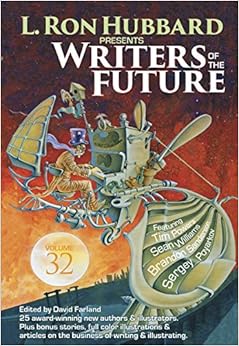
"Images Across a Shattered Sea" by Stewart C. Baker

Published in WOTF 32
Summary:

Driss and Fatima pull a buble from the panoptic shard, guessing what it might contain: some strange knowledge. Instead, they find themselves.

Two centuries years earlier, Jen and Hog send out the shards to learn something about the future. It just contains visual images, but they glean information from that--whether the future is live-able and how.

Then they receive a vision of a near-future that seems to offer certain doom.
Discussion with spoilers:
Baker offers a great speculative conceit. It begs the question of how our actions affect the future. The last image is affecting, perhaps illustrative of what many hope will happen revolutionarily to our present society.

Problematic is that the protagonists have little impact on the narrative, swept along on a techno-mystical wave. However, that suggest something thematically intriguing: that we have little impact. Maybe it will all turn out right in the end, but a god-in-the-machine will resolve. Contrary to popular opinion today, you don't have to agree with a particular theme for it to stimulate thought.

Tuesday, June 14, 2016

Review: Wylding Hall by Elizabeth Hand

Wylding Hall 
by Elizabeth Hand  
Open Road Integrated Media  
Mystery & Thrillers
Nominated for the Locus and Shirley Jackson awards.


Windhollow Faire, a fictive sixties folk band, decide to hole up in Wylding Hall, a large house where the band planned to practice for their second album. Partially, they are trying to distance themselves from the death [suicide? murder?] of their lead female singer, Ariana. Her loss is a major blow as her voice and looks brought attention to the band. Julian Blake, lead male singer and songwriter, had been in love with her, to the jealousy of Lesley Stansalclass, the new female lead.

The problem comes when the band members realize that they are not the only residents in Wylding Hall. Maybe the only living ones...

The story is told by the former members of Windhollow Faire and their producer, photographer, and critic. This is the highlight of this novella/short novel. It creates a pitch-perfect voice of the rockumentary. Hand captures the feel of the genre so well, this alone is worthy of reading, acclaim, and award attention.

With so many voices shaping the story, especially a tale from years past, one might expect more contradiction. However, with so many voices, if they had contradicted one another, the reader might have wound up thoroughly disoriented. So it's just as well that contradiction was not a feature. Plus, one assumes that the material in a rockumentary has been shaped by a film's editor to tell a cohesive story.

It takes a little while to come upon the speculative elements. If you've read Elizabeth Hand's other works, this may come as no surprise. Wylding Hall, when she does it explore it, has a spooky if magical atmosphere. The horror aspect is subdued, leaving the reader with a prescient photograph and the mystery of one missing [dead?] band member. All of which adds up to the most famous accidental album of their era.

This one of the best novellas published last year. Well worth the price.

Sunday, June 12, 2016

Review: The Peculiar State by Patricio Pron

The Peculiar State 
Patricio Pron  
Knopf Doubleday Publishing Group


The author, Patricio Pron--an Argentinian writer, transplanted to Spain--was unfamiliar to me. The series--A Vintage Short--instead, appealed: the promise of a classic short story. I reviewed one earlier, which disappointed. This one did not.

Towards the end, the unnamed protagonist is a German author, who writes a to-do list:
"1. Give up writing. Think about the death of the novel and the peculiar state of the short story.... 
"3. Go days without changing your shirt. 
"4. Say 'You wouldn't understand' when she asks you why you don't write anymore."
 This excerpt gives a sense of the story in theme, humor, chaos, and story (although #7 is the best and #10 contradicts previous assertions). The humor recalls Joseph Heller's Catch-22.

The German and his wife live in Altoona. He makes his living as a creative consultant, answering cryptic phone calls about chocolate. The results of his opinions dismay him when he spies them on billboards.

As you read, you learn "the peculiar state of the short story" is really the peculiar state of society--a mirror of the strange world the protagonist lives in but doesn't comprehend. It's the kind of taster that makes you salivate for more peculiar stories and their peculiar societies.

Tuesday, June 7, 2016

Review: The Story of Kullervo by J.R.R. Tolkien

The Story of Kullervo  
J.R.R. Tolkien
Houghton Mifflin Harcourt
J. R. R. Tolkien needs no introduction. Scholars respect his knowledge of the early European texts like Beowulf. Every year, new readers join the legions of Lord of the Rings fans to be stunned and enthralled by his world-building.

This brings us to The Story of Kullervo, a text based on the Finnish epic, Kalevala. Apparently, Tolkien worked on translating/reinterpreting this when he should have been studying for his classes around 1914, a tale which has a certain charm. The Hobbit was said to be written in 1920, but not published until 1936. The Lord of the Rings came out nearly twenty years later. Presumably, Tolkien took time to polish his novels for publication.

Here's the opening from The Hobbit:

"In a hole in the ground there lived a hobbit. Not a nasty, dirty, wet hole, filled with the ends of worms and an oozy smell, nor yet a dry, bare, sandy hole with nothing in it to sit down on or to eat: it was a hobbit-hole, and that means comfort."

Tolkien captures a taste of what hobbits are and are not, in one morsel of a paragraph. The following is a later work, The Two Towers--not as charming but equally evocative and more tense:

"Even as he gazed his quick ears caught sounds in the woodlands below, on the west side of the River. He stiffened. There were cries, and among them, to his horror, he could distinguish the harsh voices of Orcs. Then suddenly with a deep-throated call a great horn blew, and the blasts of it smote the hills and echoed in the hollows, rising in a mighty shout above the roaring of the falls."

Contrast those with this passage from The Story of Kullervo:

"And the wife of Kalervoinen sitting nigh to the window of the homestead descried a scurry arising of the smoke army in the distance and she spake to Kalervo saying, 'Husband, lo, an ill reek ariseth yonder: come hither to me.' "

This is not the same writer. While some passages gurgle as a pleasant stream, others clog like a shower drain full of dog hair. In other words, The Story of Kullervo is juvenilia. Crucial in his formation as a writer? Yes. Formative in his unprecedented world-building? Absolutely. But not a work that Tolkien took time to smooth out the wrinkles.

If you are a fan of The Silmarillion, this book is unmissable. If you are a Tolkien critic or aficionado of early European legends, curious to read how Tolkien has twisted the original, do buy it. Otherwise, sling up your hammock, and prop open the old favorites, The Hobbit and The Lord of the Rings.

Wednesday, June 1, 2016

"The Star Tree" by Jon Lasser

Published in WOTF 32


Summary:

Missing their wife/mother who took off to a mine on Jiri V, a father and his two boys take the train across Mars (or Mars-like planet) to their new home. However, the younger brother, Marq, wants his cards back. Chiq, the elder, won't go along with this initially, forcing the family to break up, or stick together to do what he wants. The father believes he can swing it but the family will be tired for their first day of work, and they must do it together.

A touching and rich tale with a few developmental issues.


Discussion with spoilers:
The plot here is clearly not the fisticuffs-with-nose-bleed whirlwind. Instead, it attempts to create an emotional moment, which it does with some success. Moreover, it creates a rich background society with some suggested depth.

The plot, emotion, and world-building do not align, though. The background points us toward the fact that these characters are privileged, which leads logically into a tale of class. Instead, the story makes a U-turn toward a tale of a lost love.

The boys attempt to shield their father from horrific news. All well and good, but we need to 1) care about the mother which means flashbacks, 2) understand why they are shielding their father from this, however flawed their reasoning, and 3) come up with the ideal protagonist based on the above decisions. It's not clear why this particular narrator was selected, how he is transformed, or what it means if he is not.

In addition, it doesn't explain how the Mother arrived at a different system, presumably with time dilation effects due to traveling, and the delay due sending information back to the family. Also, how does one lose an entire planet? Maybe that one would be hard to know, but you'd have to ask, and wouldn't everyone be asking? Wouldn't mothers want to send signals back to their children?

If this is a slice off a novel, that might explain the gaps and develop these questions in more depth.


Wednesday, May 4, 2016

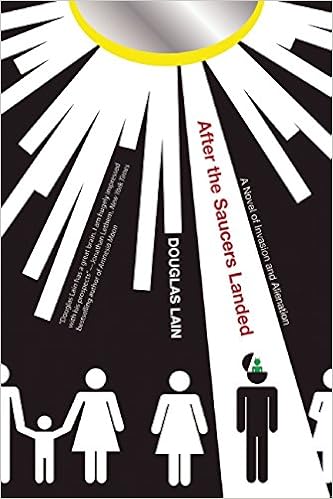
Review: After the Saucers Landed by Douglas Lain

What would a book read like if Connie Willis chose to write a Philip-K.-Dick style of novel? Probably something much like After the Saucers Landed by Douglas Lain. Appropriately enough, it was a finalist for the Philip K. Dick award, but maybe it should have landed on other award ballots as well. How many books change when you reread them? You read the same words both times, but you realize something else entirely is going on.


The protagonist, a popular UFO writer and professor, traverses the seventies to the nineties. Before the aliens land, he is a laughing stock among his colleagues. He does find refuge in his wife, Virginia. After the aliens, he is more respected, but he suspects that the identities of his wife--the woman he thought of as his wife--is really an alien, Asket. Asket has also been wife to other friends. She slips into and out of human identities so convincingly that even our protagonist is unsure, requiring the mall security to throw him out of its establishment.

Identity is the core issue here, explored in a subdued Dick fashion. Dick might have escalated the events to a fever pitch. But that is not the story here, which makes the novel in some ways more sinister. Things do and don't escalate. Events the should have escalated in the proper Fifties paranoid fashion, don't. You read one story by the novel's end, but as you turn back to page one and reread, you suspect that that explanation of events is not good enough.

It may take time before Lain's accomplishment here is recognized. After all, the novel begs to be read twice. On my first read, I'd have given the book four stars, but how could I not give five stars to a book that rewrites itself? If there are better books this year, it'll be one heck of a year for literature in deed.